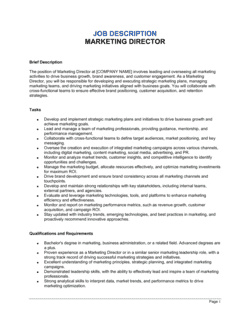
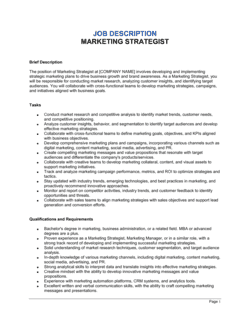
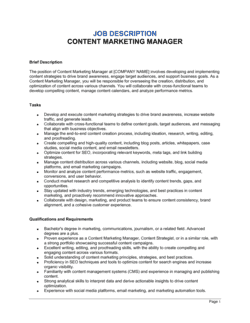
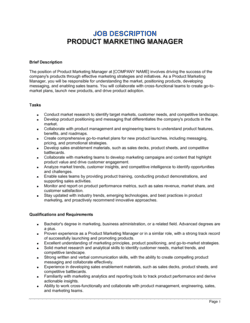
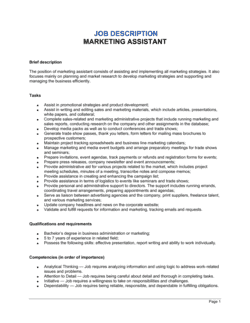
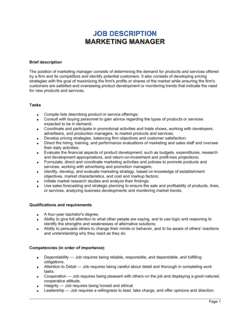
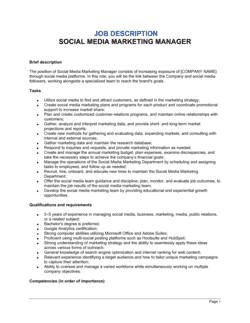
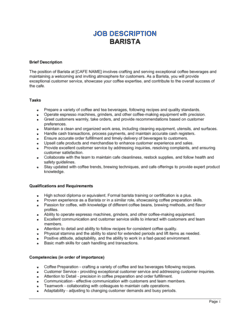
- Job Description
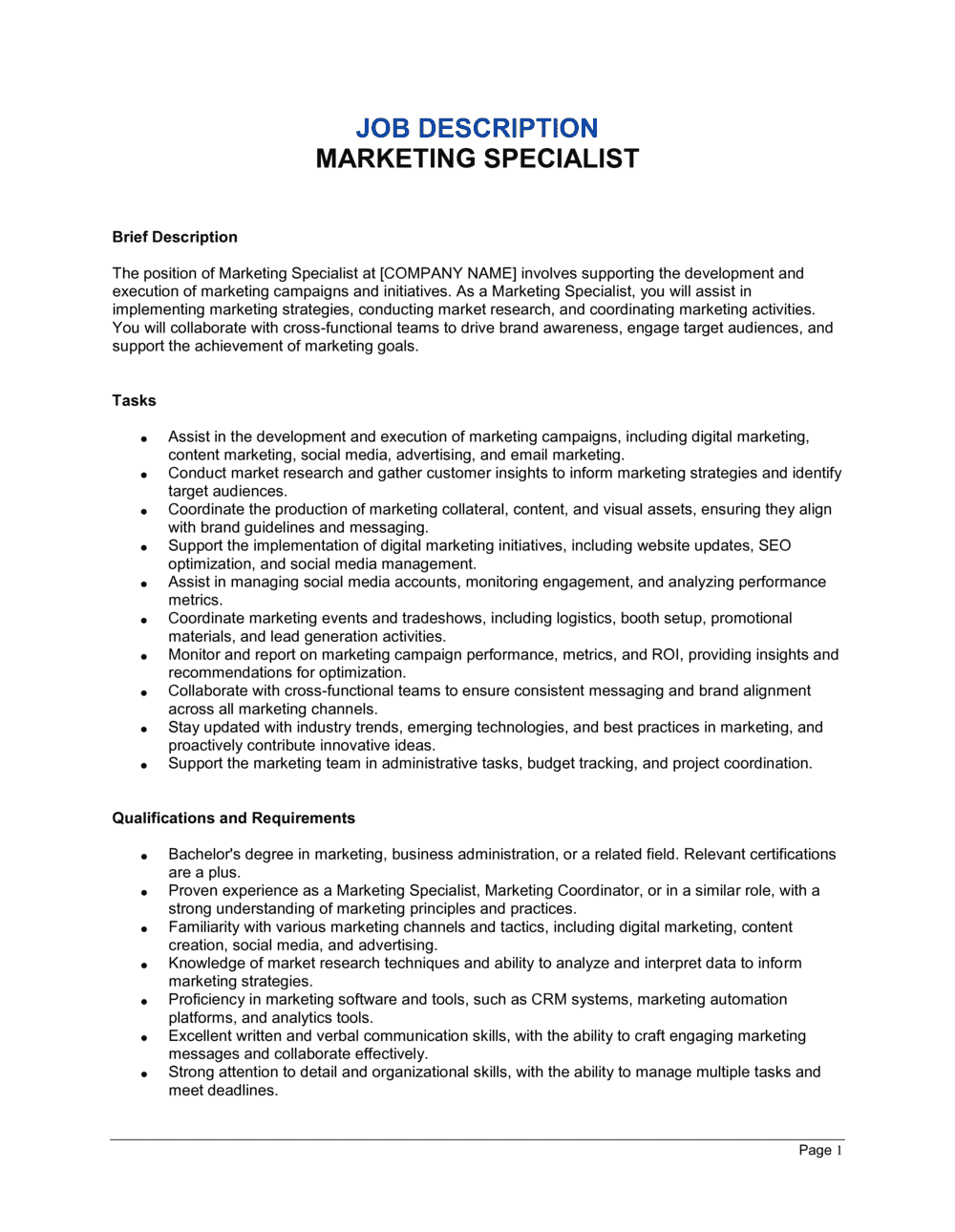
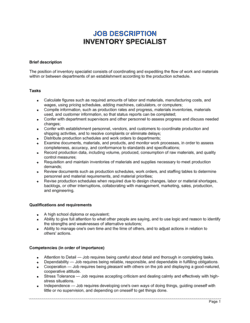
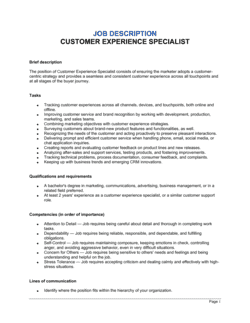
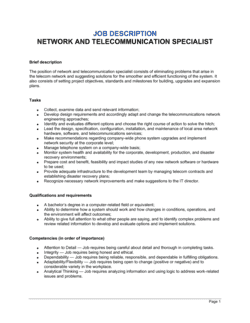
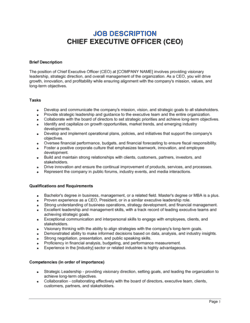
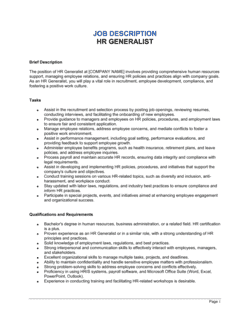
- A formal document outlining a role's duties, qualifications, reporting structure, and performance expectations — used in hiring, performance management, and employment disputes.
- KPI (Key Performance Indicator)
- A measurable metric used to evaluate whether a role holder is meeting the performance expectations defined in the job description.
- FLSA Classification
- A US-specific designation under the Fair Labor Standards Act determining whether a role is exempt from overtime pay requirements based on duties and salary threshold.
- EEO Statement
- Equal Employment Opportunity statement — legally required language affirming the employer does not discriminate based on protected characteristics such as race, gender, age, or disability.
- ATS (Applicant Tracking System)
- Software used by employers to collect, filter, and manage job applications; job descriptions are parsed by ATS keyword algorithms to surface qualified candidates.
- Reporting Structure
- The formal chain of command defining who the role holder reports to and, if applicable, who reports to them.
- Bona Fide Occupational Requirement
- A qualification that is genuinely necessary to perform the role and may legally justify screening criteria that could otherwise appear discriminatory.
- Exempt vs. Non-Exempt
- US FLSA classification: exempt employees are not entitled to overtime pay; non-exempt employees must receive 1.5× their regular rate for hours worked beyond 40 per week.
- At-Will Employment Clause
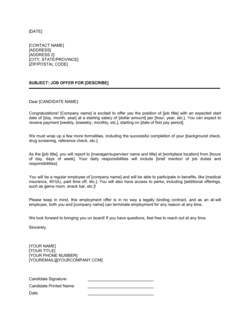
- Language stating that employment may be terminated by either party at any time for any lawful reason — applicable in most US states but not in Canada, the UK, or the EU.
- Compensation Band
- A defined salary range for a role tier, used to ensure pay equity and maintain consistency across hires at the same level.