1
Identify and schedule the licensed IP precisely
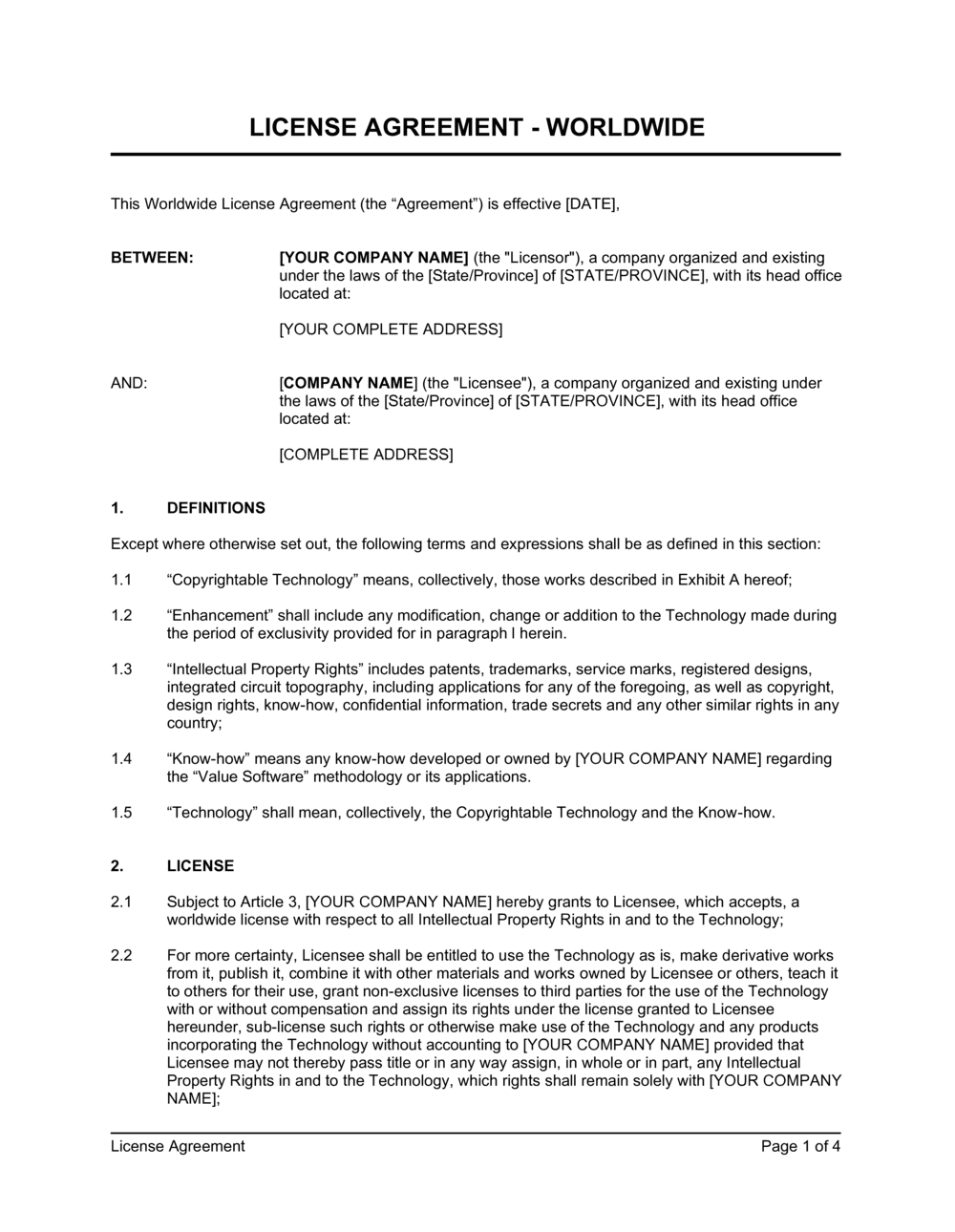
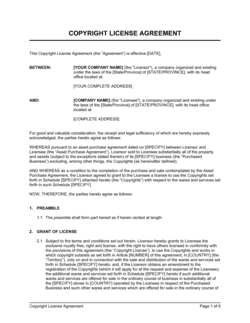
List the specific IP being licensed in a Schedule A — patent numbers and filing dates, trademark registration numbers and jurisdictions, software version numbers, or content titles with copyright registration references. Do not rely on a general description in the body of the agreement.
💡 For pending patents or unregistered trademarks, include the application number and filing date and add a clause covering improvements and continuations automatically.
2
Define the grant scope, exclusivity, and field of use
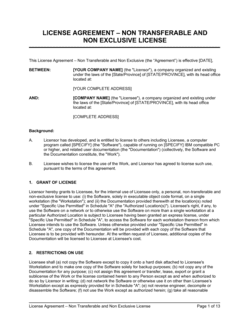
Choose exclusive, sole, or non-exclusive, and specify exactly what the licensee may do — reproduce, distribute, modify, sublicense. Add a field-of-use restriction in Schedule B limiting the grant to specific industries, products, or channels if you intend to license the same IP to others.
💡 An exclusive worldwide license without a field-of-use restriction is one of the most expensive mistakes a licensor can make — it forecloses all future licensing revenue in every market and sector.
3
Set the royalty structure and define the calculation base
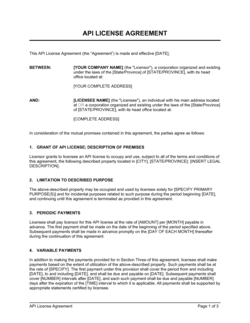
Choose a royalty model — percentage of net revenue, per-unit fee, flat annual fee, or a tiered structure. Define 'Net Revenue' or 'Net Sales' explicitly, listing every permitted deduction. Add a minimum guaranteed royalty if the licensor needs baseline income regardless of the licensee's performance.
💡 Tiered royalty rates that decrease as volume increases create an incentive for the licensee to scale aggressively — useful when market penetration is the licensor's primary goal.
4
Configure sublicensing permissions and conditions
Decide whether sublicensing is permitted and to whom — affiliates only, approved third parties, or all parties. Require that each sublicense be in writing, no less restrictive than the main agreement, and that the licensee remains jointly liable for sublicensee compliance.
💡 For brand licensing deals, require licensor pre-approval of each sublicensee and the right to review sublicensee quality standards before the sublicense becomes effective.
5
Insert audit rights and reporting obligations
Specify the royalty reporting frequency (quarterly is standard), the format of royalty statements, the record-retention period (3–5 years), and the audit frequency and cost-allocation rule. Include a shortfall threshold that shifts audit costs to the licensee.
💡 Set the cost-shift threshold at 5% underpayment — low enough to incentivize accurate reporting, high enough to avoid disputes over rounding differences.
6
Draft the term and termination provisions
Set the initial license period, auto-renewal terms, and notice period for non-renewal. Include termination triggers for material breach, insolvency, change of control, and non-payment. Add a sell-off or wind-down period of 60–90 days post-termination for products already in distribution.
💡 A change-of-control termination right is critical for exclusive licenses — it prevents the licensee's acquisition from passing your exclusive global rights to a competitor.
7
Select governing law and dispute resolution forum
Choose a governing law that one or both parties have genuine connections to and where IP law is well-developed — New York, England and Wales, and Singapore are common neutral choices for international deals. Specify arbitration for commercial disputes and carve out injunctive relief for IP enforcement.
💡 For cross-border deals between parties in different continents, ICC or LCIA arbitration in a neutral seat is generally more predictable than litigation in either party's home court.
8
Execute before any IP is transferred or accessed
Both parties must sign the agreement — and any required schedules — before any access to the licensed IP is granted. For electronic execution, use a timestamped e-signature platform and store the fully executed copy in a secure document repository.
💡 In several jurisdictions, an exclusive patent license must be recorded with the national patent office to be enforceable against third parties — check registration requirements before granting access.