1
Identify and describe the licensed IP precisely
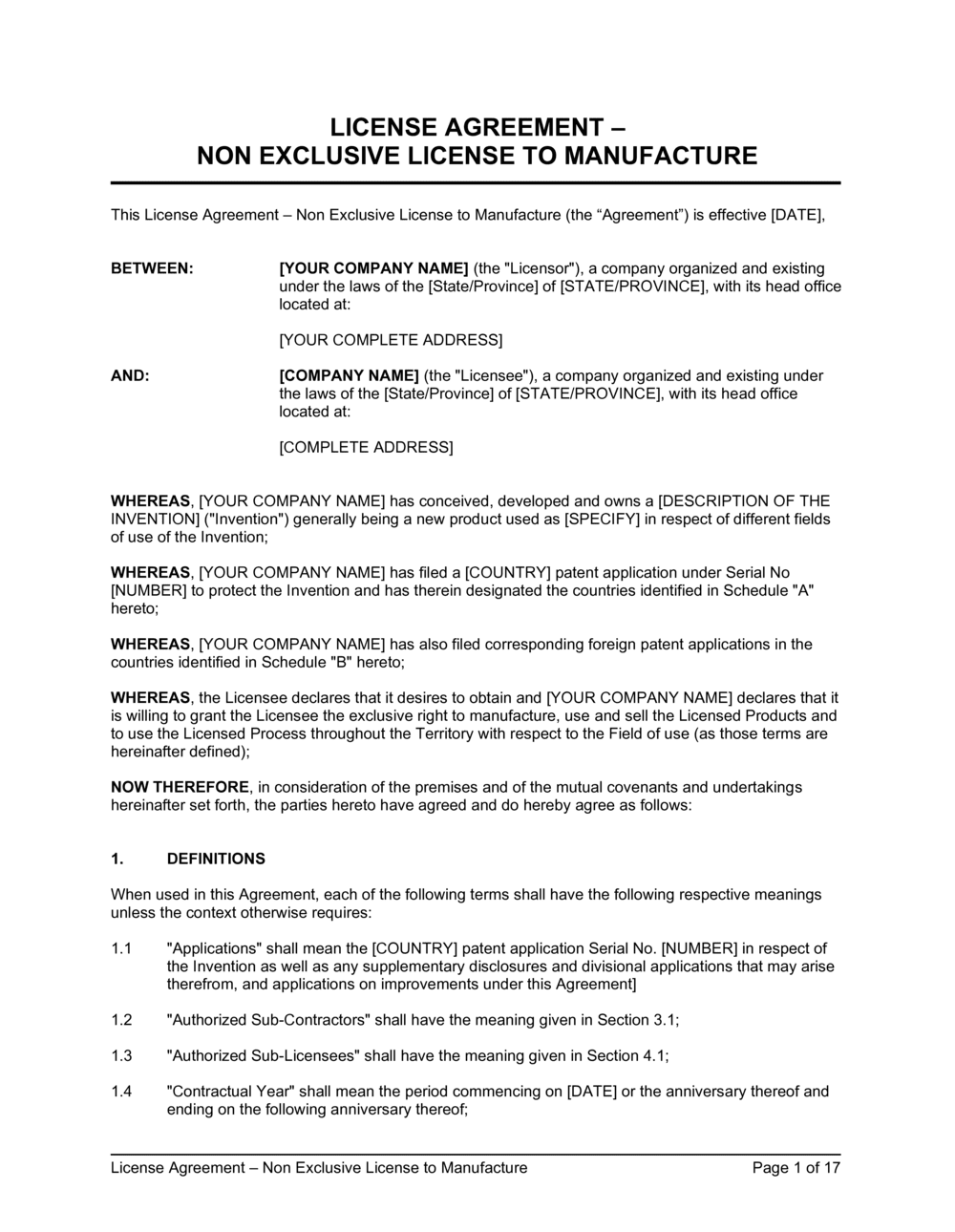
List every patent number, patent application, and item of technical know-how being licensed in Schedule B. Include filing countries, application numbers, and grant dates where available.
💡 Search the USPTO and EPO patent databases to confirm all listed patents are active and assigned to the licensor before signing — a lapsed or unassigned patent cannot be effectively licensed.
2
Define the territory and field of use
State the geographic territory as specific countries or regions, not vague terms like 'worldwide.' Define the field of use by product category, industry vertical, or end application so both parties know exactly what is and is not covered.
💡 Narrow fields of use allow the licensor to sign additional licensees for adjacent applications, maximizing royalty income without conflicting with existing grants.
3
Set the royalty structure and define net sales
Choose either a percentage-of-net-sales royalty or a per-unit fee, then write out the exact definition of net sales, listing every permitted deduction (e.g., returns, freight, taxes). Set a minimum annual royalty and attach the payment schedule.
💡 Industry royalty rates for manufactured goods typically run 3–8% of net sales for patents on components and 5–15% for patented end products — research comparable license agreements in your sector before fixing a rate.
4
Attach the quality standards schedule
Complete Schedule C with specific manufacturing tolerances, materials specifications, testing protocols, and any certifications (e.g., ISO 9001, CE marking) required. Both parties must initial the schedule at signing.
💡 If quality standards will evolve over time, include a clause allowing Licensor to update the schedule with [60] days' notice rather than requiring a contract amendment each time.
5
Configure the audit rights clause
Set the audit frequency (typically once per year), notice period (10–15 business days), and the underpayment threshold that triggers cost reimbursement by the licensee (typically 5% of royalties due in the audited period).
💡 Request that the licensee maintain production and sales records for at least 3 years after the end of each royalty period — this aligns with most statute-of-limitations periods for contract claims.
6
Negotiate and record improvement ownership
Decide whether improvements to the licensed technology made by the licensee during the term are assigned back to the licensor, remain with the licensee, or are jointly owned. Record the agreed position in a dedicated clause or schedule.
💡 A 'grant-back' clause requiring the licensee to license improvements back to the licensor non-exclusively at no cost is common and generally enforceable, but exclusive grant-backs may raise competition law concerns in the EU.
7
Set the term and sell-off provisions
State the initial term, any automatic renewal conditions, and the notice period required for non-renewal. Include a 90–180-day post-termination sell-off period allowing the licensee to deplete finished goods inventory.
💡 For capital-intensive manufacturing, consider a minimum term of 3–5 years to give the licensee adequate time to recover tooling and setup costs — short terms discourage investment in the licensed technology.
8
Execute before manufacturing begins
Both parties must sign and date the agreement before the licensee begins any production run using the licensed IP. Have each party initial every schedule and amendment page.
💡 Use a dated electronic signature platform to create a timestamped execution record — critical if a royalty underpayment or infringement dispute arises years later.