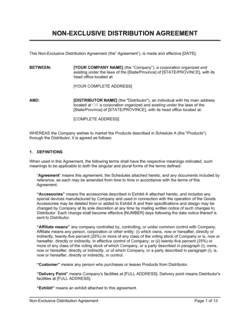
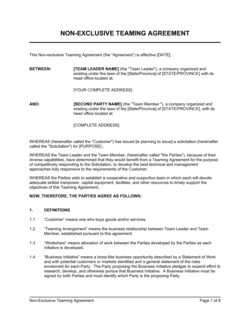
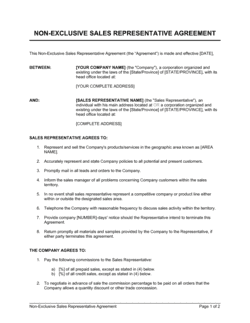
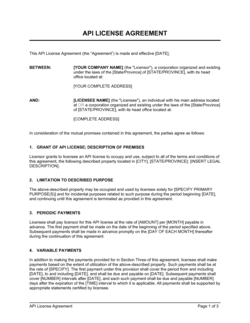
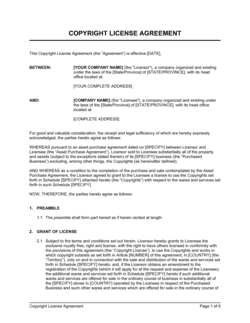
License Agreement Exclusive and Non-Transferable_Right Template

Free Word download • Edit online • Save & share with Drive • Export to PDF

11 pages30–40 min to fillDifficulty: ComplexSignature requiredLegal review recommended
Learn more ↓
FreeLicense Agreement Exclusive and Non-Transferable_Right Template

At a glance

What it is
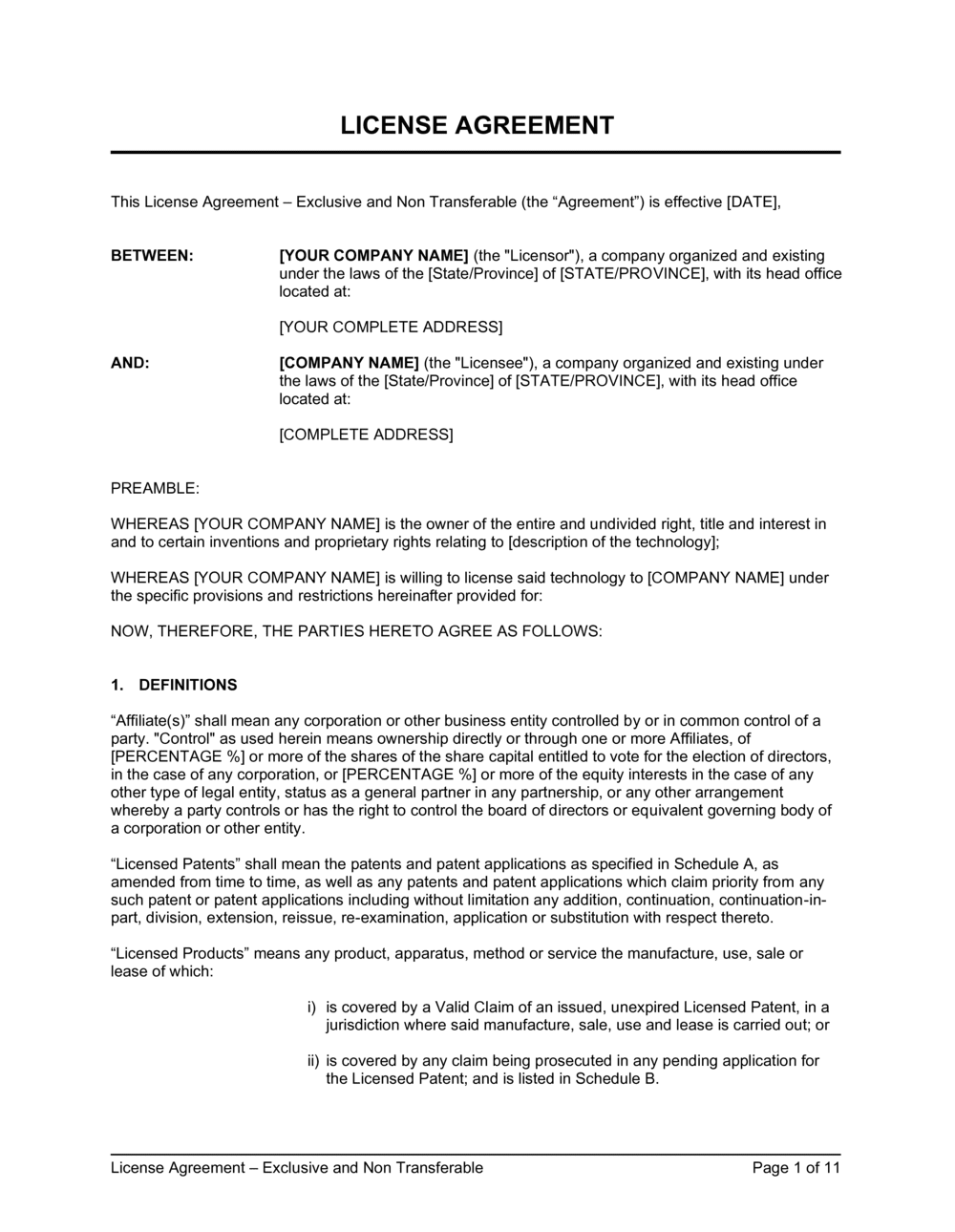
An Exclusive Non-Transferable License Agreement is a legally binding contract in which a licensor grants a single licensee the sole right to use a defined piece of intellectual property — software, a patent, a trademark, or creative work — while prohibiting that licensee from assigning or sublicensing those rights to any third party. This free Word download covers all core provisions and can be edited online and exported as PDF for execution.
When you need it
Use it when you want one specific party to be the only entity authorized to use your IP within a defined scope, territory, or time period, and when you need to ensure those rights cannot be passed on without your explicit consent. It is also appropriate when a licensee is willing to pay a premium for exclusivity and you want enforceable restrictions in writing.
What's inside
Grant of exclusive rights, non-transferability and sublicensing restrictions, defined scope and territory, license fees and royalties, IP ownership confirmation, representations and warranties, term and termination, and governing law. A confidentiality clause and audit rights provision are also included to protect both parties.

What is an Exclusive Non-Transferable License Agreement?

An Exclusive Non-Transferable License Agreement is a legally binding contract in which an intellectual property owner — the licensor — grants a single, named party — the licensee — the sole right to use a defined piece of IP within a specified scope, territory, and time period, while expressly prohibiting that licensee from passing those rights to anyone else. The licensor retains full ownership of the underlying IP at all times; what changes hands is only the right to use it. The exclusivity component means no competing licenses can be granted to others within the defined boundaries; the non-transferability component means the licensee cannot sublicense, assign, or otherwise redirect those rights without the licensor's written consent.

Why You Need This Document

Without a written exclusive non-transferable license agreement, the terms of the arrangement exist only as informal understandings — and informal understandings collapse the moment money or ownership changes hands. A licensee who has no written restriction on sublicensing can pass your IP to a competitor the day after you sign a deal. A licensor who has not defined the field of use may find that a single exclusive license blocks them from monetizing the same IP in adjacent markets worth more than the original deal. Royalty disputes — the most common source of post-execution litigation in IP licensing — are almost always caused by an undefined royalty base or missing audit rights, both of which this template addresses. A properly executed agreement also provides the written record required to register the exclusive license with patent and trademark offices, which is a prerequisite for enforcing it against third parties in the US, Canada, and the UK.

Which variant fits your situation?

If your situation is…Use this template
Granting rights that the licensee can freely sublicense to othersNon-Exclusive License Agreement
Licensing software on a subscription or SaaS basisSoftware License Agreement
Licensing a brand name or logo for commercial useTrademark License Agreement
Granting exclusive rights to manufacture under a patentPatent License Agreement
Licensing content between a creator and a publisherContent License Agreement
Transferring all IP ownership permanently rather than licensing itIP Assignment Agreement
Licensing technology as part of a joint venture arrangementTechnology Transfer Agreement

Common mistakes to avoid

❌ No field-of-use limitation on the exclusivity

Why it matters: An unlimited exclusive license prevents the licensor from monetizing the IP in any other industry or application, destroying potentially significant revenue opportunities that were never part of the deal.

Fix: Always define the field of use in the grant clause. If the parties intend a broad grant, enumerate the fields explicitly rather than leaving the scope open.

❌ Omitting a sublicensing prohibition alongside the non-assignment clause

Why it matters: Courts distinguish between assignment (transferring the whole agreement) and sublicensing (granting a subset of rights to a third party). A non-assignment clause alone does not prevent sublicensing.

Fix: Draft separate, explicit prohibitions on assignment, delegation, and sublicensing. Courts enforce restrictions that are clearly stated and treat ambiguity in the licensee's favor.

❌ Undefined royalty base and deductions

Why it matters: If 'Net Revenue' is not defined with specific permitted deductions, licensees will subtract returns, shipping, taxes, and internal charges, reducing the royalty base — and your income — far below what was intended.

Fix: Define the royalty base in a definitions clause with an exhaustive list of permitted deductions. Any deduction not listed is not permitted.

❌ No ownership clause addressing licensee improvements

Why it matters: If the licensee builds features, modifications, or derivative works on top of the licensed IP and the contract is silent on ownership, the licensee may claim co-ownership — which can prevent you from using the improved IP without their consent.

Fix: Include an explicit clause stating that all improvements and derivative works vest in the licensor, or define a joint-ownership structure with clear usage rights for each party.

❌ No change-of-control provision

Why it matters: If the licensee is acquired by a competitor, the exclusive license transfers to that competitor by operation of law unless the contract requires consent. Your IP's exclusivity now benefits your direct rival.

Fix: Add a change-of-control clause stating that any merger, acquisition, or change in majority ownership of the licensee constitutes an assignment requiring the licensor's prior written consent.

❌ Termination without a defined reversion and wind-down procedure

Why it matters: Without a clear post-termination process, licensees continue using the IP after termination, argue about how long a 'wind-down' period should last, and retain copies of materials the licensor never intended them to keep.

Fix: Specify a fixed wind-down period (e.g., 30 days), require written certification of destruction or return, and make continued use after termination an infringement rather than a contract breach.

The 10 key clauses, explained

Grant of Exclusive Rights

In plain language: Defines precisely what IP is being licensed, confirms exclusivity, and states the field of use and territory within which the license operates.

Sample language
Licensor hereby grants to Licensee an exclusive, non-transferable, non-sublicensable license to use [DESCRIPTION OF IP] (the 'Licensed IP') solely within the field of [FIELD OF USE] and the territory of [TERRITORY] during the Term.

Common mistake: Failing to define the field of use. Without it, an exclusive license may inadvertently block the licensor from using the IP in entirely unrelated markets, destroying value the licensor never intended to give away.

Non-Transferability and No Sublicensing

In plain language: Explicitly prohibits the licensee from assigning the agreement, transferring rights, or sublicensing the IP to any third party without the licensor's prior written consent.

Sample language
Licensee shall not assign, transfer, delegate, sublicense, or otherwise dispose of any of its rights or obligations under this Agreement, in whole or in part, without the prior written consent of Licensor. Any purported assignment without such consent shall be null and void.

Common mistake: Using only a general non-assignment clause and omitting an explicit prohibition on sublicensing. Courts treat sublicensing and assignment as distinct acts — both must be restricted in separate language.

IP Ownership and Reservation of Rights

In plain language: Confirms that the licensor retains full ownership of the IP and that no rights are transferred to the licensee beyond what is expressly stated.

Sample language
Licensor retains all right, title, and interest in and to the Licensed IP, including all intellectual property rights therein. Nothing in this Agreement shall be construed to convey to Licensee any ownership interest in the Licensed IP.

Common mistake: Omitting this clause when the licensee contributes improvements or modifications. Without explicit ownership language, a court may find the licensee has acquired co-ownership rights over derivative works.

License Fees and Royalties

In plain language: States the upfront license fee, ongoing royalty rate and calculation basis, payment schedule, and any minimum royalty commitment.

Sample language
Licensee shall pay Licensor an upfront license fee of $[AMOUNT] due upon execution, and ongoing royalties equal to [X]% of Net Revenue derived from use of the Licensed IP, payable quarterly within [30] days after each calendar quarter, with a minimum annual royalty of $[AMOUNT].

Common mistake: Not defining 'Net Revenue' or the royalty calculation base. Ambiguous royalty language is the single most common source of post-execution disputes in license agreements.

Audit Rights

In plain language: Gives the licensor the right to inspect the licensee's books and records to verify that royalty payments are accurate and complete.

Sample language
Licensor shall have the right, upon [30] days' prior written notice, to audit Licensee's books and records relating to the Licensed IP no more than once per calendar year. If an audit reveals an underpayment of more than [5]%, Licensee shall reimburse Licensor for the cost of the audit.

Common mistake: Omitting audit rights entirely. Without this clause, the licensor has no practical mechanism to verify whether royalty statements are accurate, especially in high-volume licensing arrangements.

Representations and Warranties

In plain language: Each party confirms it has the authority to enter the agreement; the licensor also warrants that it owns the IP and has the right to grant the exclusive license.

Sample language
Licensor represents and warrants that: (a) it is the sole owner of the Licensed IP and has full right and authority to grant the license herein; (b) the Licensed IP does not infringe the intellectual property rights of any third party; and (c) no other exclusive license covering the Licensed IP has been granted within the Territory.

Common mistake: The licensor failing to warrant that no prior exclusive license has been granted. If the licensor has already licensed the same rights to someone else, the new licensee has no remedy without this representation.

Confidentiality

In plain language: Requires both parties to keep the terms of the agreement and any proprietary information disclosed during the relationship confidential.

Sample language
Each party agrees to keep the terms of this Agreement and all Confidential Information of the other party strictly confidential and not to disclose such information to any third party without prior written consent, except as required by law or court order.

Common mistake: Omitting a survival clause for confidentiality. Without it, confidentiality obligations expire when the agreement ends — leaving sensitive IP and commercial terms unprotected post-termination.

Term and Termination

In plain language: Sets the duration of the license and specifies the events — such as material breach, insolvency, or non-payment — that allow either party to terminate early.

Sample language
This Agreement commences on [EFFECTIVE DATE] and continues for [X] years unless earlier terminated. Either party may terminate upon [30] days' written notice of a material breach if the breaching party fails to cure within such period. Licensor may terminate immediately upon Licensee's insolvency or failure to pay any amounts due.

Common mistake: No cure period before termination for breach. Courts in most jurisdictions expect a reasonable cure period before termination is effective — omitting one can make a termination legally defective.

Effect of Termination and Reversion

In plain language: Describes what happens when the agreement ends — the licensee must cease use of the IP, destroy or return materials, and all licensed rights revert to the licensor.

Sample language
Upon expiration or termination of this Agreement for any reason: (a) all licenses granted to Licensee shall immediately terminate; (b) Licensee shall cease all use of the Licensed IP; (c) Licensee shall promptly destroy or return all copies of the Licensed IP and certify destruction in writing within [10] business days.

Common mistake: Not requiring written certification of destruction. Without it, the licensor has no verifiable record that the licensee has stopped using the IP after termination.

Governing Law and Dispute Resolution

In plain language: Specifies which jurisdiction's law governs the agreement and the mechanism for resolving disputes — arbitration, mediation, or litigation.

Sample language
This Agreement shall be governed by the laws of [STATE / PROVINCE / COUNTRY], without regard to conflict of laws principles. Any dispute arising under this Agreement shall be resolved by binding arbitration administered by [AAA / JAMS / ICC] in [CITY], except that either party may seek injunctive relief in any court of competent jurisdiction.

Common mistake: Choosing a governing law with no connection to either party's location or the IP's registration jurisdiction. Enforcing a judgment or injunction becomes significantly harder when the chosen forum is inconvenient or unrecognized.

How to fill it out

  1. 1

    Identify and describe the licensed IP precisely

    In the recitals and grant clause, describe the IP with enough specificity to eliminate ambiguity — include patent numbers, registration numbers, version numbers for software, or a Schedule A attaching the work. Vague descriptions create scope disputes.

    💡 Attach a Schedule A listing the exact IP, including version, registration number, and filing jurisdiction. This is easier to update than the body of the agreement.

  2. 2

    Define the scope: field of use, territory, and term

    Set the boundaries of the exclusivity — what industry or application the licensee can operate in, which geographic markets they cover, and the exact start and end dates of the license.

    💡 Narrowing the field of use protects your ability to license the same IP to others in different markets. 'Healthcare analytics in North America for 5 years' is enforceable; 'all uses globally forever' eliminates your monetization options.

  3. 3

    Set the fee structure and define the royalty base

    Enter the upfront fee, the royalty rate, and the definition of the royalty base (Net Revenue, Gross Revenue, or per-unit). Add a minimum annual royalty if you want to ensure the exclusivity is earning you income.

    💡 Define 'Net Revenue' with specific deductions listed — returns, discounts, taxes — to prevent the licensee from deducting expenses you never agreed to.

  4. 4

    Confirm IP ownership and draft the reservation of rights clause

    Include an explicit statement that the licensor owns the IP and that nothing in the agreement transfers title. Address ownership of improvements or derivative works the licensee may create.

    💡 If the licensee will develop improvements, specify whether those improvements belong to the licensor, the licensee, or are jointly owned — leaving this open is one of the most litigated issues in technology licensing.

  5. 5

    Insert the non-transferability and sublicensing prohibition

    Use explicit language prohibiting assignment, delegation, transfer, and sublicensing — each as a separate prohibition. Link a change-of-control provision so that an acquisition of the licensee triggers the same restriction.

    💡 Add a change-of-control clause: if the licensee is acquired, the surviving entity must obtain written consent to continue the license. Without it, your exclusive license could end up in a competitor's hands.

  6. 6

    Set audit rights and payment verification mechanics

    Define how often audits can occur (typically once per year), the notice period, and who bears the cost. Set a threshold — typically 5% underpayment — that triggers cost-shifting to the licensee.

    💡 Quarterly royalty statements with a standardized reporting format reduce disputes more than annual audits alone. Include a reporting template in Schedule B.

  7. 7

    Draft termination triggers and the reversion process

    List every event that triggers termination — material breach, non-payment, insolvency, or breach of the non-transferability clause — and set cure periods where appropriate. Specify the post-termination obligations in detail.

    💡 Make breach of the non-transferability clause a termination event with no cure period. An unauthorized transfer or sublicense is typically too serious to allow remediation.

  8. 8

    Execute before the licensee begins using the IP

    Both parties must sign before any use of the licensed IP begins. Use of IP before execution creates an implied license with no enforceable restrictions, defeating the purpose of the agreement.

    💡 Countersign using a timestamped electronic signature service and store the fully executed copy with all schedules in a single PDF immediately after signing.

Frequently asked questions

What is an exclusive non-transferable license agreement?

An exclusive non-transferable license agreement is a contract in which an IP owner grants a single party the sole right to use defined intellectual property within a specified scope, territory, and time period, while prohibiting that party from passing those rights on to anyone else. The licensor retains ownership of the IP at all times. It combines two distinct protections: exclusivity (no competing licenses to others) and non-transferability (the licensee cannot reassign the rights they hold).

What is the difference between an exclusive and a non-exclusive license?

An exclusive license means the licensor cannot grant the same rights to any other party within the defined scope — the licensee is the only authorized user. A non-exclusive license allows the licensor to grant identical rights to multiple parties simultaneously. Exclusive licenses typically command higher fees because they carry commercial value for the licensee; non-exclusive licenses are common for widely distributed software or stock content where broad usage is the goal.

Does an exclusive license transfer ownership of the IP?

No. An exclusive license grants the right to use the IP; it does not transfer ownership. The licensor retains full title and all underlying intellectual property rights. If the parties intend to transfer ownership permanently, they need an IP assignment agreement rather than a license. The distinction matters significantly for tax, accounting, and the licensor's ability to enforce the IP against third-party infringers.

Can a licensee sublicense rights under an exclusive non-transferable agreement?

Only if the agreement expressly permits it — which this template does not. Non-transferability prohibits both assignment and sublicensing. If a licensee sublicenses without authorization, the sublicense is void and the licensor typically has grounds to terminate the main agreement for material breach. Parties who want sublicensing rights must negotiate that permission explicitly and define its scope in the contract.

What happens to the exclusive license if the licensee company is acquired?

Without a change-of-control clause, an acquisition of the licensee may cause the exclusive license to transfer to the acquiring entity by operation of law — which could include a direct competitor of the licensor. A well-drafted agreement requires the licensor's prior written consent for any change of majority ownership or control, and makes unauthorized transfer a termination event. This is one of the most commonly overlooked provisions in licensing agreements.

What royalty rate is standard for an exclusive license?

There is no universal standard — rates vary widely by industry, IP type, and negotiating leverage. Technology patent licenses commonly range from 2–10% of net revenue. Software licenses may use per-seat fees, percentage of revenue, or a flat annual fee. Publishing deals often use 10–15% of cover price. The exclusivity premium typically adds 1–3 percentage points over an equivalent non-exclusive rate. Minimum annual royalties are common to ensure the exclusivity is commercially productive for the licensor.

Is a license agreement enforceable without registration of the IP?

In most jurisdictions, a license agreement is a contract enforceable between the parties regardless of whether the underlying IP is registered. However, registration provides critical benefits: it establishes a public record of ownership, is required to sue for infringement in the US federal courts, and determines priority in disputes between competing claimants. For patents and trademarks, always confirm registration status before signing.

Do I need a lawyer to draft or review an exclusive license agreement?

For standard domestic licenses with straightforward IP, a high-quality template is a sound starting point. Legal review is strongly recommended when the license covers registered patents or critical software, the royalty structure is complex, the licensee is a large enterprise with negotiating leverage, or the agreement spans multiple jurisdictions. A typical review costs $500–$1,500 and can prevent disputes worth multiples of that investment.

What governs an exclusive license agreement when the parties are in different countries?

The governing law clause in the agreement determines which jurisdiction's law applies. In cross-border arrangements, the parties should choose a neutral jurisdiction with well-developed IP law — common choices include England and Wales, New York, or Delaware. The choice of law does not override the mandatory IP laws of the country where the IP is registered or where enforcement is sought; those local rules apply regardless of what the contract says.

How this compares to alternatives

vs Non-Exclusive License Agreement

A non-exclusive license lets the licensor grant the same rights to multiple parties simultaneously, maximizing distribution at the cost of exclusivity. An exclusive non-transferable license gives one licensee sole access within the defined scope, commanding a premium fee in exchange. Use a non-exclusive structure when broad adoption matters more than exclusivity revenue; use an exclusive structure when the licensee's investment or market position depends on being the sole authorized user.

vs IP Assignment Agreement

An IP assignment transfers full ownership of the intellectual property to the assignee — permanently and irrevocably. A license agreement grants usage rights while the licensor retains ownership. Choose an assignment when you intend to sell the IP outright; choose a license when you want recurring revenue, the ability to enforce the IP independently, or the right to reclaim it when the agreement ends.

vs Software License Agreement

A software license agreement is optimized for the deployment and use of a specific software product, covering installation, seat counts, updates, and SaaS-specific terms. An exclusive non-transferable license agreement is a broader IP licensing instrument applicable to patents, trademarks, creative works, and software alike. Use the software-specific template for a software product deployment; use this template when the exclusivity and non-transferability provisions are the central commercial concern.

vs Technology Transfer Agreement

A technology transfer agreement typically bundles an IP license with technical assistance, know-how disclosure, and training — used when the licensee needs the licensor's expertise to exploit the IP, not just access to it. An exclusive non-transferable license agreement covers rights and restrictions without operational support obligations. Use a technology transfer agreement when the IP is inseparable from proprietary processes or tacit knowledge the licensor must actively provide.

Industry-specific considerations

Technology / Software

Exclusive licenses in a defined vertical (e.g., healthcare analytics) with version-specific grant language, source code escrow provisions, and per-seat or revenue-based royalties.

Pharmaceuticals and Life Sciences

Patent-based exclusive licenses for drug compounds or medical devices, milestone royalties tied to regulatory approvals, and territory restrictions aligned to FDA and EMA filing jurisdictions.

Publishing and Media

Exclusive territorial distribution rights for books, music, or film, with royalty rates tied to cover price or streaming revenue and reversion triggers if minimum sales thresholds are not met.

Manufacturing and Consumer Goods

Exclusive production rights under a design patent or trademark, minimum order commitments enforcing the exclusivity value, and quality control standards protecting the licensor's brand.

Jurisdictional notes

United States

US patent and copyright law governs the underlying IP regardless of the governing law clause. Exclusive patent licenses must be recorded with the USPTO to be enforceable against subsequent assignees. California courts apply strict scrutiny to non-compete provisions often bundled with licenses; non-transferability restrictions on the license itself are generally enforceable. The choice between state and federal court for infringement claims matters — only copyright-registered and patent-registered IP can be litigated in federal court.

Canada

Canadian intellectual property is governed by federal statute — the Patent Act, Copyright Act, and Trade-marks Act apply nationally. Exclusive patent licenses should be registered with the Canadian Intellectual Property Office (CIPO) to establish priority. Quebec requires contracts affecting consumer rights or employees to be available in French; commercial B2B IP licenses between corporations are generally enforceable in English in Quebec. Royalty payments to non-residents are subject to withholding tax under the Income Tax Act unless reduced by a tax treaty.

United Kingdom

Post-Brexit, UK and EU IP registrations are separate. Exclusive patent licenses must be registered at the UK Intellectual Property Office (UKIPO) within six months of execution to be enforceable against third parties. UK courts apply a strict approach to non-transferability clauses — clear, unambiguous language is required for enforcement. Royalty payments between UK and non-UK parties may attract UK withholding tax; confirm treaty position before structuring fees.

European Union

EU competition law (Article 101 TFEU) scrutinizes exclusive IP licenses that may restrict competition within the single market; the Technology Transfer Block Exemption Regulation (TTBER) provides a safe harbor for most standard exclusive licenses between non-competitors. GDPR considerations apply if the licensed IP involves personal data processing. Exclusive licenses covering a single EU country rather than the whole bloc may raise parallel import issues under the principle of IP exhaustion after first authorized sale.

Template vs lawyer — what fits your deal?

PathBest forCostTime
Use the templateStraightforward domestic licenses for creative works, brand assets, or internally-developed software with a single domestic licenseeFree30–60 minutes
Template + legal reviewLicenses covering registered patents, significant royalty streams, multi-year terms, or licensees with greater bargaining power$500–$1,5003–5 business days
Custom draftedCross-border pharmaceutical or technology licenses, complex royalty structures, or licenses where litigation risk is material$3,000–$10,000+2–4 weeks

Glossary

Licensor
The party that owns the intellectual property and grants usage rights to the licensee under the agreement.
Licensee
The party that receives the right to use the intellectual property under the terms defined in the license agreement.
Exclusive License
A grant of rights that prevents the licensor from licensing the same IP to any other party within the defined scope, territory, or time period.
Non-Transferable
A restriction that prohibits the licensee from assigning, selling, or otherwise transferring their licensed rights to any third party without the licensor's written consent.
Sublicense
A secondary license granted by the licensee to another party — typically prohibited under a non-transferable agreement unless expressly permitted.
Licensed IP
The specific intellectual property — patent, copyright, trademark, trade secret, or software — covered by the agreement.
Royalty
A recurring payment made by the licensee to the licensor, typically calculated as a percentage of revenue or a fixed fee per unit or period.
Field of Use
A defined category of application or industry within which the licensee is permitted to exercise the licensed rights.
Territory
The geographic region or market in which the licensee is authorized to exercise the licensed rights.
Term
The defined duration of the license agreement, after which the licensee's rights expire unless the agreement is renewed.
Reversion
The return of all licensed rights to the licensor upon expiration or termination of the agreement.
IP Ownership
A clause confirming that the licensor retains full title to the intellectual property notwithstanding any rights granted to the licensee.

Part of your Business Operating System

This document is one of 3,000+ business & legal templates included in Business in a Box.

  • Fill-in-the-blanks — ready in minutes
  • 100% customizable Word document
  • Compatible with all office suites
  • Export to PDF and share electronically

Create your document in 3 simple steps.

From template to signed document — all inside one Business Operating System.
1
Download or open template

Access over 3,000+ business and legal templates for any business task, project or initiative.

2
Edit and fill in the blanks with AI

Customize your ready-made business document template and save it in the cloud.

3
Save, Share, Send, Sign

Share your files and folders with your team. Create a space of seamless collaboration.

Save time, save money, and create top-quality documents.

★★★★★

"Fantastic value! I'm not sure how I'd do without it. It's worth its weight in gold and paid back for itself many times."

Managing Director · Mall Farm
Robert Whalley
Managing Director, Mall Farm Proprietary Limited
★★★★★

"I have been using Business in a Box for years. It has been the most useful source of templates I have encountered. I recommend it to anyone."

Business Owner · 4+ years
Dr Michael John Freestone
Business Owner
★★★★★

"It has been a life saver so many times I have lost count. Business in a Box has saved me so much time and as you know, time is money."

Owner · Upstate Web
David G. Moore Jr.
Owner, Upstate Web

Run your business with a system — not scattered tools

Stop downloading documents. Start operating with clarity. Business in a Box gives you the Business Operating System used by over 250,000 companies worldwide to structure, run, and grow their business.

Start free · No credit card required