Interview Guide Programmer Java

Free to read β€’ Save or share with one click

FreeInterview Guide Programmer Java Template

At a glance

What it is
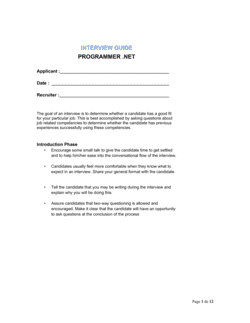
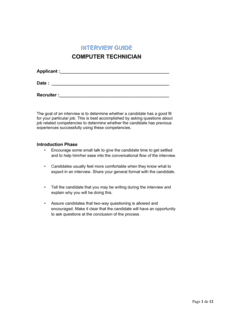
A Java Programmer Interview Guide is a structured document that gives hiring managers and technical interviewers a repeatable framework for evaluating Java developer candidates. This free Word download covers technical question banks, coding challenge prompts, behavioral questions, and a scoring rubric β€” all in one editable template you can export as PDF and share across your hiring panel.
When you need it
Use it when opening a Java developer role and you need every interviewer on the panel asking consistent questions, scoring on the same criteria, and producing defensible hiring records. It is equally useful for a first-time hire at a startup and for a recurring role at a larger engineering team.
What's inside
Role overview and required competencies, technical question bank covering core Java concepts and frameworks, a live coding or take-home assessment section, behavioral and situational questions, an interviewer scoring rubric with weighted criteria, and a consolidated candidate comparison summary.

What is an Interview Guide Programmer Java?

A Java Programmer Interview Guide is a structured operational document that gives hiring managers, technical interviewers, and HR teams a repeatable, consistent framework for evaluating Java developer candidates. It organizes every stage of the interview β€” from panel preparation and technical question banks to live coding assessments and scoring rubrics β€” into a single editable file, so every candidate for the same role is assessed on the same criteria by the same process. The guide draws on defined competencies (core Java, frameworks, system design, behavioral indicators) and maps them to scored evaluation criteria that produce a defensible, comparable hiring record.

Why You Need This Document

Without a structured interview guide, Java developer hiring produces inconsistent outcomes: one interviewer focuses on Spring Boot internals while another asks algorithm puzzles, candidates are scored on gut feeling rather than evidence, and debrief meetings dissolve into whoever speaks first winning the argument. The cost is concrete β€” a bad technical hire at the mid-level typically costs 1.5Γ— to 2Γ— annual salary when onboarding, lost productivity, and severance are factored in. A well-structured guide eliminates duplicated questioning across panel members, ensures critical competency areas are never skipped, and creates the written record that HR and legal teams need if a hiring decision is ever challenged. This template gives you a ready-to-use framework you can customize in under an hour for any Java role, at any seniority level, and reuse consistently across every future hire.

Which variant fits your situation?

If your situation is…Use this template
Interviewing a senior or lead Java developer with architectural responsibilitiesInterview Guide Senior Software Engineer
Evaluating a full-stack developer who uses Java on the backendInterview Guide Full Stack Developer
Screening candidates for a Spring Boot microservices role specificallyInterview Guide Programmer Java
Assessing a junior or entry-level Java developer fresh out of universityInterview Guide Junior Software Developer
Hiring for a DevOps or platform engineer role that includes Java scriptingInterview Guide DevOps Engineer
Conducting a structured reference check after the technical interviewReference Check Form
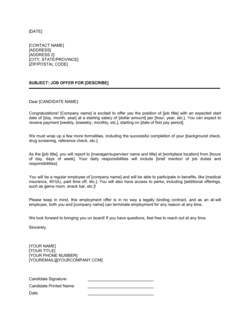
Documenting the final hiring decision and offer terms after interview completionJob Offer Letter

Common mistakes to avoid

❌ Using the same question set for all Java seniority levels

Why it matters: Junior and senior roles require fundamentally different assessments. A senior developer asked only syntax questions will disengage; a junior candidate given system design questions will be unable to demonstrate any competency.

Fix: Edit the template before each hire to match the seniority level. Remove system design questions for junior roles and add architecture and trade-off questions for senior ones.

❌ Scoring candidates after the debrief discussion rather than before

Why it matters: When one interviewer shares their view first, others anchor to it β€” a cognitive bias called anchoring. Post-discussion scores no longer reflect independent observations.

Fix: Require all interviewers to submit written scores before the debrief meeting begins. Reveal scores simultaneously, then discuss evidence for any significant disagreements.

❌ Skipping behavioral questions for technical roles

Why it matters: Most Java developer terminations and team conflicts trace to collaboration, communication, or judgment failures β€” not technical gaps. A purely technical interview misses the signals that predict on-the-job success.

Fix: Allocate at least 20% of the interview time to behavioral questions covering past technical disagreements, deadline pressure, and code review feedback.

❌ Writing vague or absent notes in the scoring rubric

Why it matters: Vague records like 'seemed strong' create legal exposure if a rejected candidate challenges the hiring decision, and make it impossible to fairly compare candidates interviewed days apart.

Fix: Require every interviewer to record at least one specific piece of evidence β€” a candidate statement or code decision β€” for each score of 3 or 4 on the rubric.

The 9 key sections, explained

Role overview and required competencies

Pre-interview preparation checklist

Technical question bank β€” core Java

Technical question bank β€” frameworks and ecosystem

Live coding or take-home assessment

System design questions (mid/senior roles)

Behavioral and situational questions

Interviewer scoring rubric

Candidate summary and hire recommendation

How to fill it out

  1. 1

    Define the role and identify three to five core competencies

    Start by entering the job title, team, and seniority level. Then select the three to five competencies β€” from the template's competency list β€” that are non-negotiable for this specific role.

    πŸ’‘ Rank competencies by weight before the interview. A backend API role may weight Core Java and system design at 40% each, with behavioral at 20%.

  2. 2

    Assign sections to specific panel interviewers

    Use the pre-interview checklist to divide the question sections across your panel. Assign Core Java to your most senior technical interviewer, behavioral questions to the hiring manager, and coding assessment to a peer engineer.

    πŸ’‘ Email each interviewer their assigned section and the candidate's resume at least 24 hours before the session β€” rushed interviewers skip the prep checklist.

  3. 3

    Select and customize the technical question bank

    From the Core Java and frameworks sections, select six to eight questions that map directly to the job description. Delete questions that test skills not required for the role and add any company-specific technology questions.

    πŸ’‘ Include at least one question that covers Java 8+ features (streams, optionals, functional interfaces) β€” many candidates strong in Java 7 struggle here.

  4. 4

    Set up the coding assessment

    Choose a live coding problem from the template's assessment section or substitute your own. Confirm the shared IDE or coding platform is working before the interview starts. Set a time limit appropriate to the problem complexity.

    πŸ’‘ For a 45-minute technical round, a problem solvable in 20–25 minutes leaves time for explanation, follow-up questions, and edge-case discussion.

  5. 5

    Conduct the interview and take structured notes

    Ask each question as written and record the candidate's key points directly in the notes field next to each question. Do not score while the candidate is talking β€” note first, score immediately after each section.

    πŸ’‘ Write the candidate's exact words for any standout answer β€” paraphrasing introduces interviewer bias into the record.

  6. 6

    Complete the scoring rubric immediately after the session

    Score each competency using the rubric anchors within 30 minutes of the interview. Memory degrades quickly, and delayed scoring correlates with recency bias toward the most recent candidate interviewed.

    πŸ’‘ If you cannot recall a specific answer to justify a score, mark it as 'insufficient evidence' rather than guessing β€” this is a valid outcome.

  7. 7

    Consolidate panel scores and complete the hire recommendation

    Gather all interviewers' scorecards before the debrief meeting. Enter each score into the candidate summary, calculate the total, and have each interviewer record their recommendation independently before group discussion.

    πŸ’‘ Run the debrief as a structured discussion β€” share scores simultaneously (or in written form) before open discussion to prevent anchoring on the first opinion stated.

  8. 8

    File the completed guide with the hiring record

    Save the completed guide β€” with all notes, scores, and recommendations β€” as part of the candidate's hiring file. Retain for a minimum of one year (or per your jurisdiction's employment record requirements).

    πŸ’‘ Attach the guide to the candidate's profile in your ATS immediately after the debrief, not at offer stage β€” records filed late are frequently incomplete.

Frequently asked questions

What is a Java programmer interview guide?

A Java programmer interview guide is a structured document that gives hiring managers and technical interviewers a repeatable framework for assessing Java developer candidates. It includes a technical question bank covering core Java and frameworks, a coding assessment section, behavioral questions, and a scoring rubric. Using a structured guide reduces interviewer-to-interviewer variation and produces defensible hiring records.

What topics should a Java developer interview cover?

A complete Java developer interview should cover core Java concepts (OOP, Collections Framework, exception handling, memory management, concurrency), Java 8+ features (streams, lambdas, optionals), at least one major framework relevant to the role (Spring Boot is most common), a live or take-home coding assessment, and behavioral questions assessing collaboration, code quality judgment, and problem-solving under pressure. System design questions are appropriate for mid-level and senior candidates.

How long should a Java developer interview take?

A standard panel interview for a Java developer role runs 60–90 minutes total across all stages β€” typically a 30-minute technical screen, a 45-minute coding and core-concepts interview, and a 30-minute behavioral and system design round. Compressing all of this into a single 60-minute session is possible but leaves insufficient time to probe follow-up answers thoroughly.

What Java questions are appropriate for a junior versus senior developer?

Junior candidates should be assessed on core OOP principles, basic Collections usage, exception handling, and simple algorithm problems. Senior candidates should face questions on concurrency, memory management, framework internals, REST API design trade-offs, and system design problems. Behavioral questions should be calibrated too β€” juniors are asked about learning and feedback; seniors about technical leadership and architectural decisions.

Should I use a live coding test or a take-home assignment?

Live coding tests reveal how a candidate thinks, handles ambiguity, and communicates under pressure β€” but they disadvantage candidates who perform poorly under observation. Take-home assignments produce higher-quality code samples but cannot verify the work was done independently. Many teams use both: a short live screen to verify baseline competency and a take-home for a more complex problem with a follow-up discussion session.

How do I score Java developer interviews consistently across interviewers?

Use a competency-based scoring rubric with defined anchor descriptions for each score level (e.g., 1–4 scale) and require all interviewers to score independently before the debrief discussion. Calculate a weighted total score that reflects the relative importance of each competency for the specific role. Interviewers without anchor descriptions default to subjective impressions, making cross-candidate comparison unreliable.

What behavioral questions work best for Java developer candidates?

The most predictive behavioral questions for Java developers ask about specific past situations: resolving a production performance issue, handling a code review disagreement, working under a tight deployment deadline, or refactoring a legacy Java codebase. Frame all questions in STAR format and probe the Action and Result components β€” many candidates describe situations at length but skim the resolution, which is where engineering judgment is revealed.

Do I need to retain completed interview guides after hiring?

Yes. Completed interview guides are employment records that document the basis for a hiring decision. In most jurisdictions, employment records should be retained for at least one year after the hiring decision and typically longer for roles subject to government contracting or equal employment regulations. Retain all completed guides β€” including those for candidates who were not hired β€” as part of the documented selection process.

Can a non-technical HR manager use this Java interview guide?

Yes, for the behavioral and structured questions sections. The template includes expected answer guidance and scoring anchors that allow a non-technical interviewer to assess communication, problem-solving approach, and behavioral competencies. Assign the Core Java technical questions and the coding assessment sections to an engineer or technical panel member who can evaluate the substance of the answers.

How this compares to alternatives

vs Generic Software Developer Interview Guide

A generic software developer interview guide covers language-agnostic concepts β€” algorithms, system design, and behavioral questions. A Java-specific guide adds targeted questions on the JVM, Collections Framework, Spring ecosystem, and Java concurrency. Use the Java-specific version when the role requires Java as the primary language and framework knowledge matters for day-one productivity.

vs Job Description Template

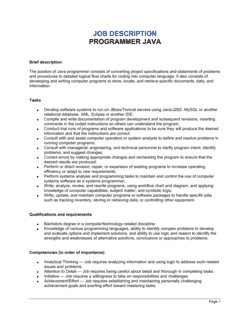
A job description defines the role requirements and attracts candidates. An interview guide operationalizes those requirements into structured questions and scoring criteria used after candidates apply. Both documents should reference the same competencies β€” writing the interview guide immediately after the job description ensures they stay aligned.

vs Employee Performance Review Template

A performance review evaluates an existing employee against established goals on a recurring basis. An interview guide evaluates a candidate before hire against role requirements in a single session. The competency language in the interview guide should carry forward into the 90-day and annual performance review to maintain consistency from hire to evaluation.

vs Reference Check Form

A reference check form gathers third-party validation of a candidate's past performance after the interview process. An interview guide structures the interview itself. The two documents complement each other β€” gaps or low scores in the interview guide should generate targeted reference check questions for the same competency areas.

Industry-specific considerations

SaaS / Technology

Spring Boot, microservices architecture, REST API design, and CI/CD pipeline experience are weighted heavily for backend Java roles at SaaS companies.

Financial Services

High-throughput transaction processing, Java concurrency and thread safety, and low-latency system design are critical evaluation areas for Java roles in banking and fintech.

Healthcare / MedTech

HIPAA-aware data handling, integration with HL7/FHIR APIs, and experience with regulated software development lifecycles are common Java-specific competencies in healthcare IT.

Manufacturing and Enterprise

Enterprise Java (Jakarta EE), ERP integration experience, and familiarity with on-premise deployment and legacy system modernization are the dominant competency areas for Java roles in large manufacturing organizations.

Template vs pro β€” what fits your needs?

PathBest forCostTime
Use the templateEngineering managers, HR managers, and CTOs hiring Java developers with an existing technical panelFree30–60 minutes to customize per role
Template + professional reviewCompanies building a repeatable technical hiring process or standardizing across multiple Java roles$300–$800 for a recruiting consultant or HR advisor review1–3 days
Custom draftedEnterprise talent acquisition teams building a full Java engineering competency framework integrated with an ATS$2,000–$8,000 for a talent strategy consultant or I/O psychologist3–6 weeks

Glossary

Competency Framework
A defined set of skills, behaviors, and knowledge areas used as the basis for evaluating all candidates for a given role.
Scoring Rubric
A grid that assigns numeric or descriptive ratings to specific candidate responses, enabling objective comparison across interviewers.
Behavioral Question
An interview question that asks the candidate to describe a past situation to predict future behavior β€” typically framed as 'Tell me about a time when...'
STAR Method
A structured answer format: Situation, Task, Action, Result β€” used to evaluate the completeness and quality of behavioral interview responses.
Technical Screen
An early-stage assessment β€” phone or video β€” focused on verifying minimum technical qualifications before a full panel interview.
Panel Interview
A structured interview format where two or more interviewers assess the same candidate simultaneously or in sequence, each covering assigned competency areas.
Live Coding Assessment
A real-time exercise where the candidate writes or debugs code β€” in Java, typically in an IDE or shared coding environment β€” while the interviewer observes.
Candidate Scorecard
A consolidated form summarizing each interviewer's ratings and qualitative notes for a single candidate across all evaluated competencies.
Structured Interview
An interview format in which every candidate for a role is asked the same questions in the same order, scored on the same criteria, reducing bias and improving consistency.
OOP (Object-Oriented Programming)
A programming paradigm organizing code around objects and classes β€” encapsulation, inheritance, polymorphism, and abstraction are its four core principles, all central to Java.

Part of your Business Operating System

This document is one of 3,000+ business & legal templates included in Business in a Box.

  • Fill-in-the-blanks β€” ready in minutes
  • Compatible with all office suites
  • Export to PDF and share electronically

Create your document in 3 simple steps.

From template to signed document β€” all inside one Business Operating System.
1
Download or open template

Access over 3,000+ business and legal templates for any business task, project or initiative.

2
Edit and fill in the blanks with AI

Customize your ready-made business document template and save it in the cloud.

3
Save, Share, Send, Sign

Share your files and folders with your team. Create a space of seamless collaboration.

Save time, save money, and create top-quality documents.

β˜…β˜…β˜…β˜…β˜…

"Fantastic value! I'm not sure how I'd do without it. It's worth its weight in gold and paid back for itself many times."

Managing Director Β· Mall Farm
Robert Whalley
Managing Director, Mall Farm Proprietary Limited
β˜…β˜…β˜…β˜…β˜…

"I have been using Business in a Box for years. It has been the most useful source of templates I have encountered. I recommend it to anyone."

Business Owner Β· 4+ years
Dr Michael John Freestone
Business Owner
β˜…β˜…β˜…β˜…β˜…

"It has been a life saver so many times I have lost count. Business in a Box has saved me so much time and as you know, time is money."

Owner Β· Upstate Web
David G. Moore Jr.
Owner, Upstate Web

Run your business with a system β€” not scattered tools

Stop downloading documents. Start operating with clarity. Business in a Box gives you the Business Operating System used by over 250,000 companies worldwide to structure, run, and grow their business.

Free Forever PlanΒ Β·Β No credit card required