Interview Guide Executive Secretary

Free to read β€’ Save or share with one click

FreeInterview Guide Executive Secretary Template

At a glance

What it is
An Interview Guide for an Executive Secretary is a structured Word document that gives hiring managers a consistent, repeatable framework for evaluating candidates for an executive-level administrative support role. This free Word download includes competency-based questions, evaluation criteria, and a scoring rubric you can edit online and export as PDF for use across all interviewer panels.
When you need it
Use it whenever you are screening or conducting in-person interviews for an executive secretary, executive assistant, or senior administrative professional position. It is especially valuable when multiple interviewers are involved and consistent, comparable candidate evaluations are required.
What's inside
Role overview and required competencies, structured behavioral and situational interview questions organized by skill area, a numerical scoring rubric for each question, an interviewer notes section, and a candidate summary and recommendation form.

What is an Interview Guide Executive Secretary?

An Interview Guide for an Executive Secretary is a structured evaluation document that gives hiring managers and HR professionals a consistent, repeatable framework for assessing candidates applying for a senior administrative support role. It combines a competency framework specific to executive-level secretarial work β€” calendar and correspondence management, discretion, and composure under pressure β€” with pre-written behavioral and situational questions, a numerical scoring rubric, and a formal candidate recommendation form. Unlike a generic list of interview questions, a structured guide ensures every candidate is evaluated on identical criteria in the same sequence, producing scores that can be compared across applicants and retained as documentation supporting the hire decision.

Why You Need This Document

Hiring an executive secretary without a structured guide creates two compounding risks: inconsistent evaluation across candidates and an indefensible paper trail if the decision is later questioned. An executive secretary sits at the intersection of an organization's most sensitive communications, schedules, and relationships β€” a bad hire costs not just recruitment fees but executive time, confidential information exposure, and operational disruption. Without scored, documented interview records, organizations cannot demonstrate that the selected candidate was chosen on merit rather than subjective impression. This template eliminates both risks by giving every interviewer the same questions, the same rubric, and a built-in recommendation form that creates a complete, auditable hiring record from the first screening call through the final hire decision.

Which variant fits your situation?

If your situation is…Use this template
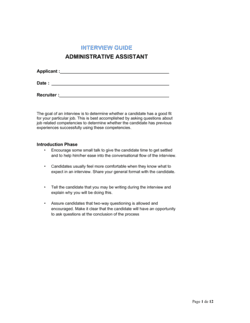
Interviewing candidates for a general administrative assistant roleInterview Guide Administrative Assistant
Hiring a personal assistant to a C-suite executive with travel coordination dutiesInterview Guide Personal Assistant
Screening candidates at the initial phone or video stagePhone Screen Interview Guide
Evaluating a shortlisted candidate for a senior executive assistant roleInterview Guide Executive Assistant
Conducting a panel interview with multiple evaluatorsPanel Interview Scorecard
Assessing a receptionist or front-desk administrative hireInterview Guide Receptionist
Onboarding the selected candidate after hire decisionEmployee Onboarding Checklist

Common mistakes to avoid

❌ Skipping the scoring rubric and relying on gut feeling

Why it matters: Unscored interviews make it impossible to compare candidates objectively, and 'best fit' decisions based on impression alone expose the organization to bias claims.

Fix: Assign a 1–5 score to every question immediately after the answer and anchor each score point with a behavioral descriptor so interviewers apply the scale consistently.

❌ Asking the same unstructured questions from memory instead of using the guide

Why it matters: Unstructured interviews predict job performance at roughly half the rate of structured ones, and inconsistent questions across candidates undermine any comparison.

Fix: Print or open the guide before every candidate session and commit to reading each question verbatim, even for repeat interviews.

❌ Omitting a practical written exercise for correspondence competency

Why it matters: Verbal claims about writing ability are not predictive β€” an executive secretary who cannot draft a clean, professional email under mild time pressure will create real problems on day one.

Fix: Include a five-minute email drafting task based on a realistic scenario (e.g., rescheduling a board meeting with three external attendees) and score the output as part of the evaluation.

❌ Not probing for specifics when a candidate gives a vague behavioral answer

Why it matters: Candidates trained in interview technique can give plausible-sounding non-answers that score high if interviewers do not follow up β€” leading to hires who cannot actually perform the tasks described.

Fix: For every behavioral answer, ask at least one follow-up: 'What specifically did you do?' or 'What was the measurable outcome?' before recording the score.

The 10 key sections, explained

Role Overview and Required Competencies

Candidate and Interview Logistics

Warm-Up and Background Questions

Organizational and Time Management Questions

Communication and Correspondence Questions

Discretion and Confidentiality Questions

Technology and Tools Proficiency Questions

Problem-Solving and Judgment Under Pressure Questions

Interviewer Notes and Per-Question Scores

Candidate Summary and Recommendation

How to fill it out

  1. 1

    Confirm the competency framework before customizing questions

    Review the role overview section and confirm the five to seven competencies listed match the specific executive's working style and the organization's priorities. Adjust the competency list before editing any questions.

    πŸ’‘ Ask the hiring executive to rank the competencies in priority order β€” this tells you which question sections to weight most heavily in the scoring rubric.

  2. 2

    Complete the candidate and logistics header at the start of each interview

    Fill in the candidate's name, today's date, the interviewer's name and title, and the current interview round before the session begins. Do not rely on completing it afterward.

    πŸ’‘ If multiple interviewers are using the same guide, print a separate copy for each interviewer and ensure every copy has a unique interviewer name filled in before distribution.

  3. 3

    Read each question exactly as written

    Structured interviews require identical question wording across all candidates. Do not paraphrase or reorder questions mid-interview, as this makes candidate scores non-comparable.

    πŸ’‘ Highlight or bold the core probe in each question so you can return to it naturally if the candidate's initial answer is incomplete.

  4. 4

    Record notes in real time, not from memory

    Write down key phrases or specific examples the candidate gives for each question as they speak. Aim for two to four bullet points per question rather than full sentences.

    πŸ’‘ Note the absence of a STAR structure explicitly β€” 'no result stated' or 'no specific example given' is a valid and important observation that supports a low score.

  5. 5

    Score each question immediately after the candidate's answer

    Apply the 1–5 rubric to each question before moving to the next. Waiting until the interview ends allows recency bias to distort earlier scores.

    πŸ’‘ If you are unsure between a 3 and a 4, default to the lower score and note what would have earned the higher rating β€” this discipline improves calibration over time.

  6. 6

    Add the practical writing exercise results to the correspondence section

    If you used a written exercise alongside the correspondence questions, attach the candidate's written output to the completed guide and note your assessment of tone, grammar, and conciseness in the notes column.

    πŸ’‘ Score the written exercise on the same 1–5 scale and count it as a full question score β€” it is the most predictive single data point for executive correspondence quality.

  7. 7

    Complete the summary and recommendation before leaving the room

    Total the scores, write a three to five sentence summary of the candidate's overall performance, list one to two key strengths and any concerns, and record your formal recommendation while the interview is fresh.

    πŸ’‘ If you are part of a panel, complete your scorecard independently before discussing with other interviewers β€” post-interview discussion calibrates judgment; it should not replace individual scoring.

  8. 8

    File the completed guide with HR within 24 hours

    Submit the scored guide to the HR file for this requisition within one business day. This preserves the integrity of the evaluation record and ensures all panel scorecards are available for the selection meeting.

    πŸ’‘ Retain completed interview guides for a minimum of one year after the hire decision β€” many jurisdictions require employers to retain selection records for 12 to 24 months in the event of a discrimination complaint.

Frequently asked questions

What is an interview guide for an executive secretary?

An interview guide for an executive secretary is a structured document that gives hiring managers a predetermined set of competency-based questions, a scoring rubric, and a notes framework to use consistently across all candidates interviewing for the role. It replaces ad hoc questioning with a repeatable evaluation process that produces comparable, documented scores for every candidate.

What competencies should an executive secretary interview guide assess?

The core competencies are: organizational and calendar management skills, written and verbal communication quality, discretion and confidentiality judgment, technology proficiency (Outlook, Office, scheduling platforms), problem-solving and composure under pressure, and the ability to prioritize competing demands without direction. Discretion is the most role-specific competency and should carry the highest score weight.

What is the difference between behavioral and situational interview questions?

Behavioral questions ask the candidate to describe what they actually did in a past situation β€” 'Tell me about a time when…' β€” and are scored on the quality and specificity of the real example given. Situational questions present a hypothetical future scenario and ask what the candidate would do. Both formats are used in an executive secretary guide; behavioral questions are generally more predictive for experienced candidates.

How many questions should an executive secretary interview guide include?

A complete structured guide typically includes 10 to 14 scored questions, plus two to three unscored warm-up questions, across five to seven competency areas. This supports a 45 to 60 minute interview with time for candidate questions. Fewer than eight scored questions produces insufficient data for a reliable hire decision; more than 16 creates interviewer fatigue and time pressure.

Should I use the same interview guide for all rounds?

No. A phone or video screen uses a shorter version (four to six questions focused on knock-out criteria and minimum qualifications). The first in-person interview uses the full structured guide. A final round may use a condensed version focused only on the two or three areas where the candidate showed gaps in the first round. Each round's guide should be filed separately.

Can multiple interviewers use the same guide?

Yes β€” in fact, using the same guide across all panel interviewers is the primary way to ensure comparable scores. Each interviewer should complete their scorecard independently before any group discussion. Divide the question sections across interviewers if time is limited, but ensure the full guide is covered collectively and that every section is scored by at least one interviewer.

How long should I retain completed interview guides?

Retain all completed interview guides β€” for hired and rejected candidates β€” for a minimum of one year after the hiring decision. Many jurisdictions require employers to keep selection records for 12 to 24 months in case of a discrimination or unfair hiring complaint. Storing them in the requisition file alongside the offer letter and resume is standard practice.

What is the STAR method and should I expect candidates to use it?

STAR stands for Situation, Task, Action, and Result β€” a structured answer format candidates use to give complete behavioral responses. You should not require it explicitly, but you should probe for all four elements if the candidate's answer is incomplete. If a candidate describes a Situation and Action but never states a Result, ask: 'What was the outcome?' before scoring.

Is an interview guide legally required for hiring?

No legal requirement mandates a structured interview guide in most jurisdictions. However, documented, structured hiring processes are the primary defense against discrimination claims β€” they demonstrate that all candidates were evaluated on identical, job-relevant criteria. Legal counsel typically recommends retaining scored guides for any role where a rejected candidate might have grounds for a complaint.

How this compares to alternatives

vs Interview Guide Administrative Assistant

An administrative assistant guide covers general scheduling, filing, and reception competencies appropriate for coordinator-level roles. An executive secretary guide adds discretion, board-level correspondence, and complex calendar management questions calibrated to the higher autonomy and sensitivity of supporting C-suite principals. Use the administrative assistant guide for coordinator-level hires and this guide for anyone supporting VP-level and above.

vs Job Offer Letter

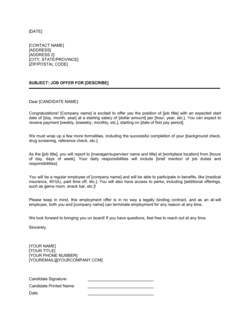
An interview guide is used during the evaluation stage to score and compare candidates. A job offer letter is issued after the hire decision to formalize compensation and start date. The two documents are sequential, not interchangeable β€” completing a structured interview guide before issuing an offer letter creates a defensible record of why the selected candidate was chosen.

vs Job Description Executive Secretary

A job description defines the role's requirements for external posting and candidate attraction. An interview guide translates those requirements into scored, structured questions for candidate evaluation. Both documents should reference the same competency framework β€” if the job description lists confidentiality as a requirement, the interview guide must include at least one scored question that tests it.

vs Employee Onboarding Checklist

An interview guide is used before the hire decision; an onboarding checklist is used after it. The onboarding checklist picks up where the interview guide ends β€” translating the strengths and development areas documented during the interview into the new hire's first 30 to 90 day plan. Gaps identified in the interview scoring should inform the onboarding priorities.

Industry-specific considerations

Financial Services

Emphasizes confidentiality around client data, regulatory communications, and board-level correspondence where discretion failures carry compliance consequences.

Legal and Professional Services

Focuses on document management, attorney-client confidentiality boundaries, court deadline awareness, and high-volume correspondence drafting under time pressure.

Healthcare

Adds questions around HIPAA-adjacent information handling, executive communications with clinical and administrative staff, and scheduling across complex multi-site calendars.

Government and Public Sector

Requires assessment of experience with formal records management, freedom-of-information protocols, and the protocol-driven communication style expected in public institutions.

Template vs pro β€” what fits your needs?

PathBest forCostTime
Use the templateHR managers and hiring executives conducting structured interviews for a single executive secretary roleFree30–60 minutes to customize; 45–60 minutes per interview session
Template + professional reviewOrganizations standardizing hiring across multiple administrative roles or building a competency-based interview library$200–$800 for an HR consultant review and calibration session2–5 business days
Custom draftedEnterprises with formal psychometric assessments, structured panel interview programs, or legal mandates for documented selection processes$1,000–$4,000 for a custom competency-based interview design engagement2–4 weeks

Glossary

Behavioral Interview Question
A question that asks a candidate to describe a specific past situation to predict how they will perform in similar future scenarios β€” typically framed as 'Tell me about a time when…'
Situational Interview Question
A hypothetical question that presents a future scenario and asks the candidate how they would respond, assessing judgment and problem-solving approach.
Competency Framework
A defined set of skills, behaviors, and knowledge areas required to perform a role successfully, used as the basis for structuring interview questions and evaluations.
STAR Method
A structured answer format β€” Situation, Task, Action, Result β€” used by candidates to give complete, evidence-based responses to behavioral questions.
Scoring Rubric
A numerical or descriptive scale applied to each interview question to convert subjective observations into comparable, documented ratings across candidates.
Panel Interview
An interview format in which two or more interviewers evaluate the candidate simultaneously, each scoring independently before a consensus discussion.
Knock-Out Question
A screening question with a pass/fail threshold β€” a candidate who cannot meet the minimum standard is eliminated from consideration regardless of other scores.
Candidate Scorecard
A summary document aggregating all question scores and interviewer notes into a total rating that supports a hire or no-hire recommendation.
Structured Interview
An interview format in which all candidates are asked the same predetermined questions in the same order, enabling direct comparison and reducing interviewer bias.
Confidentiality and Discretion
A core competency for executive secretaries β€” the demonstrated ability to handle sensitive executive communications and information without unauthorized disclosure.

Part of your Business Operating System

This document is one of 3,000+ business & legal templates included in Business in a Box.

  • Fill-in-the-blanks β€” ready in minutes
  • Compatible with all office suites
  • Export to PDF and share electronically

Create your document in 3 simple steps.

From template to signed document β€” all inside one Business Operating System.
1
Download or open template

Access over 3,000+ business and legal templates for any business task, project or initiative.

2
Edit and fill in the blanks with AI

Customize your ready-made business document template and save it in the cloud.

3
Save, Share, Send, Sign

Share your files and folders with your team. Create a space of seamless collaboration.

Save time, save money, and create top-quality documents.

β˜…β˜…β˜…β˜…β˜…

"Fantastic value! I'm not sure how I'd do without it. It's worth its weight in gold and paid back for itself many times."

Managing Director Β· Mall Farm
Robert Whalley
Managing Director, Mall Farm Proprietary Limited
β˜…β˜…β˜…β˜…β˜…

"I have been using Business in a Box for years. It has been the most useful source of templates I have encountered. I recommend it to anyone."

Business Owner Β· 4+ years
Dr Michael John Freestone
Business Owner
β˜…β˜…β˜…β˜…β˜…

"It has been a life saver so many times I have lost count. Business in a Box has saved me so much time and as you know, time is money."

Owner Β· Upstate Web
David G. Moore Jr.
Owner, Upstate Web

Run your business with a system β€” not scattered tools

Stop downloading documents. Start operating with clarity. Business in a Box gives you the Business Operating System used by over 250,000 companies worldwide to structure, run, and grow their business.

Free Forever PlanΒ Β·Β No credit card required