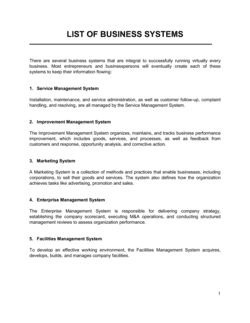
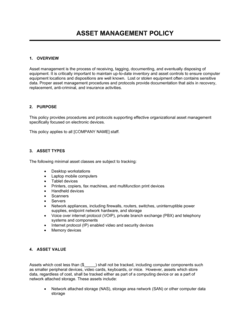
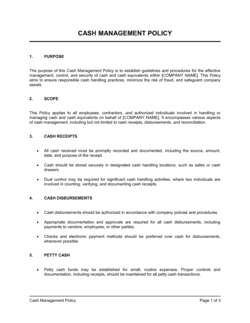
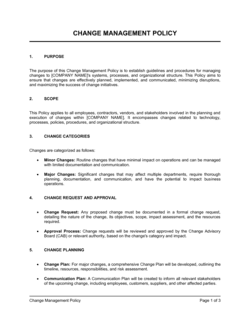
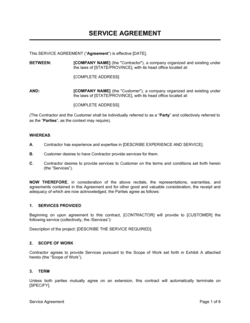
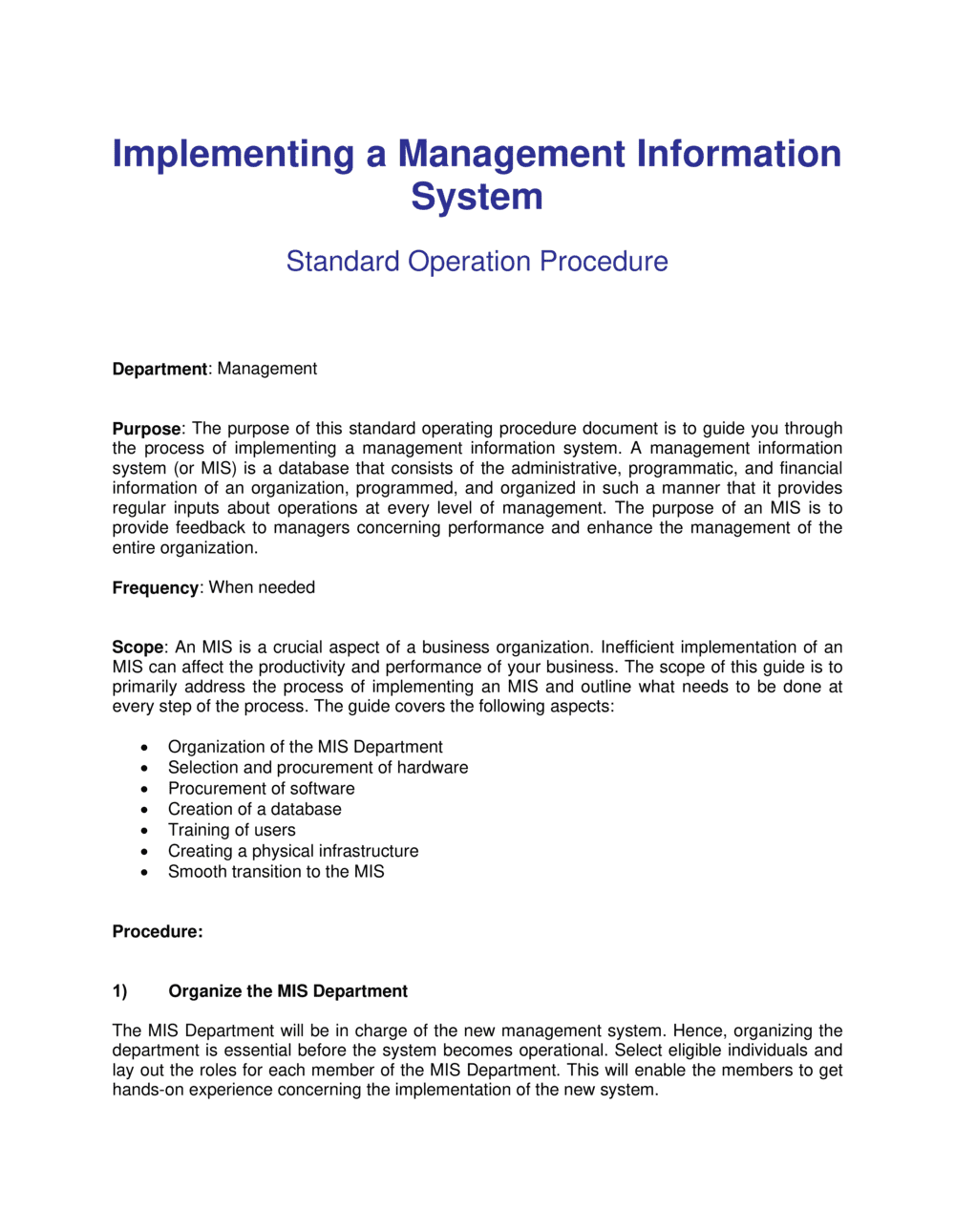
Implementing Management Information Systems Template

Free Word download • Edit online • Save & share with Drive • Export to PDF

3 pages25–30 min to fillDifficulty: StandardSignature requiredLegal review recommended
Learn more ↓
FreeImplementing Management Information Systems Template

At a glance

What it is
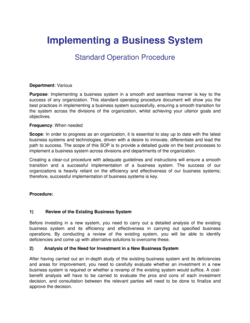
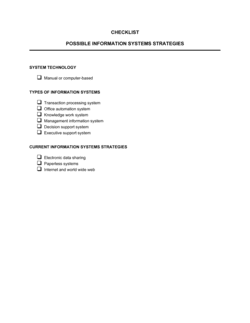
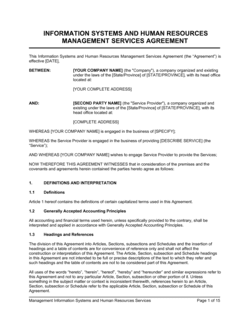
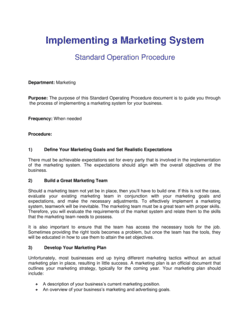
An Implementing Management Information Systems agreement is a legally binding contract between an organization and a technology vendor or internal IT team that governs the planning, deployment, configuration, and handover of a management information system. This free Word download covers project scope, deliverables, data governance, service-level commitments, intellectual property, confidentiality, and termination in a single structured document you can edit online and export as PDF.
When you need it
Use it when procuring, deploying, or upgrading an enterprise-wide MIS — including ERP, CRM, HRIS, or business intelligence platforms — where multiple stakeholders, significant budget, and sensitive organizational data are involved. It is equally applicable when engaging an external systems integrator or formalizing the mandate of an internal project team.
What's inside
Project scope and objectives, deliverables schedule and milestones, data migration and governance obligations, service-level agreements, training and change-management requirements, intellectual property assignment, confidentiality, liability limitations, and termination procedures with transition assistance.

What is an Implementing Management Information Systems Agreement?

An Implementing Management Information Systems agreement is a legally binding contract between an organization and a technology vendor or systems integrator that governs the end-to-end deployment of a management information system — covering planning, configuration, data migration, testing, training, and go-live handover. Unlike a generic purchase order or informal project charter, this document creates enforceable obligations on scope, deliverables, data ownership, service-level performance, intellectual property, and termination, replacing verbal understandings with a single authoritative record that both parties sign before work begins. MIS deployments typically involve significant organizational data, multi-department stakeholders, and six-figure budgets — all of which require contractual clarity that a standard IT contract does not provide.

Why You Need This Document

Without a written MIS implementation agreement, four categories of risk remain entirely unmanaged. First, scope creep: vendors routinely treat undocumented requirements as change-order opportunities, inflating project costs by 20–40% above the original estimate when there is no signed scope schedule to point to. Second, IP exposure: custom integrations and configurations built specifically for your business processes may legally belong to the vendor if the contract is silent on ownership, locking you into a single-vendor relationship with no exit. Third, data governance gaps: a generic NDA does not assign GDPR, CCPA, or PIPEDA processor obligations to the vendor — regulators treat the client organization as responsible for the vendor's non-compliance, exposing you to fines that can reach 4% of global annual revenue under GDPR. Fourth, termination lock-in: without a transition assistance clause, a vendor can withhold your own data and institutional system knowledge at the moment of termination, when you have the least negotiating leverage. This template gives you a complete, attorney-reviewed starting point that closes all four gaps for the cost of 20 minutes and a legal review where the stakes warrant it.

Which variant fits your situation?

If your situation is…Use this template
Deploying a cloud-hosted SaaS ERP with a third-party integratorImplementing Management Information Systems
Engaging a consultant for a stand-alone business intelligence dashboardIT Consulting Agreement
Licensing proprietary MIS software without integration servicesSoftware License Agreement
Ongoing post-implementation system support and maintenanceIT Service Level Agreement
Sharing data between the MIS and a third-party analytics providerData Processing Agreement
Hiring an internal project manager to lead the MIS rolloutEmployment Contract
Outsourcing ongoing MIS operations after go-liveIT Outsourcing Agreement

Common mistakes to avoid

❌ Paying based on time elapsed rather than accepted milestones

Why it matters: Time-based payments transfer all financial risk to the client — the vendor is paid regardless of whether deliverables meet specifications, removing the commercial incentive to perform.

Fix: Structure at least 70% of contract value as milestone-tied payments, with each tranche released only after written client acceptance of the corresponding deliverable.

❌ Accepting a generic NDA instead of a data processor clause

Why it matters: A standard confidentiality clause does not assign GDPR, CCPA, or PIPEDA processor obligations to the vendor. Regulators treat the client as the data controller — responsible for the vendor's non-compliance.

Fix: Include a dedicated data processing addendum that names the applicable regulations, assigns processor duties explicitly, and sets a 72-hour breach notification requirement.

❌ Leaving IP ownership implicit for custom-built components

Why it matters: If the contract is silent on custom IP, vendor-default clauses or jurisdiction-specific copyright laws may assign ownership of custom integrations and configurations to the vendor, creating dependency and switching costs.

Fix: Add an explicit IP assignment clause that transfers all custom developments to the client upon creation, with the vendor retaining only a license to its pre-existing platform.

❌ No transition assistance obligation at termination

Why it matters: Without a contractual obligation to assist with migration, a vendor can effectively hold organizational data and system knowledge hostage after termination, forcing expensive renegotiation.

Fix: Include a minimum 90-day transition assistance period at agreed rates, a requirement to return all data in a portable format within 10 business days, and a source code escrow for mission-critical systems.

❌ SLA with no financial remedy

Why it matters: An SLA that commits the vendor to 'best efforts' or 'commercially reasonable steps' with no credit or termination right creates the appearance of accountability without any enforceable consequence.

Fix: Define uptime thresholds numerically, attach a credit schedule for each hour below the threshold, and include a termination right if SLA is missed in two or more consecutive months.

❌ Scope defined by outcome only, without specifying modules and exclusions

Why it matters: Vague scope language — 'a fully functioning MIS' — gives vendors room to argue that disputed features were out of scope and require a change order, inflating project cost and timeline.

Fix: Attach a detailed Schedule A that lists every included module, integration point, user group, and data source, and explicitly excludes anything not listed. Any additions require a signed change order.

The 10 key clauses, explained

Project scope and objectives

In plain language: Defines the boundaries of the implementation — which modules, departments, locations, and data sets are included — and states the measurable business outcomes the system must achieve.

Sample language
Vendor shall implement the [SYSTEM NAME] platform for [COMPANY NAME] covering the following modules: [LIST MODULES]. The project objective is to [OBJECTIVE] by [DATE]. Any work outside this scope requires a written change order signed by both parties.

Common mistake: Writing scope in outcome language only without specifying which modules or data sets are included. When scope disputes arise mid-project, vague objectives give the vendor room to argue that additional work was implied, triggering costly change orders.

Deliverables and milestone schedule

In plain language: Lists each project deliverable with its acceptance criteria and ties payment installments to verified completion of specific milestones rather than elapsed time.

Sample language
Vendor shall deliver the following milestones: (a) System Configuration — [DATE], (b) Data Migration Completion — [DATE], (c) User Acceptance Testing — [DATE], (d) Go-Live — [DATE]. Payment of $[AMOUNT] is due within [X] days of written client acceptance of each milestone.

Common mistake: Tying all payments to time elapsed rather than verified milestones. If the vendor falls behind or delivers a non-conforming system, you lose all payment leverage once the clock-based invoices are paid.

Data migration and governance

In plain language: Allocates responsibility for extracting, cleansing, mapping, and validating legacy data, and establishes who owns and controls organizational data throughout and after the project.

Sample language
Client shall provide data in [FORMAT] no later than [DATE]. Vendor shall cleanse, map, and migrate all data in accordance with Schedule B. All data remains the sole property of Client at all times. Vendor shall not access, use, or retain Client data beyond what is strictly necessary to perform the services.

Common mistake: Leaving data ownership implicit rather than stating it explicitly. Without a written clause, vendor contracts that are silent on data ownership may allow the vendor to retain or repurpose organizational data post-project.

Service-level agreements and performance standards

In plain language: Sets minimum uptime, response time, and incident resolution standards for the implemented system, with defined credits or remedies if the vendor falls short.

Sample language
Vendor warrants that the System shall be available for productive use at least [99.5]% of each calendar month, excluding scheduled maintenance windows. For each hour of downtime below this threshold, Vendor shall credit Client $[AMOUNT] against the next invoice, up to a maximum of [X]% of monthly fees.

Common mistake: Accepting an SLA with no financial remedy clause. An SLA that only requires the vendor to 'use commercially reasonable efforts' to restore service creates no real accountability — credits or termination rights must be specified.

Training and change management

In plain language: Specifies the volume, format, and timeline of end-user and administrator training the vendor must deliver, and assigns responsibility for internal communication and adoption activities.

Sample language
Vendor shall provide [X] hours of on-site training for up to [N] administrators and [Y] hours of web-based training for end users, to be completed no later than [X] days before Go-Live. Client is responsible for internal change communications and shall designate a change champion no later than [DATE].

Common mistake: Omitting training obligations entirely from the contract and treating them as a verbal understanding. Without a written commitment, training scope is routinely reduced by the vendor when project budgets tighten.

Intellectual property and custom developments

In plain language: Determines who owns any custom code, configurations, integrations, or documentation created specifically for this project, and grants the client rights to use the vendor's underlying platform IP.

Sample language
All custom developments, integrations, and documentation created specifically for Client under this Agreement ('Custom IP') are the sole property of Client and are hereby irrevocably assigned to Client upon creation. Vendor retains ownership of its pre-existing platform IP and grants Client a perpetual, non-exclusive license to use it.

Common mistake: Accepting a clause where all project output — including custom integrations built for your specific business processes — belongs to the vendor. This leaves the client dependent on the vendor for any future modifications and unable to switch providers without losing their custom work.

Confidentiality and data protection

In plain language: Restricts both parties from disclosing the other's confidential information, assigns data processor obligations to the vendor, and specifies compliance with applicable data protection laws.

Sample language
Vendor shall process Client's data solely as instructed by Client, implement appropriate technical and organizational security measures, and comply with all applicable data protection laws including [GDPR / CCPA / PIPEDA] as applicable. Vendor shall notify Client of any data breach within [72] hours of discovery.

Common mistake: Using a generic NDA clause instead of a data processor-specific provision. A standard confidentiality clause does not cover the vendor's obligations as a data processor under GDPR, CCPA, or PIPEDA — regulators hold the client liable for their vendor's non-compliance.

Liability limitations and indemnification

In plain language: Caps the vendor's financial exposure for direct damages and allocates responsibility for third-party claims arising from IP infringement, data breaches, or gross negligence.

Sample language
Vendor's total liability under this Agreement shall not exceed the total fees paid in the [12] months preceding the claim. This cap shall not apply to (a) breaches of confidentiality, (b) data protection violations, or (c) gross negligence or wilful misconduct. Each party shall indemnify the other against third-party claims arising from its own breach.

Common mistake: Accepting a liability cap that applies equally to all breach types, including data breaches. A blanket cap that limits data-breach liability to one month of fees is almost certainly insufficient to cover the actual cost of a regulatory investigation or customer notification exercise.

Termination and transition assistance

In plain language: Defines the conditions under which either party may terminate — for cause, for convenience, or for insolvency — and requires the vendor to provide structured transition support to avoid operational lock-in.

Sample language
Either party may terminate this Agreement for cause upon [30] days' written notice if the other party materially breaches and fails to cure within that period. Client may terminate for convenience on [60] days' written notice. Upon termination, Vendor shall provide up to [X] months of transition assistance at its standard rates and return all Client data in [FORMAT] within [10] business days.

Common mistake: No transition assistance obligation in the termination clause. Without it, a vendor can hold organizational data and institutional knowledge hostage at the moment of termination, forcing the client into an unfavorable renegotiation when they are most vulnerable.

Governing law and dispute resolution

In plain language: Specifies the jurisdiction whose law governs the contract and the mechanism for resolving disputes — arbitration, mediation, or litigation — before either party incurs court costs.

Sample language
This Agreement is governed by the laws of [STATE / PROVINCE / COUNTRY]. Any dispute shall first be referred to senior management of both parties for good-faith negotiation for a period of [30] days. Unresolved disputes shall be submitted to binding arbitration administered by [AAA / ICDR / LCIA] in [CITY].

Common mistake: Omitting a tiered dispute resolution clause and going straight to arbitration or litigation. A mandatory 30-day negotiation step resolves the majority of implementation disputes at near-zero cost before either party incurs legal fees.

How to fill it out

  1. 1

    Identify both parties and the system being implemented

    Enter the full legal names of the client organization and the vendor or implementation partner. Specify the MIS platform by name, version, and module set so there is no ambiguity about what is being deployed.

    💡 Reference the vendor's official product name exactly as it appears in their licensing documentation — mismatches between the contract and license agreement create interpretation gaps.

  2. 2

    Define scope with a detailed schedule of inclusions and exclusions

    List every module, integration, and data set that is in scope. Equally important — list what is explicitly excluded. Attach a Schedule A with the full scope narrative and require a signed change order for any additions.

    💡 If scope is unclear at signing, agree on a time-boxed discovery phase (2–4 weeks) and make the full scope schedule an amendment due before the discovery phase ends.

  3. 3

    Build the milestone and payment schedule

    Break the project into four to six measurable milestones, each with a specific deliverable, an acceptance criterion, and a tied payment amount. Enter dates in a Schedule B and confirm they are realistic based on vendor estimates.

    💡 Hold back at least 15–20% of total contract value as a final payment tied to go-live acceptance — this is your primary commercial lever if the vendor falls behind.

  4. 4

    Complete the data governance and migration obligations

    Specify the format, volume, and source of legacy data the client will provide, the vendor's cleansing and mapping obligations, and the timeline for parallel running before cutover.

    💡 Require a data migration test run at least 30 days before go-live. A single successful migration rehearsal catches 80% of conversion errors before they affect operations.

  5. 5

    Set SLA thresholds and remedies

    Enter the minimum uptime percentage, incident response targets (P1 within 1 hour, P2 within 4 hours is standard), and the credit or termination right that applies if the vendor misses them.

    💡 For mission-critical systems, negotiate a right to terminate for convenience — not just for cause — if the vendor misses SLA thresholds in two consecutive calendar months.

  6. 6

    Confirm IP ownership and license grants

    Explicitly state that all custom code, configurations, and documentation created for this project belong to the client. Grant the vendor only the access rights strictly necessary to deliver the services.

    💡 Ask the vendor to list any third-party open-source components included in the custom build. Open-source licenses can restrict your ability to modify or commercialize the output.

  7. 7

    Tailor the confidentiality and data protection clause to your jurisdiction

    If any party is subject to GDPR, CCPA, PIPEDA, or sector-specific regulations (HIPAA, FCA), add a data processing addendum that assigns processor obligations explicitly and specifies breach notification timelines.

    💡 A 72-hour breach notification obligation to the client — shorter than most regulatory deadlines — gives you time to assess and file your own regulatory notification before the deadline.

  8. 8

    Sign before the vendor begins any work

    Both authorized signatories must execute the agreement before the vendor accesses any systems, data, or facilities. Post-start signatures create gaps in IP assignment and confidentiality coverage.

    💡 Use a digital signature platform with a timestamped audit trail. Disputes about when an MIS contract was executed are common; a verifiable timestamp eliminates them.

Frequently asked questions

What is an implementing management information systems agreement?

An implementing management information systems agreement is a legally binding contract between an organization and a vendor or implementation partner that governs the deployment of an MIS platform — such as an ERP, CRM, or HRIS. It defines project scope, deliverables, data governance, service-level commitments, IP ownership, confidentiality, and termination rights. The agreement protects both parties by creating enforceable obligations and replacing informal project charters or purchase orders as the authoritative governing document.

When do I need a formal MIS implementation agreement?

Any time a third-party vendor or systems integrator is engaged to deploy an enterprise-wide information system, a written agreement is essential. This is equally true for cloud-hosted SaaS deployments, on-premise ERP installations, and custom-built business intelligence platforms. The agreement is also appropriate when formalizing the mandate of an internal IT project team where budget, data governance, and executive accountability need to be documented.

What is the difference between an MIS implementation agreement and a software license agreement?

A software license agreement grants the right to use a vendor's existing software product under defined terms. An MIS implementation agreement governs the services required to configure, integrate, migrate data into, and deploy that software within a specific organizational environment. Most enterprise MIS projects require both documents — a license agreement for the platform and an implementation agreement for the deployment services.

Who owns the custom configurations and integrations built during an MIS implementation?

Ownership depends entirely on what the contract says. Without an explicit IP assignment clause, vendor-default terms or jurisdiction-specific copyright law may assign ownership of custom code and configurations to the vendor. This means the client cannot modify or port their own business-process logic without the vendor's consent. Always include a clause that assigns all custom developments to the client upon creation, with the vendor retaining only a license to their pre-existing platform.

What data protection obligations should the agreement include?

The agreement should include a dedicated data processing addendum that names the applicable regulations — GDPR for EU data subjects, CCPA for California residents, PIPEDA for Canadian personal data, or HIPAA for US health information. The addendum should assign processor obligations to the vendor, specify permitted data uses, require appropriate security measures, and set a 72-hour breach notification deadline. A generic confidentiality clause is insufficient for regulatory compliance purposes.

What should an SLA in an MIS implementation agreement cover?

A well-drafted SLA covers system uptime expressed as a monthly percentage (typically 99.5% or higher for mission-critical systems), incident priority classifications with response and resolution time targets for each tier, scheduled maintenance windows and their frequency, and the financial remedy — service credits or termination rights — if thresholds are not met. An SLA without an attached credit schedule or termination right is difficult to enforce in practice.

What happens if the vendor misses a go-live milestone?

The consequences depend on what the contract specifies. A well-drafted agreement ties each milestone to a payment tranche, giving the client a commercial lever — withholding the next payment until the milestone is accepted. It may also include liquidated damages for material delays, calculated as a daily or weekly sum. Without either mechanism, the client's only remedy is to terminate for material breach, which is commercially disruptive and often disproportionate for a single missed date.

What transition assistance should the termination clause require?

At minimum, the termination clause should require the vendor to provide 90 days of transition assistance at their standard service rates, return all client data in a machine-readable, portable format within 10 business days, provide complete documentation of all custom configurations and integrations, and cooperate with the client's replacement vendor. For mission-critical systems, consider adding a source code escrow arrangement so the client can access the underlying code if the vendor ceases operations.

How this compares to alternatives

vs IT Service Level Agreement

An IT SLA governs ongoing support and maintenance of a system already in production — it defines uptime, response times, and escalation procedures for a live environment. An MIS implementation agreement governs the project of building and deploying the system in the first place. The implementation agreement typically references or transitions into an SLA at go-live.

vs Software License Agreement

A software license agreement grants permission to use a vendor's existing platform under defined terms, covering usage rights, restrictions, and licensing fees. An MIS implementation agreement governs the services required to configure, integrate, and deploy that platform within a specific organizational environment. Enterprise deployments typically require both documents operating in parallel.

vs IT Consulting Agreement

An IT consulting agreement engages an individual consultant or firm to provide advisory or development services on a time-and-materials or retainer basis, without necessarily tying deliverables to a defined system deployment. An MIS implementation agreement is project-specific — it defines fixed deliverables, go-live milestones, and performance standards against a named system. Use a consulting agreement for advisory engagements and an implementation agreement when a specific platform deployment is the objective.

vs Data Processing Agreement

A data processing agreement (DPA) governs how a third party handles personal data on behalf of the data controller, assigning processor obligations under GDPR, CCPA, or PIPEDA. An MIS implementation agreement is broader — it covers the full deployment project including scope, milestones, IP, and SLAs. The DPA typically runs as an addendum to the implementation agreement rather than as a standalone document.

Industry-specific considerations

Financial Services

MIS implementations in financial services must address FCA, SEC, or OSFI regulatory data requirements, strict audit trail obligations, and enhanced liability caps given the sensitivity of client financial data.

Healthcare

HIPAA (US) and equivalent national health data laws require a Business Associate Agreement to run alongside the MIS contract, with specific breach notification timelines and minimum security standards for electronic protected health information.

Manufacturing

ERP implementations in manufacturing require detailed supply-chain integration clauses, production data ownership provisions, and SLAs calibrated to shift-based operations where system downtime has direct output cost.

Professional Services

CRM and billing MIS deployments in professional services firms require robust client-data confidentiality provisions and IP clauses that prevent the vendor from using anonymized engagement data to train AI models or benchmark competitors.

Jurisdictional notes

United States

US MIS agreements are governed by state commercial law, typically the UCC for software goods and common law for services — which category applies depends on whether the contract is predominantly for goods or services. CCPA applies to personal data of California residents regardless of where the vendor is based. HIPAA requires a Business Associate Agreement for any MIS handling protected health information. Non-compete and IP assignment enforceability varies by state — California voids many post-engagement IP assignment clauses for work done outside business hours.

Canada

PIPEDA governs personal data handling for federally regulated industries; provincial privacy laws apply in Quebec (Law 25), Alberta, and British Columbia. Quebec's Law 25 (Bill 64) introduces strict data residency, privacy impact assessment, and breach notification requirements that must be addressed in the data processing addendum. Canadian courts interpret limitation-of-liability clauses strictly — blanket liability caps are less reliably enforced than in the US and should be reviewed by counsel for high-value deployments.

United Kingdom

Post-Brexit, the UK GDPR and Data Protection Act 2018 govern personal data processing, with the ICO as the supervisory authority. Contracts must include UK-GDPR-compliant data processor provisions and, for transfers to non-adequate countries, UK International Data Transfer Agreements (IDTAs). The UK Modern Slavery Act 2015 may require a supply chain statement for larger vendors. IR35 rules apply if the MIS vendor engages subcontractors through personal service companies, potentially creating tax liability for the client.

European Union

GDPR Articles 28 and 29 require a formal Data Processing Agreement for any vendor processing EU personal data, with mandatory clauses on subject matter, duration, nature and purpose, data type, and data subject categories. Standard Contractual Clauses (SCCs) are required for data transfers outside the EU/EEA. The EU Cybersecurity Act and NIS2 Directive impose additional security and incident reporting obligations on vendors supplying critical infrastructure. Member state variations in contract law — particularly in Germany and France — mean multi-jurisdiction deployments should be reviewed by local counsel.

Template vs lawyer — what fits your deal?

PathBest forCostTime
Use the templateSmall businesses deploying off-the-shelf MIS platforms with established vendors under $50K total contract valueFree1–2 hours to complete
Template + legal reviewMid-market deployments above $50K, any engagement involving personal data subject to GDPR or CCPA, or vendors with non-standard IP terms$500–$1,5003–5 business days
Custom draftedEnterprise ERP implementations above $500K, mission-critical systems in regulated industries, or multi-jurisdiction deployments with complex data governance requirements$3,000–$10,000+2–4 weeks

Glossary

Management Information System (MIS)
An integrated platform that collects, processes, and presents organizational data to support management decision-making across departments.
Scope of Work
A contractually defined description of the specific tasks, deliverables, and boundaries of the implementation project.
Go-Live Date
The agreed calendar date on which the MIS becomes operational and available for productive use by end users.
Service-Level Agreement (SLA)
A contractual commitment specifying minimum performance standards — such as uptime percentage or incident response time — and the remedies if those standards are not met.
Data Migration
The process of transferring existing organizational data from legacy systems into the new MIS, including cleansing, mapping, and validation.
Change Management
The structured process of preparing, training, and supporting employees to adopt the new system effectively.
Acceptance Testing
A formal verification process in which the client confirms that each deliverable meets the agreed specifications before sign-off and payment.
Intellectual Property (IP) Assignment
A clause that determines whether custom configurations, integrations, or code developed during the project belong to the client or the vendor.
Force Majeure
A clause excusing a party from contractual obligations when performance is prevented by events outside their reasonable control, such as natural disasters or cyberattacks.
Escrow (Source Code Escrow)
An arrangement in which a third party holds the vendor's source code so the client can access it if the vendor ceases operations or breaches the agreement.
Liquidated Damages
A pre-agreed sum payable by the vendor for specific breaches — such as missing a go-live milestone — calculated to approximate the client's actual loss.
Transition Assistance
Post-termination support the vendor is obligated to provide to help the client migrate to a replacement system without disruption.

Part of your Business Operating System

This document is one of 3,000+ business & legal templates included in Business in a Box.

  • Fill-in-the-blanks — ready in minutes
  • 100% customizable Word document
  • Compatible with all office suites
  • Export to PDF and share electronically

Create your document in 3 simple steps.

From template to signed document — all inside one Business Operating System.
1
Download or open template

Access over 3,000+ business and legal templates for any business task, project or initiative.

2
Edit and fill in the blanks with AI

Customize your ready-made business document template and save it in the cloud.

3
Save, Share, Send, Sign

Share your files and folders with your team. Create a space of seamless collaboration.

Save time, save money, and create top-quality documents.

★★★★★

"Fantastic value! I'm not sure how I'd do without it. It's worth its weight in gold and paid back for itself many times."

Managing Director · Mall Farm
Robert Whalley
Managing Director, Mall Farm Proprietary Limited
★★★★★

"I have been using Business in a Box for years. It has been the most useful source of templates I have encountered. I recommend it to anyone."

Business Owner · 4+ years
Dr Michael John Freestone
Business Owner
★★★★★

"It has been a life saver so many times I have lost count. Business in a Box has saved me so much time and as you know, time is money."

Owner · Upstate Web
David G. Moore Jr.
Owner, Upstate Web

Run your business with a system — not scattered tools

Stop downloading documents. Start operating with clarity. Business in a Box gives you the Business Operating System used by over 250,000 companies worldwide to structure, run, and grow their business.

Start free · No credit card required