- Personal Protective Equipment (PPE)
- Employer-supplied gear — hard hats, gloves, safety glasses, high-visibility vests — worn by workers to reduce exposure to specific workplace hazards.
- Hazard Identification
- The process of systematically recognizing conditions or practices in a workplace that have the potential to cause injury, illness, or property damage.
- Corrective Action
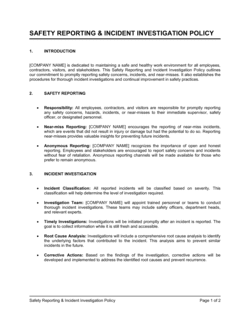
- A documented step taken to eliminate the root cause of an identified safety violation or near-miss to prevent recurrence.
- Near-Miss
- An unplanned event that did not result in injury or damage but had the potential to do so — required to be reported under most safety programs.
- Lockout/Tagout (LOTO)
- A safety procedure that ensures dangerous machinery is properly shut off and cannot be restarted before maintenance or servicing is performed.
- Material Safety Data Sheet (SDS/MSDS)
- A document provided by chemical manufacturers that describes a substance's hazards, safe handling procedures, and emergency response measures.
- Emergency Action Plan (EAP)
- A written plan designating evacuation routes, assembly points, emergency contacts, and assigned roles to follow when a fire, chemical release, or other emergency occurs.
- Incident Rate
- A standardized metric — total recordable injuries × 200,000 ÷ total hours worked — used to compare safety performance across organizations and industries.
- Duty of Care
- The legal obligation of an employer to take reasonable steps to protect employees, contractors, and visitors from foreseeable harm in the workplace.
- Right to Refuse Unsafe Work
- A statutory protection in most jurisdictions that allows an employee to decline work they reasonably believe poses an imminent danger, without fear of discipline or dismissal.
- Safety Committee
- A joint employer-employee body responsible for reviewing incident reports, recommending corrective actions, and overseeing the ongoing implementation of the safety program.