- Performance Date
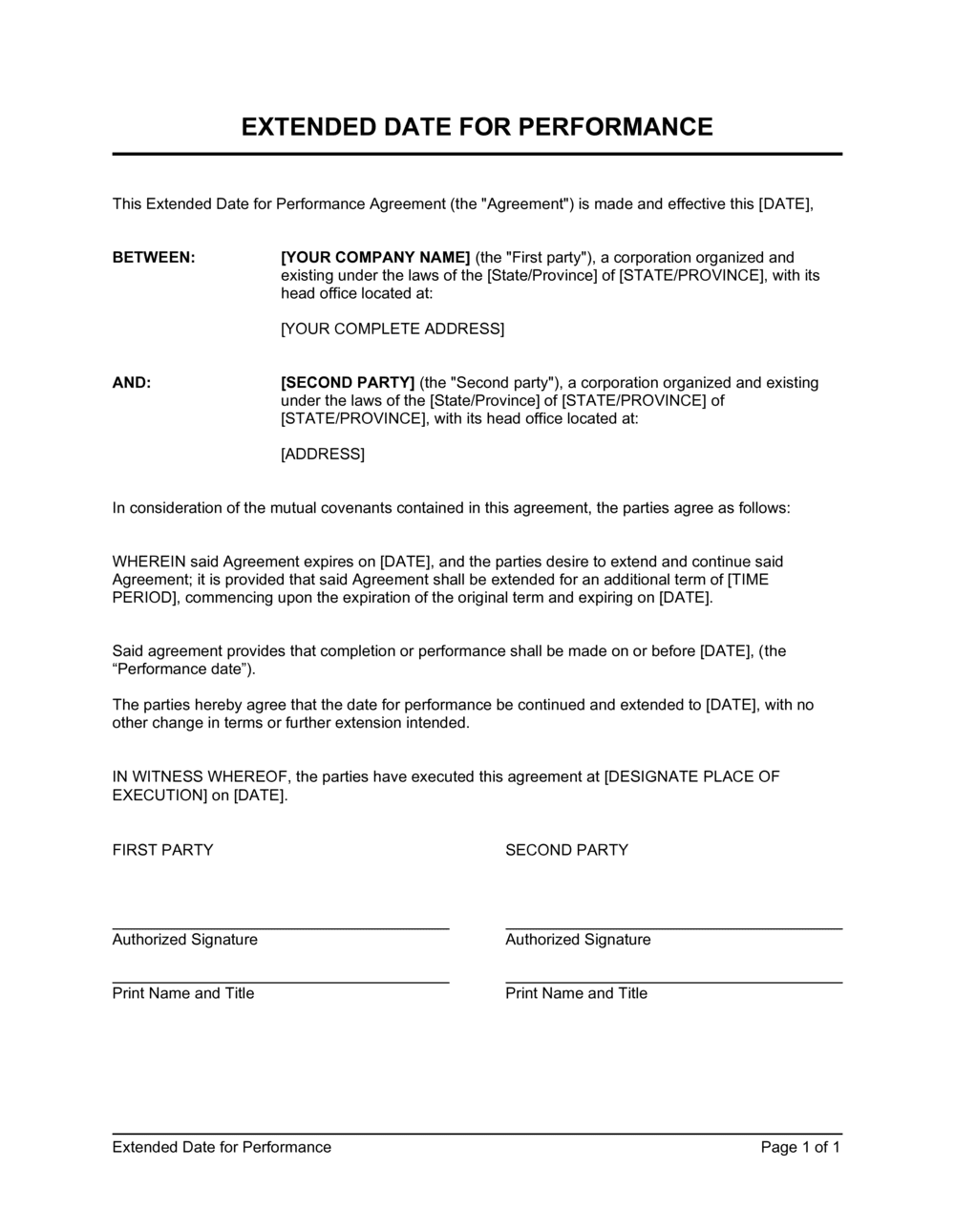
- The specific calendar date by which a contractual obligation must be fulfilled — delivery, payment, completion, or another defined act.
- Amendment
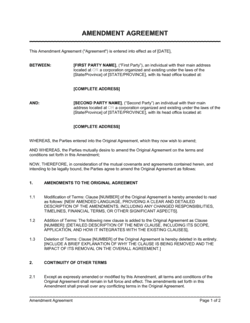
- A written modification to an existing contract that changes one or more of its terms while leaving the rest of the agreement in force.
- Default
- A party's failure to fulfill a contractual obligation by its due date, which typically entitles the other party to remedies such as damages or contract termination.
- Time is of the Essence
- A contractual clause stating that deadlines are strict and material — missing one constitutes a breach, not merely a technical oversight.
- Consideration
- Something of value exchanged between parties to make a contract or amendment legally binding — for an extension, this is often the mutual benefit of avoiding default and litigation.
- Material Breach
- A failure to perform a core obligation that is significant enough to excuse the other party from their own obligations and entitle them to sue for damages.
- Force Majeure
- A contractual clause excusing a party from performance when extraordinary events outside their control — natural disasters, pandemics, government actions — make performance impossible.
- Addendum
- A document added to an existing contract to introduce new terms; unlike an amendment, it supplements rather than replaces original provisions.
- Waiver
- The voluntary relinquishment of a known contractual right — for example, a party choosing not to enforce a missed deadline, which can inadvertently set a precedent if not documented.
- Novation
- The replacement of one contract or party with a new one, extinguishing the original obligation entirely — distinct from an extension, which preserves the original contract.
- Executed Agreement
- A contract or amendment that has been signed by all parties, making it legally effective and binding.