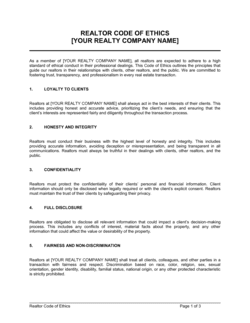
- Code of Ethics
- A formal written document that sets binding standards of professional behavior, moral obligations, and conduct expectations for individuals within a defined role or organization.
- Data Integrity
- The assurance that data is accurate, consistent, and unaltered from its original state throughout its lifecycle — including storage, processing, and transmission.
- Confidential Information
- Any non-public technical, business, or personal data — including source code, algorithms, customer records, and system architectures — that must not be disclosed without authorization.
- Intellectual Property (IP)
- Creations of the mind — software, code, databases, designs, and documentation — that may be owned and protected by law, typically assigned to the employer under a work-made-for-hire or assignment clause.
- Conflict of Interest
- A situation where a professional's personal interests, outside employment, or financial relationships could compromise or appear to compromise their objectivity and loyalty to their employer.
- Whistleblower Protection
- Legal and contractual protections preventing retaliation against an employee who reports unethical, illegal, or unsafe conduct through proper internal or external channels.
- Security Vulnerability
- A weakness in a system, application, or process that could be exploited to gain unauthorized access, disrupt operations, or compromise data.
- Professional Competence
- The obligation of a technical professional to perform only work within their documented skill set and to maintain their knowledge as technology and standards evolve.
- Acceptable Use
- The defined scope of permitted activities when accessing an organization's systems, networks, and data — typically prohibiting unauthorized access, personal commercial use, and deliberate harm.
- Acknowledgment Clause
- The signed, dated section of the document in which the signatory confirms they have read, understood, and agreed to be bound by every provision of the code.
- Enforcement Mechanism
- The documented process — warnings, suspension, termination, or legal action — that applies when a provision of the code is violated.