- Personal Protective Equipment (PPE)
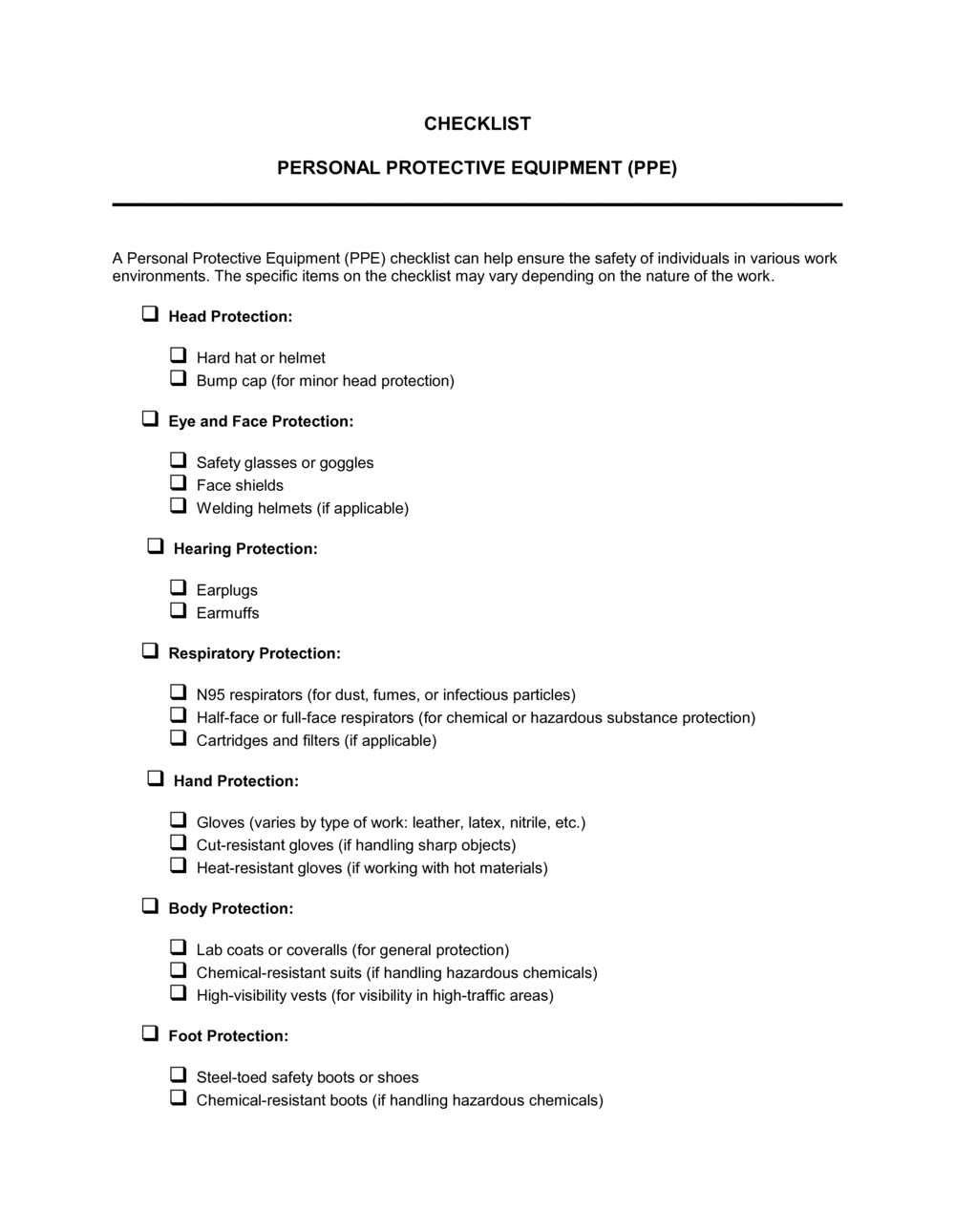
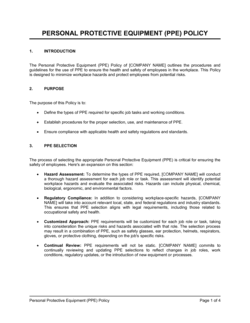
- Wearable gear — such as helmets, gloves, eye protection, and respirators — worn to minimize exposure to workplace hazards.
- Hazard Assessment
- A formal evaluation of a worksite or task to identify risks that require PPE controls, typically completed before selecting equipment.
- Fit Testing
- A standardized procedure that confirms a respirator or tight-fitting face mask forms an adequate seal for a specific worker's facial dimensions.
- Inspection Frequency
- How often PPE is formally checked for damage, expiry, or degradation — daily, weekly, or per-use depending on the equipment type and regulatory requirement.
- Service Life
- The manufacturer-specified period or usage limit after which PPE must be retired and replaced, regardless of visible condition.
- OSHA
- The U.S. Occupational Safety and Health Administration, which sets federal standards for workplace PPE selection, use, training, and recordkeeping.
- ANSI/ISEA Standard
- Product performance specifications published by the American National Standards Institute and International Safety Equipment Association, commonly referenced on PPE certification labels.
- Decontamination
- The process of cleaning or disposing of PPE that has been exposed to hazardous substances before it is reused, stored, or discarded.
- PPE Hierarchy of Controls
- The safety framework that positions PPE as the last line of defense after elimination, substitution, engineering controls, and administrative controls have been applied.