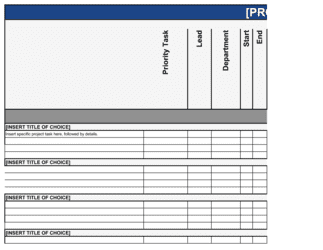
Checklist Developing Services

Free download β€’ Use as a template β€’ Print or share

1 pageβ€’15–25 min to useβ€’Difficulty: Standard
Learn more ↓
FreeChecklist Developing Services Template

At a glance

What it is
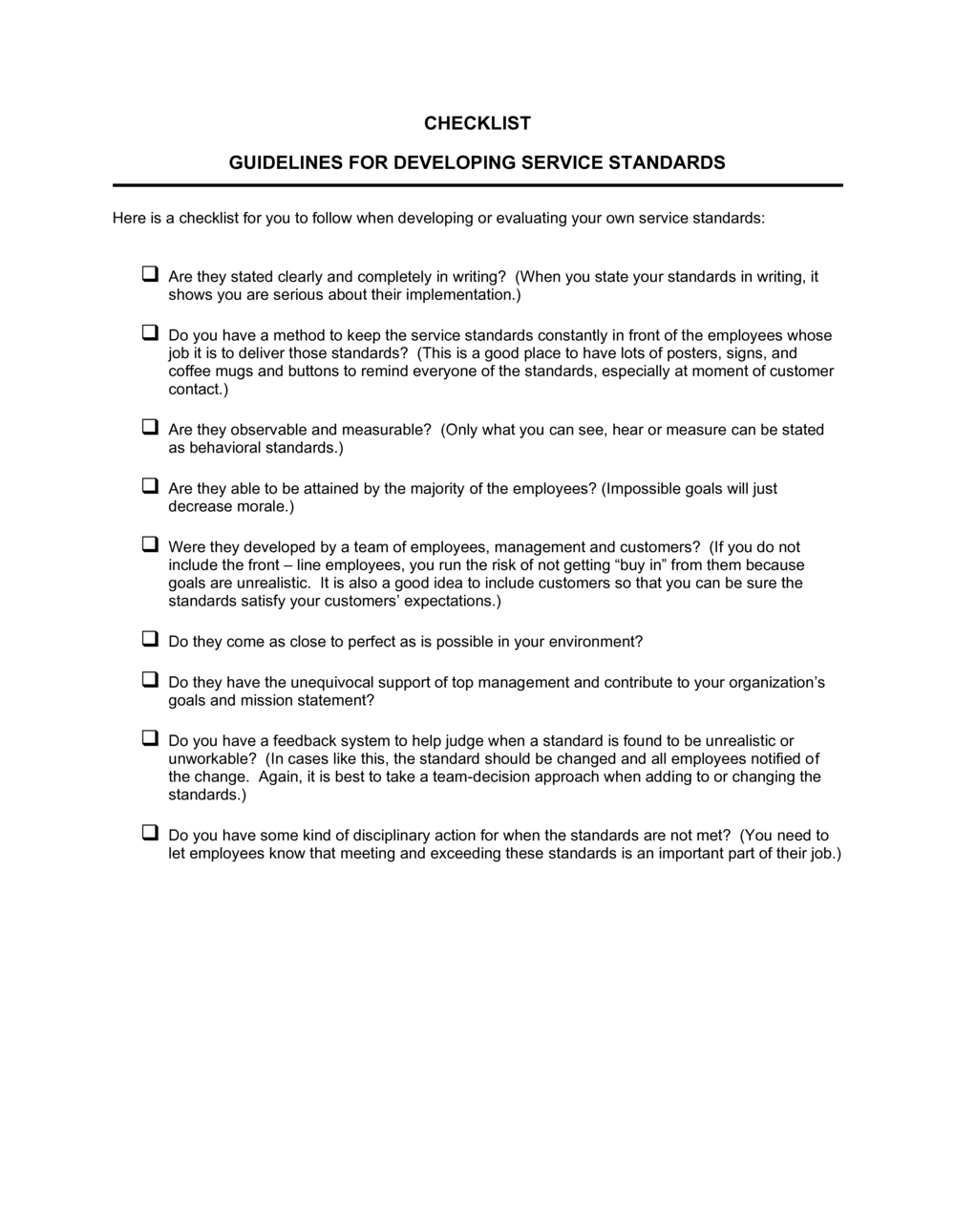
A Checklist Developing Services is a structured form that guides teams through every step required to define, prepare, and launch a new service offering. This free Word download lets you document scope, assigned owners, milestones, quality criteria, and sign-off status in a single reference sheet you can edit online and export as PDF for distribution.
When you need it
Use it whenever your business is designing a new service line, expanding an existing offering, or formalizing an informal service into a repeatable, deliverable product. It is especially useful when multiple team members or departments must coordinate to bring the service to market.
What's inside
Service description and objective, target customer profile, scope and exclusions, task list with owners and due dates, resource and tooling requirements, quality and compliance criteria, pricing and packaging notes, and final approval sign-off fields.

What is a Checklist Developing Services?

A Checklist Developing Services is a structured planning form that walks a business through every decision, task, and approval required to take a new service offering from concept to launch-ready. It captures the service objective, target customer, scope boundaries, task assignments with owners and due dates, resource requirements, quality standards, pricing notes, and final sign-off β€” in one concise document. Rather than relying on informal team knowledge or scattered email threads, this checklist creates a single shared reference that keeps every stakeholder aligned from the first planning session through the go/no-go decision.

Why You Need This Document

Without a formal development checklist, new services frequently launch with undefined scope, unconfirmed pricing, and no documented approval β€” setting up the first client engagements for scope disputes, margin problems, and inconsistent delivery. Teams that skip this step spend the first months of a new service's life firefighting issues that a 30-minute planning session would have caught. This template eliminates those gaps by forcing the critical questions β€” who owns each task, what is explicitly out of scope, is the service profitable at the proposed price β€” before a single client conversation takes place. The result is a service that can be sold confidently, delivered consistently, and improved systematically over time.

Which variant fits your situation?

If your situation is…Use this template
Launching a brand-new service line from scratchChecklist Developing Services
Mapping out a complex multi-phase project delivery processProject Plan Template
Tracking recurring delivery tasks for an existing serviceService Delivery Checklist
Defining the full scope of work for a client engagementStatement of Work
Documenting step-by-step service delivery as a repeatable procedureStandard Operating Procedure (SOP)
Planning a new product launch rather than a serviceNew Product Launch Plan

Common mistakes to avoid

❌ Assigning tasks without a single named owner

Why it matters: When a task is owned by 'the team' or a department, no individual takes responsibility for completion, and deadlines slip without anyone flagging the delay.

Fix: Assign one named person to every task. That person can delegate execution but remains accountable for the outcome and due date.

❌ Skipping the exclusions column in the scope field

Why it matters: Clients and internal teams fill undefined scope gaps with their own expectations, leading to scope creep, margin erosion, and disputes at delivery.

Fix: For every service component you include, ask what the natural adjacent request would be β€” and document it as an explicit exclusion if it is not part of the offering.

❌ Finalizing scope before pricing

Why it matters: A service designed without a pricing constraint frequently turns out to be undeliverable at a commercially viable rate, forcing painful last-minute scope reductions.

Fix: Define a target price range and cost-to-deliver estimate in parallel with scope, not after it.

❌ Treating the sign-off field as a formality

Why it matters: Undocumented or backdated approvals provide no protection when a launch goes wrong β€” stakeholders claim they were not properly consulted.

Fix: Collect written sign-offs from named approvers before the service is sold or delivered, and retain the completed checklist as a timestamped record.

The 9 key fields, explained

Service name and objective

Target customer profile

Scope and exclusions

Task list with owners and due dates

Resource and tooling requirements

Quality and compliance criteria

Pricing and packaging notes

Dependencies and risks

Final approval and go/no-go sign-off

How to fill it out

  1. 1

    Name the service and write a clear objective

    Enter the working service name and a one-sentence objective that states the customer outcome. Confirm the objective with at least one other stakeholder before proceeding.

    πŸ’‘ Test your objective by asking whether a new hire could read it and immediately understand what the service delivers and for whom.

  2. 2

    Define the target customer profile

    Describe the specific segment, role, or company type the service is built for. Include firmographic details β€” industry, company size, or job title β€” that will guide scope, pricing, and marketing decisions.

    πŸ’‘ If you serve more than one distinct customer type, create a separate checklist for each β€” mixed audiences produce unfocused service designs.

  3. 3

    Document scope and exclusions

    List every component included in the service, then explicitly list what is out of scope. Both lists are equally important and should be reviewed with anyone who will sell or deliver the service.

    πŸ’‘ Exclusions are often more valuable than inclusions β€” they prevent the misaligned expectations that generate scope disputes.

  4. 4

    Build the task list with owners and due dates

    Break development into discrete tasks, assign a single named owner to each, and set a realistic due date. Sequence tasks by dependency so the order is logical.

    πŸ’‘ Keep task descriptions short enough to fit in a single row β€” if a task needs a paragraph to explain it, split it into two tasks.

  5. 5

    Confirm resource and tooling availability

    List every person, platform, and vendor the service requires and verify their availability before marking the checklist as in-progress.

    πŸ’‘ Check team capacity against existing commitments before assigning ownership β€” overloaded owners are the single most common cause of missed launch dates.

  6. 6

    Set quality criteria for each phase

    For each major deliverable or phase, write the minimum standard it must meet before the next phase can begin. Attach any relevant templates, style guides, or compliance requirements.

    πŸ’‘ Phrase quality criteria as observable outcomes β€” 'client-facing materials reviewed and approved by account lead' β€” not intentions like 'high quality.'

  7. 7

    Confirm pricing before finalizing scope

    Enter the proposed pricing model and rate, then check that the service can be delivered profitably at that price given the scope and resources defined in the checklist.

    πŸ’‘ Calculate a rough cost-to-deliver estimate before locking scope β€” services priced before costing frequently launch at a loss.

  8. 8

    Collect sign-offs and record the go/no-go decision

    Route the completed checklist to every required approver, capture their decision and date, and store the signed copy before the service is marketed or delivered.

    πŸ’‘ Send the checklist to approvers at least five business days before the intended launch date β€” last-minute reviews produce rubber-stamp approvals, not real oversight.

Frequently asked questions

What is a checklist for developing services?

A checklist for developing services is a structured form that guides a team through every step required to define, build, and launch a new service offering. It captures the service objective, target customer, scope, task assignments, resource requirements, quality criteria, pricing, and final approvals in a single document. It ensures nothing critical is missed before the service reaches clients.

When should I use a service development checklist?

Use it any time your business is creating a new service from scratch, expanding an existing offering, or formalizing an informal service into a repeatable, sellable product. It is especially useful when multiple people or departments are involved and you need a shared reference for who is doing what by when.

How is a service development checklist different from a project plan?

A project plan is a detailed scheduling tool β€” with Gantt charts, dependencies, and resource allocation β€” suited to complex, multi-month initiatives. A service development checklist is a lighter, faster form focused specifically on the decisions and approvals needed before a service is ready to launch. For most service businesses, the checklist is sufficient; the project plan is reserved for large-scale builds.

Who should fill out the checklist?

The service owner or product manager typically leads the process, but the checklist is most effective when completed collaboratively with the people who will deliver the service, set the price, and approve the launch. Gathering input from operations, sales, and finance before sign-off catches gaps that a single author would miss.

Does a service development checklist need to be signed?

No signature is legally required, but capturing named approvals with dates in the sign-off field creates an internal audit trail. This is especially important if the service involves compliance obligations, third-party vendors, or a significant financial commitment β€” the record shows who reviewed what and when.

Can I reuse this checklist for multiple service launches?

Yes β€” save a blank master copy and create a fresh version for each new service. Over time, the completed checklists from prior launches become a reference library that shortens the development process for similar services and reduces the risk of repeating the same mistakes.

What happens if I skip the quality criteria field?

Without defined quality criteria, team members deliver to their own individual standards, which vary. Clients receive inconsistent outputs, and managers have no documented basis for requesting revisions. Even a single-sentence quality criterion per phase β€” 'deliverable reviewed by senior team member before sending' β€” measurably improves consistency.

How detailed should the task list be?

Each task should be specific enough that the owner knows exactly what to produce and when it is done β€” but not so granular that the list becomes unmanageable. A good rule: if a task cannot be completed in one to three business days by a single person, break it into smaller tasks. Most service development checklists contain between 10 and 30 tasks.

How this compares to alternatives

vs Standard Operating Procedure (SOP)

An SOP documents how a service is delivered step by step once it is already defined and running. A service development checklist is used before launch to ensure the service is fully designed, resourced, priced, and approved. Use the checklist first; build the SOP from what it produces.

vs Project Plan

A project plan provides detailed scheduling, Gantt timelines, and resource allocation for complex, multi-month initiatives. A service development checklist is a lighter decision and sign-off tool suited to shorter-cycle service launches. Use a project plan when the build spans multiple teams over more than a month; use the checklist for most standard service rollouts.

vs Statement of Work

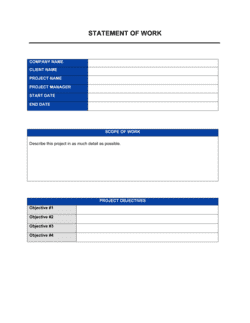
A statement of work is a client-facing contractual document that defines deliverables, timelines, and payment terms for a specific engagement. A service development checklist is an internal planning tool used before any client conversation. The checklist informs what goes into the SOW.

vs Product Launch Plan

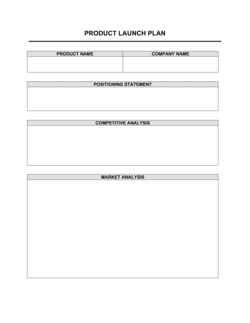
A product launch plan covers the full go-to-market strategy β€” positioning, marketing campaigns, sales enablement, and success metrics β€” for taking a product to market. A service development checklist focuses on the internal readiness steps before launch. For a new service, complete the checklist first, then use the launch plan to drive external awareness.

Industry-specific considerations

Professional Services

Used to package and document consulting, advisory, or managed-service offerings before they are presented to clients or included in a service catalog.

Marketing and Creative Agencies

Structures the development of new service lines β€” such as SEO audits, content subscriptions, or brand strategy workshops β€” ensuring scope, pricing, and delivery methods are defined before the offering is sold.

Technology and SaaS

Guides the build-out of professional services or implementation offerings that accompany a software product, capturing integration tasks, training requirements, and go-live criteria.

Healthcare and Wellness

Ensures new patient-facing or corporate wellness services meet compliance, credentialing, and quality standards before being offered, with explicit sign-off fields for clinical or regulatory review.

Template vs pro β€” what fits your needs?

PathBest forCostTime
Use the templateService businesses, agencies, and consultants launching standard service offerings without complex compliance requirementsFree30–60 minutes to complete
Template + professional reviewTeams adding compliance criteria, vendor contracts, or regulated service components that need a second expert review$100–$300 (operations consultant or senior manager review)Half a day
Custom draftedEnterprises standardizing service development across multiple business units with custom workflow integrations$500–$2,000 (operations specialist or process consultant)1–2 weeks

Glossary

Service Scope
The defined boundaries of what a service includes and explicitly excludes, agreed upon before delivery begins.
Milestone
A specific, measurable checkpoint in the service development process that signals a phase is complete and work can proceed.
Owner
The individual or team role accountable for completing a specific task or deliverable on the checklist.
Quality Criteria
The minimum standards a service component must meet before it is considered complete and ready for the next stage.
Sign-off
Formal written approval from an authorized stakeholder confirming that a task, phase, or the entire service is ready to proceed or launch.
Service Packaging
The process of bundling service components, defining pricing tiers, and naming an offering so it can be consistently sold and delivered.
Dependency
A task or resource that must be completed or secured before a subsequent checklist item can begin.
Go/No-Go Decision
A structured review point at which stakeholders decide whether a service is ready to launch or requires additional work before proceeding.

Part of your Business Operating System

This document is one of 3,000+ business & legal templates included in Business in a Box.

  • Fill-in-the-blanks β€” ready in minutes
  • 100% customizable Word document
  • Compatible with all office suites
  • Export to PDF and share electronically

Create your document in 3 simple steps.

From template to signed document β€” all inside one Business Operating System.
1
Download or open template

Access over 3,000+ business and legal templates for any business task, project or initiative.

2
Edit and fill in the blanks with AI

Customize your ready-made business document template and save it in the cloud.

3
Save, Share, Send, Sign

Share your files and folders with your team. Create a space of seamless collaboration.

Save time, save money, and create top-quality documents.

β˜…β˜…β˜…β˜…β˜…

"Fantastic value! I'm not sure how I'd do without it. It's worth its weight in gold and paid back for itself many times."

Managing Director Β· Mall Farm
Robert Whalley
Managing Director, Mall Farm Proprietary Limited
β˜…β˜…β˜…β˜…β˜…

"I have been using Business in a Box for years. It has been the most useful source of templates I have encountered. I recommend it to anyone."

Business Owner Β· 4+ years
Dr Michael John Freestone
Business Owner
β˜…β˜…β˜…β˜…β˜…

"It has been a life saver so many times I have lost count. Business in a Box has saved me so much time and as you know, time is money."

Owner Β· Upstate Web
David G. Moore Jr.
Owner, Upstate Web

Run your business with a system β€” not scattered tools

Stop downloading documents. Start operating with clarity. Business in a Box gives you the Business Operating System used by over 250,000 companies worldwide to structure, run, and grow their business.

Start freeΒ Β·Β No credit card required