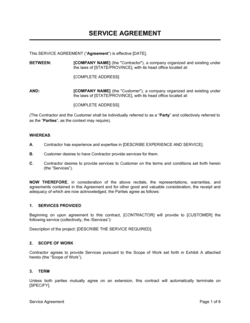
Indemnity Agreement Template

Free Word download β€’ Edit online β€’ Save & share with Drive β€’ Export to PDF

2 pagesβ€’20–30 min to fillβ€’Difficulty: Standardβ€’Signature requiredβ€’Legal review recommended
Learn more ↓
FreeIndemnity Agreement Template

At a glance

What it is
An Indemnity Agreement is a legally binding contract in which one party (the indemnifier) agrees to compensate the other (the indemnitee) for specific losses, claims, liabilities, or damages arising from a defined event or relationship. This free Word download gives you a structured, attorney-reviewed starting point you can edit online and export as PDF for use in M&A transactions, IP licensing, services contracts, or warranty backstop arrangements.
When you need it
Use it whenever one party is taking on a risk that originates from the other party's actions, representations, or obligations β€” such as when a vendor's services could expose your business to third-party claims, or when a seller in an M&A deal must backstop representations about the target company.
What's inside
Party identification and defined roles, scope of indemnifiable events, indemnification procedure and notice requirements, caps and exclusions, defense and control of claims, insurance obligations, survival clause, and governing law β€” covering both unilateral and mutual structures.

What is an Indemnity Agreement?

An Indemnity Agreement is a legally binding contract in which one party β€” the indemnifier β€” agrees to compensate another party β€” the indemnitee β€” for specific losses, liabilities, claims, or damages arising from a defined event or relationship. Beyond simple reimbursement, a well-drafted indemnity agreement typically requires the indemnifier to fund and manage the defense of covered third-party claims, making it one of the primary risk-allocation tools in commercial contracting. It is used across M&A transactions to backstop representations and warranties, in IP licensing to protect licensees from infringement claims, in services contracts to shift liability for vendor-caused damages, and in corporate governance to protect officers and directors from personal liability for actions taken in their official capacity.

Why You Need This Document

Without a written indemnity agreement, the party best positioned to prevent or manage a risk is under no contractual obligation to bear the financial consequences if that risk materializes. A vendor whose code infringes a third-party patent can walk away while their client faces a seven-figure lawsuit; a seller in an acquisition can disclaim responsibility for undisclosed liabilities the moment the deal closes. Relying on general tort principles to recover losses after the fact is expensive, slow, and uncertain β€” courts do not automatically impose indemnification obligations between commercial parties. A signed indemnity agreement defines the trigger, the covered losses, the cap, the notice procedure, and the survival period before any dispute arises, converting a negotiated risk allocation into an enforceable, insurable obligation. This template gives you a complete, clause-by-clause starting point that handles both unilateral and mutual structures β€” saving significant drafting time while ensuring every critical provision is addressed before you sign.

Which variant fits your situation?

If your situation is…Use this template
One party bears all the risk β€” e.g., a vendor indemnifying a clientUnilateral Indemnity Agreement
Both parties take on reciprocal indemnity obligationsMutual Indemnity Agreement
Broad liability waiver paired with indemnification β€” common in events and sportsHold Harmless Agreement
IP licensor indemnifying licensee against third-party infringement claimsIP Indemnification Addendum
Seller backstopping reps and warranties in an asset or share purchaseM&A Indemnification Agreement
Company providing personal indemnity coverage to an executive or board memberDirector and Officer Indemnification Agreement
Subcontractor indemnifying a general contractor for worksite liabilitySubcontractor Indemnity Agreement

Common mistakes to avoid

❌ Scope covers the indemnitee's own negligence without an explicit exclusion

Why it matters: Several US states (California, Texas, New York construction contexts) have anti-indemnity statutes that void clauses requiring a party to indemnify another for the other's own negligence. Even where enforceable, indemnifying a counterparty's negligence is often uninsurable.

Fix: Add an explicit exclusion for losses arising from the indemnitee's own gross negligence, willful misconduct, or fraud β€” and confirm the exclusion satisfies the applicable anti-indemnity statute in the governing jurisdiction.

❌ No cap on the indemnifier's aggregate liability

Why it matters: Unlimited indemnification exposure can make the indemnity obligation commercially uninsurable and deters sophisticated counterparties from signing. A vendor whose services generate $50K in fees cannot rationally stand behind unlimited liability.

Fix: Negotiate a cap benchmarked to the contract value, insurance limits, or a fixed amount acceptable to both parties. Carve out fraud and willful misconduct from the cap.

❌ Survival period shorter than the applicable statute of limitations

Why it matters: If the indemnification obligation expires before a third party's window to sue the indemnitee closes, the indemnitee bears an unindemnified tail risk for the gap period β€” exactly the exposure the agreement was designed to eliminate.

Fix: Set the survival period to equal or exceed the longest limitation period applicable to the covered claims in the governing jurisdiction, and extend it indefinitely for fraud and IP infringement claims.

❌ Omitting the insurance obligation

Why it matters: An indemnity from an underinsured or financially distressed counterparty is worth little in practice. Without a required insurance clause and an additional insured endorsement, the indemnitee holds an unsecured promise against an entity that may be insolvent by the time a claim arises.

Fix: Require the indemnifier to maintain adequate insurance throughout the agreement term, name the indemnitee as an additional insured, and deliver annual certificates of insurance as a condition of continued performance.

The 10 key clauses, explained

Parties and Recitals

In plain language: Identifies the indemnifier and indemnitee as legal entities, states their relationship, and describes the commercial context that gives rise to the indemnity obligation.

Sample language
This Indemnity Agreement ('Agreement') is entered into as of [DATE] between [INDEMNIFIER LEGAL NAME], a [STATE] [ENTITY TYPE] ('Indemnifier'), and [INDEMNITEE LEGAL NAME], a [STATE] [ENTITY TYPE] ('Indemnitee'). The parties have entered into a [DESCRIPTION OF UNDERLYING RELATIONSHIP] pursuant to which the Indemnifier has agreed to provide the indemnification set out herein.

Common mistake: Using trade names instead of registered legal entity names. If the named indemnifier does not match the signatory's corporate registration, enforcing the indemnity against the right entity requires additional litigation to pierce the naming ambiguity.

Scope of Indemnification

In plain language: Defines exactly what events, acts, or circumstances trigger the indemnity obligation and what categories of losses are covered.

Sample language
Indemnifier shall indemnify, defend, and hold harmless Indemnitee from and against any and all Losses arising out of or relating to: (a) any breach of Indemnifier's representations or warranties; (b) any negligent or wrongful act or omission of Indemnifier; or (c) [SPECIFIC TRIGGERING EVENT].

Common mistake: Using 'arising out of or in connection with' without narrowing the scope β€” courts have interpreted this language broadly enough to cover losses the indemnifier never intended, including the indemnitee's own negligence.

Definition of Losses

In plain language: Lists the specific types of damages and costs the indemnifier must cover β€” typically including legal fees, settlements, judgments, fines, and out-of-pocket expenses.

Sample language
'Losses' means any and all damages, liabilities, losses, costs, and expenses (including reasonable attorneys' fees and court costs), settlements, fines, penalties, and judgments arising from or related to a covered claim.

Common mistake: Omitting consequential or indirect damages from the definition without expressly excluding them. If the agreement is silent, courts in many jurisdictions allow recovery of consequential damages, which can dwarf direct losses in technology and IP contexts.

Exclusions from Indemnification

In plain language: Carves out circumstances where the indemnifier is not obligated to compensate the indemnitee β€” most commonly the indemnitee's own gross negligence, willful misconduct, or fraud.

Sample language
Notwithstanding the foregoing, Indemnifier shall have no obligation to indemnify Indemnitee for Losses arising from: (a) Indemnitee's own gross negligence or willful misconduct; (b) Indemnitee's material breach of this Agreement; or (c) [ADDITIONAL EXCLUSION].

Common mistake: Excluding only 'negligence' without specifying 'gross negligence.' In many jurisdictions, a simple negligence exclusion can void the entire indemnity clause under anti-indemnity statutes β€” particularly in construction contracts.

Cap on Liability

In plain language: Sets the maximum aggregate amount the indemnifier is required to pay, protecting them from unlimited exposure and making the indemnity obligation commercially insurable.

Sample language
Indemnifier's aggregate liability under this Agreement shall not exceed [DOLLAR AMOUNT / X TIMES THE CONTRACT VALUE / THE AMOUNT OF INSURANCE REQUIRED UNDER SECTION [X]] ('Liability Cap'), except in cases of fraud or willful misconduct.

Common mistake: Setting the cap equal to the contract value without considering the actual risk exposure. In IP licensing or M&A contexts, third-party infringement or warranty claims routinely exceed the underlying contract value by multiples.

Notice and Claim Procedure

In plain language: Requires the indemnitee to promptly notify the indemnifier of any claim or proceeding that triggers indemnification, specifying how notice must be given and the consequences of late notice.

Sample language
Indemnitee shall provide written notice to Indemnifier within [NUMBER] days of becoming aware of any claim for which indemnification may be sought. Notice shall be delivered to [ADDRESS / EMAIL] and shall describe the nature of the claim, the basis for indemnification, and the estimated amount of Losses.

Common mistake: Making late notice an automatic forfeiture of indemnification rights. Courts often refuse to enforce forfeiture unless the indemnifier can show actual prejudice from the delay β€” but the ambiguity creates costly disputes.

Defense and Control of Claims

In plain language: Allocates the right to control the defense of covered third-party claims β€” including selecting counsel, managing strategy, and approving settlements.

Sample language
Upon receipt of a Third-Party Claim notice, Indemnifier shall have the right, at its expense, to assume control of the defense using counsel reasonably acceptable to Indemnitee. Indemnitee may participate at its own expense. Indemnifier shall not settle any claim without Indemnitee's prior written consent, not to be unreasonably withheld.

Common mistake: Allowing the indemnifier to settle claims that include non-monetary relief β€” such as injunctions or admissions of liability β€” without the indemnitee's consent. Such settlements can materially harm the indemnitee's ongoing business even if they cost the indemnifier nothing.

Insurance Requirements

In plain language: Requires the indemnifier to maintain specific insurance coverage β€” general liability, E&O, or umbrella β€” to ensure the indemnity obligation is actually collectible.

Sample language
During the term of this Agreement, Indemnifier shall maintain, at minimum: (a) Commercial General Liability insurance with limits of not less than $[AMOUNT] per occurrence and $[AMOUNT] in aggregate; and (b) [ADDITIONAL COVERAGE TYPE] with limits of not less than $[AMOUNT]. Indemnitee shall be named as an additional insured on all such policies.

Common mistake: Omitting an insurance obligation entirely. An indemnity from an underinsured or insolvent counterparty is an unsecured promise β€” without required insurance, the indemnitee may win the legal argument and still collect nothing.

Survival

In plain language: Specifies how long the indemnification obligations continue after the agreement terminates or the underlying transaction closes.

Sample language
The indemnification obligations under this Agreement shall survive the termination or expiration of this Agreement (and, if applicable, the closing of the transaction described in the Recitals) for a period of [NUMBER] years, except with respect to fraud or willful misconduct claims, which shall survive indefinitely.

Common mistake: Setting a survival period shorter than the applicable statute of limitations for the underlying claims. If a third party can sue the indemnitee for three years but the survival period is twelve months, the indemnitee is exposed for the gap.

Governing Law and Dispute Resolution

In plain language: Specifies which jurisdiction's law governs the interpretation and enforcement of the agreement and how disputes between the parties are resolved.

Sample language
This Agreement shall be governed by and construed in accordance with the laws of [STATE / PROVINCE / COUNTRY], without regard to conflict-of-law principles. Any dispute shall be resolved by [binding arbitration / litigation in the courts of [JURISDICTION]], and each party consents to exclusive jurisdiction therein.

Common mistake: Selecting a governing law with no meaningful connection to either party or the underlying transaction. Arbitrators and courts will honor the choice, but local mandatory employment or anti-indemnity statutes may override the chosen law regardless of what the contract says.

How to fill it out

  1. 1

    Identify parties using full registered legal names

    Enter the indemnifier's and indemnitee's complete registered entity names, jurisdictions of formation, and principal addresses. Attach a recital paragraph describing the underlying commercial relationship that gives rise to the indemnity.

    πŸ’‘ Cross-check both entity names against corporate registry filings before execution β€” a name mismatch can void the agreement or require a separate confirmation deed.

  2. 2

    Define the triggering events precisely

    List every specific act, omission, breach, or condition that obligates the indemnifier to compensate the indemnitee. The more precisely you define the trigger, the less room there is for disputed interpretations.

    πŸ’‘ Avoid catch-all phrases like 'any and all acts.' Use a defined list with a general catch-up clause at the end: 'including but not limited to the following specific events.'

  3. 3

    Draft the definition of Losses with care

    Specify whether coverage includes direct damages only, or also consequential, incidental, and punitive damages. Expressly address attorneys' fees β€” whether the prevailing party recovers them or they are always recoverable under the indemnity.

    πŸ’‘ In technology and IP contracts, consequential damages (lost profits, lost customers) often exceed direct damages by 10Γ—. If you are the indemnifier, cap or exclude them explicitly.

  4. 4

    Set and document the liability cap

    Agree on a monetary ceiling for the indemnifier's aggregate exposure. Common benchmarks: total contract value, 12 months of fees, or the limits of the required insurance policy. Document the cap rationale in the recitals to assist interpretation.

    πŸ’‘ Negotiate carve-outs from the cap for fraud, willful misconduct, and IP indemnification β€” these are high-consequence scenarios where an artificial ceiling creates perverse incentives.

  5. 5

    Establish the notice and claim procedure

    Set a notice period (typically 10–30 days after the indemnitee becomes aware of a claim), specify the form and addressee for notice, and describe what the notice must include β€” nature of claim, estimated losses, and the basis for indemnification.

    πŸ’‘ Replace automatic forfeiture for late notice with a prejudice standard: indemnification rights are reduced only to the extent the indemnifier is actually prejudiced by the delay.

  6. 6

    Allocate control of the defense

    Decide whether the indemnifier or indemnitee controls defense of third-party claims. If the indemnifier controls, require their counsel to be reasonably acceptable to the indemnitee and bar settlement without indemnitee consent for any settlement involving non-monetary relief or admission of liability.

    πŸ’‘ Consider a shared-control structure for high-stakes claims where the indemnitee's reputation is at risk, even if the indemnifier is paying all costs.

  7. 7

    Insert insurance requirements and name indemnitee as additional insured

    Specify minimum insurance types, per-occurrence and aggregate limits, and the requirement to name the indemnitee as an additional insured. Require the indemnifier to deliver certificates of insurance within 10 days of signing and upon each annual renewal.

    πŸ’‘ Request copies of the actual policy endorsements naming you as additional insured β€” a certificate alone does not guarantee the endorsement was actually issued.

  8. 8

    Set the survival period and confirm the governing law

    Choose a survival period that is at least as long as the applicable statute of limitations for the most serious covered claim. Confirm the governing law matches the indemnifier's primary jurisdiction and check for mandatory local statutes that may override contractual choice.

    πŸ’‘ In M&A deals, survival periods for fundamental representations (title, authority, tax) typically run 5–7 years or indefinitely; ordinary business representations run 12–24 months.

Frequently asked questions

What is an indemnity agreement?

An indemnity agreement is a contract in which one party β€” the indemnifier β€” agrees to compensate the other party β€” the indemnitee β€” for specific losses, claims, liabilities, or damages arising from a defined event or relationship. It shifts the financial risk of a covered loss from the indemnitee to the indemnifier, and typically also includes an obligation to defend the indemnitee against covered third-party claims. Indemnity agreements are used across M&A transactions, IP licensing, services contracts, real estate, and corporate governance.

What is the difference between an indemnity agreement and a hold harmless agreement?

The terms are often used interchangeably, but they carry slightly different meanings in strict legal usage. A hold harmless clause prevents the indemnitee from being held liable for specified losses β€” it is a promise not to sue or assert claims. An indemnity clause goes further and requires the indemnifier to actively compensate the indemnitee for covered losses. Many commercial agreements combine both in a single clause: 'shall indemnify, defend, and hold harmless.' Using both together provides the broadest protection.

Is an indemnity agreement legally enforceable?

An indemnity agreement is generally enforceable when properly executed, clearly drafted, and not prohibited by applicable law. However, enforceability is subject to significant limitations: anti-indemnity statutes in many US states restrict or void clauses that indemnify a party for its own negligence, particularly in construction contracts. Courts also scrutinize caps, survival periods, and scope language carefully. Consider consulting a lawyer to confirm the agreement is enforceable in your specific jurisdiction and context.

What is a mutual indemnity agreement?

A mutual indemnity agreement β€” sometimes called a cross-indemnification agreement β€” imposes reciprocal indemnification obligations on both parties. Each party agrees to indemnify the other for losses caused by its own acts, omissions, or breaches. Mutual structures are common in joint ventures, technology partnerships, and services agreements where both parties have meaningful exposure. A unilateral structure, by contrast, places the entire indemnification burden on one party β€” typically the vendor, contractor, or seller in a transaction.

What is a cap on indemnification liability and why does it matter?

A liability cap is a contractual ceiling on the total amount the indemnifier can be required to pay under the agreement. It matters for two reasons. First, it makes the indemnity commercially insurable β€” most insurers will not underwrite unlimited indemnification exposure. Second, it allows parties to price the risk appropriately and structure insurance coverage to match. Common benchmarks include the total contract value, 12 months of fees, or the limits of the required insurance policy. Fraud and willful misconduct are almost always carved out from the cap.

How long does an indemnity agreement last after the underlying contract ends?

The survival period β€” how long indemnification obligations remain enforceable after the agreement terminates β€” is one of the most negotiated provisions in an indemnity agreement. For standard commercial contracts, survival periods of 12 to 36 months are typical. In M&A deals, ordinary business representations survive 12–24 months while fundamental representations (title, authority, capitalization) often survive 5–7 years or indefinitely. The survival period should always be at least as long as the applicable statute of limitations for the most serious covered claim.

Do I need a separate indemnity agreement or is an indemnity clause in a contract enough?

An indemnity clause embedded in a broader contract β€” a services agreement, license, or asset purchase agreement β€” is generally sufficient and often preferable because it keeps all obligations in one document. A standalone indemnity agreement is typically used when the indemnification obligation arises independently of a larger contract, when the parties want to negotiate and execute the indemnity on a separate timeline, or when the indemnity backstops multiple underlying agreements. Both structures are equally enforceable when properly drafted.

What are anti-indemnity statutes and do they affect my agreement?

Anti-indemnity statutes are state or provincial laws that limit or prohibit contractual indemnification for a party's own negligence β€” most commonly in construction, oilfield, and transportation industries. The US states with the broadest anti-indemnity laws include California, Texas, Colorado, Louisiana, and New York (for construction contracts). If your indemnity covers acts in one of these states, clauses that shift liability for the indemnitee's own negligence may be void regardless of what the contract says. A lawyer familiar with the applicable jurisdiction should review the agreement before execution in high-risk industries.

Who controls the defense of a third-party claim under an indemnity agreement?

Control of the defense is typically granted to the indemnifier, since they are paying for it β€” including the right to select counsel and manage litigation strategy. However, the indemnitee should negotiate the right to approve defense counsel, participate in strategy at its own cost, and withhold consent to any settlement that includes non-monetary terms such as injunctions, admissions of liability, or restrictions on the indemnitee's future business. Without these protections, the indemnifier could settle a claim in a way that damages the indemnitee's operations or reputation at no cost to itself.

How this compares to alternatives

vs Hold Harmless Agreement

A hold harmless agreement focuses on preventing the indemnitee from being held liable β€” it is a promise not to assert claims. An indemnity agreement goes further, requiring the indemnifier to actively compensate the indemnitee for covered losses and often to fund the defense. Most commercial contracts combine both in a single clause for comprehensive protection.

vs Liability Waiver

A liability waiver is a pre-incident release in which one party (typically a participant or customer) voluntarily gives up the right to sue for specified losses before any harm occurs. An indemnity agreement is a post-event compensation mechanism between commercial parties. Waivers are consumer-facing; indemnity agreements are B2B risk-allocation tools.

vs General Release Agreement

A general release discharges an existing, known claim or dispute β€” it ends a past liability. An indemnity agreement addresses future, contingent losses that have not yet occurred. A release closes the books on what happened; an indemnity allocates responsibility for what might happen.

vs Non-Disclosure Agreement

An NDA governs the protection and non-disclosure of confidential information β€” it creates obligations of secrecy, not financial compensation for losses. An indemnity agreement is the document that backs up an NDA by specifying what the disclosing party can recover if the confidentiality obligation is breached and a third-party claim results.

Industry-specific considerations

Technology / SaaS

IP indemnification for third-party infringement claims is standard in software licensing; indemnifiers typically carve out claims arising from the licensee's modifications or combination with third-party components.

Construction and Real Estate

Subcontractor-to-general-contractor indemnities are routine but heavily regulated by anti-indemnity statutes in most US states β€” clauses covering the general contractor's own negligence are frequently void.

Professional Services

Consultants and agencies typically provide indemnification for errors and omissions covered by their E&O policy, with caps tied to policy limits and exclusions for client-directed decisions.

Mergers and Acquisitions

Seller indemnification of buyer for breaches of representations and warranties is the core risk-allocation mechanism in M&A; basket, cap, and survival provisions are heavily negotiated and often supplemented by representations and warranties insurance.

Jurisdictional notes

United States

Anti-indemnity statutes in approximately 40 states restrict or void clauses that require a party to indemnify another for the other's own negligence β€” most aggressively in construction, oilfield services, and transportation. California, Texas, New York, and Colorado have among the broadest restrictions. IP indemnities in technology contracts are generally enforceable nationwide but should carve out licensee modifications. The FTC and state consumer protection laws may override indemnity clauses in consumer-facing contexts.

Canada

Canadian common law generally enforces clear indemnity language, but courts apply a strict interpretation rule β€” ambiguous scope is read against the indemnifier. Provincial construction legislation (Ontario's Construction Act, BC's Builders Lien Act) contains anti-indemnity provisions mirroring US restrictions. Quebec's Civil Code governs indemnity in that province and may treat certain clauses differently from common-law provinces. Contracts should specify the governing province explicitly.

United Kingdom

Indemnity clauses in the UK are subject to the Unfair Contract Terms Act 1977 and, for consumer contracts, the Consumer Rights Act 2015 β€” both impose a reasonableness test on exclusion and limitation clauses. Business-to-business indemnities are generally enforceable if clearly drafted, but courts will not enforce an indemnity for deliberate wrongdoing. The Contracts (Rights of Third Parties) Act 1999 may allow third parties to enforce indemnity obligations if they are named or identifiable in the agreement.

European Union

EU member states vary significantly in their treatment of commercial indemnities β€” French, German, and Dutch law each impose distinct limitations on liability exclusions and indemnification scope. GDPR creates an implied indemnification framework between data controllers and processors under Article 82, making explicit indemnity clauses in data processing agreements especially important. Consumer-facing indemnity clauses are subject to the Unfair Contract Terms Directive across all member states, which voids terms that create a significant imbalance to the consumer's detriment.

Template vs lawyer β€” what fits your deal?

PathBest forCostTime
Use the templateStandard vendor-client or contractor indemnities with straightforward scope and a clear governing jurisdictionFree30–60 minutes
Template + legal reviewIP licensing indemnities, cross-border agreements, or any indemnity in a state with anti-indemnity statutes$400–$9002–4 days
Custom draftedM&A transaction indemnification, director and officer indemnities, or multi-party agreements with complex cap and basket structures$1,500–$8,000+1–3 weeks

Glossary

Indemnifier
The party who agrees to compensate the other for covered losses or claims β€” also called the indemnitor.
Indemnitee
The party who receives the benefit of the indemnification promise β€” the one being protected from losses.
Hold Harmless
A provision in which one party agrees not to hold the other responsible for specified losses β€” often used alongside an indemnity obligation.
Indemnifiable Loss
The specific categories of damages, costs, or claims covered by the indemnity β€” typically defined to include legal fees, settlements, judgments, and out-of-pocket costs.
Cap on Liability
A dollar ceiling on the total indemnification obligation, often expressed as a multiple of contract value or a fixed amount.
Basket (or Deductible)
A minimum threshold of aggregate losses that must be reached before the indemnifier's payment obligation is triggered β€” common in M&A indemnification.
Tipping Basket
A basket structure under which, once losses exceed the threshold, the indemnifier pays from the first dollar β€” not just the excess above the basket.
Survival Clause
A provision specifying how long indemnification obligations remain enforceable after the agreement terminates or the underlying transaction closes.
Third-Party Claim
A claim brought against the indemnitee by an external party β€” as opposed to a direct claim between the contracting parties β€” which triggers the indemnifier's defense and payment obligations.
Subrogation
The right of an insurer or indemnifier who has paid a loss to step into the shoes of the indemnitee and pursue recovery from the party responsible for causing the loss.
Defense Obligation
A duty to actively defend the indemnitee against covered third-party claims, including retaining and paying for legal counsel, in addition to β€” or instead of β€” simply reimbursing costs after the fact.

Part of your Business Operating System

This document is one of 3,000+ business & legal templates included in Business in a Box.

  • Fill-in-the-blanks β€” ready in minutes
  • 100% customizable Word document
  • Compatible with all office suites
  • Export to PDF and share electronically

Create your document in 3 simple steps.

From template to signed document β€” all inside one Business Operating System.
1
Download or open template

Access over 3,000+ business and legal templates for any business task, project or initiative.

2
Edit and fill in the blanks with AI

Customize your ready-made business document template and save it in the cloud.

3
Save, Share, Send, Sign

Share your files and folders with your team. Create a space of seamless collaboration.

Save time, save money, and create top-quality documents.

β˜…β˜…β˜…β˜…β˜…

"Fantastic value! I'm not sure how I'd do without it. It's worth its weight in gold and paid back for itself many times."

Managing Director Β· Mall Farm
Robert Whalley
Managing Director, Mall Farm Proprietary Limited
β˜…β˜…β˜…β˜…β˜…

"I have been using Business in a Box for years. It has been the most useful source of templates I have encountered. I recommend it to anyone."

Business Owner Β· 4+ years
Dr Michael John Freestone
Business Owner
β˜…β˜…β˜…β˜…β˜…

"It has been a life saver so many times I have lost count. Business in a Box has saved me so much time and as you know, time is money."

Owner Β· Upstate Web
David G. Moore Jr.
Owner, Upstate Web

Run your business with a system β€” not scattered tools

Stop downloading documents. Start operating with clarity. Business in a Box gives you the Business Operating System used by over 250,000 companies worldwide to structure, run, and grow their business.

Free Forever PlanΒ Β·Β No credit card required