13 Ways To Motivate Yourself

Free to read β€’ Save or share with one click

Free13 Ways To Motivate Yourself Template

At a glance

What it is
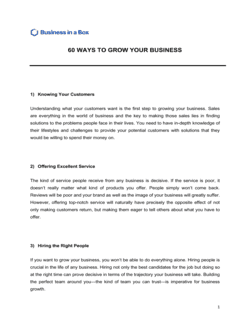
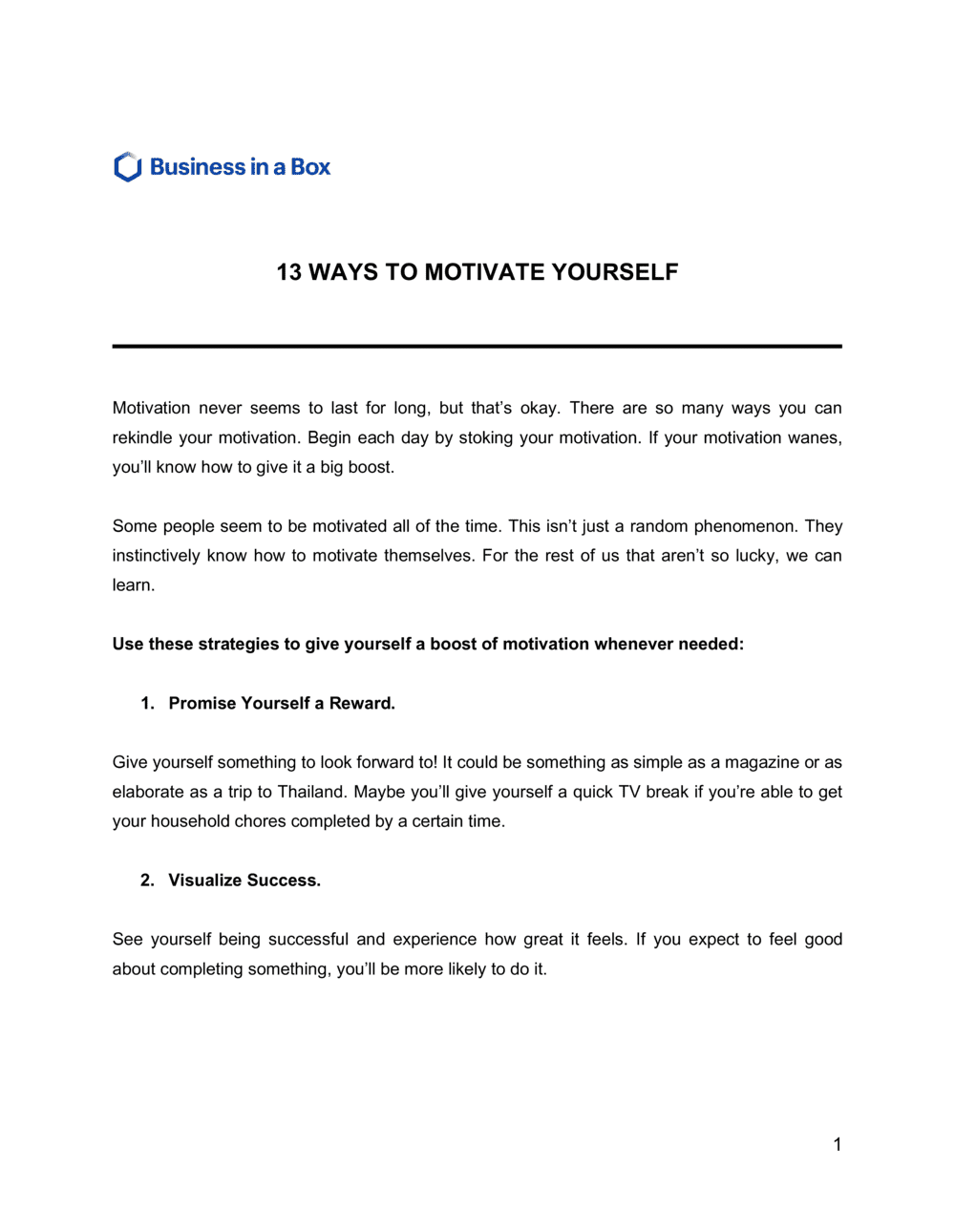
13 Ways To Motivate Yourself is a structured Word document that outlines thirteen evidence-backed strategies for building, recovering, and sustaining personal motivation in a professional context. This free download gives managers, coaches, and individuals a ready-to-use framework they can edit online, customize to their situation, and export as PDF for workshops, one-on-one sessions, or personal development plans.
When you need it
Use it when performance has plateaued, energy has dropped after a setback, a team member is disengaged, or you are entering a demanding project phase and want a concrete plan to stay on track mentally.
What's inside
The guide covers goal-setting and vision anchoring, habit design, progress tracking, accountability structures, environment optimization, self-talk reframing, and reward systems β€” organized into thirteen discrete, actionable sections with space to personalize each strategy to your specific role or goals.

What is a 13 Ways To Motivate Yourself guide?

13 Ways To Motivate Yourself is a structured operational document that outlines thirteen evidence-backed strategies for building, recovering, and sustaining personal motivation in a professional setting. It moves well beyond a generic tips list β€” each of the thirteen sections requires the reader to complete specific fields: a named goal, a personal 'why' statement, weekly milestones, an accountability partner, and pre-committed rewards. By forcing specificity at every step, the document converts motivational awareness into a concrete behavioral plan. It is used by individuals, managers, coaches, and HR professionals as a standalone development tool or as a companion to performance reviews, onboarding plans, and coaching programs.

Why You Need This Document

Motivation is not a stable state β€” it depletes under pressure, drifts when goals become abstract, and collapses after setbacks without a recovery structure in place. The cost of leaving this unaddressed is visible in missed targets, rising disengagement, and the slow productivity drain that follows any significant organizational or personal change. A structured motivation guide closes that gap by anchoring drive to a specific purpose, breaking the path to the goal into visible weekly wins, and creating external accountability that compensates for the limits of willpower alone. For managers and coaches, distributing a completed, personalized guide after a development conversation transforms good intentions into a trackable commitment. For individuals, it is the difference between knowing what motivates you and actually building the habits that keep you moving when the initial energy fades.

Which variant fits your situation?

If your situation is…Use this template
Creating a structured personal development plan for an employeeIndividual Development Plan
Tracking weekly goals and progress alongside motivation strategiesWeekly Planner
Running a team motivation workshop with facilitation notesTraining Workshop Outline
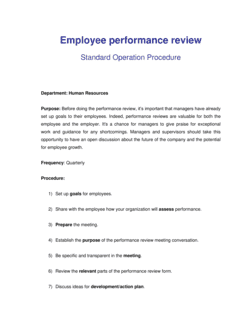
Setting and monitoring quarterly performance objectivesEmployee Performance Review
Building a full 90-day onboarding and motivation plan for new hires30-60-90 Day Plan
Supporting employee wellbeing as part of a broader HR initiativeEmployee Wellness Program Plan
Documenting personal goals as part of an annual review cyclePersonal Goals Setting Worksheet

Common mistakes to avoid

❌ Using the document as a reading exercise rather than a planning tool

Why it matters: A motivation guide that is read but not completed with personal specifics produces no behavioral change β€” it becomes inspirational content with no implementation.

Fix: Block 45–60 minutes to complete every section with specific names, dates, and numbers before sharing or acting on the document.
❌ Setting too many goals simultaneously

Why it matters: Splitting focus across five goals at once produces minimal visible progress on all of them, which is more demotivating than a single missed target.

Fix: Commit to one priority goal per planning cycle and use the milestone structure to create enough short-term wins to maintain momentum.

❌ Skipping the accountability structure section

Why it matters: Self-reported motivation plans without external accountability have a completion rate roughly 40% lower than those with a named accountability partner.

Fix: Identify a specific person, agree on a check-in frequency, and define exactly what you will report β€” before you close the document.

❌ Reviewing progress monthly instead of weekly

Why it matters: Monthly reviews lose the granular behavioral data that makes patterns visible. A month of missed targets looks like failure; the same period reviewed weekly reveals the specific day or trigger where things broke down.

Fix: Schedule a 20-minute weekly review on a fixed day and treat it with the same priority as a client meeting.

The 10 key sections, explained

Clarify your 'why'

Set a single priority goal

Break the goal into weekly milestones

Design your environment for focus

Use the two-minute start rule

Track visible progress daily

Reframe setbacks as data

Build an accountability structure

Schedule rewards for milestones

Write a weekly motivation review

How to fill it out

  1. 1

    Identify the context β€” personal, coaching, or team use

    Decide whether the document will be used as a personal development tool, shared with a coaching client, or distributed to a team. This determines the tone and level of detail you fill into each section.

    πŸ’‘ For team distribution, leave the personal fields as labeled placeholders and provide a completion guide rather than pre-filling them yourself.

  2. 2

    Complete the 'clarify your why' section first

    Write a one-to-two sentence statement of purpose for the specific goal this plan supports. Be concrete β€” 'to close my first $100K client' beats 'to grow the business.'

    πŸ’‘ Read the 'why' statement aloud. If it doesn't generate any emotion, it is too abstract β€” make it more specific.

  3. 3

    Set one priority goal with a deadline

    Enter a single measurable goal and the date by which you intend to achieve it. Resist the urge to list secondary goals in this section β€” those belong in a separate planning document.

    πŸ’‘ Apply the SMART test: Specific, Measurable, Achievable, Relevant, Time-bound. If any element is missing, the goal is not ready to commit to.

  4. 4

    Fill in weekly milestones working backward from the deadline

    Start from the goal's due date and work backward week by week, identifying what must be true at each stage. Enter no more than two milestones per week.

    πŸ’‘ If you cannot identify the milestones without more information, that gap in planning is itself a first-week task.

  5. 5

    Complete the environment design and accountability sections

    Name one specific environmental change you will make this week and one named accountability partner with a defined check-in schedule.

    πŸ’‘ The accountability partner should be someone with standing to ask hard questions β€” not just someone who will listen.

  6. 6

    Pre-commit to your milestone rewards

    For each of the top three milestones, write a specific reward that is genuinely motivating and strictly conditional on completion.

    πŸ’‘ The reward must be something you would not otherwise do β€” a reward you give yourself freely has no incentive value.

  7. 7

    Schedule the weekly motivation review in your calendar

    Block 20 minutes every [DAY] to complete the weekly review section. Treat it as a non-negotiable appointment β€” skip it and the whole system degrades within two weeks.

    πŸ’‘ Friday afternoon is the most effective time for most professionals β€” the week is fresh and you can set up next week before disconnecting.

Frequently asked questions

What is a self-motivation guide used for in a business context?

In a business context, a self-motivation guide is used by managers, coaches, and HR professionals to give employees or clients a structured framework for rebuilding drive, staying focused on goals, and developing habits that sustain performance over time. It is particularly useful during performance review cycles, onboarding, post-setback recovery, and high-pressure project phases where engagement is most at risk.

How is this document different from a motivational poster or generic tips list?

A structured motivation guide requires the reader to complete specific fields β€” named goals, dates, accountability partners, and milestone rewards β€” rather than passively absorbing advice. The completion process itself activates implementation intentions, which research consistently shows to be far more effective than awareness-level content. Generic tips inform; a completed template commits.

Can this be used as part of a formal employee development program?

Yes. HR and L&D teams frequently incorporate structured motivation frameworks into onboarding, performance improvement plans, and annual development review cycles. The document works well as a pre-work assignment before a coaching session or as a take-home deliverable from a team workshop. It pairs naturally with an Individual Development Plan or a 30-60-90 Day Plan.

How long does it take to complete the guide?

A focused first-time completion takes 45–60 minutes. Subsequent weekly review sections take 15–20 minutes. Managers using it with direct reports in a one-on-one context typically spend 30 minutes on initial completion together and 10 minutes per week on review. The upfront time investment pays off in reduced check-in overhead over the following month.

What if motivation drops again after completing the guide?

The weekly review section is specifically designed to detect and respond to motivation dips before they become disengagement. When energy drops, revisit the 'clarify your why' section first β€” the most common cause of re-emerging resistance is goal drift, where the stated goal no longer aligns with what the person actually wants. Updating the priority goal resets the system without starting from scratch.

Is this document appropriate for remote or hybrid teams?

Yes, and it is particularly valuable for remote workers, who lose the ambient social reinforcement of an office environment. The accountability structure section explicitly addresses check-in frequency and medium, making it easy to build asynchronous or video-based accountability loops. Distribute the template digitally, have each person complete it independently, and use a 30-minute virtual session to review key sections.

How does self-motivation relate to team performance outcomes?

Individual motivation is the upstream driver of discretionary effort β€” the difference between doing what is required and doing what is possible. Research on the Progress Principle shows that teams where members experience regular small wins and visible forward movement consistently outperform those driven primarily by external pressure or compensation. A structured individual motivation plan, when used across a team, compounds into measurable engagement and output improvements within 60–90 days.

Can coaches or consultants use this template with multiple clients?

Yes. The template is designed to be customized per client β€” coaches distribute a blank copy, complete the contextual sections together in session, and leave the client with a filled, personalized document. The weekly review section provides a natural recurring touchpoint. Business in a Box licenses allow commercial use for client-facing deliverables within the terms of your subscription.

How this compares to alternatives

vs Individual Development Plan

An Individual Development Plan (IDP) maps skill-building goals, training activities, and career milestones over a 6–12 month horizon. A motivation guide focuses specifically on the psychological and behavioral strategies that sustain execution of any plan. The two work best together β€” the IDP sets the destination; the motivation guide maintains the engine.

vs 30-60-90 Day Plan

A 30-60-90 Day Plan is a structured onboarding or transition roadmap with specific deliverables at each phase. A motivation guide is not time-phased in the same way β€” it focuses on building and sustaining the internal drive needed to execute any plan. Use the 30-60-90 for what to do; use the motivation guide for how to stay committed to doing it.

vs Performance Review Template

A performance review is a backward-looking assessment of what was achieved against stated objectives. A motivation guide is forward-looking and behavioral β€” it addresses how to generate the drive to hit future targets. Performance reviews diagnose gaps; a motivation guide addresses the motivational root causes behind them.

vs Employee Engagement Survey

An employee engagement survey measures collective sentiment across a team or organization at a point in time. A motivation guide is an individual, action-oriented tool that each person completes and acts on. Surveys identify where motivation is low; a structured guide gives each person a concrete framework to do something about it.

Industry-specific considerations

Professional Services

Used by consultants and coaches as a client-facing deliverable after motivation or performance coaching sessions, providing a structured take-home action plan.

Human Resources / Corporate L&D

Integrated into employee engagement programs, performance improvement plans, and annual development review cycles to support measurable behavior change.

Technology / SaaS

Startup and scale-up teams use it to maintain individual contributor focus during high-growth phases where role scope and priorities shift frequently.

Retail / Sales

Sales managers distribute it to reps during slumps or at the start of a new quota period to rebuild pipeline activity habits and reset target focus.

Template vs pro β€” what fits your needs?

PathBest forCostTime
Use the templateIndividuals, managers, and HR teams who want a ready-to-use framework without external facilitationFree45–60 minutes for initial completion; 15–20 minutes per weekly review
Template + professional reviewOrganizations embedding this into a formal L&D or coaching program who want professional facilitation or program design support$200–$800 for a coaching session or program design review2–5 days
Custom draftedLarge organizations building a proprietary motivation or performance framework with branded content and custom assessment tools$2,000–$8,000 for an organizational development consultant3–6 weeks

Glossary

Intrinsic Motivation
The drive to perform an activity because it is inherently satisfying or meaningful, rather than for an external reward.
Extrinsic Motivation
Motivation that comes from outside rewards or consequences β€” salary, recognition, bonuses, or avoiding penalties.
Implementation Intention
A specific if-then plan that links a situation to a desired behavior, increasing the likelihood the behavior actually occurs.
Habit Stacking
Attaching a new desired behavior to an existing established habit so the old cue automatically triggers the new action.
Growth Mindset
The belief that abilities and intelligence can be developed through effort and learning, rather than being fixed traits.
Accountability Partner
A person who agrees to check in regularly on another's progress toward a stated goal, creating social pressure to follow through.
Progress Principle
The research-backed finding that small, visible wins in meaningful work are the single strongest daily motivator for knowledge workers.
Self-Efficacy
A person's belief in their own capacity to execute the behaviors required to produce specific outcomes in a given situation.
Vision Board
A visual collage of goals, images, and affirmations used to keep long-term objectives concrete and emotionally resonant.
Reward System
A planned structure linking the completion of a defined task or milestone to a specific, pre-committed personal reward.

Part of your Business Operating System

This document is one of 3,000+ business & legal templates included in Business in a Box.

  • Fill-in-the-blanks β€” ready in minutes
  • Compatible with all office suites
  • Export to PDF and share electronically

Create your document in 3 simple steps.

From template to signed document β€” all inside one Business Operating System.
1
Download or open template

Access over 3,000+ business and legal templates for any business task, project or initiative.

2
Edit and fill in the blanks with AI

Customize your ready-made business document template and save it in the cloud.

3
Save, Share, Send, Sign

Share your files and folders with your team. Create a space of seamless collaboration.

Save time, save money, and create top-quality documents.

β˜…β˜…β˜…β˜…β˜…

"Fantastic value! I'm not sure how I'd do without it. It's worth its weight in gold and paid back for itself many times."

Managing Director Β· Mall Farm
Robert Whalley
Managing Director, Mall Farm Proprietary Limited
β˜…β˜…β˜…β˜…β˜…

"I have been using Business in a Box for years. It has been the most useful source of templates I have encountered. I recommend it to anyone."

Business Owner Β· 4+ years
Dr Michael John Freestone
Business Owner
β˜…β˜…β˜…β˜…β˜…

"It has been a life saver so many times I have lost count. Business in a Box has saved me so much time and as you know, time is money."

Owner Β· Upstate Web
David G. Moore Jr.
Owner, Upstate Web

Run your business with a system β€” not scattered tools

Stop downloading documents. Start operating with clarity. Business in a Box gives you the Business Operating System used by over 250,000 companies worldwide to structure, run, and grow their business.

Start freeΒ Β·Β No credit card required