AI & ChatGPT Templates
★★★★★4.7from 280+ reviews· Trusted by 20M+ businesses
Govern AI use at work, protect company data, and help your team get real results from ChatGPT.
WordEditable onlinePDF10+ AI & ChatGPT templates
Other Software & Technology categories
250K+Clients
20M+Free users
20+Years
190+Countries
10,000+Law firms
50M+Downloads
Trusted across review platforms
- Capterra★★★★☆4.649 reviews
- G2★★★★☆4.713 reviews
- GetApp★★★★☆4.649 reviews
- Google Play★★★★☆4.6179 ratings
- Google Reviews★★★★☆4.567 reviews
Frequently asked questions
Does my business need an AI policy?
Yes, if any employee uses AI tools at work. Without a written policy, you have no enforceable rules around data privacy, IP ownership, or output quality. A one-page acceptable use policy is the minimum; larger or regulated organizations typically need a fuller governance document. The cost of a data incident caused by an employee pasting sensitive information into ChatGPT is far higher than the time it takes to write a policy.
What should an AI acceptable use policy cover?
At minimum: which tools are permitted, which data categories may not be entered into AI prompts, a human review requirement for all AI-generated outputs, IP ownership rules, and consequences for violations. Regulated industries should also address how AI use intersects with compliance obligations under laws like HIPAA, GDPR, or CCPA.
Can employees use ChatGPT for work without a policy in place?
Many employees already do. The question is whether that use is safe and aligned with your business interests. Without a policy, employees have no guidance on what data they can share, so sensitive information often ends up in prompts unintentionally. A policy sets boundaries and protects both the company and the employee.
What data should never be entered into ChatGPT?
Customer personal data, employee records, trade secrets, source code, financial data, legal advice, and any information subject to confidentiality agreements should not be entered into the public versions of ChatGPT or similar tools. Enterprise API plans with data-processing agreements offer more control, but the same caution applies without explicit contractual protections in place.
How often should an AI policy be updated?
At least every six months, given the pace of change in AI tools and emerging regulation. Trigger an out-of-cycle review any time a major new tool is adopted, a regulatory development affects your industry, or a significant incident occurs.
Is a ChatGPT guide the same as an AI policy?
No. A ChatGPT guide is an educational resource — a playbook of prompts, use cases, and techniques to help employees work more effectively. An AI policy is a binding governance document. You need both: the policy tells employees what they can and can't do; the guide helps them get real value from what is permitted.
What is the difference between AI governance and AI compliance?
AI governance is the internal framework your organization sets for how AI is adopted, used, and overseen — policies, roles, review processes. AI compliance refers to meeting external legal and regulatory requirements that apply to AI use, such as the EU AI Act, GDPR, or sector-specific rules. Good governance makes compliance easier to demonstrate.
AI & ChatGPT vs. related documents
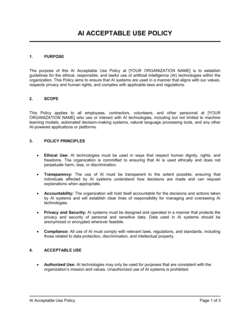
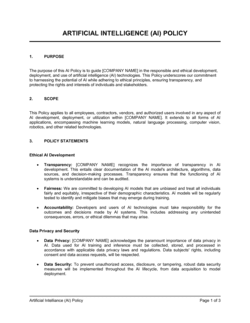
An AI Policy is a broad governance document that sets the organization's overall stance on AI: principles, risk tolerance, data protection requirements, and accountability structure. An AI Acceptable Use Policy is more operational — it tells employees specifically which tools they can use, what they can use them for, and what is prohibited. Most organizations need both: the policy sets the framework, the acceptable use document gives day-to-day direction.
An IT Security Policy governs how company systems, networks, and data are accessed and protected. An AI Policy focuses specifically on how artificial intelligence tools are adopted, used, and overseen — including risks unique to AI such as hallucinations, bias, IP exposure through prompts, and third-party model data retention. The two documents complement each other and should be cross-referenced.
Key clauses every AI & ChatGPT contains
AI governance documents share a common set of sections regardless of how detailed your organization's approach needs to be.
- Purpose and scope. States why the policy exists and which employees, contractors, tools, and use cases it covers.
- Permitted uses. Lists the specific tasks or workflows where AI tools are approved — for example, drafting, summarizing, or code review.
- Prohibited uses. Specifies what employees may not do with AI, such as inputting personal data, confidential client information, or proprietary code.
- Data protection requirements. Defines what categories of data may never be entered into an AI prompt and how AI-generated outputs must be handled.
- Human review obligation. Requires employees to verify AI-generated content before it is published, sent, or acted upon.
- Intellectual property ownership. Clarifies who owns AI-assisted work and what disclosures are required when AI is used in a deliverable.
- Accountability and enforcement. Names who is responsible for enforcing the policy and what consequences follow a violation.
- Review and update cadence. Sets how often the policy is reviewed, given how quickly AI tools and regulations change.
How to write an AI policy for your business
A practical AI policy takes less than a day to draft when you know what to cover. Here's the sequence that works for most small and mid-size teams.
1
Audit which AI tools your team already uses
Before writing a word, survey employees to find out which AI applications — ChatGPT, Copilot, Gemini, AI writing tools — are already in use.
2
Define your organization's risk tolerance
Decide upfront how conservative or permissive you want to be, factoring in your industry, the sensitivity of your data, and any regulatory requirements.
3
List permitted tools and approved use cases
Name the specific tools employees may use and the tasks those tools are approved for — drafting, research, code review, translation, etc.
4
Write the prohibited-use rules
Explicitly forbid inputting confidential data, customer PII, trade secrets, or regulated information into any AI tool unless a compliant enterprise plan is in place.
5
Address IP and disclosure
State who owns AI-assisted outputs and whether employees must disclose AI use to clients, managers, or in published materials.
6
Require human review of all AI outputs
Include a clear obligation to verify facts, check for bias, and edit AI-generated content before it is used in any official capacity.
7
Assign accountability and set a review schedule
Name a policy owner, establish consequences for violations, and commit to reviewing the policy at least every six months as tools evolve.
At a glance
- What it is
- AI and ChatGPT templates are ready-to-use documents that help businesses set rules for AI use in the workplace and put AI tools to practical use. They cover governance policies, employee guidelines, and step-by-step playbooks for applying AI across business functions.
- When you need one
- Any time your team starts using AI tools at work — especially ChatGPT — you need a written policy before issues arise and practical guides to get real value from the technology.
Which AI & ChatGPT do I need?
The right document depends on whether you need to govern AI use, guide employees on best practices, or help yourself or your team generate income with AI tools.
Your situation
Recommended template
Setting company-wide rules for how employees may use AI tools
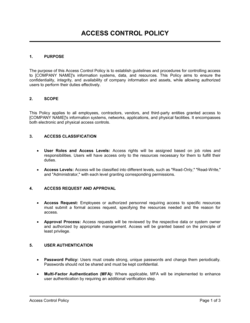
Establishes governance boundaries, data rules, and accountability across the organization.Defining exactly which AI applications staff can use and how
Lists permitted and prohibited uses so employees have clear, actionable guidance.Finding practical ways to apply ChatGPT across business functions
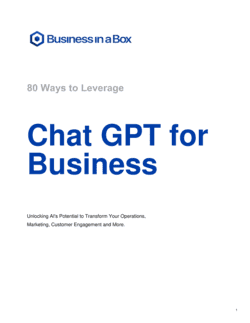
A curated playbook of 80 specific use cases spanning marketing, operations, HR, and more.Integrating AI into day-to-day business operations systematically
Step-by-step framework for identifying, adopting, and measuring AI in your workflows.Building side income or a new business using AI tools
Outlines proven AI-powered income streams with actionable starting steps.Glossary
- AI policy
- A written organizational document that sets the rules, principles, and accountability structure for how employees may use artificial intelligence tools.
- Acceptable use policy
- A narrower, more operational document that tells employees specifically which tools are permitted, which uses are approved, and what is prohibited.
- Prompt
- The text instruction or question a user types into an AI tool like ChatGPT to generate a response.
- Large language model (LLM)
- The type of AI system that powers tools like ChatGPT — trained on large amounts of text to generate human-like language responses.
- Hallucination
- When an AI tool confidently generates information that is factually incorrect or entirely fabricated, a key reason human review of AI outputs is essential.
- Human review requirement
- A policy rule that employees must verify and edit AI-generated content before it is published, sent to a client, or used in any official capacity.
- Data residency
- Where data physically or legally resides after being processed — relevant when employees enter business information into AI tools hosted in other jurisdictions.
- AI governance
- The internal structure of roles, policies, and review processes an organization uses to oversee how AI is adopted and used.
- Shadow AI
- The use of AI tools by employees without IT or management awareness or approval — a common risk in the absence of a written AI policy.
- AI literacy
- An employee's practical understanding of how AI tools work, their limitations, and how to use them responsibly and effectively.
What is an AI and ChatGPT template?
An AI and ChatGPT template is a professionally written document that helps businesses either govern the use of artificial intelligence in the workplace or put AI tools to practical, measurable use. This category covers two distinct document types that work together: governance documents — policies and acceptable use guidelines that set the rules — and practical guides that show employees and business owners how to apply AI tools like ChatGPT across real workflows.
AI policy templates give organizations a ready-made structure for addressing data protection, permitted use cases, human oversight requirements, and accountability — without starting from a blank page. Practical guides like ChatGPT playbooks and AI business handbooks translate the technology into specific tasks: writing, research, customer service, operations, and revenue generation. Together, they form the foundation of a functional AI program at any size of business.
When you need an AI or ChatGPT template
The moment your team starts using AI tools at work — even informally — you need both a policy and a practical guide. Most businesses reach this point not through a deliberate decision but when they notice employees are already using ChatGPT for drafts, summaries, or research without any guidelines in place.
Common triggers:
- An employee pastes a client brief or financial summary into ChatGPT and no data rule exists
- Leadership wants to adopt AI tools but needs a governance framework before rolling out access
- HR needs a written policy to enforce consequences for AI misuse
- A company is preparing for a compliance audit that now includes AI governance questions
- A founder wants to systematically apply AI across marketing, operations, and customer service
- A team member wants to generate side income or launch a business using AI tools
- A manager needs a practical onboarding resource to bring staff up to speed on ChatGPT
Skipping AI governance means confidential data, client information, and proprietary content are at risk every time an employee opens a chat window. A clear policy and a practical guide take hours to put in place and provide the structure your team needs to use AI confidently, safely, and to real business effect.
Award-winning platform
- Great Place to Work 2025
- BIG Award — Product of the Year 2025
- Smartest Companies 2025
- Global 100 Excellence 2026
- Best of the Best 2025