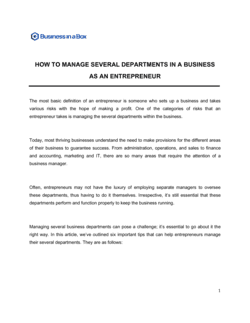
The 8 Business Departments That Are Crucial For An Organization's Function Template

Free to read • Save or share with one click

At a glance

What it is
This document defines the eight core business departments critical to an organization's function — covering roles, responsibilities, authority, and interdependencies across HR, Finance, Operations, Sales, Marketing, Legal, IT, and Customer Service. It is a Word download you can edit online and export as PDF for governance, onboarding, or compliance purposes.
When you need it
Use it when formalizing an organizational structure for a new or growing business, preparing for a regulatory review, or establishing accountability boundaries between departments as headcount scales.
What's inside
Definitions of each department's mandate and authority, reporting lines and escalation paths, cross-departmental coordination protocols, and compliance and record-keeping obligations specific to each function.

Which variant fits your situation?

If your situation is…Use this template
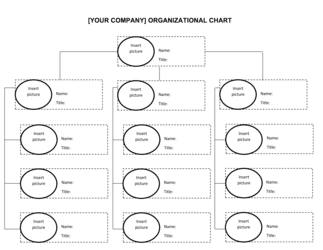
Documenting structure for a small business with fewer than 20 employeesOrganizational Chart Template
Formalizing roles for a nonprofit with volunteer and paid staffNonprofit Organizational Chart
Establishing HR policies alongside the department frameworkEmployee Handbook
Defining standard operating procedures for each departmentStandard Operating Procedure (SOP) Template
Outlining executive roles and governance for a board presentationCorporate Governance Policy
Documenting department-level KPIs and accountability metricsPerformance Management Plan
Mapping department interdependencies during a merger or acquisitionBusiness Integration Plan

What is The 8 Business Departments That Are Crucial For An Organization's Function?

The 8 Business Departments That Are Crucial For An Organization's Function is a formal governance document that defines the mandate, authority, reporting lines, and accountability obligations of each core department in a business — covering Human Resources, Finance and Accounting, Operations, Sales, Marketing, Legal and Compliance, Information Technology, and Customer Service. It moves department structure from an informal understanding to a binding written record that is acknowledged and signed by department heads and senior leadership. The document provides the governance foundation that enables a business to operate consistently, comply with applicable law, and scale without the accountability gaps that emerge when roles and authority are assumed rather than defined.

Why You Need This Document

Without a formalized department framework, accountability in a growing organization exists only as shared assumption — and shared assumptions break down the moment there is a conflict, an audit, a leadership change, or a funding round. When Finance and Operations both believe they control a vendor contract, or when Sales assumes it can approve discounts that Legal has not reviewed, the consequences range from budget overruns to regulatory exposure to unenforceable agreements. Investors and institutional lenders increasingly request evidence of documented governance before closing; a signed department framework is one of the clearest signals of organizational maturity a company can provide. This template gives you a structured, customizable starting point that you can complete in hours rather than weeks — closing the governance gap before it becomes a liability.

Common mistakes to avoid

❌ Overlapping or undefined department mandates

Why it matters: When two departments believe they own the same process, decisions stall, work gets duplicated, and accountability disappears when something goes wrong.

Fix: Add a one-sentence boundary statement to each department clause explicitly stating what that department does not control, naming adjacent departments where the boundary matters most.

❌ No dollar thresholds on spending and signing authority

Why it matters: Without explicit limits, department heads make financial commitments the CFO and board did not approve — a common trigger for audit findings and investor concern.

Fix: Define a tiered approval matrix within the Finance and each revenue-facing department clause, stating who approves expenditures at each dollar band.

❌ Treating the document as final after the first signing

Why it matters: An organizational framework that is not reviewed annually drifts out of alignment with actual operations — making it useless for governance and potentially misleading in a legal dispute.

Fix: Include a mandatory annual review clause with a named owner and a process for distributing, acknowledging, and dating all amendments.

❌ Excluding IT from software procurement decisions

Why it matters: Departments purchasing tools without IT review creates shadow IT, data security vulnerabilities, and integration failures that cost significantly more to fix after deployment.

Fix: State explicitly in the IT clause that all software procurement — regardless of department or budget size — requires IT review and approval before purchase.

❌ No legal review requirement for marketing materials

Why it matters: Marketing content published without legal review exposes the organization to false advertising claims, privacy violations, and trademark infringement — especially in regulated industries like healthcare or financial services.

Fix: Add a mandatory legal review step to the Marketing clause for all external communications, and define a turnaround time so the requirement does not become a bottleneck.

❌ Obtaining signatures after the framework is already in use

Why it matters: A department operating under an unsigned framework has no formal accountability to it — department heads can and do claim they were unaware of or disagreed with provisions they never formally accepted.

Fix: Circulate for signature before the framework takes effect, and treat unsigned copies as drafts. Provide a documented benefit or formal board resolution to accompany late signatures if circumstances require them.

The 10 key clauses, explained

Human Resources (HR) Department

In plain language: Defines the HR department's mandate over talent acquisition, employee relations, compensation, compliance, and workforce planning.

Sample language
The Human Resources Department is responsible for all aspects of the employment lifecycle, including recruitment, onboarding, compensation administration, performance management, disciplinary procedures, and separation, in compliance with applicable employment law in [JURISDICTION].

Common mistake: Assigning HR the authority to make final termination decisions without specifying approval thresholds — exposing the company to wrongful dismissal claims when the process is inconsistently applied.

Finance and Accounting Department

In plain language: Establishes Finance's authority over budgeting, financial reporting, accounts payable and receivable, tax compliance, and treasury.

Sample language
The Finance and Accounting Department shall maintain the Company's books and records in accordance with [GAAP / IFRS], prepare monthly financial statements no later than [X] business days after period close, and manage all tax filing obligations for [COMPANY NAME] in [JURISDICTION(S)].

Common mistake: Failing to define signing authority thresholds — such as which executive must approve expenditures above a specific dollar amount — resulting in unauthorized spending or budget overruns.

Operations Department

In plain language: Defines Operations' responsibility for production, supply chain, facilities, logistics, and the systems that deliver the company's core product or service.

Sample language
The Operations Department shall oversee the end-to-end delivery of [PRODUCT / SERVICE], including vendor management, inventory control, facilities maintenance, and quality assurance, targeting a defect rate not exceeding [X]% per [PERIOD].

Common mistake: Omitting quality assurance metrics from the Operations mandate, leaving no contractual basis for holding the department accountable when product or service standards slip.

Sales Department

In plain language: Establishes Sales' authority over revenue generation, customer acquisition, pipeline management, and pricing within approved parameters.

Sample language
The Sales Department is authorized to negotiate and close customer contracts up to $[AMOUNT] in total contract value without additional approval. Deals exceeding $[AMOUNT] or deviating from the standard pricing schedule require written approval from [TITLE].

Common mistake: Granting Sales authority to approve discounts or custom contract terms without a written limit — leading to margin erosion and commitments the business cannot fulfill.

Marketing Department

In plain language: Defines Marketing's mandate over brand management, demand generation, content, advertising spend, and market research.

Sample language
The Marketing Department is responsible for all external brand communications, advertising campaigns, and digital content for [COMPANY NAME]. All materials must be reviewed by the Legal Department before public release. The Marketing budget of $[AMOUNT] per [PERIOD] requires CFO approval to exceed.

Common mistake: Not requiring legal review of marketing materials before publication, creating exposure to false advertising claims, trademark infringement, or regulatory violations in regulated industries.

Legal and Compliance Department

In plain language: Defines Legal's role in contract review, regulatory compliance, intellectual property protection, dispute resolution, and risk management.

Sample language
The Legal and Compliance Department shall review all contracts with a total value exceeding $[AMOUNT], advise on regulatory obligations in [JURISDICTION(S)], manage all litigation and dispute resolution, and maintain a compliance calendar for all statutory filing deadlines.

Common mistake: Routing only large contracts to Legal while allowing department heads to sign smaller agreements unreviewed — creating cumulative liability through dozens of unfavorable standard-form contracts.

Information Technology (IT) Department

In plain language: Establishes IT's authority over infrastructure, cybersecurity, software procurement, data management, and business continuity.

Sample language
The IT Department is responsible for maintaining the security and availability of the Company's systems and data, including a recovery time objective (RTO) of [X] hours and a recovery point objective (RPO) of [X] hours in the event of a system failure. All software procurement requires IT approval.

Common mistake: Allowing individual departments to procure and deploy software tools without IT review, creating shadow IT, data security gaps, and unmanaged integration risks.

Customer Service Department

In plain language: Defines Customer Service's mandate over post-sale support, complaint resolution, service-level commitments, and customer feedback reporting.

Sample language
The Customer Service Department shall respond to all customer inquiries within [X] business hours and resolve complaints within [X] business days. Refunds exceeding $[AMOUNT] require approval from [TITLE]. Monthly satisfaction scores shall be reported to [EXECUTIVE TITLE] by the [X]th of each month.

Common mistake: Giving Customer Service authority to issue refunds or credits without a dollar threshold requiring management approval, resulting in inconsistent outcomes and unbudgeted financial exposure.

Cross-Departmental Coordination and Escalation

In plain language: Defines how departments collaborate on shared initiatives, resolve inter-departmental disputes, and escalate unresolved issues to executive leadership.

Sample language
Where a decision requires input from two or more departments and consensus cannot be reached within [X] business days, the matter shall be escalated to [TITLE / COMMITTEE]. Each department head shall designate a coordination lead responsible for inter-departmental project communication.

Common mistake: Leaving escalation paths undefined so that inter-departmental disputes stall indefinitely, delaying projects and forcing ad hoc executive intervention on issues that should have been resolved at a lower level.

Amendments and Governance Review

In plain language: States the process for updating the department framework as the business grows, and who has authority to approve changes.

Sample language
This document shall be reviewed no less than annually by [TITLE / COMMITTEE]. Amendments require written approval from [CEO / BOARD]. All department heads shall acknowledge receipt of any updated version in writing within [X] business days of distribution.

Common mistake: Treating the department framework as a one-time document with no review cycle — allowing it to drift out of alignment with actual operations until a compliance review or dispute surfaces the gap.

How to fill it out

  1. 1

    Identify all active departments in your organization

    List every department currently operating, even informally. If a function is performed by a single person wearing multiple hats, document it as a distinct function so accountability is clear as the business scales.

    💡 Use your payroll or org chart as the starting point — discrepancies between formal reporting lines and actual practice are the most common source of governance gaps.

  2. 2

    Define each department's mandate and boundaries

    Write a one-paragraph mandate for each department stating its primary function, what it owns, and — critically — what it does not own. Overlapping mandates between departments create conflict and duplicated effort.

    💡 If two department heads both claim ownership of a process, that process needs its own accountability clause with a named decision-maker.

  3. 3

    Establish signing and spending authority thresholds

    For Finance, Sales, Legal, and Operations, set explicit dollar thresholds above which a higher authority must approve. Document these in each department's clause so the limits are binding, not merely conventional.

    💡 Align thresholds with your existing board or investor approval requirements — inconsistencies between this document and your governance bylaws create legal ambiguity.

  4. 4

    Map reporting lines and escalation paths

    For each department, name the executive to whom the department head reports and define the escalation path when inter-departmental disputes cannot be resolved within a set timeframe.

    💡 Escalation timelines of three to five business days prevent issues from festering — longer windows encourage passive delay rather than resolution.

  5. 5

    Define cross-departmental coordination requirements

    Identify the three to five most common processes that require two or more departments to collaborate — such as a product launch involving Sales, Marketing, Legal, and IT. Document a coordination protocol for each.

    💡 Name a coordination lead in each department rather than defaulting to the department head — the head is a bottleneck; the lead is accountable.

  6. 6

    Set the governance review cycle

    State when and how this document will be reviewed — annually is the minimum — and who has authority to approve amendments. Include a distribution and acknowledgment requirement so all department heads confirm receipt of updates.

    💡 Tie the review cycle to your fiscal year-end so it happens alongside budgeting, when organizational changes are most likely to surface.

  7. 7

    Obtain signatures from all department heads and senior leadership

    Circulate the completed document to all department heads and the CEO or COO for signature. Each signature confirms the signatory has read, understood, and accepts accountability for their department's defined mandate.

    💡 Use a dated signature block for each department — if the document is later disputed, individual dated acknowledgments are far more defensible than a single signature page.

  8. 8

    Store the executed document and distribute acknowledged copies

    File the fully signed original in your corporate records and distribute a copy to each department head. Store digitally in a system where version history is preserved so amendments are traceable.

    💡 A version number and effective date on every copy prevents confusion when the document is revised — version 'Final v3' with no date is not version control.

Frequently asked questions

What are the 8 core business departments every organization needs?

The eight departments most consistently identified as critical to organizational function are Human Resources, Finance and Accounting, Operations, Sales, Marketing, Legal and Compliance, Information Technology, and Customer Service. Each addresses a distinct functional area, and together they cover the full cycle of acquiring, serving, and retaining customers while maintaining legal, financial, and operational integrity.

Why should a business formally document its department structure?

Informal department structures create accountability gaps that surface during disputes, audits, or leadership changes. A formal document establishes binding mandates, spending authorities, and reporting lines that prevent turf conflicts, unauthorized commitments, and compliance failures. Investors, lenders, and regulators increasingly expect documented governance frameworks as evidence of organizational maturity.

When should a company formalize its department structure?

Most businesses should formalize their department structure when headcount reaches 10 to 15 employees, when raising capital from institutional investors, or when preparing for a regulatory audit. Earlier formalization is advisable in regulated industries such as healthcare, financial services, or food production, where authorities may require documented accountability structures regardless of company size.

Does a department framework document need to be signed?

Yes. Signatures from each department head and the CEO or COO transform the document from a policy recommendation into a binding internal governance instrument. Unsigned frameworks are frequently disregarded during disputes or audits. Individual dated signatures from each department head are more defensible than a single collective signature page.

How often should a business department framework be reviewed?

At minimum annually, aligned to the fiscal year-end when organizational changes are most likely. A review should also be triggered by any material event: a significant hire or departure at the department-head level, a merger or acquisition, a regulatory change affecting one or more departments, or a funding round that changes governance expectations.

What is the difference between a department framework and an organizational chart?

An organizational chart shows reporting relationships visually — who reports to whom. A department framework is a written document that defines each department's mandate, authority, spending limits, escalation paths, and cross-departmental coordination protocols. Both are needed: the chart maps the structure; the framework governs how it operates. A chart without a framework leaves accountability entirely informal.

Do small businesses with fewer than 10 employees need this document?

Not always in full form, but defining departmental responsibilities even informally — using a simplified version of this template — prevents the confusion that occurs when a three-person team scales to ten without ever discussing who owns what. A lightweight version covering Finance, Operations, and Sales is appropriate for most businesses under ten people.

Can one person head more than one department?

Yes, and this is common in early-stage businesses. The document should still define each department's mandate separately, with the individual named as the accountable owner of each. This creates a clear record of what that person is responsible for and makes transitions cleaner when you hire dedicated department heads as the business grows.

Does this document need to comply with employment or corporate law?

The document itself is an internal governance instrument, not a statutory filing. However, the authority and accountability structures it creates — particularly around HR, Finance, and Legal — must be consistent with applicable employment law, corporate bylaws, and any investor agreements. In most jurisdictions, consider having a lawyer review the document before execution to confirm it does not conflict with existing legal obligations.

How this compares to alternatives

vs Organizational Chart

An organizational chart displays reporting relationships visually but contains no written mandates, authority limits, or escalation procedures. A department framework document provides the governance substance the chart lacks. Most organizations need both: the chart for communication and onboarding, the framework for accountability and compliance.

vs Employee Handbook

An employee handbook governs individual conduct, benefits, and HR policies — it is addressed to each employee. A department framework is addressed to the organization as a governance instrument, defining how departments function, what authority they hold, and how they interact. The handbook and the framework are complementary, not interchangeable.

vs Standard Operating Procedure (SOP)

An SOP documents a single repeatable process step by step. A department framework establishes the mandate and authority structure within which all SOPs operate. The framework answers 'who owns what'; the SOP answers 'how is it done'. Both are needed for a complete governance structure.

vs Corporate Governance Policy

A corporate governance policy addresses board-level accountability, director duties, and shareholder rights — it operates at the ownership and fiduciary level. A department framework operates at the operational level, defining accountability within the executive and management layer. Larger organizations need both; early-stage companies typically formalize the department framework first.

Industry-specific considerations

Technology / SaaS

IT and Legal clauses require specific cybersecurity standards, software procurement controls, and IP assignment language aligned to the company's development model.

Healthcare

Legal and Compliance clauses must reference HIPAA obligations, credentialing requirements, and patient data handling protocols across HR, IT, and Operations.

Financial Services

Finance and Legal clauses require explicit regulatory compliance mandates — including AML, KYC, and reporting obligations — with named compliance officers and escalation paths to the board.

Manufacturing

Operations clauses cover production capacity, quality control metrics, supplier approval processes, and workplace safety obligations governed by OSHA or equivalent regulators.

Professional Services

Sales and Legal clauses define client contract approval authority, engagement letter standards, conflict-of-interest checks, and billable-hour accountability by department.

Retail / E-commerce

Operations and Customer Service clauses address inventory management, fulfillment SLAs, return and refund authority limits, and consumer protection compliance by jurisdiction.

Jurisdictional notes

United States

Department frameworks in the US must align with federal and state employment law, including FLSA classification rules and EEOC obligations embedded in the HR mandate. OSHA requirements affect the Operations clause for manufacturing and construction. State-level variations — particularly in California around privacy (CCPA) and employment restrictions — should be reviewed for any department with a California presence.

Canada

Each provincial Employment Standards Act establishes minimum obligations that must be reflected in the HR and Finance department clauses — particularly around termination notice, overtime, and leave entitlements. PIPEDA and provincial privacy laws impose data-handling obligations on the IT and Legal clauses. Quebec-based organizations must ensure all internal governance documents are available in French under the Charter of the French Language.

United Kingdom

UK organizations must ensure HR and Legal clauses reflect obligations under the Employment Rights Act 1996 and the Equality Act 2010. The IT clause should reference UK GDPR obligations for data handling and breach notification. Post-Brexit, companies with EU operations may need parallel department frameworks for each jurisdiction to address diverging regulatory requirements.

European Union

GDPR imposes specific obligations on the IT, Legal, and HR clauses — including data processing records, data protection officer designation where required, and breach notification timelines. Works council consultation requirements in Germany, France, and the Netherlands may affect how department mandates are defined and amended. Member state labor laws vary significantly; a single EU-wide framework should reference applicable national law rather than attempting to specify it.

Template vs lawyer — what fits your deal?

PathBest forCostTime
Use the templateSmall to mid-sized businesses formalizing department accountability for the first time without complex regulatory obligationsIncluded with Business in a Box2–4 hours
Template + legal reviewBusinesses in regulated industries, those raising capital, or those with existing governance documents that must remain consistent$300–$8002–5 business days
Custom draftedLarge organizations, multinationals, or businesses undergoing a merger where department frameworks must align across legal entities and jurisdictions$1,500–$5,000+1–3 weeks

Glossary

Organizational Structure
The formal system that defines how roles, responsibilities, and authority are distributed and coordinated across a business.
Departmental Mandate
A written statement of the specific functions, goals, and decision-making authority assigned to a business department.
Reporting Line
The chain of authority from an employee upward to their direct manager and ultimately to executive leadership.
Escalation Path
A defined process for routing unresolved issues or decisions upward through the organizational hierarchy.
Cross-Functional Coordination
Structured communication and collaboration between two or more departments to complete shared objectives.
Accountability Matrix
A document — often formatted as a RACI chart — specifying who is Responsible, Accountable, Consulted, and Informed for each business process.
Span of Control
The number of direct reports a manager oversees; a narrow span means fewer reports, a wide span means more.
Delegation of Authority
A formal policy specifying which decisions each role or department may make independently versus those requiring approval from a higher level.
Functional Silo
An organizational condition where departments operate independently without sharing information or coordinating, leading to inefficiencies and duplication.
Governance Framework
The set of rules, policies, and accountability structures that guide how decisions are made and monitored within an organization.
RACI Chart
A responsibility assignment matrix that maps tasks to roles using four labels: Responsible, Accountable, Consulted, and Informed.

Part of your Business Operating System

This document is one of 3,000+ business & legal templates included in Business in a Box.

  • Fill-in-the-blanks — ready in minutes
  • Compatible with all office suites
  • Export to PDF and share electronically

Browse related collections

Create your document in 3 simple steps.

From template to signed document — all inside one Business Operating System.

1
Download or open template

Access over 3,000+ business and legal templates for any business task, project or initiative.

2
Edit and fill in the blanks with AI

Customize your ready-made business document template and save it in the cloud.

3
Share with your team

Share your files and folders with your team. Create a space of seamless collaboration.

Save time, save money, and create top-quality documents.

★★★★★

"Fantastic value! I'm not sure how I'd do without it. It's worth its weight in gold and paid back for itself many times."

Managing Director · Mall Farm
Robert Whalley
Managing Director, Mall Farm Proprietary Limited
★★★★★

"I have been using Business in a Box for years. It has been the most useful source of templates I have encountered. I recommend it to anyone."

Business Owner · 4+ years
Dr Michael John Freestone
Business Owner
★★★★★

"It has been a life saver so many times I have lost count. Business in a Box has saved me so much time and as you know, time is money."

Owner · Upstate Web
David G. Moore Jr.
Owner, Upstate Web

Run your business with a system — not scattered tools

Stop downloading documents. Start operating with clarity. Business in a Box gives you the Business Operating System used by over 250,000 companies worldwide to structure, run, and grow their business.

Start free · No credit card required