Request to Include Landlord in Tenant's Liability Insurance Template

Free Word download β€’ Edit online β€’ Save & share with Drive β€’ Export to PDF

1 pageβ€’15–25 min to fillβ€’Difficulty: Standard
Learn more ↓
FreeRequest to Include Landlord in Tenant's Liability Insurance Template

At a glance

What it is
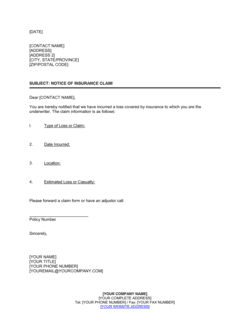
A Request to Include Landlord in Tenant's Liability Insurance is a formal business letter a tenant sends to their insurance provider asking that the landlord be added as an additional insured on the tenant's commercial general liability policy. This free Word download gives you a ready-to-edit template you can complete in minutes and export as PDF to forward to your insurer or broker.
When you need it
Use it when your lease agreement requires you to name the landlord as an additional insured, when a landlord requests proof of coverage before granting access or approving a sublease, or when renewing a policy and needing to reinstate the landlord's additional insured status.
What's inside
Tenant and landlord identification, the specific policy details and coverage requested, the legal basis referencing the lease clause, a clear action request to the insurer, and a professional closing with contact information for follow-up.

What is a Request to Include Landlord in Tenant's Liability Insurance?

A Request to Include Landlord in Tenant's Liability Insurance is a formal business letter a commercial tenant sends to their insurance provider or broker asking that the landlord be added as an additional insured on the tenant's commercial general liability policy. By adding the landlord as an additional insured, the tenant's policy extends coverage to the landlord for claims arising from the tenant's use of the leased premises β€” such as a customer injury on the property. Most commercial leases require this designation as a condition of tenancy, and this letter is the mechanism that puts the requirement into effect with the insurer.

Why You Need This Document

Failing to send this letter β€” or sending it with incomplete information β€” puts the tenant in breach of their lease's insurance obligations, which can trigger default notices, access denial, or lease termination. Landlords rely on additional insured status to avoid funding their own defense in liability claims that arise from a tenant's operations; without written confirmation, they will withhold keys, delay move-in approvals, or escalate to legal action. A clear, correctly formatted letter with the landlord's exact legal entity name, the policy number, and a specific effective date is the difference between a same-day endorsement and a week of back-and-forth that delays your business opening. This template gives you all the required components in a single ready-to-send document.

Which variant fits your situation?

If your situation is…Use this template
Lease requires landlord to be named as additional insured before move-inRequest to Include Landlord in Tenant's Liability Insurance
Landlord requests a formal certificate of insurance showing coverageCertificate of Insurance Request Letter
Tenant needs to notify landlord of existing coverage detailsProof of Insurance Letter
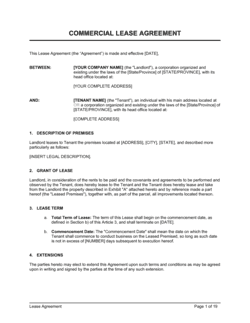
Tenant is adding a subtenant and must extend coverageSublease Agreement
Landlord is disputing adequacy of tenant's current coverageResponse to Landlord Insurance Dispute Letter
Tenant is renewing a commercial lease and updating insurance termsCommercial Lease Renewal Letter

Common mistakes to avoid

❌ Using the landlord's trade name instead of legal entity name

Why it matters: If the name on the endorsement does not match the landlord's registered legal name, the coverage may not apply to the correct party in a claim, exposing the tenant to a lease breach.

Fix: Confirm the landlord's exact registered legal entity name in writing before submitting the request, and use that name verbatim in the letter.

❌ Sending the letter without a policy number in the subject line

Why it matters: Insurers and brokers handle large volumes of correspondence β€” a letter without a policy number is frequently misrouted or queued for manual research, adding days to processing.

Fix: Always include the policy number in both the subject line and the body of the letter, and address it to the endorsements or policy services department specifically.

❌ Omitting the required effective date

Why it matters: Without a stated effective date, the insurer defaults to the processing date, which may fall after the lease commencement date and leave the tenant in breach of the lease's insurance obligations.

Fix: State the required effective date explicitly and confirm it matches or precedes the lease start date β€” then request rush processing if the timeline is tight.

❌ Failing to request the certificate of insurance in the same communication

Why it matters: Without a COI, the tenant cannot prove to the landlord that the endorsement has been added β€” landlords frequently require the COI before granting access or releasing keys.

Fix: Include a COI request in every additional insured letter and provide the landlord's contact details so the insurer can send it directly.

The 9 key clauses, explained

Sender and recipient identification

In plain language: Identifies the tenant sending the letter, their company name and address, and the insurance company or broker receiving the request.

Sample language
[TENANT COMPANY NAME] | [ADDRESS] | [DATE] | To: [INSURER / BROKER NAME], [ADDRESS]

Common mistake: Sending the letter to the wrong contact β€” addressing it to claims or billing instead of the policy services or endorsements department causes days of delay.

Subject line referencing policy and lease

In plain language: A clear, specific subject line naming the policy number, the lease address, and the nature of the request so it is routed correctly without the insurer having to open the body.

Sample language
Re: Request to Add Additional Insured | Policy No. [POLICY NUMBER] | Premises: [PROPERTY ADDRESS]

Common mistake: Using a vague subject like 'Insurance Update' β€” without the policy number, the insurer cannot locate the account and the request is often misrouted or delayed.

Statement of purpose

In plain language: The opening paragraph that clearly states the tenant is requesting the landlord be added as an additional insured on their existing liability policy.

Sample language
I am writing on behalf of [TENANT COMPANY NAME] to formally request that [LANDLORD LEGAL NAME] be added as an additional insured to our commercial general liability policy, Policy No. [POLICY NUMBER], effective [DATE].

Common mistake: Opening with background context before stating the request β€” busy insurers and brokers need the action item in the first sentence to process efficiently.

Lease clause reference

In plain language: Cites the specific section of the lease agreement that obligates the tenant to name the landlord as an additional insured, establishing the legal basis for the request.

Sample language
This request is made pursuant to Section [X] of our Lease Agreement dated [DATE] for the premises located at [PROPERTY ADDRESS], which requires [TENANT NAME] to maintain liability coverage naming [LANDLORD NAME] as an additional insured.

Common mistake: Omitting the lease section number and date β€” without this, the insurer has no documented basis for the endorsement and may require the tenant to submit the full lease.

Landlord's full legal name and address

In plain language: States the landlord's exact registered legal name and mailing address exactly as they should appear on the additional insured endorsement.

Sample language
Please add the following party as additional insured: [LANDLORD LEGAL NAME], [ADDRESS], [CITY, STATE, ZIP].

Common mistake: Using a trade name or abbreviated name rather than the landlord's registered legal entity name β€” a mismatch means the endorsement may not protect the correct party in a claim.

Coverage details and effective date

In plain language: Specifies the policy type, desired coverage limits if different from standard, and the date from which additional insured status should take effect.

Sample language
We request that the additional insured endorsement take effect on [DATE] under our [COMMERCIAL GENERAL LIABILITY / UMBRELLA] policy with a minimum limit of $[X] per occurrence.

Common mistake: Not specifying an effective date β€” the insurer may default to the endorsement processing date, which could leave a gap if the lease requires coverage from the move-in date.

Request for certificate of insurance

In plain language: Asks the insurer or broker to issue an updated certificate of insurance reflecting the landlord's additional insured status so the tenant can provide proof to the landlord.

Sample language
Once the endorsement is processed, please provide an updated Certificate of Insurance naming [LANDLORD LEGAL NAME] as additional insured and forward a copy to both the undersigned and to [LANDLORD CONTACT EMAIL / ADDRESS].

Common mistake: Forgetting to request the COI in the same letter β€” tenants often follow up separately, doubling the processing time and delaying the landlord's confirmation.

Urgency or deadline statement

In plain language: States any deadline by which the endorsement must be processed, such as a lease commencement date or a landlord-imposed deadline, so the insurer can prioritize.

Sample language
Please note that the lease commences on [DATE], and proof of additional insured status must be provided to [LANDLORD NAME] no later than [DATE]. Your prompt attention to this request is appreciated.

Common mistake: Omitting a deadline when one exists β€” without a stated timeline, routine processing queues may cause the endorsement to arrive after the lease start date.

Contact information and closing

In plain language: Provides the tenant's direct contact details for any questions, confirms authorization to make the change, and closes professionally.

Sample language
Should you require any additional information, please contact me directly at [PHONE NUMBER] or [EMAIL ADDRESS]. Thank you for your prompt assistance. Sincerely, [AUTHORIZED SIGNATORY NAME], [TITLE], [COMPANY NAME].

Common mistake: Providing only a general company email rather than a direct contact β€” follow-up questions go unanswered and processing stalls waiting for a response.

How to fill it out

  1. 1

    Gather your policy and lease details

    Before filling in the template, locate your current insurance policy number, the policy's effective dates, the insurer's endorsement contact, and the specific lease clause requiring the additional insured.

    πŸ’‘ Your policy declarations page and your broker's direct line are the two fastest sources for all the information you need.

  2. 2

    Enter sender and recipient details

    Fill in your company's full legal name, address, and the date. Address the letter specifically to your insurer's policy services or endorsements department β€” not the general mailbox.

    πŸ’‘ Call your broker first to confirm the correct department name and email β€” routing it correctly can cut processing time from days to hours.

  3. 3

    Complete the subject line with policy number and property address

    Enter your policy number and the full address of the leased premises in the subject line so the insurer can locate your account without reading the body.

    πŸ’‘ A specific subject line is the single fastest way to get this letter processed β€” insurers handle hundreds of requests daily.

  4. 4

    State the landlord's exact legal name and address

    Enter the landlord's registered legal entity name β€” not a trade name β€” and their full mailing address exactly as it should appear on the endorsement.

    πŸ’‘ Ask the landlord directly for their registered entity name if you are unsure β€” it is often different from the property management company name on your lease.

  5. 5

    Cite the relevant lease clause and effective date

    Reference the specific section of your lease that requires the additional insured designation, then specify the exact date the endorsement should take effect.

    πŸ’‘ If your lease commences in less than five business days, call your broker to request rush processing rather than sending only by email.

  6. 6

    Request a certificate of insurance in the same letter

    Add a sentence asking the insurer to issue an updated COI naming the landlord and send copies to both you and the landlord directly.

    πŸ’‘ Providing the landlord's email address in the letter saves a separate follow-up and gets the COI to them faster.

  7. 7

    State any deadline and send via email with read receipt

    If the landlord or lease requires the endorsement by a specific date, state that date clearly. Send the completed letter by email to your broker and request written confirmation of receipt.

    πŸ’‘ Follow up by phone the same day if the deadline is within a week β€” written requests alone are not always treated as urgent.

Frequently asked questions

What does it mean to add a landlord as an additional insured?

Adding a landlord as an additional insured means the landlord is included on the tenant's commercial general liability policy and receives coverage protection for claims arising from the tenant's use of the premises. If a visitor is injured on the leased property and sues both the tenant and landlord, the tenant's policy will respond on the landlord's behalf as well. This is a standard requirement in most commercial leases.

Why do landlords require tenants to name them as additional insured?

Landlords require additional insured status to protect themselves from liability claims that arise from the tenant's activities on the premises. Without it, a landlord sued alongside a tenant would need to rely solely on their own property insurance, which may not cover third-party bodily injury or property damage caused by the tenant's operations. It is a standard risk-management provision in commercial leases.

Is this letter the same as a certificate of insurance?

No. This letter is a request sent to the tenant's insurer or broker asking them to add the landlord as an additional insured by way of an endorsement. A certificate of insurance is the summary document the insurer issues afterward, confirming the coverage details and naming the landlord as additional insured. This letter triggers the process; the COI is the proof document the landlord ultimately receives.

How quickly is an additional insured endorsement typically processed?

Most insurers and brokers process standard additional insured endorsements within one to three business days when all required information is provided correctly. If your lease start date is imminent, call your broker to request same-day or next-day processing and follow up the email with a phone call. Incomplete requests β€” missing policy numbers, incorrect entity names, or no effective date β€” can delay processing significantly.

Does adding a landlord as additional insured increase the tenant's premium?

In most cases, adding a landlord as an additional insured on a commercial general liability policy does not increase the premium β€” it is a standard endorsement included at no extra cost under most CGL policies. However, some umbrella policies or specialized policies may carry a nominal endorsement fee. Confirm with your broker before submitting the request if cost is a concern.

Can a landlord be added as additional insured on a residential rental policy?

Residential renter's insurance policies generally do not offer additional insured endorsements in the same way commercial policies do. This request template is designed for commercial leases and commercial general liability policies. Residential landlords seeking coverage protection typically rely on their own landlord insurance policy rather than the tenant's renter's insurance.

What is the difference between additional insured and loss payee?

An additional insured is added to a liability policy and receives protection against third-party claims. A loss payee is added to a property insurance policy and receives direct payment if insured property is damaged or destroyed β€” most commonly used by mortgage lenders. A landlord requesting additional insured status is seeking liability protection, not a share of property damage proceeds.

What should I do if my insurer refuses to add the landlord as additional insured?

If your insurer declines to add the landlord as additional insured, contact your broker immediately to understand the reason β€” it may be a policy restriction that requires a policy upgrade or a different form of endorsement. Review your lease to confirm the exact coverage requirement and share that language with your broker. If the issue is not resolved quickly, notify your landlord in writing to avoid being found in breach of your lease's insurance obligations.

How this compares to alternatives

vs Certificate of Insurance Request Letter

A certificate of insurance request asks an insurer to issue a summary document proving existing coverage. This letter goes further β€” it requests a change to the policy itself by adding the landlord as additional insured. The COI request is typically sent after this letter has been processed and the endorsement is in place.

vs Waiver of Subrogation Letter

A waiver of subrogation letter asks the insurer to waive its right to recover claim costs from the landlord. Additional insured status and waiver of subrogation are distinct protections often required together in commercial leases. This template addresses only additional insured status; a separate waiver letter handles subrogation.

vs Commercial Lease Agreement

The commercial lease agreement is the source document that creates the obligation to name the landlord as additional insured. This letter is a downstream fulfillment action triggered by the lease's insurance clause. The lease defines the requirement; this letter executes it with the insurer.

vs Landlord Insurance Request Form

Some landlords provide their own insurance request forms for tenants to complete and submit to insurers. This letter template is appropriate when no landlord form exists or when the tenant needs to initiate the request independently through their own broker. Both achieve the same outcome β€” additional insured endorsement β€” through different formats.

Industry-specific considerations

Retail

Retail tenants in shopping centers and strip malls typically face strict lease insurance requirements with specific minimum coverage limits and mandatory additional insured language.

Food and Beverage

Restaurants and cafes have elevated premises liability exposure, making landlords particularly insistent on additional insured status as a condition of lease execution and renewal.

Professional Services

Law firms, accounting practices, and consultancies in leased office space routinely process this request as a standard step in commercial lease onboarding.

Manufacturing

Industrial tenants occupying warehouses or factory space face higher liability exposure from equipment and operations, making landlord additional insured status a near-universal lease requirement.

Template vs pro β€” what fits your needs?

PathBest forCostTime
Use the templateCommercial tenants processing a standard additional insured request under a straightforward lease clauseFree10–15 minutes
Template + professional reviewTenants with complex multi-location leases, high minimum coverage thresholds, or landlords with non-standard endorsement requirements$50–$150 (broker review)1 business day
Custom draftedLarge commercial leases with bespoke insurance schedules, regulated industries, or disputes over coverage adequacy requiring legal input$200–$500 (insurance attorney or specialist broker)2–5 business days

Glossary

Additional Insured
A person or organization added to someone else's insurance policy who receives coverage protections under that policy, typically for liability arising from the named insured's activities.
Named Insured
The primary policyholder identified on an insurance policy β€” in this context, the tenant whose policy is being modified.
Additional Insured Endorsement
A formal amendment to an existing insurance policy that extends coverage to a third party, such as a landlord, for specified liabilities.
Commercial General Liability (CGL) Policy
A standard business insurance policy covering bodily injury, property damage, and personal injury claims arising from the insured's operations at a premises.
Certificate of Insurance (COI)
A one-page summary document issued by an insurer confirming a policyholder's coverage details, including additional insured status when applicable.
Indemnification Clause
A lease provision under which the tenant agrees to hold the landlord harmless from certain liabilities arising from the tenant's use of the premises.
Policy Period
The start and end dates during which an insurance policy is active and claims may be made against it.
Broker of Record
The licensed insurance agent or brokerage authorized to make changes, additions, or endorsements to a policyholder's insurance policy.
Premises Liability
Legal responsibility for injuries or property damage that occur on a specific property β€” a central concern driving landlords to request additional insured status.
Waiver of Subrogation
A provision preventing an insurer from pursuing a third party β€” such as the landlord β€” to recover costs after paying a claim, often required alongside additional insured status.

Part of your Business Operating System

This document is one of 3,000+ business & legal templates included in Business in a Box.

  • Fill-in-the-blanks β€” ready in minutes
  • 100% customizable Word document
  • Compatible with all office suites
  • Export to PDF and share electronically

Create your document in 3 simple steps.

From template to signed document β€” all inside one Business Operating System.
1
Download or open template

Access over 3,000+ business and legal templates for any business task, project or initiative.

2
Edit and fill in the blanks with AI

Customize your ready-made business document template and save it in the cloud.

3
Save, Share, Send, Sign

Share your files and folders with your team. Create a space of seamless collaboration.

Save time, save money, and create top-quality documents.

β˜…β˜…β˜…β˜…β˜…

"Fantastic value! I'm not sure how I'd do without it. It's worth its weight in gold and paid back for itself many times."

Managing Director Β· Mall Farm
Robert Whalley
Managing Director, Mall Farm Proprietary Limited
β˜…β˜…β˜…β˜…β˜…

"I have been using Business in a Box for years. It has been the most useful source of templates I have encountered. I recommend it to anyone."

Business Owner Β· 4+ years
Dr Michael John Freestone
Business Owner
β˜…β˜…β˜…β˜…β˜…

"It has been a life saver so many times I have lost count. Business in a Box has saved me so much time and as you know, time is money."

Owner Β· Upstate Web
David G. Moore Jr.
Owner, Upstate Web

Run your business with a system β€” not scattered tools

Stop downloading documents. Start operating with clarity. Business in a Box gives you the Business Operating System used by over 250,000 companies worldwide to structure, run, and grow their business.

Start freeΒ Β·Β No credit card required