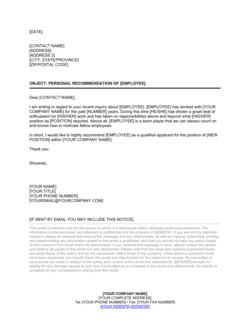
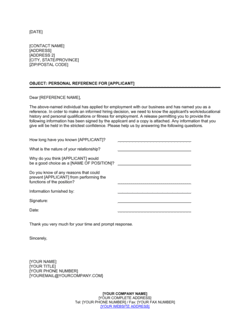
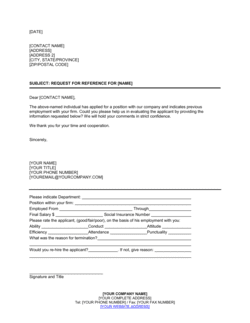
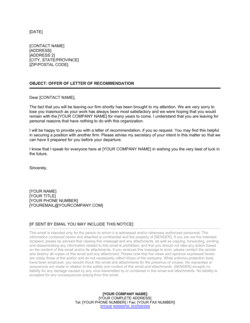
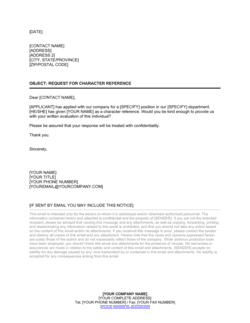
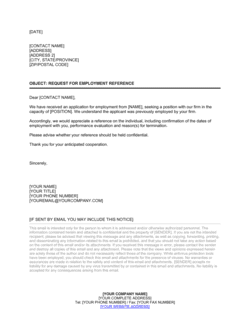
Personal Recommendation and Reference Template

Free Word download β€’ Edit online β€’ Save & share with Drive β€’ Export to PDF

1 pageβ€’20–25 min to fillβ€’Difficulty: Standardβ€’Signature requiredβ€’Legal review recommended
Learn more ↓
FreePersonal Recommendation and Reference Template

At a glance

What it is
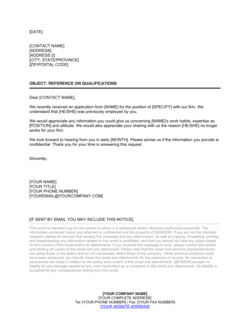
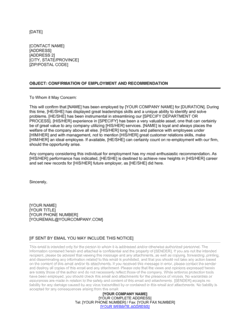
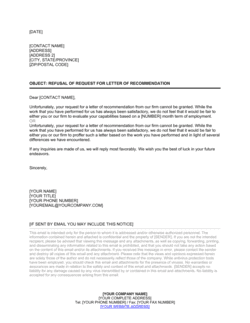
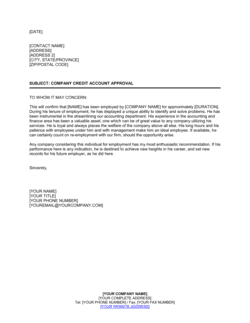
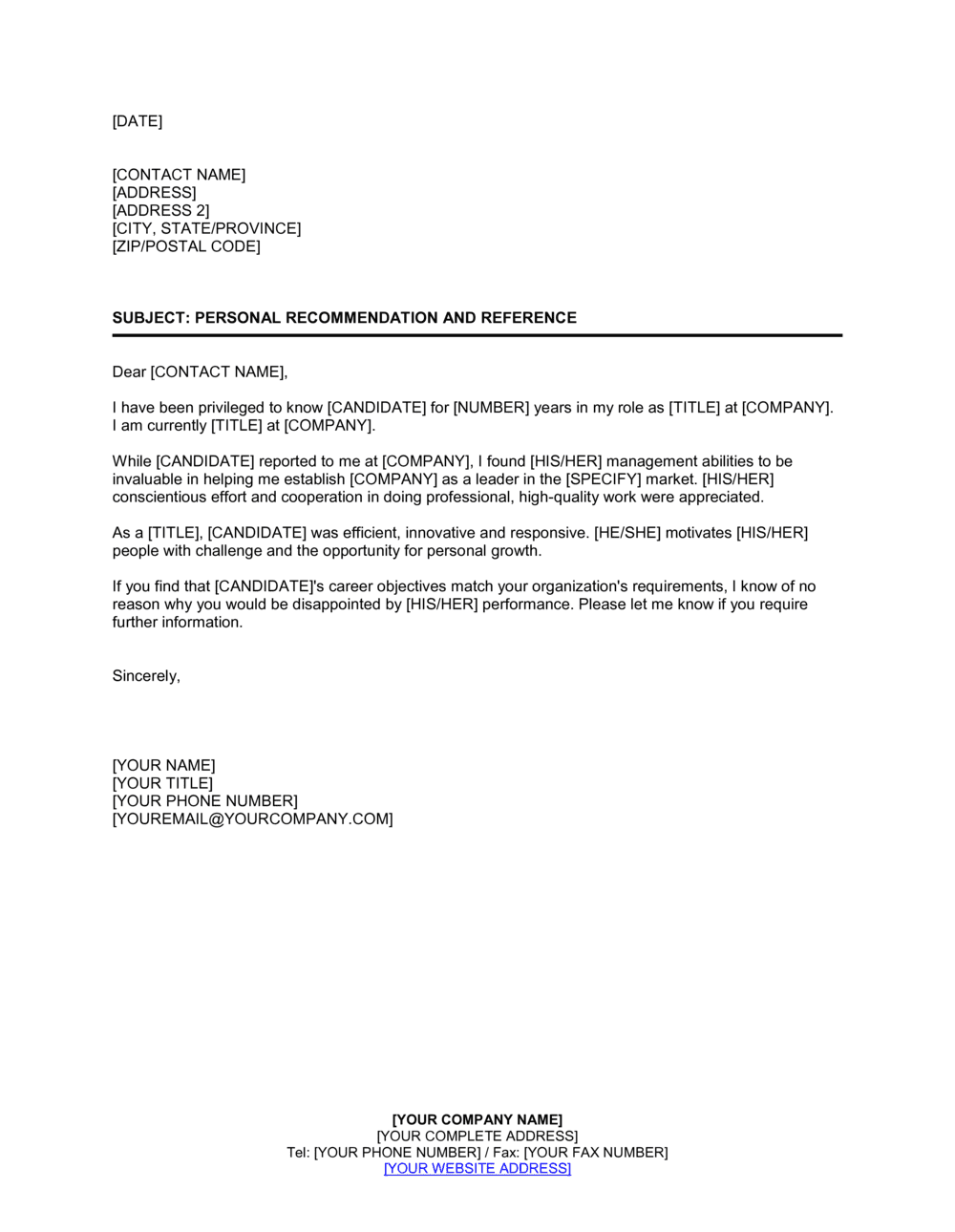
A Personal Recommendation and Reference is a formal written statement in which a referee attests to a subject's character, professional abilities, or suitability for a specific role, program, or purpose. This free Word download gives you a structured, professionally worded template you can edit online and export as PDF β€” covering the referee's relationship to the subject, specific competency endorsements, and a clear personal vouching statement.
When you need it
Use it when an employer, academic institution, licensing body, immigration authority, or court requires a formal written attestation of a person's character or professional qualifications. It is also appropriate when a departing employee requests a reference letter to support a job search.
What's inside
Referee identification and credentials, relationship context and duration, specific character and competency attestations with supporting examples, a personal recommendation statement, scope and limitations of the reference, and the referee's dated signature block.

What is a Personal Recommendation and Reference?

A Personal Recommendation and Reference is a formal written document in which a referee β€” an employer, academic supervisor, professional colleague, or community leader β€” attests to a subject's character, professional competencies, or suitability for a specific role, program, or legal purpose. Unlike an informal verbal endorsement, a signed and dated reference letter creates a verifiable written record that the receiving party β€” whether an employer, admissions committee, licensing board, immigration authority, or court β€” can retain, verify, and rely upon. The document typically identifies the referee and their credentials, describes the nature and duration of the relationship, provides specific evidence-backed attestations, and closes with an explicit endorsement and the referee's signature.

Why You Need This Document

Without a properly structured reference letter, candidates lose ground in competitive selection processes, regulatory applications stall awaiting adequate character evidence, and courts receive unsubstantiated verbal accounts rather than a signed written record. A generic, undated letter written in vague terms is routinely discounted or rejected outright by hiring managers, admissions officers, and immigration officials β€” leaving the subject without the third-party endorsement they needed. For the referee, a poorly drafted letter that omits a scope limitation or overstates the subject's qualifications creates real legal exposure: tortious misrepresentation and negligent reference claims have been successfully pursued in the US, Canada, and the UK. This template eliminates both problems β€” it gives the subject a specific, credible endorsement and gives the referee the structural safeguards, accuracy declarations, consent language, and scope limitations that protect them from unintended liability.

Which variant fits your situation?

If your situation is…Use this template
Supporting a former employee's job applicationEmployment Reference Letter
Endorsing a student for university admission or a scholarshipAcademic Recommendation Letter
Attesting to a person's character for a court proceedingCharacter Reference Letter for Court
Supporting a visa or immigration applicationImmigration Reference Letter
Recommending a business contact for a professional membershipProfessional Association Reference Letter
Providing a reference for a tenant rental applicationPersonal Reference Letter for Tenant
Endorsing a contractor or freelancer for a new client engagementProfessional Recommendation Letter

Common mistakes to avoid

❌ Writing a generic, undated letter with no named recipient

Why it matters: Recipients treat undated or 'To Whom It May Concern' letters as low-effort and inherently less credible. Many institutions automatically disqualify them.

Fix: Date every letter on the day it is signed and address it to a named individual or institution whenever possible. If the recipient is unknown, use a specific purpose statement in place of a name.

❌ Overstating the subject's qualifications or achievements

Why it matters: If a recipient relies on inflated claims to make a hiring or admissions decision and the subject fails to meet stated expectations, the referee may face negligent misrepresentation claims in jurisdictions that recognize tortious reference liability.

Fix: Limit attestations to qualities and achievements you personally observed. Use hedged language β€” 'in my experience' and 'to the best of my knowledge' β€” and include the accuracy declaration clause.

❌ Omitting the scope limitation clause

Why it matters: Without a scope clause, the subject may present the letter for purposes the referee did not intend β€” court proceedings, immigration applications, or unrelated employers β€” creating unanticipated legal exposure for the referee.

Fix: Always specify the single purpose for which the letter is written and state that use in any other context requires the referee's prior written consent.

❌ Disclosing negative information without legal advice

Why it matters: In many jurisdictions, a referee who includes negative factual statements β€” even accurate ones β€” may face defamation claims if the letter is disclosed or leaked beyond the intended recipient.

Fix: If you cannot write a genuinely positive reference, decline the request rather than including damaging statements. If disclosure of a serious issue is legally required, consult an employment lawyer before writing a single word.

The 9 key clauses, explained

Referee identification and credentials

In plain language: States the full name, title, organization, and professional credentials of the person writing the reference, establishing their authority to vouch for the subject.

Sample language
I, [REFEREE FULL NAME], [JOB TITLE] at [ORGANIZATION NAME], [PROFESSIONAL CREDENTIALS], am writing this letter of recommendation on behalf of [SUBJECT FULL NAME].

Common mistake: Omitting the referee's title or organizational affiliation. Without context, the reader cannot evaluate the weight of the endorsement β€” a letter from an anonymous individual carries far less credibility than one from a named director or professor.

Relationship context and duration

In plain language: Describes how the referee knows the subject, in what capacity, and for how long β€” giving the reader the factual basis for the referee's observations.

Sample language
I have known [SUBJECT NAME] for [X] years in my capacity as [RELATIONSHIP β€” e.g., direct supervisor, academic advisor, professional colleague] at [ORGANIZATION / INSTITUTION].

Common mistake: Being vague about the nature of the relationship. Stating 'I know this person well' without specifying a professional or academic context raises credibility questions and may prompt the recipient to discount the letter entirely.

Specific competency and character attestations

In plain language: Provides concrete, evidence-based endorsements of the subject's relevant skills, professional qualities, or personal character β€” tied to specific observed examples rather than general praise.

Sample language
During [SUBJECT NAME]'s tenure as [ROLE] from [START DATE] to [END DATE], I directly observed [SPECIFIC COMPETENCY OR ACHIEVEMENT], which demonstrated [QUALITY]. For example, [SPECIFIC INSTANCE OR MEASURABLE OUTCOME].

Common mistake: Relying exclusively on adjectives without supporting examples. Phrases like 'highly reliable and dedicated' without a concrete instance are routinely discounted by hiring managers and admissions committees as generic filler.

Suitability statement for the specific purpose

In plain language: Explicitly connects the subject's qualifications or character to the specific role, program, or purpose the reference is intended to support.

Sample language
Based on my experience working with [SUBJECT NAME], I believe they are exceptionally well-suited for [SPECIFIC ROLE / PROGRAM / PURPOSE] because [SPECIFIC REASONS TIED TO THE OPPORTUNITY].

Common mistake: Writing a generic letter that does not reference the specific opportunity. A letter addressed 'To Whom It May Concern' with no mention of the target role or program signals low effort and is frequently disregarded.

Scope and limitation clause

In plain language: Defines the boundaries of the referee's endorsement β€” clarifying the context in which it applies and limiting use to the stated purpose to reduce the referee's legal exposure.

Sample language
This reference is provided solely in connection with [SUBJECT NAME]'s application for [SPECIFIC PURPOSE / POSITION] at [RECIPIENT ORGANIZATION] and is not intended for use in any other context without the referee's prior written consent.

Common mistake: Omitting a scope clause entirely. Without it, the subject may present the letter for unrelated purposes β€” immigration proceedings, court matters, or unrelated job applications β€” potentially exposing the referee to liability for statements made in a different context.

Consent and data disclosure acknowledgment

In plain language: Confirms that the subject has authorized the referee to disclose the information contained in the letter to the named recipient, supporting compliance with data protection requirements.

Sample language
I confirm that [SUBJECT NAME] has consented to the disclosure of the information contained in this letter to [RECIPIENT NAME / ORGANIZATION] for the purpose stated above.

Common mistake: Skipping the consent statement in jurisdictions with strict data protection laws. In the EU and UK, sharing personal data in a reference letter without documented consent can constitute a GDPR or UK GDPR violation.

Accuracy and honest belief declaration

In plain language: A statement by the referee that the information provided is accurate to the best of their knowledge and represents their genuine, honest opinion.

Sample language
The statements contained in this letter are true and accurate to the best of my knowledge and represent my honest professional opinion based on direct observation and experience with [SUBJECT NAME].

Common mistake: Overstating qualifications or achievements to be helpful. If a recipient relies on an inflated reference to make a hiring or admissions decision, the referee may face claims of negligent misrepresentation β€” particularly in jurisdictions that recognize tortious reference claims.

Contact and follow-up availability

In plain language: Provides the referee's direct contact information and indicates willingness to respond to follow-up inquiries, adding credibility and facilitating verification.

Sample language
I welcome any follow-up questions regarding [SUBJECT NAME]'s qualifications or character. I may be reached at [EMAIL ADDRESS] or [PHONE NUMBER] during business hours.

Common mistake: Providing only a generic organizational email address. Many HR and admissions teams attempt to verify references by phone β€” a direct number or personal email signals that the referee is a real, reachable person.

Date and signature block

In plain language: Records the date the letter was signed and provides a handwritten or digital signature to authenticate the document.

Sample language
Signed: _________________________ Date: [DATE] | [REFEREE FULL NAME] | [TITLE] | [ORGANIZATION] | [ADDRESS]

Common mistake: Sending an undated letter. References without a date cannot be verified as current β€” many recipients have a policy of rejecting references more than 12 months old, and an undated letter triggers automatic scrutiny.

How to fill it out

  1. 1

    Confirm the subject's request and gather context

    Ask the subject to provide their current resume, the specific role or program they are applying for, and any key competencies or achievements they want highlighted. Review this material before drafting.

    πŸ’‘ Requesting a brief 'brag sheet' from the subject takes less than five minutes and produces a substantially stronger, more specific letter than writing from memory alone.

  2. 2

    Enter referee credentials and relationship details

    Complete the referee identification block with your full legal name, current title, organization, and professional credentials. Describe your relationship to the subject, the context in which you worked together, and the duration.

    πŸ’‘ Be specific about your role in overseeing or observing the subject β€” 'I supervised [NAME] directly for three years on a six-person team' is far more credible than 'I worked with [NAME].'

  3. 3

    Write specific, evidence-backed competency attestations

    For each core quality you wish to endorse, cite a specific observed instance β€” a project outcome, a measured result, or a particular behavior you witnessed. Aim for at least two to three concrete examples across the letter.

    πŸ’‘ Quantify wherever possible. 'Increased client retention by 18% over 12 months' is more persuasive than 'demonstrated strong client relationship skills.'

  4. 4

    Tailor the suitability statement to the specific opportunity

    Name the specific role, program, or purpose in the body of the letter. Explain explicitly why the subject's demonstrated qualities make them a strong fit for that specific context.

    πŸ’‘ If the subject is applying to multiple places, draft a separate version for each β€” a tailored letter consistently outperforms a generic one in competitive selection processes.

  5. 5

    Add the scope limitation and consent language

    Insert the scope clause specifying the intended purpose of the letter and confirm in writing that the subject has consented to disclosure of the information to the named recipient.

    πŸ’‘ In the EU and UK, this consent statement is not optional β€” it is part of your GDPR compliance obligation as a data controller sharing personal data.

  6. 6

    Include your direct contact information

    Add a direct email address and phone number where you can be reached for follow-up verification. Avoid routing through a general switchboard if possible.

    πŸ’‘ Many employers and admissions offices call references before extending offers. Providing a direct line signals confidence in your endorsement and speeds up the process.

  7. 7

    Date and sign the completed letter

    Enter the specific date of signing β€” day, month, and year β€” and add your handwritten or verified digital signature. Export as PDF before sending to preserve formatting.

    πŸ’‘ Use Business in a Box eSign to timestamp execution digitally and retain a verified copy for your records, particularly for immigration or court-related references.

Frequently asked questions

What is a personal recommendation and reference letter?

A personal recommendation and reference letter is a formal written statement in which a referee attests to a subject's character, professional abilities, or suitability for a specific role, program, or legal purpose. It is used in employment, academic admissions, immigration, professional licensing, and court proceedings. Unlike an informal verbal reference, a written letter creates a dated, signed record that can be verified by the receiving party.

What is the difference between a personal reference and a professional reference?

A personal reference β€” sometimes called a character reference β€” attests to the subject's integrity, values, and personal conduct based on a non-work relationship such as community involvement, volunteer work, or a long personal friendship. A professional reference focuses on job performance, technical skills, and workplace behavior observed in a direct working or supervisory relationship. Many applications require both types; employers typically weight professional references more heavily for role-specific competency assessments.

Is a reference letter a legally binding document?

A reference letter is not a contract in the traditional sense β€” it does not create obligations between signatories in the way an employment agreement or NDA does. However, it does carry legal weight: a referee who makes materially false or negligently inaccurate statements may face defamation or tortious misrepresentation claims, depending on the jurisdiction. In most common-law countries, the doctrine of qualified privilege protects referees who write honestly and without malice.

Can a reference letter be used as evidence in court?

Yes β€” character reference letters are regularly admitted in criminal sentencing hearings, civil proceedings, family court matters, and immigration tribunals. Courts typically require that the author be identifiable, the letter be dated and signed, and the referee be willing to confirm its contents under oath if required. A well-structured template with a clear accuracy declaration strengthens the letter's evidentiary value.

What should I do if I cannot write a positive reference?

Decline the request rather than writing a lukewarm or negative letter. In most jurisdictions, a referee has no obligation to provide a reference, and a politely declined request is far less damaging to both parties than an ambiguous or faint endorsement. If you are a former employer who is legally required to disclose a serious misconduct issue β€” such as a safeguarding concern in certain regulated industries β€” consult an employment lawyer before proceeding.

How long should a reference letter be?

One page is the accepted standard for most employment and academic reference letters β€” typically three to five paragraphs. Court references and immigration support letters may run to two pages when detailed factual background is required. Letters longer than two pages are rarely read in full; concise, specific letters consistently outperform lengthy ones. Every sentence should either establish credibility, provide evidence, or make a direct recommendation.

Can a reference letter be signed digitally?

Yes β€” a digitally signed reference letter is generally acceptable for employment, academic, and professional purposes in most jurisdictions. Immigration authorities and courts may have specific requirements for wet signatures or notarization. Check the recipient's submission requirements before relying solely on a digital signature. Business in a Box eSign provides timestamped digital signatures that are recognized under the US ESIGN Act, Canada's PIPEDA, the EU eIDAS Regulation, and the UK Electronic Communications Act.

How recent does a reference letter need to be?

Most employers and admissions offices prefer references dated within the past 12 months. Immigration and licensing bodies may specify a maximum age β€” commonly 6 months for visa applications. Court references should reflect the subject's current character and are most effective when recent. Always date your letter on the day you sign it, and advise the subject to request updated letters if the original is more than a year old.

How this compares to alternatives

vs Employment Verification Letter

An employment verification letter confirms factual employment data β€” dates of employment, job title, and salary β€” without expressing any opinion on the subject's character or performance. A personal recommendation and reference goes further by providing an evaluative endorsement. Many employers require both: the verification confirms facts; the reference provides judgment.

vs Character Reference Letter for Court

A court character reference is a specialized form written specifically for submission to a judge or magistrate in criminal, civil, or family proceedings. It follows stricter structural conventions β€” including an explicit acknowledgment that it may be read into the court record β€” and typically requires a wet signature. A standard personal recommendation letter is not appropriate for court use without modification.

vs Letter of Intent

A letter of intent is written by the subject themselves to express their own interest in and qualifications for an opportunity. A recommendation and reference letter is written by a third-party referee to endorse the subject from an external perspective. Applications that require both serve different purposes: the letter of intent establishes motivation; the reference letter provides independent corroboration.

vs Testimonial Letter

A testimonial letter is an informal, often publicly shared endorsement β€” commonly used in marketing and client acquisition β€” that focuses on satisfaction with a product or service. A personal recommendation and reference is a formal, recipient-specific document with legal implications. Testimonials are not appropriate substitutes in employment, academic, or regulatory contexts.

Industry-specific considerations

Professional Services

Law firms, accounting practices, and consultancies require formal written references for partnership candidates, regulatory registration, and professional body membership applications.

Education and Academia

Universities and scholarship committees require structured recommendation letters from faculty advisors and supervisors with specific attestations tied to academic and research competencies.

Healthcare

Licensing boards, hospitals, and regulated healthcare settings require written references confirming clinical competence, professional conduct, and fitness to practice before granting privileges or registration.

Financial Services

FCA, SEC, and equivalent regulators require character and fitness references for approved-person applications, with specific attestations on honesty, integrity, and financial probity.

Nonprofit and Government

Grant-making bodies and public sector employers require formal references for senior appointments, board nominations, and positions involving access to vulnerable populations or public funds.

Technology / SaaS

Fast-growing tech companies use structured reference letters for senior engineering and product hires where technical depth and leadership qualities must be attested by former supervisors or collaborators.

Jurisdictional notes

United States

In most US states, referees are protected by qualified privilege when providing honest, good-faith employment references to parties with a legitimate interest. However, several states β€” including California and New York β€” have recognized tortious interference and negligent misrepresentation claims arising from false or misleading references. Some employers adopt a policy of providing only dates of employment and job title to limit liability. No federal law mandates a specific reference format.

Canada

Canadian courts have recognized the tort of negligent misstatement in the reference context, meaning a referee who makes careless inaccurate statements can face civil liability. Quebec's civil law system imposes a general duty not to cause harm through negligent conduct, which applies to reference authors. PIPEDA and provincial privacy legislation β€” including Quebec's Law 25 β€” require that personal information shared in a reference have an identified purpose and, where feasible, the subject's consent.

United Kingdom

UK employers have no general legal obligation to provide a reference, with limited exceptions in regulated sectors such as financial services under FCA requirements. The Supreme Court in Spring v Guardian Assurance (1994) established that employers owe a duty of care to provide accurate references. UK GDPR requires a lawful basis for sharing personal data in a reference; consent or legitimate interests are the most commonly relied-upon bases. References should not disclose special category data β€” such as health conditions or trade union membership β€” without explicit consent.

European Union

GDPR Article 6 requires a lawful basis for processing personal data in a reference letter; explicit consent from the data subject is the clearest basis. Several EU member states β€” including Germany and Austria β€” have a statutory right for employees to request a written Arbeitszeugnis (employment certificate), which follows strict content rules and may not contain coded negative language. In France, references are not legally required but are common practice; the subject has the right to access data held about them under GDPR, including reference contents in some circumstances.

Template vs lawyer β€” what fits your deal?

PathBest forCostTime
Use the templateEmployment references, academic recommendation letters, and professional association endorsements for standard applicationsFree15–30 minutes
Template + legal reviewReferences for regulated-industry roles, senior executive hires, or any context involving sensitive personal disclosures$150–$400 for a brief employment lawyer review1–2 days
Custom draftedCourt submissions, immigration tribunal references, or situations involving potential misconduct disclosures where defamation or misrepresentation risk is material$500–$1,500+3–7 days

Glossary

Referee
The person writing the reference letter and personally vouching for the subject's character or qualifications.
Subject
The individual on whose behalf the recommendation letter is written.
Character Reference
A statement attesting to a person's personal qualities, integrity, and conduct rather than their professional skills.
Professional Reference
A statement focusing on the subject's job performance, technical skills, and workplace conduct based on direct observation.
Attestation
A formal declaration that the referee believes the stated facts to be true to the best of their knowledge.
Scope Limitation
A clause clarifying the specific context in which the referee's endorsement applies, to prevent the letter being used for purposes beyond its original intent.
Defamation Risk
The legal exposure a referee faces if false or misleading negative statements in a reference letter harm the subject's reputation or career prospects.
Qualified Privilege
A legal protection in many jurisdictions that shields a referee from defamation claims when a reference is given honestly, without malice, and to a party with a legitimate interest in receiving it.
Tortious Misrepresentation
A legal claim arising when a referee makes a materially false statement in a reference letter that a third party relies on to their detriment.
Consent Release
An acknowledgment β€” sometimes embedded in the reference template β€” that the subject has authorized the referee to disclose information about them to the named recipient.
Confidentiality of Reference
The understanding between the referee and the requesting party about whether the subject may access the contents of the reference letter.

Part of your Business Operating System

This document is one of 3,000+ business & legal templates included in Business in a Box.

  • Fill-in-the-blanks β€” ready in minutes
  • 100% customizable Word document
  • Compatible with all office suites
  • Export to PDF and share electronically

Create your document in 3 simple steps.

From template to signed document β€” all inside one Business Operating System.
1
Download or open template

Access over 3,000+ business and legal templates for any business task, project or initiative.

2
Edit and fill in the blanks with AI

Customize your ready-made business document template and save it in the cloud.

3
Save, Share, Send, Sign

Share your files and folders with your team. Create a space of seamless collaboration.

Save time, save money, and create top-quality documents.

β˜…β˜…β˜…β˜…β˜…

"Fantastic value! I'm not sure how I'd do without it. It's worth its weight in gold and paid back for itself many times."

Managing Director Β· Mall Farm
Robert Whalley
Managing Director, Mall Farm Proprietary Limited
β˜…β˜…β˜…β˜…β˜…

"I have been using Business in a Box for years. It has been the most useful source of templates I have encountered. I recommend it to anyone."

Business Owner Β· 4+ years
Dr Michael John Freestone
Business Owner
β˜…β˜…β˜…β˜…β˜…

"It has been a life saver so many times I have lost count. Business in a Box has saved me so much time and as you know, time is money."

Owner Β· Upstate Web
David G. Moore Jr.
Owner, Upstate Web

Run your business with a system β€” not scattered tools

Stop downloading documents. Start operating with clarity. Business in a Box gives you the Business Operating System used by over 250,000 companies worldwide to structure, run, and grow their business.

Start freeΒ Β·Β No credit card required