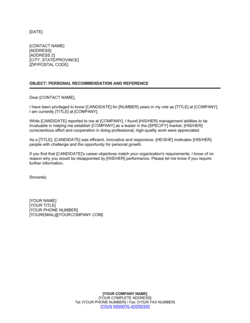
Personal Reference Check Letter Template

Free Word download β€’ Edit online β€’ Save & share with Drive β€’ Export to PDF

2 pagesβ€’15–25 min to fillβ€’Difficulty: Standard
Learn more ↓
FreePersonal Reference Check Letter Template

At a glance

What it is
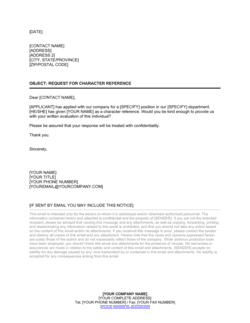
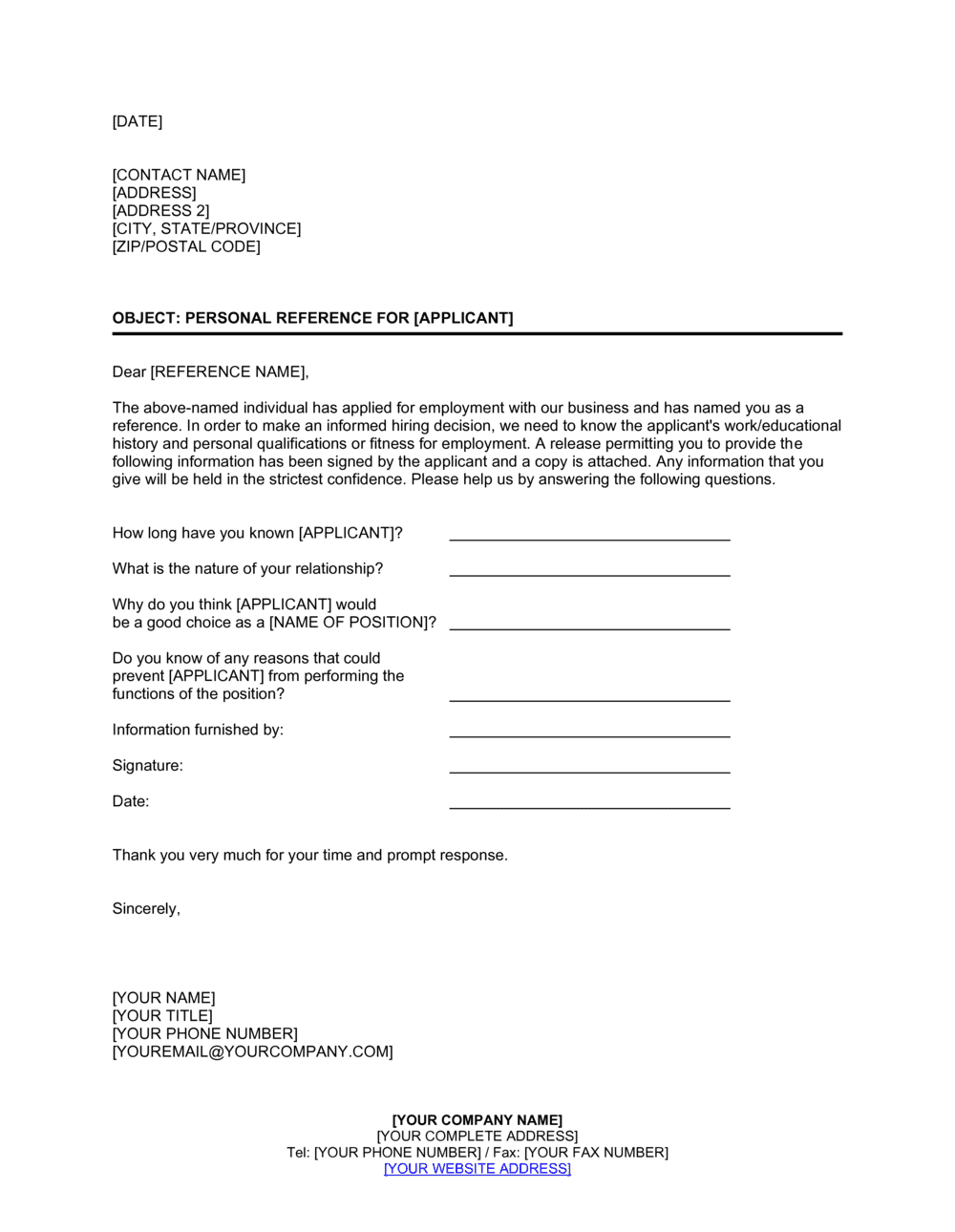
A Personal Reference Check Letter is a formal written request sent by an employer or hiring manager to a candidate's personal referee β€” typically a former mentor, community leader, or colleague who can speak to the candidate's character, reliability, and interpersonal qualities. This free Word download gives you a ready-to-send template you can edit online and export as PDF in under ten minutes.
When you need it
Use it after a candidate has cleared initial interviews and you need to verify their character and conduct before extending a formal offer. It is also used by landlords screening tenants, academic institutions evaluating applicants, and volunteer coordinators vetting candidates.
What's inside
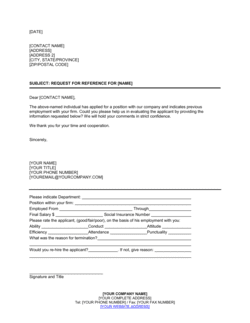
Sender and recipient details, a clear statement of purpose, a description of the candidate and the role, a set of structured questions covering character and reliability, a confidentiality assurance, and a response deadline with contact information.

What is a Personal Reference Check Letter?

A Personal Reference Check Letter is a formal written request sent by an employer, landlord, or admissions officer to an individual named by a candidate as a personal referee. Unlike an employment reference check β€” which targets former managers and focuses on job performance β€” this letter asks a personal contact to speak to the candidate's character, reliability, honesty, and interpersonal conduct. It is structured with specific open-ended questions to ensure consistent, comparable responses across all referees contacted for the same role or application.

Why You Need This Document

Skipping the personal reference check leaves a critical gap in your due diligence. Professional references confirm what a candidate can do; personal references reveal how they behave β€” under pressure, in conflict, and when no one is watching. For roles involving financial access, care of vulnerable people, or significant team leadership, a single undiscovered character issue can cost far more than the time it takes to send a letter. A written reference check also creates a documented record of your hiring process, which matters if a decision is later challenged. This template gives you a ready-to-send, professionally formatted letter with structured questions that yield substantive answers β€” not just vague endorsements.

Which variant fits your situation?

If your situation is…Use this template
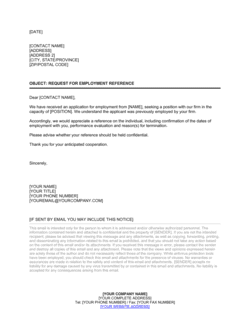
Checking a candidate's professional work history and performanceEmployment Reference Check Letter
Requesting a written character reference from a refereePersonal Reference Letter
Verifying credentials and past employment after an offer is acceptedBackground Check Authorization Form
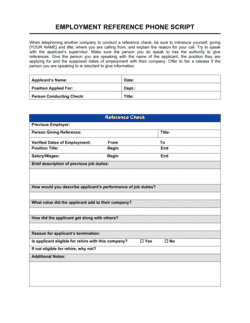
Following up on a reference check by phoneReference Check Phone Script
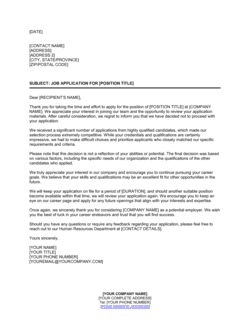
Formally declining a candidate after reference checksCandidate Rejection Letter
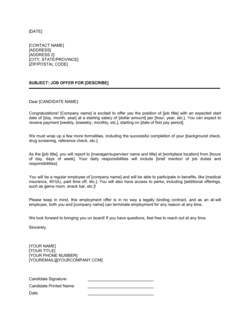
Extending an offer once references are clearedJob Offer Letter

Common mistakes to avoid

❌ Sending without candidate consent

Why it matters: Contacting referees without the candidate's knowledge can damage trust and, in some jurisdictions, may raise privacy concerns if personal information is shared without authorization.

Fix: Confirm in writing with the candidate that they consent to referee contact before sending the letter. Keep a record of that confirmation in the hiring file.
❌ Using only yes/no questions

Why it matters: Binary questions yield binary answers β€” you learn nothing specific about how the candidate behaves under pressure, handles conflict, or follows through on commitments.

Fix: Replace all closed questions with open-ended prompts that begin with 'How would you describe…' or 'Can you give an example of…'

❌ Setting a deadline of fewer than five business days

Why it matters: Referees are not obligated to respond and will not prioritize a tight turnaround. Short deadlines produce either silence or rushed, unhelpful replies.

Fix: Allow at least seven business days from send date and schedule a single follow-up reminder at the five-day mark.

❌ Omitting the confidentiality clause

Why it matters: Without an explicit confidentiality assurance, referees self-censor and rarely share genuine concerns β€” making the entire exercise far less useful.

Fix: Include a one- to two-sentence confidentiality statement confirming responses will not be shared with the candidate or any third party outside the hiring process.

The 9 key clauses, explained

Sender and recipient header

In plain language: Identifies the organization sending the letter, the referee's full name and contact details, and the date of the letter.

Sample language
[ORGANIZATION NAME] | [ADDRESS] | [CITY, STATE/PROVINCE, ZIP] | [DATE] | Attn: [REFEREE FULL NAME] | [REFEREE ADDRESS]

Common mistake: Addressing the letter to 'To Whom It May Concern' when you have the referee's name β€” impersonal openings reduce response rates significantly.

Purpose statement

In plain language: A clear opening sentence explaining why the letter is being sent and who provided the referee's name.

Sample language
We are writing to you because [CANDIDATE FULL NAME] has listed you as a personal referee in connection with their application for the position of [JOB TITLE] at [ORGANIZATION NAME].

Common mistake: Burying the purpose in the second or third paragraph. Referees who cannot immediately identify the letter's intent often discard it without responding.

Candidate and role description

In plain language: A brief summary of the candidate's name, the role they have applied for, and why personal character is relevant to the position.

Sample language
[CANDIDATE FULL NAME] has applied for the role of [JOB TITLE], which involves [BRIEF ROLE DESCRIPTION]. Given the nature of this position, we value input on the candidate's personal qualities and conduct.

Common mistake: Providing so much detail about the role that the referee feels pressure to tailor their response to fit β€” keep the description factual and brief.

Relationship and context request

In plain language: Asks the referee to confirm how they know the candidate and for how long, establishing the weight of the reference.

Sample language
To help us contextualize your response, please indicate the nature and duration of your relationship with [CANDIDATE FULL NAME]: [RELATIONSHIP TYPE] | [APPROXIMATE DURATION].

Common mistake: Skipping this clause entirely. Without knowing the relationship context, responses about character cannot be meaningfully assessed.

Structured character questions

In plain language: A numbered list of open-ended questions covering the candidate's reliability, interpersonal skills, honesty, and suitability for responsibility.

Sample language
1. How would you describe [CANDIDATE FIRST NAME]'s reliability and follow-through on commitments? 2. Can you provide an example of how they handled a difficult situation? 3. Would you recommend them without reservation for a role requiring [KEY QUALITY]?

Common mistake: Asking only yes/no questions. Binary answers give you nothing to distinguish candidates. At least two questions should require a specific example.

Overall recommendation prompt

In plain language: A direct question asking whether the referee would recommend the candidate and if there are any reservations the sender should be aware of.

Sample language
Overall, would you recommend [CANDIDATE FULL NAME] for this type of role? If you have any reservations or additional context you feel we should be aware of, please share them here.

Common mistake: Framing this as optional. Referees who are not asked directly for a recommendation often omit it, leaving the most important data point unaddressed.

Confidentiality and data use assurance

In plain language: Assures the referee that their response will be treated confidentially and used solely for the purpose of evaluating the candidate.

Sample language
Your responses will be held in strict confidence, used solely for the purpose of evaluating [CANDIDATE FIRST NAME]'s application, and will not be disclosed to the candidate or any third party.

Common mistake: Omitting the confidentiality clause. Referees are less candid without it β€” honest negative feedback rarely appears unless the referee trusts it will be handled discreetly.

Response instructions and deadline

In plain language: States how the referee should return their response β€” email, enclosed form, or written reply β€” and by what date.

Sample language
Please return your completed response by [DATE] by email to [EMAIL ADDRESS] or by post to the address above. If you have any questions, contact [CONTACT NAME] at [PHONE NUMBER].

Common mistake: Setting a response deadline that is less than five business days from the send date. Referees need adequate time to respond thoughtfully; short windows reduce response rates.

Closing and sender signature block

In plain language: A professional closing that thanks the referee for their time and provides the sender's full name, title, and organization.

Sample language
Thank you for taking the time to assist us. We appreciate your candour and the support you are providing [CANDIDATE FIRST NAME]. Sincerely, [SENDER FULL NAME] | [TITLE] | [ORGANIZATION NAME] | [CONTACT DETAILS]

Common mistake: Closing without contact details. If a referee has a clarifying question or prefers to respond by phone, they need a direct number β€” without it, many simply do not respond.

How to fill it out

  1. 1

    Enter your organization's details in the header

    Add your full organization name, mailing address, and contact email to the sender block at the top of the letter. This establishes legitimacy and gives the referee a way to verify the request is genuine.

    πŸ’‘ Use your official letterhead or add your logo above the header β€” referees are more likely to respond to requests on branded stationery.

  2. 2

    Address the letter to the specific referee by name

    Enter the referee's full name and mailing or email address. Obtain this directly from the candidate before sending β€” never guess a spelling.

    πŸ’‘ Confirm the referee is expecting your contact by asking the candidate to give them advance notice. Response rates increase significantly when the referee is not caught off guard.

  3. 3

    Identify the candidate and the role clearly

    State the candidate's full name and the specific position they have applied for. Include a one-sentence description of the role's key responsibilities so the referee can tailor their comments.

    πŸ’‘ Keep the role description to one sentence β€” enough context to be useful, not so much that it steers the referee's answers.

  4. 4

    Ask the referee to confirm the relationship

    Include a short field asking the referee to state how they know the candidate and for approximately how long. This helps you weigh the reference appropriately.

    πŸ’‘ A reference from someone who has known the candidate for two years carries more weight than one from an acquaintance of a few months β€” document this for your hiring file.

  5. 5

    Tailor the structured questions to the role

    Replace the placeholder questions with three to five open-ended questions relevant to the specific position. For roles requiring trust or leadership, ask for concrete examples of those qualities.

    πŸ’‘ Limit questions to five. More than five reduces the completion rate β€” referees are doing you a favour and have limited time.

  6. 6

    Add the confidentiality statement and response deadline

    Confirm that responses will be kept confidential and state a specific return date β€” at least seven business days from the send date.

    πŸ’‘ Send a brief follow-up email on the fifth business day if you have not received a response. One polite reminder typically recovers 30–40% of non-responses.

  7. 7

    Sign the letter and send via the referee's preferred channel

    Add your full name and title to the signature block. Confirm with the candidate whether their referee prefers email or post before sending.

    πŸ’‘ For senior or sensitive hires, a printed letter on official stationery sent by post signals the seriousness of the process and often yields more thoughtful responses.

Frequently asked questions

What is a personal reference check letter?

A personal reference check letter is a formal written request sent to an individual named by a candidate as a personal referee. It asks the referee to comment on the candidate's character, reliability, and interpersonal qualities β€” information that supplements professional references and employment history verification. It is commonly used in hiring, tenancy screening, and academic admissions.

What is the difference between a personal reference and a professional reference?

A professional reference speaks to a candidate's job performance, technical skills, and work history β€” typically provided by a former manager or colleague. A personal reference addresses character, values, and conduct outside of a direct employment relationship β€” typically provided by a mentor, teacher, or community contact. Personal references are most valuable for candidates with limited work history or for roles where trust and character are the primary hiring criteria.

Should I contact personal referees by letter or by phone?

A written letter or email gives the referee time to reflect and provide considered answers, and creates a documented record. A phone call can yield more candid, unscripted responses but is harder to document consistently. Many organizations use a written letter to establish initial contact and follow up by phone if further clarification is needed. For senior or sensitive roles, a combined approach is standard.

How many personal references should I request?

For most roles, one to two personal references are sufficient alongside professional references. For positions involving significant trust β€” working with children, vulnerable adults, or access to sensitive data β€” two personal references from independent sources is a stronger standard. Requesting more than three references is generally unnecessary and inconveniences the candidate.

What questions should a personal reference check letter ask?

Effective questions cover three areas: reliability and follow-through (e.g., does the candidate do what they say they will?), interpersonal conduct (e.g., how do they behave under pressure or in conflict?), and an overall recommendation with space for reservations. All questions should be open-ended and invite specific examples rather than yes/no answers. Limit the list to three to five questions to maintain completion rates.

Can a personal reference check letter be used for tenant screening?

Yes. Landlords and property managers frequently request personal references from prospective tenants, particularly first-time renters with no prior tenancy history. The letter format is the same as for employment contexts β€” adjust the role description and questions to focus on responsibility, reliability, and respect for shared spaces rather than professional performance.

What should I do if a referee does not respond?

Send one polite follow-up message at the five-business-day mark, acknowledging that their time is valuable and restating the deadline. If there is still no response, inform the candidate and ask whether they can provide an alternative referee. Do not contact the referee more than twice β€” persistent follow-up can reflect poorly on the organization.

Is a personal reference check letter legally binding?

No. A personal reference check letter is a formal request, not a legally binding document. Referees are generally not obligated to respond or to provide positive assessments. However, referees who knowingly provide false information that causes harm may face liability in some jurisdictions. Organizations should handle responses with appropriate confidentiality and use them as one input among several in any hiring decision.

How this compares to alternatives

vs Personal Reference Letter

A personal reference letter is written by the referee and provided to the candidate or directly to the hiring organization β€” it is a character statement, not a request for information. A personal reference check letter is sent by the hiring organization to the referee, asking specific questions. One is a document the referee authors; the other is a request document the hiring organization authors.

vs Employment Reference Check Letter

An employment reference check letter targets former managers and focuses on job performance, technical skills, and professional conduct. A personal reference check letter targets personal contacts and focuses on character, values, and interpersonal behaviour. Use both when a thorough hire requires evidence of both professional competence and personal integrity.

vs Background Check Authorization Form

A background check authorization form obtains the candidate's written consent for a formal third-party criminal, credit, or identity check. A personal reference check letter contacts a named individual for subjective qualitative input on character. Background checks verify facts; personal references provide context and interpretation that automated checks cannot supply.

vs Job Offer Letter

A job offer letter is sent to the candidate after all checks are complete and a hiring decision has been made. A personal reference check letter precedes that decision β€” it is part of the due diligence phase. The reference check should be completed and assessed before the offer letter is issued.

Industry-specific considerations

Human Resources and Staffing

Used as a final pre-offer step to verify character for roles involving client contact, financial access, or team leadership where professional references alone are insufficient.

Education and Academic Institutions

Admissions offices request personal references to assess applicants' values, community involvement, and character attributes that academic transcripts do not capture.

Real Estate and Property Management

Landlords use personal reference letters for first-time renters or applicants without a credit or tenancy history to assess reliability and care for property.

Nonprofit and Volunteer Sector

Organizations working with children, elderly adults, or vulnerable populations require personal character references as part of mandatory safeguarding and vetting procedures.

Template vs pro β€” what fits your needs?

PathBest forCostTime
Use the templateHR teams, small business owners, and property managers conducting standard reference checksFree10 minutes per letter
Template + professional reviewOrganizations in regulated sectors or those hiring for roles with significant safeguarding requirements$100–$300 for an HR consultant review1–2 business days
Custom draftedLarge enterprises standardizing reference processes across multiple departments or jurisdictions with specific privacy compliance requirements$500–$1,500 for legal or HR policy drafting1–2 weeks

Glossary

Personal Referee
An individual who can speak to a candidate's character, values, and conduct rather than their specific job performance β€” distinct from a professional reference.
Reference Check
The process of contacting named individuals to verify and expand on information a candidate has provided during the application process.
Character Reference
A written or verbal account of a person's personal qualities β€” honesty, reliability, interpersonal skills β€” provided by someone who knows them outside a direct employment context.
Confidentiality Assurance
A statement in the reference request confirming that the referee's responses will be used only for hiring purposes and will not be shared directly with the candidate.
Open-Ended Question
A question that invites a descriptive response rather than a yes/no answer β€” used in reference letters to elicit specific examples of behaviour.
Response Deadline
The date by which the sender needs the referee's completed response in order to keep the hiring or application process on schedule.
Hiring Manager
The person within an organization responsible for filling a specific vacancy and who typically authorises or signs off on the reference check.
Due Diligence
The process of independently verifying material information about a candidate before making a hiring, tenancy, or admissions decision.
Informed Consent
Confirmation β€” typically obtained from the candidate β€” that they authorise their named referees to be contacted and to share information about them.
Structured Reference Questions
A pre-set list of questions sent to all referees for the same role, ensuring consistency and comparability across responses.

Part of your Business Operating System

This document is one of 3,000+ business & legal templates included in Business in a Box.

  • Fill-in-the-blanks β€” ready in minutes
  • 100% customizable Word document
  • Compatible with all office suites
  • Export to PDF and share electronically

Create your document in 3 simple steps.

From template to signed document β€” all inside one Business Operating System.
1
Download or open template

Access over 3,000+ business and legal templates for any business task, project or initiative.

2
Edit and fill in the blanks with AI

Customize your ready-made business document template and save it in the cloud.

3
Save, Share, Send, Sign

Share your files and folders with your team. Create a space of seamless collaboration.

Save time, save money, and create top-quality documents.

β˜…β˜…β˜…β˜…β˜…

"Fantastic value! I'm not sure how I'd do without it. It's worth its weight in gold and paid back for itself many times."

Managing Director Β· Mall Farm
Robert Whalley
Managing Director, Mall Farm Proprietary Limited
β˜…β˜…β˜…β˜…β˜…

"I have been using Business in a Box for years. It has been the most useful source of templates I have encountered. I recommend it to anyone."

Business Owner Β· 4+ years
Dr Michael John Freestone
Business Owner
β˜…β˜…β˜…β˜…β˜…

"It has been a life saver so many times I have lost count. Business in a Box has saved me so much time and as you know, time is money."

Owner Β· Upstate Web
David G. Moore Jr.
Owner, Upstate Web

Run your business with a system β€” not scattered tools

Stop downloading documents. Start operating with clarity. Business in a Box gives you the Business Operating System used by over 250,000 companies worldwide to structure, run, and grow their business.

Start freeΒ Β·Β No credit card required