1
Confirm the legal name change is registered
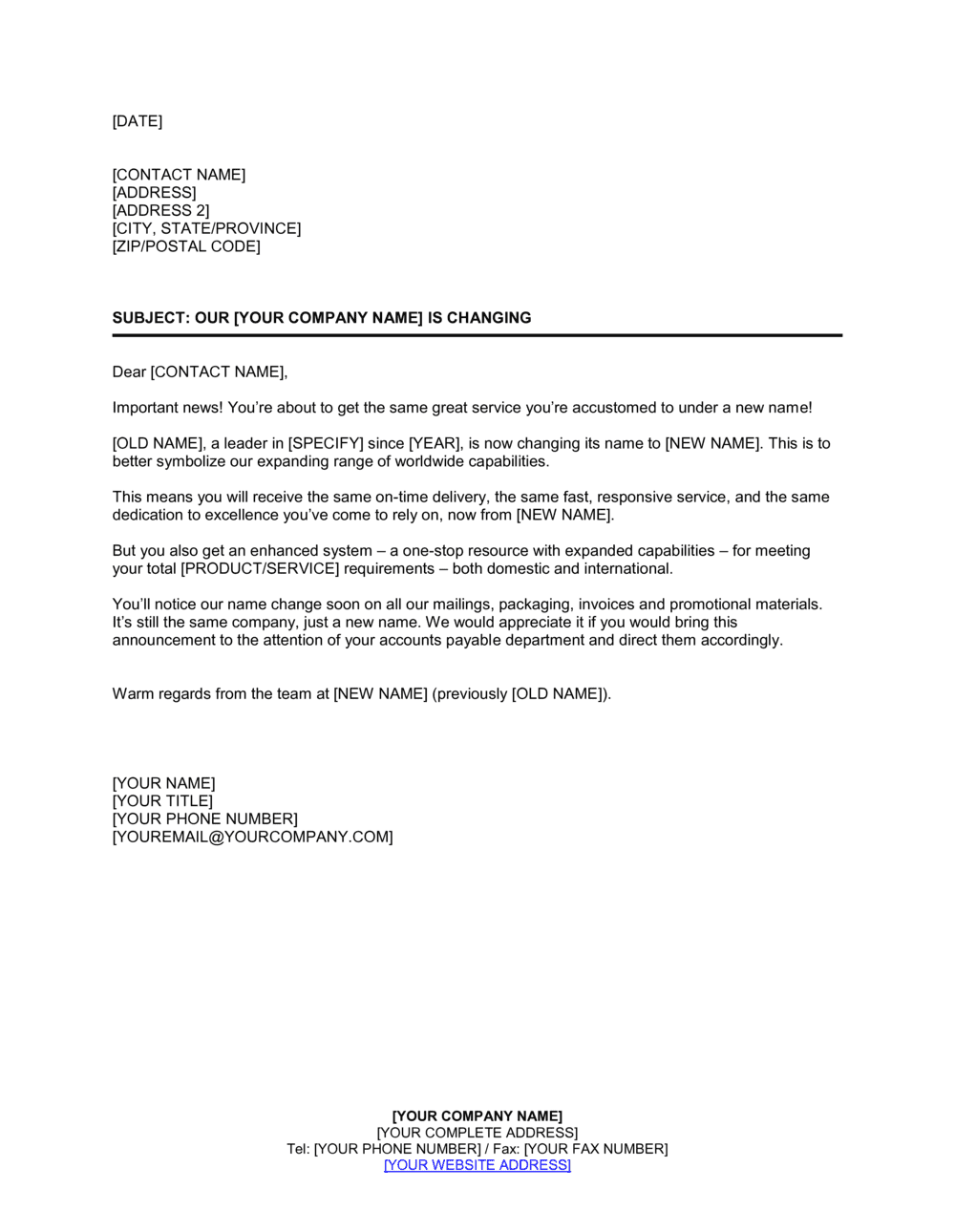
Before issuing any letters, confirm the new name has been officially registered with the relevant corporate registry — Secretary of State, Companies House, or provincial registry. Obtain the Certificate of Name Change.
💡 Do not send this letter until registration is complete — communicating a name change that is not yet legally effective creates confusion and potential misrepresentation.
2
Enter the current and new company names and effective date
Fill in both the old registered name and the new registered name exactly as they appear on official documents. Enter the specific calendar date the change becomes effective.
💡 Use the exact legal name including entity suffix (LLC, Inc., Ltd.) — inconsistencies between the letter and registry documents delay processing at banks and government agencies.
3
Identify and address each recipient category
Create separate versions of the letter for clients, vendors, financial institutions, and government agencies — each recipient group needs slightly different action items and may require different supporting documentation.
💡 Banks and financial institutions almost always require a certified copy of the Certificate of Name Change and may require their own internal form in addition to this letter.
4
Draft the continuity of contracts clause
Confirm that all existing agreements remain binding under the new name. If any contracts require formal novation rather than a simple name change, identify those separately and engage legal counsel.
💡 If the name change accompanies a corporate restructuring — such as a merger or conversion — some contracts may technically require novation or re-execution. Flag these before sending the letter.
5
Update and include remittance and contact details
Enter the new payment details — bank name, account number, sort code or routing number — as they will appear under the new entity name. Include the updated email, phone, and registered address.
💡 If bank account details are also changing, issue a separate bank account change notification alongside this letter to reduce the risk of misdirected payments.
6
Attach the certificate of name change
Enclose a certified copy of the official name change certificate with each letter. For email delivery, attach a PDF of the certified document.
💡 Some government agencies and enterprise buyers require a notarized copy — confirm the requirement before sending to avoid delays.
7
Have an authorized officer sign each letter
The letter must be signed by a director, officer, or other person with authority to bind the company. Use a wet signature for physical letters; use an approved eSign platform for digital delivery.
💡 For letters going to regulated counterparties — banks, government agencies, public companies — use the same signatory whose name appears on the Certificate of Name Change where possible.
8
Log dispatch and follow up
Keep a record of every letter sent, the date it was sent, the recipient, and the delivery method. Follow up with key counterparties — banks, major clients, and government agencies — within 10 business days to confirm receipt and record update.
💡 Set a calendar reminder to audit incoming invoices and payments 30 days after the effective date — any still referencing the old name indicate counterparties who did not action the update.