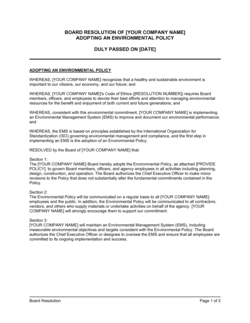
- Environmental Management System (EMS)
- A structured framework — such as ISO 14001 — that organizations use to identify, manage, and continually improve their environmental performance.
- ISO 14001
- The internationally recognized standard for environmental management systems, specifying requirements for organizations to enhance environmental performance and demonstrate compliance.
- ESG (Environmental, Social, and Governance)
- A set of criteria used by investors and stakeholders to evaluate a company's non-financial performance, with environmental impact being the 'E' component.
- Scope 1, 2, and 3 Emissions
- A greenhouse gas accounting framework: Scope 1 is direct emissions from owned sources, Scope 2 is indirect emissions from purchased energy, and Scope 3 covers all other indirect emissions across the value chain.
- Materiality Assessment
- The process of identifying which environmental topics are significant enough — based on business impact and stakeholder concern — to warrant inclusion in a policy or sustainability report.
- Regulatory Compliance Register
- A document listing all applicable environmental laws, permits, and regulations in each jurisdiction where the organization operates, along with the responsible owner for each obligation.
- Life Cycle Assessment (LCA)
- A methodology for evaluating the total environmental impact of a product or process from raw material extraction through disposal.
- Carbon Neutrality
- A state in which an organization's net greenhouse gas emissions equal zero, achieved through a combination of emission reductions and verified carbon offsets.
- Environmental Due Diligence
- The process of identifying and evaluating environmental liabilities and compliance obligations, typically conducted before an acquisition, investment, or major project approval.
- Circular Economy
- An economic model that eliminates waste by designing products and processes so that materials are continuously reused, repaired, or recycled rather than discarded.