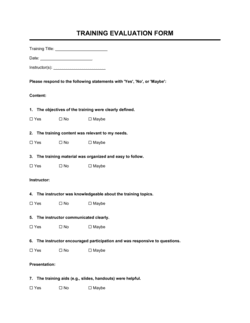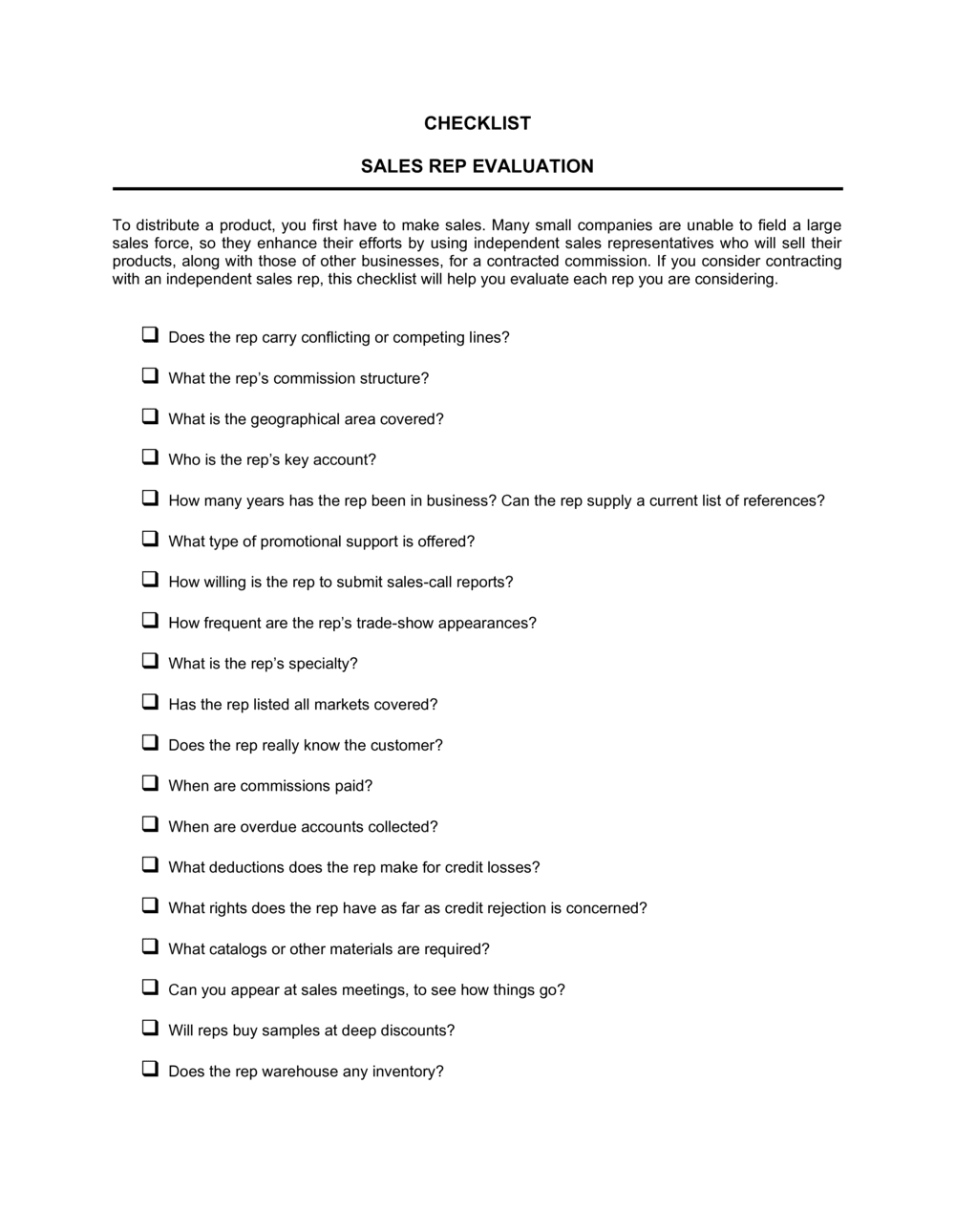
Checklist Sales Rep Evaluation

Free download β€’ Use as a template β€’ Print or share

1 pageβ€’20–25 min to useβ€’Difficulty: Standard
Learn more ↓
FreeChecklist Sales Rep Evaluation Template

At a glance

What it is
A Checklist Sales Rep Evaluation is a structured scoring form managers use to assess a sales representative's performance across activity metrics, pipeline management, selling skills, and quota attainment. This free Word download gives you a consistent, repeatable framework you can edit online and export as PDF for quarterly or annual reviews.
When you need it
Use it during scheduled performance reviews, after a probationary period, or whenever you need a documented basis for compensation decisions, coaching plans, or termination discussions involving a sales employee.
What's inside
Rep and reviewer identification, review period, activity metrics, pipeline and forecast accuracy, product knowledge, selling skills, CRM compliance, quota attainment, developmental goals, and an overall rating with sign-off fields.

What is a Checklist Sales Rep Evaluation?

A Checklist Sales Rep Evaluation is a structured scoring form that sales managers use to assess a representative's performance across defined criteria β€” activity volume, pipeline management, product knowledge, selling skills, CRM compliance, and quota attainment β€” during a scheduled review period. Unlike an informal one-on-one, it produces a documented, signed record that can be referenced for compensation decisions, coaching plans, or performance management actions. The checklist format ensures every rep is evaluated against the same criteria, making cross-rep and period-over-period comparisons consistent and defensible.

Why You Need This Document

Without a standardized evaluation form, sales performance reviews default to subjective impressions and inconsistent scoring β€” managers weigh different criteria, use different rating scales, and produce records that cannot be meaningfully compared across a team or referenced in a dispute. The practical cost is real: informal reviews that lack documentation create serious exposure when a rep contests a compensation decision or challenges a termination. A completed, signed checklist establishes that the review happened, what was discussed, and what was agreed β€” before any performance action is taken. It also drives better coaching outcomes, because goals written into a signed document with specific follow-up dates are far more likely to be acted on than verbal commitments made in a meeting.

Which variant fits your situation?

If your situation is…Use this template
Evaluating inside sales reps focused on high-volume outbound activityInside Sales Rep Evaluation Checklist
Reviewing a field sales rep with complex, long-cycle dealsField Sales Representative Performance Review
Assessing a new hire at the 30-, 60-, or 90-day markSales Onboarding Evaluation Form
Conducting a self-assessment before a manager reviewSales Rep Self-Evaluation Form
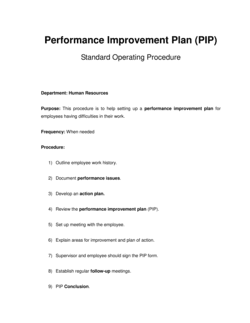
Documenting a performance improvement plan for an underperforming repPerformance Improvement Plan (PIP)
Scoring a candidate during a sales role interview processSales Interview Scorecard
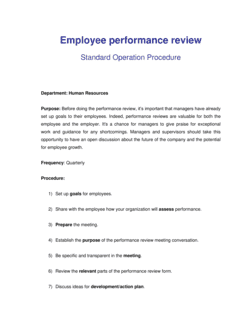
Running an annual team-wide review tied to compensation band adjustmentsEmployee Performance Review Template

Common mistakes to avoid

❌ Completing the form from memory instead of CRM data

Why it matters: Activity and pipeline scores based on recall rather than exports are subjective, inconsistent across managers, and easily challenged by the rep.

Fix: Pull a CRM data export for the exact review period before starting the form, and cite the report name or date in the notes field.
❌ Skipping the rep signature on the overall rating

Why it matters: Without a signed acknowledgment, you have no documented proof the review was delivered β€” which creates significant exposure if the rep is later placed on a PIP or terminated.

Fix: Make the rep signature field mandatory in your review process and note the date it was signed, not just the review date.

❌ Setting development goals without a follow-up date

Why it matters: Goals with no check-in deadline are consistently deprioritized and rarely revisited before the next full review cycle, making the development section pointless.

Fix: Assign a specific follow-up date β€” typically 30 or 60 days out β€” for each development goal and calendar the check-in at the time of the review.

❌ Using the same quota attainment threshold for reps in different ramp stages

Why it matters: Scoring a rep at month two of their ramp against a fully ramped quota makes the evaluation misleading and demoralizing, and skews team-average comparisons.

Fix: Include a ramp-adjustment field that records months in role and applies the appropriate quota percentage β€” typically 50% in month one, 75% in month two, 100% from month three.

The 10 key fields, explained

Rep and reviewer identification

Review period

Activity metrics checklist

Pipeline and forecast accuracy

Product knowledge rating

Selling skills assessment

CRM compliance score

Quota attainment summary

Development goals and action items

Overall rating and sign-off

How to fill it out

  1. 1

    Pull CRM data before opening the form

    Export the rep's activity log, pipeline report, and closed-won data for the review period from your CRM before filling in any numbers. Working from live data prevents score disputes.

    πŸ’‘ Run the CRM export at least two business days before the review meeting so you have time to spot data gaps and ask the rep to clean them up.

  2. 2

    Complete the identification and review period fields

    Enter the rep's full name, title, territory, and the manager's name. Set the exact start and end dates of the review period β€” not just the quarter label.

    πŸ’‘ If your company reviews reps on a calendar-quarter basis, pre-populate the review period in your master template to eliminate a common omission.

  3. 3

    Score activity metrics against documented targets

    Compare the rep's actual activity numbers β€” calls, emails, demos, proposals β€” to their documented weekly or monthly targets. Score each line based on the ratio of actual to target.

    πŸ’‘ Color-code the activity table (green / yellow / red) at 100%, 80–99%, and below 80% of target to make the pattern visible at a glance.

  4. 4

    Assess pipeline coverage and forecast accuracy

    Calculate the rep's pipeline coverage ratio and compare their submitted forecast to actual closed revenue. Note the variance percentage and whether it represents consistent over- or under-forecasting.

    πŸ’‘ A rep who consistently forecasts at 90% of actual closed revenue is more valuable than one who hits quota but can't predict their own number.

  5. 5

    Rate selling skills from observed evidence

    Score each competency β€” discovery, objection handling, negotiation, closing β€” based on reviewed call recordings or direct ride-along observations. Note the source of evidence for each score.

    πŸ’‘ Review at least two calls per competency category before scoring. One call is too small a sample to assess a skill reliably.

  6. 6

    Set development goals with specific targets and dates

    Agree on one to three development priorities with the rep. Write each goal as a measurable outcome β€” not a behavior β€” with a specific target date and the coaching or resource the manager will provide.

    πŸ’‘ Frame goals as 'raise demo-to-proposal conversion from 40% to 55% by end of next quarter' rather than 'improve your discovery calls.'

  7. 7

    Deliver the review, collect signatures, and file

    Walk through the completed form with the rep in a scheduled one-on-one. Collect both signatures on the overall rating page and store the signed copy in the rep's personnel file or HR system.

    πŸ’‘ Send the rep a copy of the signed form within 24 hours of the review meeting. A rep who receives nothing in writing is more likely to dispute ratings later.

Frequently asked questions

What is a sales rep evaluation checklist?

A sales rep evaluation checklist is a structured form managers use to score a sales representative's performance across defined criteria β€” activity metrics, pipeline health, selling skills, CRM compliance, and quota attainment β€” during a scheduled review period. It creates a consistent, documented record that supports coaching decisions, compensation changes, and performance management actions.

How often should sales reps be evaluated?

Most sales organizations conduct formal evaluations quarterly, aligned to their fiscal quarters. New hires are typically evaluated at the 30-, 60-, and 90-day marks during the ramp period. Informal coaching check-ins should happen weekly or bi-weekly, but these are distinct from the formal documented evaluation that uses the full checklist.

What criteria should a sales rep evaluation include?

A complete evaluation covers five areas: activity metrics (calls, demos, proposals), pipeline management (coverage ratio and forecast accuracy), selling skills (discovery, objection handling, negotiation, closing), CRM compliance, and quota attainment. Weighting these categories by importance to your business model ensures the overall score reflects actual performance priorities.

Should reps sign their evaluation form?

Yes. A rep's signature confirms the review was delivered and the content was discussed β€” it is not an agreement that the rep endorses every rating. Including a 'rep comments' field alongside the signature line gives the rep a documented opportunity to note disagreements, which is important if the evaluation is later referenced in a performance improvement or termination process.

How is a sales rep evaluation different from a performance improvement plan?

A sales rep evaluation is a routine assessment of performance across all defined criteria β€” conducted for every rep on a regular schedule. A performance improvement plan (PIP) is a remedial document triggered when a rep consistently falls below minimum expectations. The evaluation is often the input that initiates a PIP, and a signed evaluation with low scores creates the documented basis required before a PIP is issued.

What data should I pull from the CRM before conducting a review?

Pull the rep's activity log (calls, emails, meetings logged), pipeline snapshot at the start and end of the review period, closed-won revenue for the period, forecast submissions versus actuals, and any overdue or stale deal flags. Having these numbers in hand before the review meeting prevents score disputes and keeps the conversation focused on patterns rather than recalled anecdotes.

Can I use this checklist for both inside and field sales reps?

Yes, with minor adjustments. For inside sales reps, weight activity metrics and CRM compliance more heavily, as volume and data hygiene are central to the role. For field sales reps with long-cycle deals, weight pipeline management, deal quality, and forecast accuracy more heavily. The template's open scoring fields and notes sections accommodate both configurations without requiring a separate form.

What should happen after a completed evaluation is filed?

Store the signed form in the rep's personnel file or HR system immediately after the review. Send the rep a copy within 24 hours. Schedule any agreed coaching sessions or development follow-ups on the calendar at the same time as the review. The evaluation should directly feed the rep's individual development plan and inform the next quarter's target-setting conversation.

How this compares to alternatives

vs Employee Performance Review

A general employee performance review covers competencies applicable to any role β€” communication, teamwork, initiative, and job knowledge. A sales rep evaluation checklist is built specifically around revenue metrics, pipeline data, and sales-specific skills. Use the general review for non-sales staff; use the sales-specific checklist when the role carries a quota.

vs Performance Improvement Plan

A performance improvement plan is a remedial document triggered by sustained underperformance. A sales rep evaluation is a routine assessment conducted for every rep on a regular schedule. The evaluation typically generates the documented evidence β€” low scores across two or more review periods β€” that justifies initiating a PIP.

vs Sales Activity Report

A sales activity report is a periodic log of what a rep did β€” calls made, emails sent, meetings held β€” without a qualitative assessment. An evaluation checklist uses activity data as one input among several and layers on skills assessment, pipeline quality, and overall ratings. The report feeds the evaluation; it does not replace it.

vs Sales Forecast Template

A sales forecast captures projected revenue by rep, deal, and time period. An evaluation checklist assesses how accurately the rep forecast and how well they managed the pipeline that produced those numbers. Forecast accuracy is one scored field within the evaluation, not the evaluation itself.

Industry-specific considerations

Software and SaaS

Evaluations weight product knowledge and technical discovery skills heavily, and include SaaS-specific metrics like ARR, churn contribution, and expansion revenue per rep.

Financial Services

Compliance and suitability assessment criteria are added alongside standard performance metrics, and sign-off requirements are more formal due to regulatory documentation standards.

Retail and Wholesale

Evaluations focus on units sold, average transaction value, and attach rate for add-on products, with activity metrics calibrated to in-store or territory-call volumes.

Professional Services

Pipeline quality and relationship management scores carry more weight than activity volume, reflecting the consultative, long-cycle nature of professional services sales.

Template vs pro β€” what fits your needs?

PathBest forCostTime
Use the templateSales managers and small business owners running structured rep reviews without a dedicated HR or sales-ops teamFree15–30 minutes per rep per review cycle
Template + professional reviewTeams building a formal performance management program tied to compensation bands or at-risk pay structures$200–$500 for an HR consultant review of the scoring framework1–3 days
Custom draftedEnterprise sales organizations integrating evaluations with HRIS and CRM platforms, or companies in regulated industries with formal documentation requirements$1,000–$5,000 for custom form design and system integration2–6 weeks

Glossary

Quota Attainment
The percentage of a rep's assigned revenue or unit target that was actually achieved in the review period.
Pipeline Coverage
The ratio of total open pipeline value to the revenue target β€” typically a 3Γ— to 4Γ— ratio is considered healthy.
Activity Metrics
Measurable sales behaviors such as calls made, emails sent, demos booked, and meetings held per week or month.
Forecast Accuracy
How closely a rep's committed pipeline forecast matches actual closed revenue, expressed as a percentage variance.
CRM Compliance
The degree to which a rep consistently logs activities, updates deal stages, and maintains accurate contact data in the CRM system.
Average Deal Size
The mean contract value of all opportunities closed by a rep during the review period.
Win Rate
The percentage of qualified opportunities a rep converts to closed-won deals in a given period.
Sales Cycle Length
The average number of days between a rep's first contact with a prospect and the close of the deal.
Ramp Period
The defined time β€” typically 30 to 90 days for new hires β€” before a rep is expected to reach full quota performance.
Performance Improvement Plan (PIP)
A formal documented plan outlining specific, measurable targets and a timeline for a rep who is consistently underperforming against expectations.

Part of your Business Operating System

This document is one of 3,000+ business & legal templates included in Business in a Box.

  • Fill-in-the-blanks β€” ready in minutes
  • 100% customizable Word document
  • Compatible with all office suites
  • Export to PDF and share electronically

Create your document in 3 simple steps.

From template to signed document β€” all inside one Business Operating System.
1
Download or open template

Access over 3,000+ business and legal templates for any business task, project or initiative.

2
Edit and fill in the blanks with AI

Customize your ready-made business document template and save it in the cloud.

3
Save, Share, Send, Sign

Share your files and folders with your team. Create a space of seamless collaboration.

Save time, save money, and create top-quality documents.

β˜…β˜…β˜…β˜…β˜…

"Fantastic value! I'm not sure how I'd do without it. It's worth its weight in gold and paid back for itself many times."

Managing Director Β· Mall Farm
Robert Whalley
Managing Director, Mall Farm Proprietary Limited
β˜…β˜…β˜…β˜…β˜…

"I have been using Business in a Box for years. It has been the most useful source of templates I have encountered. I recommend it to anyone."

Business Owner Β· 4+ years
Dr Michael John Freestone
Business Owner
β˜…β˜…β˜…β˜…β˜…

"It has been a life saver so many times I have lost count. Business in a Box has saved me so much time and as you know, time is money."

Owner Β· Upstate Web
David G. Moore Jr.
Owner, Upstate Web

Run your business with a system β€” not scattered tools

Stop downloading documents. Start operating with clarity. Business in a Box gives you the Business Operating System used by over 250,000 companies worldwide to structure, run, and grow their business.

Start freeΒ Β·Β No credit card required