IT Project Management Templates

4.7from 280+ reviews Trusted by 20M+ businesses

Plan, execute, and close IT projects on time with ready-to-use documents for every phase.

WordEditable onlinePDF10+ IT project management templates

Other Software & Technology categories

250K+Clients
20M+Free users
20+Years
190+Countries
10,000+Law firms
50M+Downloads

Trusted across review platforms

  • Capterra★★★★☆4.649 reviews
  • G2★★★★☆4.713 reviews
  • GetApp★★★★☆4.649 reviews
  • Google Play★★★★☆4.6179 ratings
  • Google Reviews★★★★☆4.567 reviews

Related categories

Frequently asked questions

What documents does an IT project manager need?
At minimum, an IT project manager needs a project plan or project management plan, a risk register or risk management checklist, a project timeline, and a communication plan. Larger or more formal projects also require a project proposal, a project management agreement, a change management policy, and a post-project evaluation. The exact set depends on project size, organizational governance, and whether external vendors or clients are involved.
What is the difference between an IT project plan and a project management plan?
An IT project plan is a working document focused on tasks, schedule, and resources for a specific project. A project management plan is broader — it describes the methodology, governance structure, communication approach, risk strategy, and quality standards that apply across the project's entire lifecycle. For small internal IT projects a project plan is usually sufficient; for enterprise deployments a full project management plan is typically required.
How do IT project management templates save time?
Templates provide a pre-built structure so teams don't start from a blank page. They include the standard sections, prompts, and language that project stakeholders expect, which reduces drafting time, prevents common omissions, and shortens review cycles. A well-chosen template can cut initial document preparation from several hours to 20–30 minutes.
Which IT project management methodology should I use?
The right methodology depends on project type and organizational culture. Waterfall works well for infrastructure deployments with fixed requirements. Agile or Scrum suits software development where requirements evolve. PRINCE2 and PMI/PMBOK are common in formal enterprise environments. The templates in this folder are methodology-neutral and can be adapted to any of these approaches.
Do I need a project management agreement for internal IT projects?
For purely internal projects, a project management agreement is usually optional — a project charter or project plan with an internal sign-off is often enough. When an external project manager, consultancy, or managed service provider is involved, a formal project management agreement is important because it defines deliverables, fees, liability, and the process for handling changes.
What metrics should I track in an IT project?
The five most common are: schedule variance (planned vs. actual progress), cost variance (budgeted vs. actual spend), scope creep rate (number of approved change requests), defect or issue rate (bugs or incidents per sprint or phase), and stakeholder satisfaction. Tracking these consistently gives early warning of problems before they become crises.
When should I conduct a project evaluation?
A project evaluation — sometimes called a post-mortem or retrospective — should happen within two to four weeks of project closure, while details are still fresh. It reviews whether objectives were met, whether budget and schedule were maintained, and what should be done differently next time. The output informs future project planning and is especially valuable for organizations running multiple IT projects per year.
What IT policies does every technology team need?
At a minimum, most IT teams need an acceptable use policy, an IT security policy, a data management policy, and an IT governance and compliance policy. Organizations that manage physical hardware also benefit from an asset management policy, and those with external vendors need a vendor management policy. These policies reduce risk and establish the rules of engagement before incidents occur.

IT Project Management vs. related documents

Project plan vs. project management plan

A project plan is a concise working document that outlines scope, tasks, schedule, and resource assignments for a specific project. A project management plan is a broader governance document that describes how the project will be managed — covering methodology, communication protocols, change control, risk strategy, and quality standards. For small IT projects a project plan is usually enough; for enterprise or multi-team work a full project management plan is warranted.

IT project management vs. product management

IT project management focuses on delivering a defined outcome by a specific date within a fixed budget — it has a clear end. Product management is ongoing: it involves continuously developing, prioritizing, and improving a product over its entire lifecycle. The two disciplines overlap during feature delivery but have different success metrics, toolsets, and stakeholder relationships. Many organizations use both simultaneously.

Risk management checklist vs. risk management plan

A risk management checklist is a quick-scan tool used to identify common IT risks at project initiation. A risk management plan is the full strategy document that defines how risks will be identified, scored, mitigated, monitored, and escalated throughout the project. Use the checklist early to surface risks fast; build the plan to manage them through delivery.

IT service agreement vs. project management agreement

An IT service agreement governs an ongoing managed-service relationship — recurring support, maintenance, or hosting. A project management agreement covers a defined, time-boxed engagement to deliver a specific project outcome. If the work has a clear end date and deliverable, use the project management agreement; for continuous IT support, use the service agreement.

Key clauses every IT Project Management contains

Across planning documents, agreements, and policies in this folder, the following structural elements appear consistently — regardless of the specific template variant.

  • Scope statement. Defines exactly what is included in and excluded from the project to prevent scope creep.
  • Milestones and schedule. Lists the key deliverables, deadlines, and phase gates that mark measurable progress.
  • Roles and responsibilities. Names who is accountable, responsible, consulted, and informed for each workstream.
  • Risk register. Documents identified risks, their likelihood and impact, and the planned mitigation or response.
  • Change control process. Specifies how scope, schedule, or budget changes are requested, reviewed, approved, and communicated.
  • Resource and budget allocation. Identifies the people, tools, and funds assigned to the project and how overruns are handled.
  • Communication plan. Sets the frequency, format, and audience for status updates, escalations, and stakeholder reporting.
  • Acceptance criteria. States the measurable conditions that must be met before a deliverable or phase is signed off.

How to write an IT project management plan

A well-structured IT project management plan answers six questions: what are we building, why, who is doing what, by when, at what cost, and what could go wrong.

  1. 1

    Define the project scope and objectives

    State clearly what the project will deliver, what it will not include, and how success will be measured.

  2. 2

    Identify stakeholders and assign roles

    List every person or team that affects or is affected by the project, then document their responsibilities and decision-making authority.

  3. 3

    Break work into tasks and milestones

    Decompose the project into a work breakdown structure, then sequence tasks and set milestone dates for each phase.

  4. 4

    Build the project timeline

    Plot tasks against a calendar, identify dependencies, and mark the critical path to show where delays would impact the finish date.

  5. 5

    Assign resources and establish the budget

    Allocate team members, tools, and licenses to specific tasks, then total costs and define how budget variances will be tracked and escalated.

  6. 6

    Conduct a risk assessment

    Use an IT risk management checklist to surface technical, security, and operational risks, then document mitigation actions in a risk register.

  7. 7

    Define the change control and communication protocols

    Specify how scope changes are submitted and approved, and how often stakeholders will receive status updates and escalation notices.

  8. 8

    Get sign-off and store the plan where the team can access it

    Obtain formal approval from the project sponsor and store the signed plan in a shared location that the team can reference throughout delivery.

At a glance

What it is
IT project management documents are the structured plans, policies, agreements, and tracking tools that govern how technology projects are initiated, executed, monitored, and closed. They give every stakeholder a shared reference point for scope, schedule, risk, and accountability.
When you need one
Any time a team is deploying software, migrating infrastructure, implementing a new system, or coordinating IT vendors, structured project documents keep work on track and protect the organization when things go wrong.

Which IT Project Management do I need?

The right template depends on where you are in the project lifecycle and whether you need a planning document, a policy, a contract, or a hiring tool.

Your situation
Recommended template

Starting a new IT project and need a single planning document

Covers scope, schedule, resources, and milestones in one IT-specific format.

Managing a software development or delivery project

Tailored to software lifecycles with sprint, release, and QA planning sections.

Identifying and managing risks before an IT project kicks off

Structured checklist that surfaces technical, security, and operational risks early.

Documenting the full project management approach for stakeholders

Comprehensive plan covering governance, communication, quality, and change control.

Formalizing the engagement between a client and an IT project manager

Sets out scope, fees, deliverables, and liability between client and manager.

Visualizing project schedule and dependencies for a stakeholder presentation

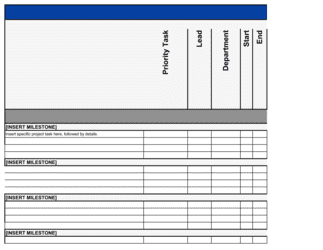
Gantt-style timeline format that communicates milestones and deadlines at a glance.

Evaluating a completed IT project against original objectives

Structured post-project review comparing outcomes, budget, and lessons learned.

Hiring an IT project manager and need a job description

Role-specific job description with IT competency and certification requirements.

Glossary

Project scope
The defined boundaries of a project — what will be delivered, what is excluded, and what conditions must be met.
Work breakdown structure (WBS)
A hierarchical decomposition of a project into smaller, manageable tasks and deliverables.
Critical path
The longest sequence of dependent tasks in a project schedule; any delay on the critical path delays the project end date.
Risk register
A log of identified project risks, their likelihood and impact scores, and the planned mitigation or response for each.
Change control
The formal process for requesting, reviewing, approving, and communicating changes to a project's scope, schedule, or budget.
Milestone
A significant checkpoint or deliverable in a project schedule that marks the end of a phase or the completion of a key outcome.
Stakeholder
Any person, team, or organization that has an interest in or is affected by the project's outcome.
Project sponsor
The senior individual or body that authorizes the project, owns the business case, and resolves escalated issues.
RACI matrix
A responsibility-assignment chart that labels each task with who is Responsible, Accountable, Consulted, and Informed.
Scope creep
The gradual expansion of a project's scope beyond its original boundaries, typically without corresponding adjustments to budget or schedule.
Acceptance criteria
The specific, measurable conditions a deliverable must satisfy before the client or sponsor formally signs it off.
Post-mortem
A structured review conducted after project completion to assess what went well, what did not, and what should change next time.

What is IT project management?

IT project management is the discipline of planning, organizing, executing, monitoring, and closing technology projects — from software deployments and infrastructure migrations to system implementations and vendor integrations. It applies structured processes to manage scope, schedule, budget, risk, and the people involved so that technology work delivers its intended outcome on time and within cost.

IT project management documents are the written foundation of that discipline. They translate strategy into executable plans, assign clear accountability, create a shared record of decisions, and provide the audit trail organizations need when projects are reviewed, escalated, or disputed. Without them, even well-resourced IT teams routinely miss deadlines, exceed budgets, or deliver systems that don't match what stakeholders expected.

The category spans a wide range of document types: project plans and management plans for defining and governing work; risk management tools for anticipating and responding to technical threats; agreements for formalizing client and vendor relationships; governance policies for setting the rules every IT team operates under; and job descriptions for hiring the people who manage it all.

When you need an IT project management template

The need for structured IT project documents arises at every stage of the technology project lifecycle — not just at the planning phase. Whether you are proposing a new initiative, staffing a project team, managing delivery, or closing out completed work, there is a document that belongs at each step.

Common triggers:

  • A CTO or IT director needs to present a project plan to executive leadership for budget approval
  • A project manager is onboarding a new vendor or external development team and needs to define deliverables and terms
  • A security or compliance team is preparing for an audit and needs documented IT governance policies
  • A project is expanding beyond its original scope and the team needs a formal change control process in writing
  • A new IT project manager is being hired and the organization needs a job description that reflects current role requirements
  • A software deployment has gone live and the team needs to run a structured post-project evaluation
  • An infrastructure migration carries significant risk and the project lead needs a risk management checklist before kickoff

Skipping project management documentation rarely saves time — it shifts risk from the planning phase to the delivery and closure phases, where problems are more expensive to fix. A project plan drafted in a few hours at the start of a project can prevent weeks of rework, stakeholder conflict, or scope disputes later.

Award-winning platform

  • Great Place to Work 2025
  • BIG Award — Product of the Year 2025
  • Smartest Companies 2025
  • Global 100 Excellence 2026
  • Best of the Best 2025

Create your document in 3 simple steps.

From template to signed document — all inside one Business Operating System.
1
Download or open template

Access over 3,000+ business and legal templates for any business task, project or initiative.

2
Edit and fill in the blanks with AI

Customize your ready-made business document template and save it in the cloud.

3
Save, Share, Send, Sign

Share your files and folders with your team. Create a space of seamless collaboration.

Save time, save money, and create top-quality documents.

★★★★★

"Fantastic value! I'm not sure how I'd do without it. It's worth its weight in gold and paid back for itself many times."

Managing Director · Mall Farm
Robert Whalley
Managing Director, Mall Farm Proprietary Limited
★★★★★

"I have been using Business in a Box for years. It has been the most useful source of templates I have encountered. I recommend it to anyone."

Business Owner · 4+ years
Dr Michael John Freestone
Business Owner
★★★★★

"It has been a life saver so many times I have lost count. Business in a Box has saved me so much time and as you know, time is money."

Owner · Upstate Web
David G. Moore Jr.
Owner, Upstate Web

Run your business with a system — not scattered tools

Stop downloading documents. Start operating with clarity. Business in a Box gives you the Business Operating System used by over 250,000 companies worldwide to structure, run, and grow their business.

Free Forever Plan · No credit card required