Reference Checking Form Template

Free Word download β€’ Edit online β€’ Save & share with Drive β€’ Export to PDF

2 pagesβ€’15–25 min to fillβ€’Difficulty: Standard
Learn more ↓
FreeReference Checking Form Template

At a glance

What it is
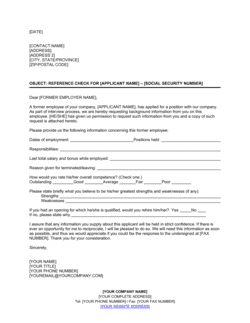
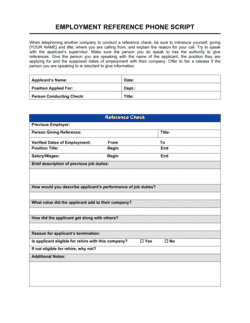
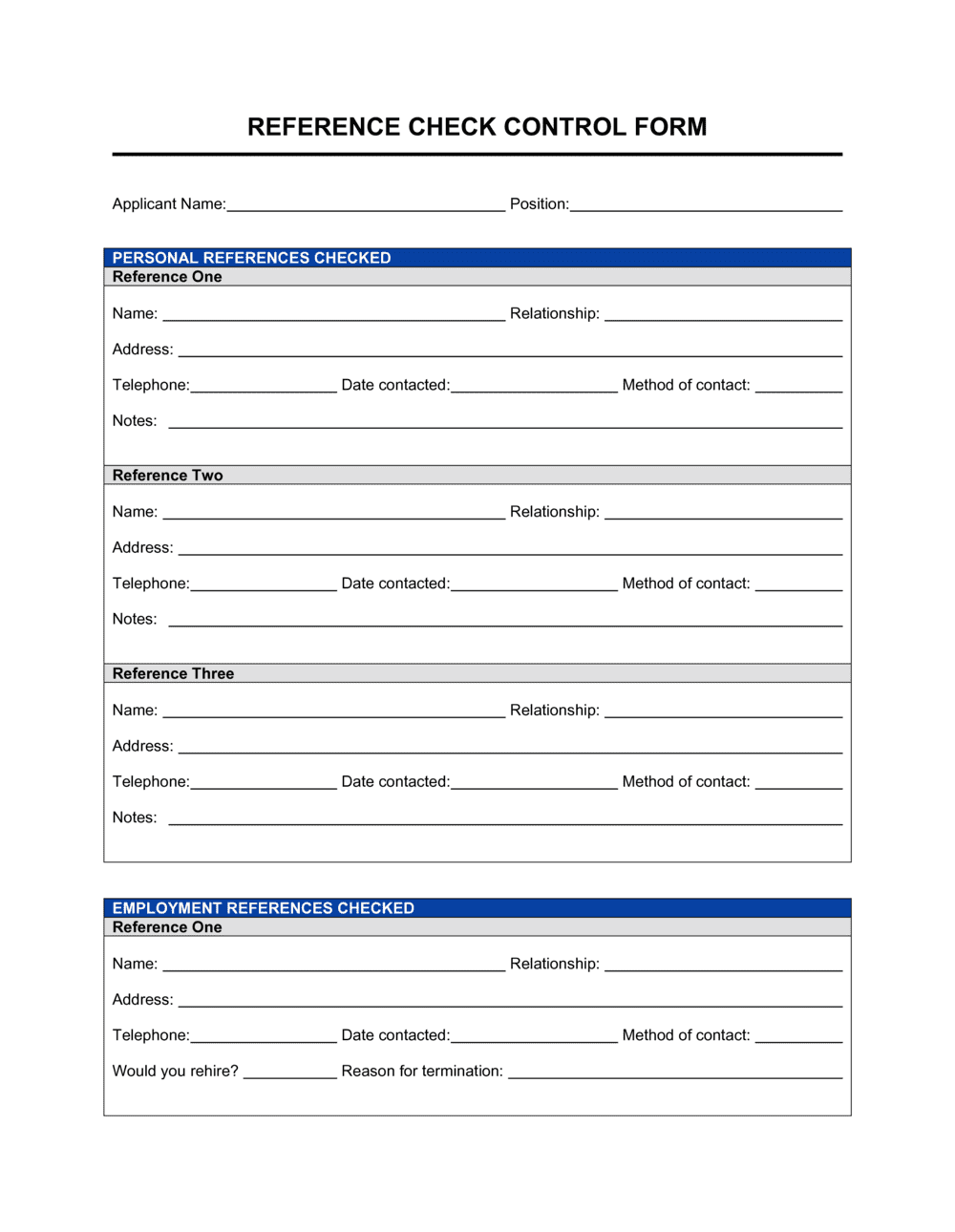
A Reference Checking Form is a structured document hiring teams use to conduct consistent, defensible reference calls for shortlisted candidates. This free Word download captures referee contact details, role context, standardized questions, numeric ratings, and verbatim quotes β€” giving every interviewer the same framework regardless of experience level.
When you need it
Use it after a candidate clears final-round interviews but before an offer is extended. It applies to any role where external validation of past performance, conduct, or skills is material to the hiring decision.
What's inside
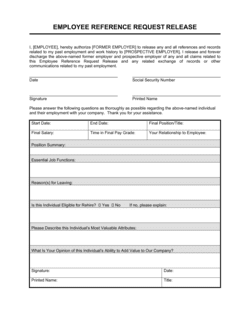
Candidate and referee identification blocks, relationship and tenure fields, structured behavioral questions with rating scales, open-ended follow-up prompts, a re-hire eligibility field, and a summary recommendation section for the interviewer's overall assessment.

What is a Reference Checking Form?

A Reference Checking Form is a structured document that guides hiring teams through a standardized reference call for shortlisted candidates. It captures the referee's contact details, their relationship to and tenure with the candidate, answers to behavioral questions scored on a rating scale, verbatim quotes, re-hire eligibility, and an overall hiring recommendation. Rather than relying on an interviewer's memory or improvised questions, the form ensures every reference call covers the same ground β€” making it possible to compare candidates objectively and document the basis for the final hiring decision.

Why You Need This Document

Unstructured reference calls β€” where the interviewer asks whatever comes to mind β€” routinely miss the questions that matter most, leave no defensible paper trail, and produce results that vary based on who made the call rather than the candidate's actual record. A missed re-hire flag or an undocumented concern about a candidate's conduct can translate into a costly bad hire, or worse, a negligent-hiring liability if the employee later causes harm that a reasonable check would have surfaced. This template gives every member of your hiring team the same structured framework, ensures no critical field is skipped, and produces a file-ready record that protects the organization if a hiring decision is ever challenged.

Which variant fits your situation?

If your situation is…Use this template
Checking references for a senior or executive-level hireExecutive Reference Check Form
Verifying credentials and employment history onlyEmployment Verification Letter
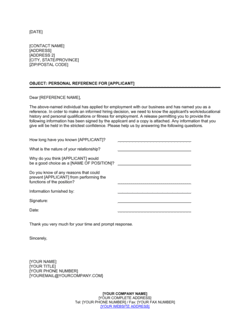
Collecting written references from referees asynchronouslyReference Request Letter
Documenting a candidate's full pre-employment screeningPre-Employment Screening Checklist
Evaluating internal candidates for a promotionEmployee Performance Evaluation Form
Conducting structured behavioral interviews before referencesInterview Evaluation Form

Common mistakes to avoid

❌ Contacting referees without the candidate's consent

Why it matters: Reference checks conducted without consent can expose the employer to privacy complaints and, in some jurisdictions, legal liability under data protection law.

Fix: Include a consent clause in the job application and confirm authorization in writing before initiating any reference call.
❌ Asking only one referee and treating it as sufficient

Why it matters: A single reference provides one perspective β€” which may reflect a personal relationship, a conflict, or an incomplete view of the candidate's performance across roles.

Fix: Contact at least two referees for any role, and three for senior or leadership positions. Require at least one to be a direct former manager.

❌ Accepting vague positive responses without probing for specifics

Why it matters: Referees default to positive generalities β€” 'great team player,' 'really dedicated' β€” which give you no actionable information about the candidate's actual performance.

Fix: Follow every general statement with 'Can you give me a specific example of that?' until you have a concrete situation, action, and result.

❌ Not documenting verbatim quotes

Why it matters: If a hiring decision is challenged, paraphrased notes are far weaker evidence than a direct record of what the referee actually said.

Fix: Record at least one verbatim quote per call in the designated field, particularly for any statement β€” positive or negative β€” that influenced the overall recommendation.

The 9 key fields, explained

Candidate and position details

Referee contact information

Relationship and tenure

Role and responsibilities confirmation

Structured performance questions with ratings

Strengths and development areas

Re-hire eligibility

Reason for leaving

Overall recommendation and interviewer notes

How to fill it out

  1. 1

    Confirm candidate consent before contacting any referee

    Verify that the candidate has authorized reference checks in writing β€” typically via the job application or a consent line in the offer process. Never contact a referee before consent is confirmed.

    πŸ’‘ Note the date and method of consent in the form header. If a candidate objects to a specific referee being contacted, document that too.

  2. 2

    Complete the candidate and position header

    Enter the candidate's full name, the role applied for, and the name of the person conducting the check. Date-stamp the form before the call begins.

    πŸ’‘ Use the exact job title from the job posting, not an informal version β€” this makes the form defensible if a hiring decision is later questioned.

  3. 3

    Fill in referee contact and relationship fields before the call

    Enter the referee's name, employer, title, and contact details using the information provided by the candidate. Record the relationship type and the dates of their working overlap.

    πŸ’‘ Verify the referee's current employer on LinkedIn before the call to confirm the professional relationship is legitimate.

  4. 4

    Conduct the call using the structured question set in sequence

    Ask each behavioral question in order, allow the referee to answer fully before moving on, and record both a numeric rating and a verbatim summary for each response.

    πŸ’‘ Silence is a technique β€” after a referee finishes answering, wait three to five seconds before moving to the next question. Additional detail often follows.

  5. 5

    Probe the re-hire eligibility answer

    If the answer is 'yes with reservations' or 'no,' ask a direct follow-up: 'What specifically gives you pause?' Record the response verbatim, even if it is brief.

    πŸ’‘ Referees who decline to explain a 'no' on re-hire are themselves a signal. Note the refusal in the concerns field.

  6. 6

    Complete the summary recommendation immediately after the call

    Fill in the overall recommendation, key themes, and any concerns while the conversation is fresh. Do not leave this section for later.

    πŸ’‘ If two referees give materially different assessments of the same candidate, flag it explicitly rather than averaging β€” the discrepancy itself is relevant information.

  7. 7

    File the completed form with the candidate's hiring record

    Save the signed form to the candidate's file alongside interview notes and the offer letter. Retain it for the duration required by your jurisdiction's employment record-keeping rules.

    πŸ’‘ In most jurisdictions, retaining hiring documents for a minimum of one to two years after the hire decision is standard practice for defensibility.

Frequently asked questions

What is a reference checking form?

A reference checking form is a structured document that guides hiring teams through a standardized reference call. It captures the referee's contact details and relationship to the candidate, records answers to behavioral questions with numeric ratings, notes the referee's position on re-hire eligibility, and documents an overall hiring recommendation. Using a consistent form ensures every candidate is assessed against the same criteria.

When should a reference check be conducted?

Reference checks are typically conducted after a candidate has cleared final-round interviews but before a formal offer is extended. This sequencing means you invest reference-check time only in serious finalists, while still giving yourself the opportunity to factor the results into the offer decision or withdraw consideration if concerns arise.

How many references should I check?

Two references is a common minimum for most roles. For senior, management, or executive positions, three references β€” with at least two being former direct managers β€” provides a more complete picture. Checking only one reference leaves you reliant on a single perspective that may not be representative of the candidate's broader track record.

What questions should I ask on a reference call?

Effective reference questions focus on specific past behavior rather than hypotheticals. Ask the referee to describe the candidate's primary responsibilities, give an example of how they handled a difficult situation, name their top strengths and a development area, explain the reason for leaving, and state whether they would rehire the candidate. Behavioral questions tied to the role's key competencies give the most useful signal.

Is a reference check legally required before hiring?

In most private-sector roles, reference checks are not legally mandated. However, certain regulated industries β€” healthcare, childcare, financial services, and government contracting β€” may require background screening that includes employment verification. Even where not required, documented reference checks protect employers from negligent-hiring claims if a new employee causes harm that a reasonable check would have flagged.

What should I do if a referee refuses to provide information?

Some employers instruct managers to confirm only job title and dates of employment due to legal caution. If a referee declines to answer substantive questions, note the refusal in the form and treat it as a data point. You can ask whether there is anything that would prevent them from recommending the candidate β€” a hesitation or refusal to answer that question is itself informative. Consider requesting an additional referee.

Can I use the same reference check form for every role?

A standard form works well for most individual-contributor roles. For management or executive hires, add competency-specific questions around leadership, team development, and decision-making under uncertainty. For technical roles, include a question asking the referee to assess specific skills or tools. A modular form with a standard core and optional role-specific sections serves most organizations well.

How long should I retain completed reference check forms?

Retain completed forms as part of the candidate's hiring record for at least one to two years after the hire decision in most jurisdictions β€” longer if local employment law requires it. For candidates who were hired, keep the form for the duration of their employment plus any applicable post-employment retention period. Check your local data protection and employment record-keeping rules for the exact requirement.

How this compares to alternatives

vs Interview Evaluation Form

An interview evaluation form documents the hiring team's internal assessment of a candidate during structured interviews. A reference checking form captures external validation from former employers. The two documents serve different stages of the hiring process and should both be retained β€” the evaluation form documents what the candidate claimed; the reference form documents what others observed.

vs Employment Verification Letter

An employment verification letter confirms factual employment data β€” dates, title, and salary β€” without qualitative assessment. A reference checking form goes further, capturing behavioral examples, ratings, and a re-hire recommendation. Verification confirms history; a reference check evaluates performance and character.

vs Reference Letter

A reference letter is a written statement the referee prepares and sends directly β€” it is the referee's narrative, not a structured assessment. A reference checking form guides a live call with standardized questions and ratings, giving the interviewer more control over what is covered. Letters are easier for referees to keep vague; structured calls are harder to deflect.

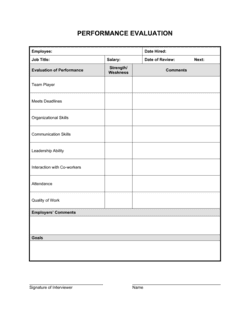
vs Employee Performance Evaluation Form

An employee performance evaluation form is used internally to assess an existing employee against role expectations, typically on an annual cycle. A reference checking form is used externally during pre-hire screening to gather a former employer's assessment of a candidate. The former tracks ongoing development; the latter informs a one-time hiring decision.

Industry-specific considerations

Technology / SaaS

Reference calls for engineering and product roles focus on technical judgment, code quality, and how the candidate handles rapid scope changes or technical disagreements.

Healthcare

Clinical and administrative hires often require mandatory reference checks; questions cover patient care standards, compliance behavior, and conduct under high-stress conditions.

Financial Services

References for regulated roles must probe ethics, accuracy under pressure, and any history of regulatory incidents β€” and must be retained to satisfy compliance audit requirements.

Professional Services

Client-facing roles require questions on relationship management, discretion with confidential information, and the ability to manage competing client demands simultaneously.

Template vs pro β€” what fits your needs?

PathBest forCostTime
Use the templateHR teams, hiring managers, and small business owners conducting standard pre-hire reference checksFree10 minutes to prepare, 20–30 minutes per reference call
Template + professional reviewOrganizations adding role-specific competency questions or operating in regulated industries$100–$300 for an HR consultant review1–2 days
Custom draftedEnterprise HR teams building fully branded, ATS-integrated reference check workflows$500–$2,000 for custom HR systems configuration1–3 weeks

Glossary

Reference Check
A pre-hire verification process in which a prospective employer contacts a candidate's former managers or colleagues to validate performance, conduct, and skills.
Referee
The individual β€” typically a former manager, colleague, or client β€” who provides a professional reference on behalf of the candidate.
Behavioral Question
An interview or reference question that asks for a specific past example of behavior, structured around the STAR method (Situation, Task, Action, Result).
Re-Hire Eligibility
A direct question asking whether the previous employer would rehire the candidate β€” widely regarded as one of the most predictive single data points in a reference call.
Rating Scale
A numeric scoring system β€” typically 1 to 5 β€” applied to specific competencies so that references from multiple sources can be compared objectively.
Verbatim Quote
A word-for-word record of a notable statement made by the referee, preserved to support or justify the hiring decision if challenged.
Consent to Reference Check
Written or verbal authorization from the candidate permitting the prospective employer to contact named referees and discuss their employment history.
Structured Reference Check
A reference call conducted using a fixed set of standardized questions asked of every referee, enabling valid comparisons across candidates.
Employment Gap
A period in a candidate's work history with no recorded employer β€” often surfaced during reference calls when tenure dates do not match the candidate's stated dates.

Part of your Business Operating System

This document is one of 3,000+ business & legal templates included in Business in a Box.

  • Fill-in-the-blanks β€” ready in minutes
  • 100% customizable Word document
  • Compatible with all office suites
  • Export to PDF and share electronically

Create your document in 3 simple steps.

From template to signed document β€” all inside one Business Operating System.
1
Download or open template

Access over 3,000+ business and legal templates for any business task, project or initiative.

2
Edit and fill in the blanks with AI

Customize your ready-made business document template and save it in the cloud.

3
Save, Share, Send, Sign

Share your files and folders with your team. Create a space of seamless collaboration.

Save time, save money, and create top-quality documents.

β˜…β˜…β˜…β˜…β˜…

"Fantastic value! I'm not sure how I'd do without it. It's worth its weight in gold and paid back for itself many times."

Managing Director Β· Mall Farm
Robert Whalley
Managing Director, Mall Farm Proprietary Limited
β˜…β˜…β˜…β˜…β˜…

"I have been using Business in a Box for years. It has been the most useful source of templates I have encountered. I recommend it to anyone."

Business Owner Β· 4+ years
Dr Michael John Freestone
Business Owner
β˜…β˜…β˜…β˜…β˜…

"It has been a life saver so many times I have lost count. Business in a Box has saved me so much time and as you know, time is money."

Owner Β· Upstate Web
David G. Moore Jr.
Owner, Upstate Web

Run your business with a system β€” not scattered tools

Stop downloading documents. Start operating with clarity. Business in a Box gives you the Business Operating System used by over 250,000 companies worldwide to structure, run, and grow their business.

Start freeΒ Β·Β No credit card required