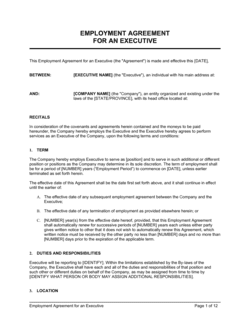
Refusal of Employee Request for Early Raise Template

Free Word download β€’ Edit online β€’ Save & share with Drive β€’ Export to PDF

1 pageβ€’20–30 min to fillβ€’Difficulty: Standardβ€’Signature requiredβ€’Legal review recommended
Learn more ↓
FreeRefusal of Employee Request for Early Raise Template

At a glance

What it is
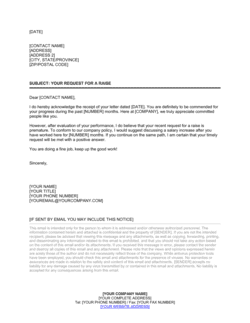
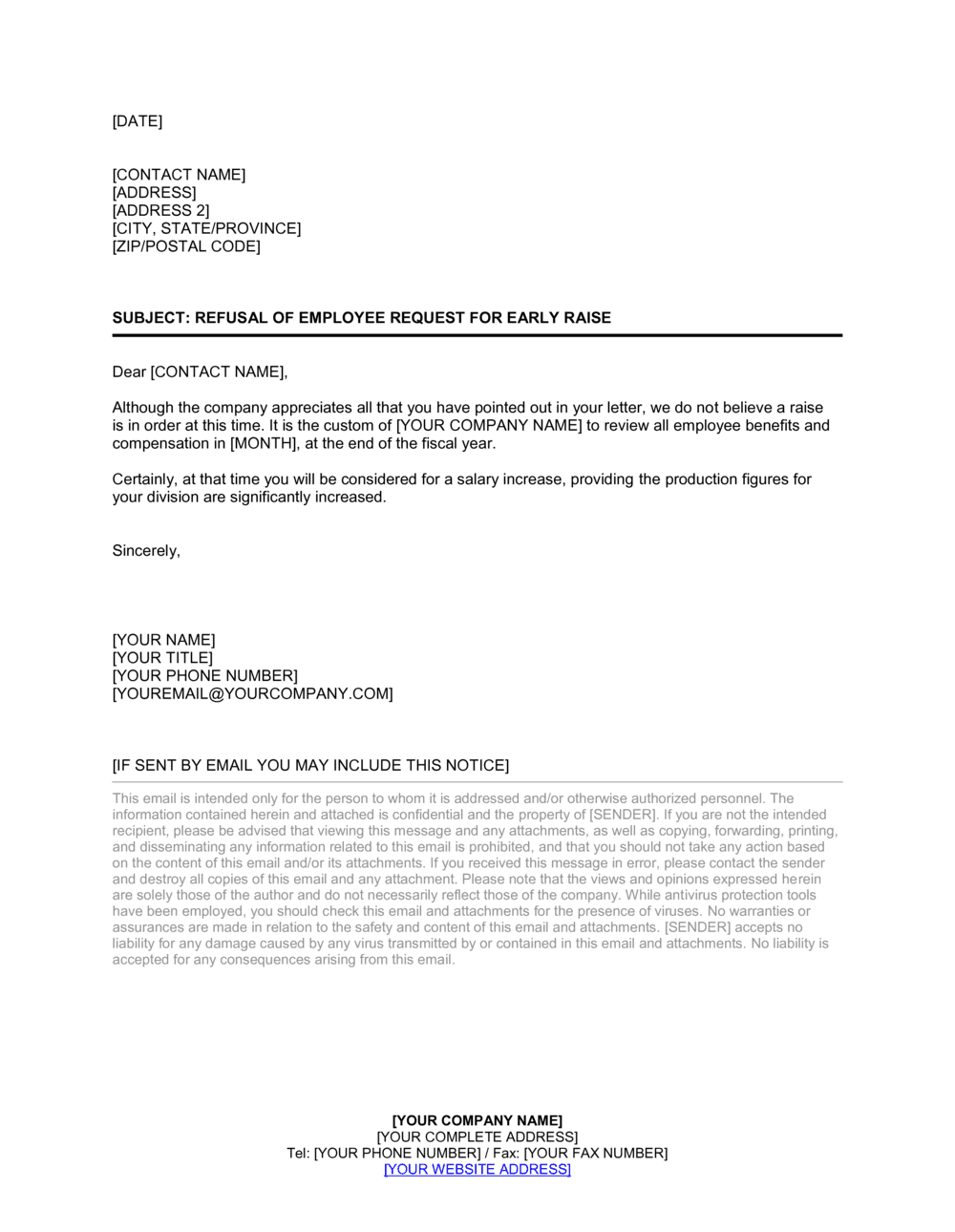
A Refusal of Employee Request for Early Raise is a formal written letter an employer sends to an employee to decline a request for a salary increase outside the company's standard review cycle. This free Word download gives you a professionally structured template you can edit online and export as PDF β€” stating the refusal clearly, referencing applicable policy, and outlining the conditions under which a future review may be considered.
When you need it
Use it when an employee submits a pay raise request before their scheduled performance review date, before completing a required tenure threshold, or at a time when business conditions, budget constraints, or compensation policy do not support an adjustment.
What's inside
Employer and employee identification, the date and reference to the original raise request, a clear statement of refusal, the business or policy rationale, acknowledgment of the employee's contributions, conditions or timeline for a future review, and next steps for the employee.

What is a Refusal of Employee Request for Early Raise?

A Refusal of Employee Request for Early Raise is a formal written letter an employer issues to decline an employee's request for a salary increase that falls outside the company's standard compensation review cycle. It documents the decision in writing, states the specific business or policy rationale, acknowledges the employee's value to the organization, and establishes a clear and qualified path toward a future salary review. Unlike a verbal conversation or an informal email response, this document creates a contemporaneous record that the employer made a consistent, non-discriminatory decision in accordance with its compensation policy β€” a record that becomes critical if the employee later raises a grievance, files a human rights complaint, or initiates an employment tribunal claim.

Why You Need This Document

Declining a raise request verbally or by casual email may feel simpler in the moment, but it creates three compounding risks. First, the employee is left with no clear understanding of when or under what conditions a raise might be considered, which drives disengagement and voluntary departure. Second, the employer has no documented evidence that the refusal was grounded in policy rather than bias β€” a significant exposure if the employee belongs to a protected class and later claims the decision was discriminatory. Third, informal refusals often contain unintentional language that implies a future commitment, which courts in common-law jurisdictions have found to create enforceable pay expectations. This template gives you a professionally structured, legally defensible response that protects the employment relationship, enforces compensation policy consistently, and eliminates ambiguity on both sides β€” for the cost of 15 minutes and a quick HR review.

Which variant fits your situation?

If your situation is…Use this template
Refusing a raise due to a company-wide budget freezeRefusal of Employee Request for Early Raise (Budget Freeze)
Declining a raise because the employee has not yet met tenure requirementsRefusal of Employee Request for Early Raise
Refusing a raise due to below-expectations performanceEmployee Performance Warning Letter
Declining a raise but offering a non-monetary benefit insteadCounter-Offer Letter (Benefits Adjustment)
Formally notifying an employee that their compensation review has been postponedSalary Review Postponement Notice
Responding to a raise request by scheduling a formal performance reviewEmployee Performance Review Template
Documenting the outcome of a salary negotiation conversationMeeting Summary β€” Compensation Discussion

Common mistakes to avoid

❌ Using vague or hedging refusal language

Why it matters: Language like 'we'll revisit this soon' or 'it's not the right time' leaves the employee uncertain whether the decision is final, prompting repeated informal escalation and eroding the manager's credibility.

Fix: State the refusal in direct, unambiguous terms in the first substantive paragraph. Follow immediately with the rationale and the next review date.

❌ Providing no documented rationale

Why it matters: A bare refusal with no business or policy reason is the single biggest exposure point if the employee later claims the decision was discriminatory or retaliatory.

Fix: Reference the specific policy section, budget period, or tenure requirement that governs the decision. Keep a copy of the policy version in force at the time of the letter.

❌ Making an unqualified promise of a future raise

Why it matters: Statements like 'you will receive a raise at your next review' can be treated as a binding contractual commitment in several common-law jurisdictions, regardless of actual performance or budget.

Fix: Always qualify future review language with 'at the Company's discretion' and tie any interim review to measurable, documented performance conditions.

❌ Omitting the employee acknowledgment signature block

Why it matters: Without a signed acknowledgment, the employer cannot prove the employee received the formal response, weakening the company's position in a grievance, tribunal, or wrongful termination claim.

Fix: Include a signature block for the employee, set a return deadline, and follow up in writing if the signed copy is not returned within five business days.

❌ Delivering the letter by email without any in-person discussion

Why it matters: Email-only delivery of sensitive HR decisions increases the risk of the message being misread, forwarded to colleagues, or triggering an immediate resignation without the employer having the opportunity to retain the employee.

Fix: Schedule a brief private meeting to hand over or discuss the letter. Document the meeting date and the employee's reaction in the HR file.

❌ Failing to apply the refusal consistently across similarly situated employees

Why it matters: If one employee's out-of-cycle raise request is denied while a comparably performing employee's is approved in the same period, the inconsistency can form the basis of a discrimination or pay-equity claim.

Fix: Before issuing any refusal, check with HR that the same policy has been applied to all similarly situated employees in the same review window, and document that consistency check in the file.

The 9 key clauses, explained

Parties and reference to original request

In plain language: Identifies the employer, the employee, and the specific raise request being addressed β€” including the date the request was made.

Sample language
This letter is addressed to [EMPLOYEE FULL NAME], [JOB TITLE], from [EMPLOYER LEGAL NAME] ('Company'), in response to your written request dated [REQUEST DATE] for a salary increase.

Common mistake: Omitting a reference to the date or method of the original request. Without this anchor, the employee may dispute that the letter responds to their specific request, creating ambiguity in any later grievance process.

Clear statement of refusal

In plain language: States unambiguously that the request for an early salary increase is declined at this time.

Sample language
After careful consideration, the Company is unable to approve your request for a salary increase at this time.

Common mistake: Using hedging language like 'we are not in a position to consider this right now.' Vague refusals leave the employee uncertain whether the decision is final, which leads to repeated requests and informal escalations.

Business or policy rationale

In plain language: Explains the specific, non-discriminatory reason for the refusal β€” such as compensation policy timing, budget constraints, or tenure requirements β€” without disclosing confidential financial data.

Sample language
Per the Company's Compensation Policy (Section [X]), salary reviews are conducted annually during the [REVIEW PERIOD]. Your next scheduled review date is [DATE]. Additionally, current budget allocations for [FISCAL YEAR/QUARTER] do not permit out-of-cycle adjustments.

Common mistake: Giving no reason at all. A bare refusal without rationale increases the risk that the employee perceives β€” and potentially claims β€” discriminatory or retaliatory intent.

Acknowledgment of employee contributions

In plain language: Briefly recognizes the employee's work and performance to preserve the employment relationship and reduce the risk of immediate resignation.

Sample language
The Company recognizes and values your contributions to [DEPARTMENT/TEAM], including [SPECIFIC ACHIEVEMENT OR METRIC]. This decision does not reflect dissatisfaction with your performance.

Common mistake: Skipping this clause entirely in a short, transactional letter. Omitting any acknowledgment of the employee's value is one of the most common causes of post-refusal disengagement and voluntary departure.

Conditions for future salary review

In plain language: States what must happen β€” and when β€” for a raise to be reconsidered, giving the employee a clear and actionable path forward.

Sample language
Your compensation will be reviewed during the next standard performance review scheduled for [DATE]. Should you achieve [SPECIFIC PERFORMANCE MILESTONE OR OBJECTIVE] prior to that date, the Company may, at its discretion, consider an interim review.

Common mistake: Promising a raise at the next review without the word 'discretionary.' Courts in several jurisdictions have found that unqualified future pay promises become enforceable contractual commitments.

Non-discrimination confirmation

In plain language: Confirms that the refusal is based solely on business or policy grounds and not on any protected characteristic.

Sample language
This decision is made solely on the basis of [BUSINESS/POLICY REASON] and is not related to [EMPLOYEE NAME]'s [race, gender, age, disability, or any other protected characteristic under applicable law].

Common mistake: Omitting this clause. If the employee later files a discrimination claim, the absence of documented non-discriminatory rationale weakens the employer's defense significantly.

Alternative support or non-monetary recognition

In plain language: Optionally offers non-salary alternatives β€” professional development, flexible scheduling, or a one-time bonus consideration β€” to demonstrate good faith.

Sample language
While a base salary adjustment is not possible at this time, the Company is prepared to discuss [PROFESSIONAL DEVELOPMENT OPPORTUNITIES / FLEXIBLE WORK ARRANGEMENT / OTHER BENEFIT] as a demonstration of our continued investment in your growth.

Common mistake: Promising a specific non-monetary benefit in this clause without confirming it first with the relevant budget holder. Offering a benefit the company cannot deliver creates a new breach of expectation.

Employee acknowledgment and next steps

In plain language: Requests the employee's signature confirming receipt and understanding of the letter, and outlines any follow-up actions β€” such as scheduling a meeting with HR.

Sample language
Please sign and return a copy of this letter to [HR CONTACT NAME] by [DATE] to confirm receipt. Should you wish to discuss this decision further, please contact [HR CONTACT / MANAGER NAME] at [EMAIL / PHONE].

Common mistake: Not requesting a signature or acknowledgment. Without written confirmation of receipt, the employer has no proof the employee was formally notified, which can undermine the company's position in a later dispute or grievance.

Governing policy and confidentiality

In plain language: States that the letter is governed by the company's existing compensation and HR policies and asks the employee to keep the contents confidential.

Sample language
This letter is issued pursuant to the Company's Compensation Policy and Employee Handbook (last updated [DATE]). The contents of this communication are confidential and should not be shared with colleagues outside of the HR process.

Common mistake: Referencing a version of the policy that has not been communicated to the employee. If the employee was never given the policy that grounds the refusal, the rationale may not hold up in a grievance or employment tribunal.

How to fill it out

  1. 1

    Identify the parties and the original request

    Enter the employee's full legal name, job title, department, and the date and method of their raise request. Confirm you are referencing the correct request if the employee has made multiple inquiries.

    πŸ’‘ Save a copy of the employee's original request β€” email, written memo, or HR system submission β€” and attach it to your file copy of this letter for a complete paper trail.

  2. 2

    State the refusal clearly and directly

    Draft the refusal statement in the first substantive paragraph. Use unambiguous language β€” 'the Company is unable to approve your request at this time' β€” so there is no room for the employee to interpret the response as a deferral rather than a denial.

    πŸ’‘ Avoid softening the refusal to the point of obscuring it. Employees and their advisors read HR letters carefully; indirect language creates disputes.

  3. 3

    Insert the specific business or policy rationale

    Reference the exact section of your compensation policy, the budget cycle, or the tenure requirement that applies. Include the next scheduled review date so the employee has a concrete timeline.

    πŸ’‘ Cross-check with your finance or payroll team before citing a specific budget freeze β€” issuing this letter and then approving another employee's raise within the same period creates discrimination exposure.

  4. 4

    Acknowledge the employee's contributions

    Write one to two sentences identifying a specific contribution or achievement. Generic praise ('you are a valued member of our team') is better than nothing but less effective than a named accomplishment.

    πŸ’‘ Specific acknowledgment β€” 'your management of the Q1 client rollout' rather than 'your hard work' β€” signals that this is a business decision, not a performance judgment.

  5. 5

    Set clear, qualified conditions for future review

    State the next review date and any performance milestones that could trigger an interim review. Use 'at the Company's discretion' for any interim review language to avoid creating a binding commitment.

    πŸ’‘ If you set a performance milestone, make it measurable β€” 'achieving a client satisfaction score of 85% or above' rather than 'demonstrating improvement.'

  6. 6

    Add the non-discrimination confirmation

    Insert the clause confirming that the decision is based on business or policy grounds, not on any protected characteristic. Have HR review this clause before the letter is issued.

    πŸ’‘ In jurisdictions with pay equity legislation β€” such as the UK and Ontario β€” document that the refusal is consistent with how comparably situated employees of all genders and ethnicities are treated.

  7. 7

    Include next steps and the acknowledgment request

    Name the HR contact for follow-up, set a deadline for the employee to sign and return the acknowledgment copy, and specify the channel (email, in-person signature, or HRIS system).

    πŸ’‘ A five-business-day return deadline is standard. If the employee does not return the signed copy, follow up in writing and note the non-response in the HR file.

  8. 8

    Review, sign, and deliver the letter

    Have the letter reviewed by HR leadership or, for senior employees, legal counsel. The authorized signatory β€” typically the direct manager or HR director β€” signs first, then the letter is delivered to the employee in a private meeting rather than by email alone.

    πŸ’‘ Deliver the letter in a face-to-face or video meeting so you can answer immediate questions and gauge the employee's reaction. Email delivery alone increases the risk of misunderstanding and disengagement.

Frequently asked questions

What is a refusal of employee request for early raise?

A refusal of employee request for early raise is a formal written letter an employer issues to decline an employee's request for a salary increase outside the standard compensation review cycle. It documents the refusal, states the business or policy rationale, acknowledges the employee's contributions, and sets out the conditions and timeline for a future review. The letter creates a clear paper trail that protects the employer in the event the decision is later challenged as discriminatory or retaliatory.

Does an employer have to give a reason for refusing a raise request?

In most jurisdictions, employers are not legally required to give a reason for declining a discretionary pay increase. However, providing a documented, non-discriminatory rationale is strongly advisable β€” an undocumented refusal is far harder to defend if the employee later files a grievance or discrimination claim. In jurisdictions with pay equity legislation, such as Canada and the UK, the bar for documentation is higher.

Can refusing a raise request be considered constructive dismissal?

A single refusal of an out-of-cycle raise request is generally not constructive dismissal. However, a pattern of repeated unreasonable refusals combined with other adverse actions β€” reducing duties, cutting existing pay, or systematic exclusion β€” can cumulatively meet the threshold for constructive dismissal in common-law jurisdictions. This is why the refusal letter should be professional, policy-grounded, and accompanied by a clear path to a future review.

Should the employee sign the refusal letter?

Yes. Requesting the employee's signature acknowledging receipt is standard practice and creates a documented record that the employee received and understood the company's decision. The signature does not mean the employee agrees with the decision β€” it confirms only receipt. If the employee refuses to sign, note that fact in the HR file and follow up in writing.

What reasons can an employer give for refusing an early raise?

Legitimate reasons include: the request falls outside the standard compensation review cycle, a company-wide budget freeze is in effect, the employee has not yet met the minimum tenure requirement for a review, the employee's current salary is already at the top of the applicable salary band, or business performance targets that would support an increase have not been met. Each reason should be specific and consistently applied across similarly situated employees.

What is the difference between this letter and a performance improvement plan?

A refusal of raise letter declines a specific compensation request for business or policy reasons unrelated to underperformance β€” it is not disciplinary. A performance improvement plan (PIP) is issued when an employee's performance falls below expectations and sets formal targets with consequences for non-improvement. Conflating the two β€” or issuing a raise refusal in a tone that implies the employee is underperforming when they are not β€” creates unnecessary disengagement and legal risk.

Can a raise refusal expose the employer to discrimination claims?

Yes, if the refusal is not applied consistently across employees of different genders, races, ages, or other protected characteristics. The risk is highest when the refusal is undocumented, the rationale is inconsistent with how other employees have been treated, or the refusal comes shortly after the employee engaged in a protected activity such as filing an HR complaint. Documenting a clear, non-discriminatory rationale and applying it uniformly is the primary defense.

How soon after receiving a raise request should an employer respond?

Best practice is to respond within five to ten business days of receiving the request. Delayed responses increase employee anxiety, create informal escalation, and can signal to the employee that the employer is not taking the request seriously β€” which increases the risk of disengagement or resignation. If a decision requires more time for budget review, acknowledge receipt immediately and set an expected response date.

Is this letter appropriate for both at-will and contract employees?

Yes, with modifications. For at-will employees, the letter can be straightforward. For employees under a fixed-term or collective bargaining agreement, the refusal must be consistent with any compensation provisions in the agreement β€” issuing a refusal that contradicts contractual salary progression rights can itself be a breach of contract. Always review the employee's specific contract before issuing the letter.

How this compares to alternatives

vs Employee Performance Review

A performance review is a scheduled, comprehensive evaluation of an employee's work that may β€” but does not have to β€” result in a compensation change. A raise refusal letter responds to a specific, unsolicited compensation request outside the review cycle. The two documents are distinct: one is proactive and periodic; the other is reactive and event-driven. Referencing the next performance review date in the refusal letter links the two appropriately.

vs Employee Warning Letter

A warning letter is a disciplinary document issued when an employee's conduct or performance falls below expectations, with consequences for non-improvement. A raise refusal letter is not disciplinary β€” it declines a compensation request for business or policy reasons. Confusing the two in tone or format can cause the employee to perceive the refusal as punitive, which increases legal and retention risk.

vs Salary Negotiation Counter-Offer Letter

A counter-offer letter responds to a compensation request by proposing alternative terms β€” a smaller increase, a future review date, or a non-monetary benefit. A raise refusal letter declines the request outright. Use the counter-offer when you want to retain the employee and have some flexibility; use the refusal letter when policy or budget permits no adjustment at this time.

vs Employment Contract Amendment

An employment contract amendment formally modifies the compensation terms of an existing agreement β€” used when a raise is approved and needs to be made binding. A raise refusal letter does the opposite: it documents a decision not to change current terms. Both documents interact with the underlying employment contract, which is why refusal letters should not contain any language that inadvertently creates new contractual obligations.

Industry-specific considerations

Technology / SaaS

Fast-moving hiring markets mean engineers frequently request out-of-cycle raises after competing offers; the refusal letter must acknowledge market dynamics while anchoring to internal equity and documented review timelines.

Financial Services

Compensation decisions are often subject to regulatory review; refusal letters in this sector must reference compliance with remuneration policies and, where applicable, FCA or SEC pay governance requirements.

Healthcare

Nursing and clinical staff shortages create high pressure for out-of-cycle increases; employers must document refusals carefully to avoid perceptions of differential treatment between clinical and administrative staff.

Professional Services

Billable-hours targets and client revenue generation are common milestones referenced in raise conditions; refusal letters in this sector frequently link future review to utilization rates or client portfolio growth.

Jurisdictional notes

United States

In most US states, at-will employment means an employer can refuse a raise request without cause, but the refusal must not be based on a protected characteristic under Title VII, the ADEA, the ADA, or state equivalents. Several states β€” including California, New York, and Illinois β€” have enacted pay transparency and pay equity laws that require employers to document compensation decisions consistently across comparable roles. Where a prior offer letter or employment agreement references compensation review timelines, those terms may limit the employer's discretion.

Canada

Canadian human rights legislation at both federal and provincial levels prohibits compensation decisions based on protected grounds including gender, race, disability, and age. Pay equity legislation in Ontario, Quebec, and federally regulated sectors requires employers to actively monitor and document wage decisions across comparable job classes. A refusal letter that lacks documented, non-discriminatory rationale is more vulnerable to a human rights tribunal complaint. In Quebec, the letter should be available in French for provincially regulated employers.

United Kingdom

Under the Equality Act 2010, pay decisions must not discriminate on the basis of any protected characteristic, including gender β€” gender pay gap reporting obligations apply to employers with 250 or more employees. Employees who believe a refusal is discriminatory may raise an employment tribunal claim within three months of the decision. The refusal letter should reference the employer's pay policy and, where applicable, confirm consistency with any pay progression framework set out in the employment contract or staff handbook.

European Union

The EU Pay Transparency Directive (2023/970), which member states must implement by June 2026, requires employers to justify pay decisions and respond to employee pay-related requests with documented criteria. Employees in several member states β€” including Germany, France, and the Netherlands β€” have works council or employee representative consultation rights that may apply before a unilateral compensation decision is communicated. GDPR applies to any personal data included in or processed in connection with the letter, including the employee's salary details.

Template vs lawyer β€” what fits your deal?

PathBest forCostTime
Use the templateStandard refusals for non-senior employees where the rationale is clearly policy-based and consistently appliedFree15–30 minutes
Template + legal reviewRefusals involving employees who have previously raised HR complaints, employees in protected categories, or jurisdictions with pay equity legislation$150–$400 (HR advisor or employment lawyer review)1–2 business days
Custom draftedSenior executives, unionized employees, employees under fixed-term contracts with compensation provisions, or situations with active discrimination or retaliation exposure$500–$2,000+3–7 business days

Glossary

Out-of-Cycle Raise
A salary increase granted outside the employer's standard annual or semi-annual compensation review schedule.
Compensation Policy
A written employer policy that governs how and when salary adjustments are evaluated, approved, and communicated.
Performance Review Cycle
The recurring schedule β€” typically annual or semi-annual β€” during which an employer formally evaluates employee performance and may adjust compensation.
Salary Band
The defined minimum and maximum pay range for a given role or grade within an organization's compensation structure.
Budget Freeze
A temporary employer directive suspending discretionary spending, including new salary increases, until financial conditions improve.
Constructive Dismissal
When an employer's actions β€” including significant pay cuts or repeated unreasonable refusals β€” are severe enough that a reasonable employee would feel forced to resign, triggering dismissal liability.
Consideration
Something of value exchanged between parties in a contract; in employment, a salary increase request and refusal involves no new contractual consideration unless a counter-offer is accepted.
At-Will Employment
Employment in which either party may end the relationship at any time for any lawful reason; an employer's refusal of a raise does not itself constitute unlawful termination under at-will doctrine.
Legitimate Business Reason
A non-discriminatory, documented rationale for an employment decision that can withstand legal scrutiny if the decision is later challenged.
Acknowledgment Clause
A section of a formal letter or agreement where the recipient confirms they have received, read, and understood the document's contents.

Part of your Business Operating System

This document is one of 3,000+ business & legal templates included in Business in a Box.

  • Fill-in-the-blanks β€” ready in minutes
  • 100% customizable Word document
  • Compatible with all office suites
  • Export to PDF and share electronically

Create your document in 3 simple steps.

From template to signed document β€” all inside one Business Operating System.
1
Download or open template

Access over 3,000+ business and legal templates for any business task, project or initiative.

2
Edit and fill in the blanks with AI

Customize your ready-made business document template and save it in the cloud.

3
Save, Share, Send, Sign

Share your files and folders with your team. Create a space of seamless collaboration.

Save time, save money, and create top-quality documents.

β˜…β˜…β˜…β˜…β˜…

"Fantastic value! I'm not sure how I'd do without it. It's worth its weight in gold and paid back for itself many times."

Managing Director Β· Mall Farm
Robert Whalley
Managing Director, Mall Farm Proprietary Limited
β˜…β˜…β˜…β˜…β˜…

"I have been using Business in a Box for years. It has been the most useful source of templates I have encountered. I recommend it to anyone."

Business Owner Β· 4+ years
Dr Michael John Freestone
Business Owner
β˜…β˜…β˜…β˜…β˜…

"It has been a life saver so many times I have lost count. Business in a Box has saved me so much time and as you know, time is money."

Owner Β· Upstate Web
David G. Moore Jr.
Owner, Upstate Web

Run your business with a system β€” not scattered tools

Stop downloading documents. Start operating with clarity. Business in a Box gives you the Business Operating System used by over 250,000 companies worldwide to structure, run, and grow their business.

Start freeΒ Β·Β No credit card required