1
Identify all parties the document applies to
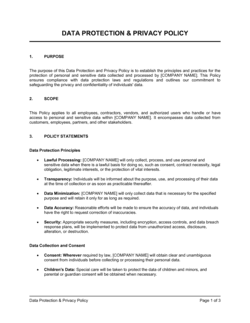
List every group covered by the policy — full-time employees, part-time employees, contractors, consultants, board members, and any vendors with access to company data or premises. Insert this list into the scope section.
💡 If a class of worker is not explicitly named in the scope, a court or regulator may find the policy does not apply to them — name everyone.
2
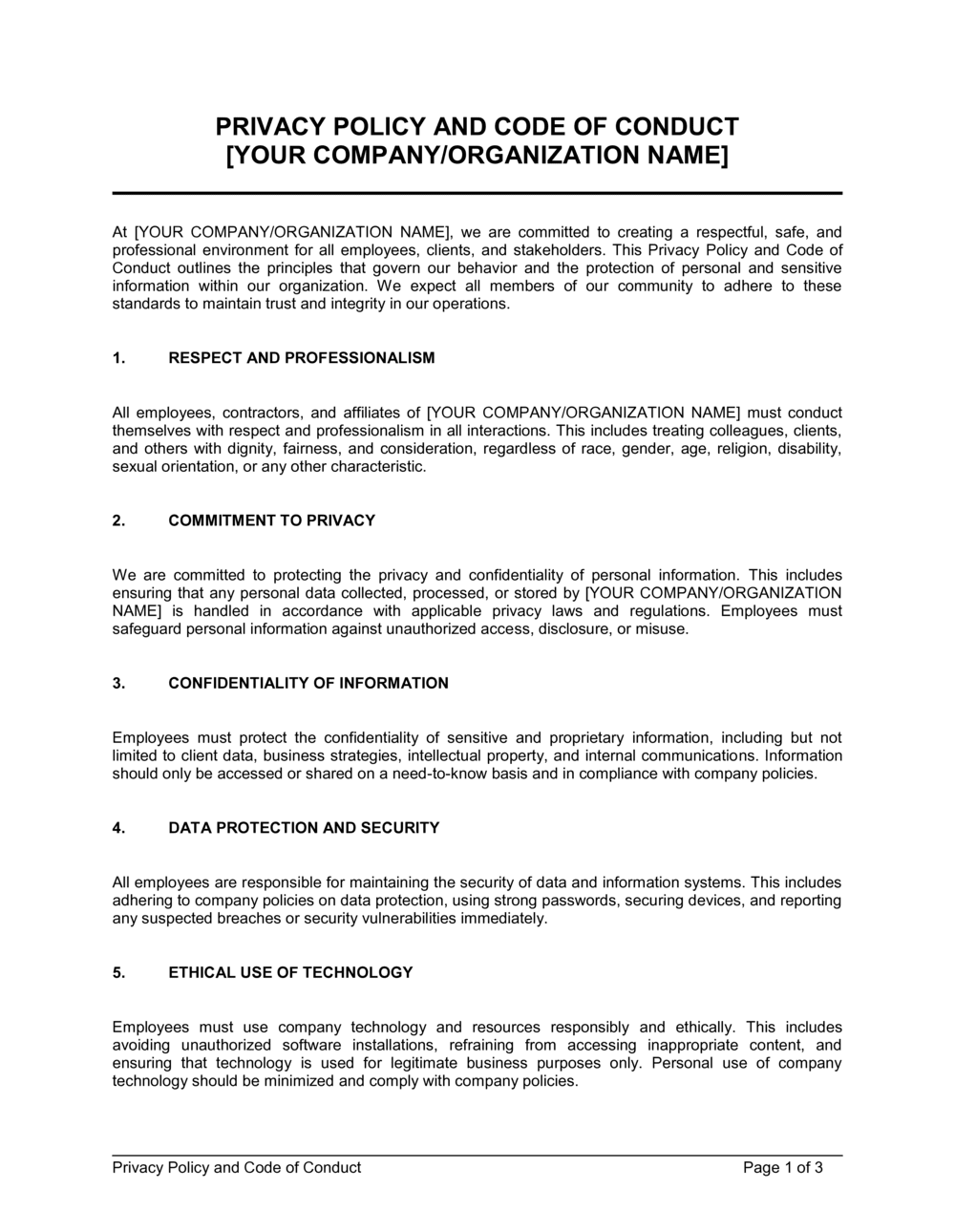
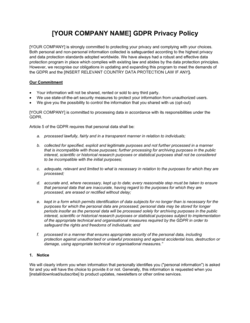
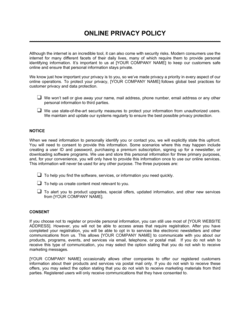
Inventory the personal data your organization collects
Map every data category you hold: employee records, customer contact data, payment information, website analytics, and any health or biometric data. Enter each category with its source and stated purpose into the data collection section.
💡 A simple spreadsheet with columns for data type, source, purpose, and retention period makes this step much faster and doubles as a data inventory for future audits.
3
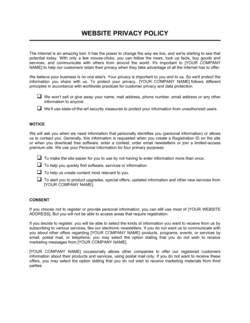
Set specific retention periods by data category
Research the statutory minimums for each data type in your jurisdiction — payroll records, tax records, and employment files each carry different requirements. Enter the specific period and deletion method for each category.
💡 When in doubt, match your retention period to the applicable statute of limitations for employment or contract claims in your jurisdiction — this protects you from both over-retention and premature deletion.
4
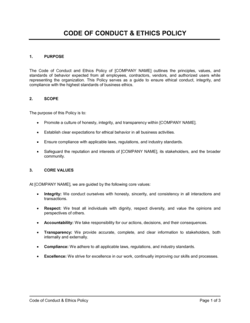
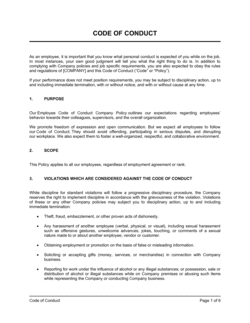
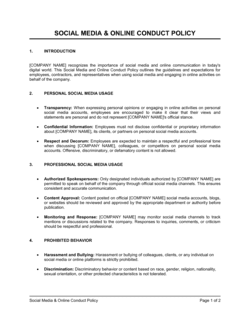
Customize workplace conduct standards for your environment
Adapt the default conduct language to reflect your actual work environment — remote-first, in-office, or hybrid. Add any industry-specific rules (e.g., client interaction protocols, social media restrictions for regulated industries).
💡 If your team works across time zones, add a specific clause about communication response-time expectations — this prevents a common source of conduct disputes in distributed teams.
5
List all protected characteristics in the anti-harassment section
Include every characteristic protected under the employment laws of your jurisdiction — race, gender, age, religion, disability, sexual orientation, national origin, and any others required locally. Insert the specific reporting contact or channel.
💡 Name a backup reporting contact in case the primary contact is the subject of the complaint — this is required in several jurisdictions and is simply good practice everywhere.
6
Define the conflict-of-interest disclosure process
Specify the form or written method for disclosing conflicts, the role who receives disclosures, and the timeframe for review and response. Insert these details into the conflict-of-interest section.
💡 Require annual re-disclosure — not just disclosure at hire — because conflicts develop over time as employees take on outside work or personal relationships change.
7
Establish data security minimums
Insert your specific security requirements: password standards, multi-factor authentication requirements, encryption standards for devices and file sharing, and the breach-reporting timeline.
💡 Reference your IT acceptable-use policy or security handbook by name rather than duplicating all technical requirements here — it keeps the conduct policy readable and avoids conflicts when technical standards change.
8
Distribute and document acknowledgment
Share the finalized document with all covered parties and collect a signed or electronic acknowledgment confirming they have read and understood it. Store acknowledgments in each employee's file.
💡 Re-distribute and collect fresh acknowledgments every time you make a substantive policy change — an outdated acknowledgment on file provides no protection if the employee claims they were unaware of the current version.