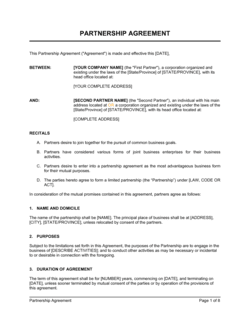
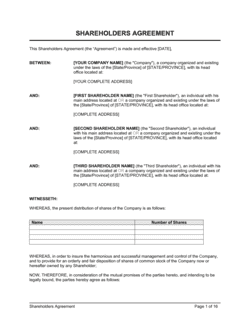
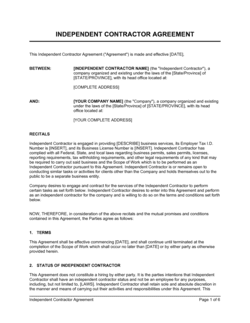
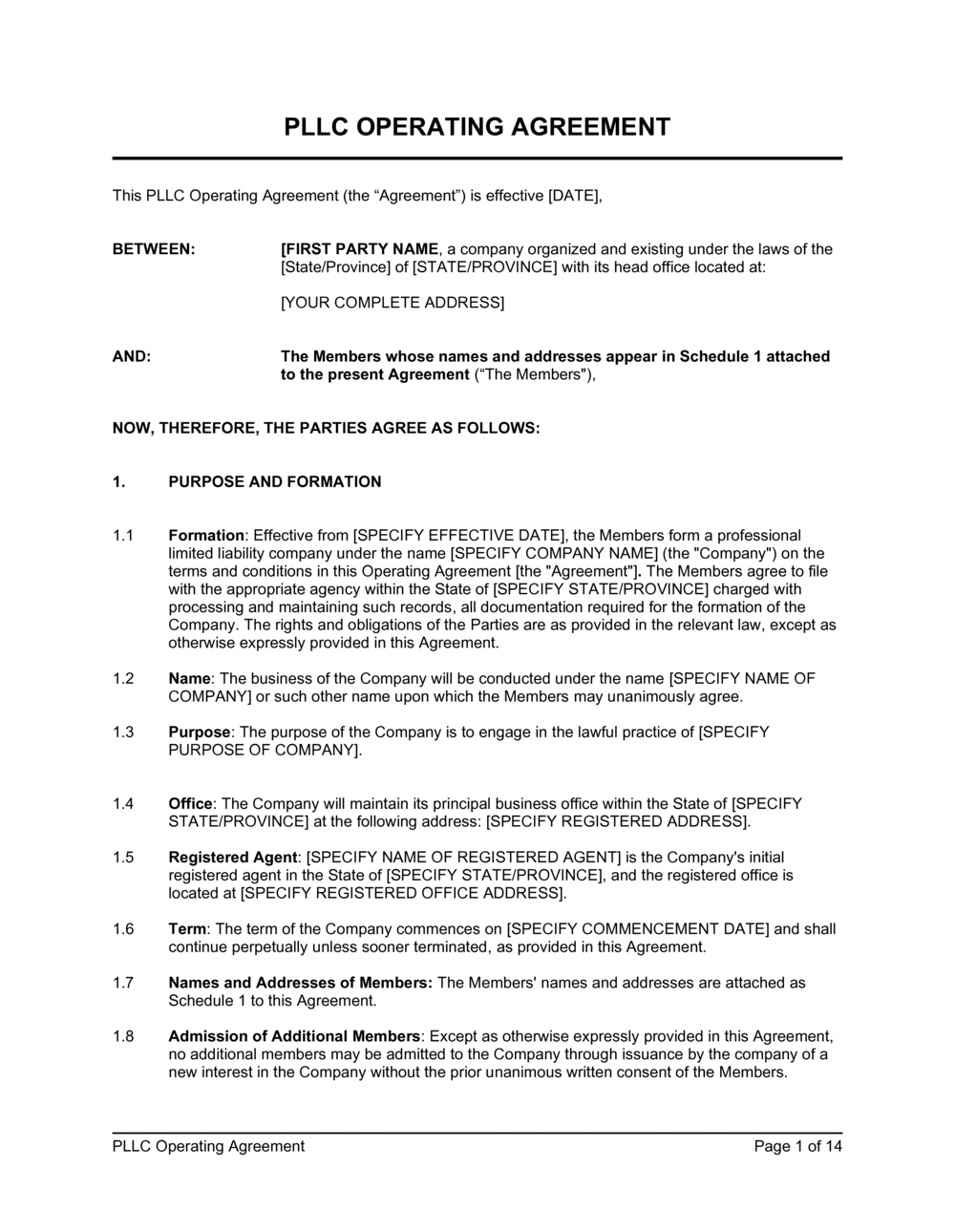
PLLC Operating Agreement Template

Free Word download • Edit online • Save & share with Drive • Export to PDF

14 pages30–45 min to fillDifficulty: ComplexSignature requiredLegal review recommended
Learn more ↓
FreePLLC Operating Agreement Template

At a glance

What it is
A PLLC Operating Agreement is a legally binding governance document for a Professional Limited Liability Company — an entity structure available in most US states exclusively to licensed professionals such as physicians, attorneys, accountants, and architects. This free Word download covers ownership restrictions, member roles, profit allocations, decision-making authority, transfer restrictions, and dissolution procedures in a single structured template you can edit online and export as PDF.
When you need it
Use it when forming or formalizing a PLLC with one or more licensed co-owners, when adding or removing a member whose license status has changed, or when your state licensing board or a lender requests a copy of your governing document.
What's inside
Licensed-member restrictions and license verification requirements, capital contributions and percentage interests, management structure (member-managed or manager-managed), profit and loss allocations, transfer and admission restrictions tied to licensure, professional liability and indemnification provisions, and dissolution and winding-up procedures.

What is a PLLC Operating Agreement?

A PLLC Operating Agreement is the primary governance document for a Professional Limited Liability Company — a state-authorized entity structure that limits ownership exclusively to individuals holding a valid professional license in the relevant field, such as medicine, law, accounting, dentistry, or architecture. Unlike a standard LLC operating agreement, it includes profession-specific provisions: license verification requirements for all members, automatic triggers when a member's license is suspended or revoked, and transfer restrictions that prevent membership interests from passing to unlicensed persons through sale, inheritance, or court order. The agreement establishes capital contributions and ownership percentages, management authority, profit allocations, and a wind-down procedure — all calibrated to the licensing compliance obligations that define the PLLC structure.

Why You Need This Document

Operating a professional practice as a PLLC without a written governing agreement exposes every licensed member to compounding risk. Without documented license revocation triggers and a buyout timeline, a single revoked license can leave the PLLC out of statutory compliance indefinitely — while the unlicensed former member retains economic rights and the remaining members face potential regulatory action. Without explicit transfer restrictions, a membership interest can pass to an unlicensed heir or divorcing spouse, threatening the practice's authorized status with the state licensing board. Profit-sharing disputes and exit disagreements resolved by default state LLC statutes rarely reflect how a professional practice actually operates. This template gives licensed professionals a starting point that addresses every one of these gaps — with clause-level prompts that prevent the most common compliance failures before they reach a licensing board or a courtroom.

Which variant fits your situation?

If your situation is…Use this template
Single licensed professional forming a solo PLLCSingle-Member PLLC Operating Agreement
Two or more licensed professionals forming a multi-member practicePLLC Operating Agreement (Multi-Member)
General professional partnership without LLC protectionProfessional Partnership Agreement
Standard LLC with no professional licensing restrictionsLLC Operating Agreement
Professional corporation instead of PLLCProfessional Corporation Shareholder Agreement
Adding a new licensed member to an existing PLLCLLC Membership Interest Purchase Agreement
Separating from a PLLC and transferring your membership interestLLC Membership Interest Transfer Agreement

Common mistakes to avoid

❌ Using a standard LLC operating agreement without licensure restrictions

Why it matters: A standard LLC agreement does not restrict ownership to licensed members. If an unlicensed person acquires an interest — through inheritance, divorce, or assignment — the PLLC may lose its authorized status and face regulatory action.

Fix: Replace all generic membership transfer clauses with PLLC-specific provisions requiring every member to hold a valid professional license and restricting transfers to licensed individuals only.

❌ Setting no buyout timeline after a license revocation event

Why it matters: Without a deadline, a member whose license is revoked retains economic and potentially voting rights indefinitely, putting the entire PLLC out of compliance with state licensing statutes.

Fix: Set an explicit deadline — typically 60 to 90 days from the triggering event — for the buyout to be completed, with distributions suspended to the affected member during that window.

❌ Omitting goodwill and client lists from the capital contribution schedule

Why it matters: Undocumented non-cash contributions create disputes about each founder's true ownership stake at exit and generate IRS scrutiny over the tax basis of the contributing member's capital account.

Fix: Have a CPA or business valuator assign a dollar value to any contributed goodwill, patient list, or existing practice assets before execution and include the figure in Schedule A.

❌ Treating PLLC liability protection as a shield against personal malpractice claims

Why it matters: Practitioners who believe they are personally protected from their own malpractice may carry insufficient insurance or take on higher-risk engagements — exposing them to personal judgments that exceed policy limits.

Fix: Include an explicit clause stating that the PLLC structure does not shield any member from personal liability for their own professional negligence, and require minimum malpractice coverage levels in the agreement.

❌ Choosing a governing state that differs from the formation state

Why it matters: PLLC eligibility, licensed-ownership requirements, and dissolution rules are creatures of state statute. Applying the law of a different state can void the licensure provisions that define the PLLC structure.

Fix: Always designate the state in which the PLLC was formed and primarily operates as the governing law — confirm that state's PLLC statute covers your profession before proceeding.

❌ No procedure for the simultaneous loss of all members' licenses

Why it matters: If all members lose their licenses at the same time — due to a regulatory action affecting the entire practice — the PLLC is legally unable to operate with no pre-agreed wind-down plan, leaving the entity in statutory limbo.

Fix: Add a dissolution trigger that activates automatically if the PLLC has no licensed member for more than 30 consecutive days, with a defined winding-up procedure and asset distribution sequence.

The 10 key clauses, explained

Licensed membership requirement

In plain language: Restricts ownership to individuals who hold a valid, current professional license in the applicable field and jurisdiction — and requires members to maintain that license as a condition of continued ownership.

Sample language
Each Member shall, at all times during their membership, hold a valid, current license to practice [PROFESSION] issued by [STATE] [LICENSING AUTHORITY]. Any Member whose license is suspended, revoked, or allowed to lapse shall be deemed to have triggered a Mandatory Purchase Event under Section [X].

Common mistake: Failing to specify which license and which licensing authority governs eligibility. Vague language like 'appropriately licensed' creates disputes when a member holds a license in a different state or specialty.

Formation, term, and principal office

In plain language: Records the PLLC's legal name, state of formation, registered agent, principal office address, and the indefinite or fixed term of the entity's existence.

Sample language
[PLLC NAME], a Professional Limited Liability Company formed under the laws of [STATE], shall maintain its principal office at [ADDRESS] and its registered agent at [REGISTERED AGENT NAME AND ADDRESS]. The term of the Company shall be perpetual unless dissolved in accordance with this Agreement.

Common mistake: Using a trade or DBA name instead of the exact registered legal name. Discrepancies between the operating agreement and state formation documents create filing and enforcement complications.

Capital contributions and membership interests

In plain language: Records each member's initial capital contribution — cash, property, or prior practice goodwill — and their resulting ownership percentage.

Sample language
The initial capital contributions and Membership Interests of the Members are set forth in Schedule A attached hereto. [MEMBER NAME]: $[AMOUNT] / [X]% Interest. No Member is required to make additional capital contributions without unanimous written consent.

Common mistake: Omitting goodwill or existing patient/client list valuations from the contribution schedule. Undocumented contributions create tax and ownership disputes when a founding member later exits.

Allocation of profits, losses, and distributions

In plain language: Sets out how net income and losses are allocated among members — typically pro rata to membership interests — and the conditions and timing for cash distributions.

Sample language
Profits and Losses of the Company shall be allocated among the Members in proportion to their respective Membership Interests as set forth in Schedule A. Distributions shall be made at such times and in such amounts as determined by [unanimous vote / majority vote] of the Members, provided the Company retains sufficient reserves to meet operating obligations.

Common mistake: Using a fixed-dollar distribution schedule instead of a formula-based one. Fixed amounts become unworkable as practice revenue fluctuates, requiring constant amendments.

Management authority and voting

In plain language: Designates whether the PLLC is member-managed or manager-managed, defines each manager's authority, and sets the voting thresholds required for routine versus major decisions.

Sample language
The Company shall be [Member-Managed / Manager-Managed]. [If Manager-Managed:] [MANAGER NAME(S)] are hereby designated as Manager(s) and shall have authority to bind the Company in the ordinary course of business. The following actions require [unanimous / supermajority of X%] Member approval: [LIST MAJOR DECISIONS].

Common mistake: Granting a single managing member unlimited authority with no consent requirements for major decisions. This creates personal liability exposure and enables unilateral decisions — such as taking on debt or selling assets — that other members never agreed to.

Transfer restrictions and admission of new members

In plain language: Prohibits transfers of membership interests to unlicensed persons and requires the consent of existing members before any new member is admitted — preserving the licensed-only ownership structure.

Sample language
No Member may Transfer all or any portion of their Membership Interest to any person who does not hold a valid license to practice [PROFESSION] in [STATE]. Any proposed Transfer requires prior written consent of Members holding at least [X]% of the outstanding Membership Interests. An unlicensed transferee shall have no right to become a substituted Member.

Common mistake: Including a standard LLC transfer-restriction clause without adding the licensure requirement for incoming transferees. A general right-of-first-refusal clause does nothing to prevent an unlicensed heir or estate from inheriting a membership interest.

License revocation and mandatory buyout

In plain language: Triggers a mandatory purchase of a member's interest if their license is suspended, revoked, or not renewed — protecting the PLLC's compliance status and the remaining members.

Sample language
Upon the suspension or revocation of a Member's professional license, the Company shall have the right to purchase such Member's Membership Interest at the Buyout Price (as defined in Section [X]) within [90] days of notice of such event. During this period, the affected Member shall have no right to vote or receive distributions.

Common mistake: Setting no timeline for the mandatory buyout after a license event. Without a deadline, the unlicensed former member retains economic rights and the PLLC may violate state licensing statutes for every day the ownership structure is out of compliance.

Professional liability and indemnification

In plain language: Clarifies that personal liability for a member's own professional malpractice is not shielded by the PLLC structure, defines what the entity will indemnify, and requires members to maintain adequate professional liability insurance.

Sample language
Each Member acknowledges that the liability protection afforded by the Company does not extend to claims arising from that Member's own professional negligence, malpractice, or misconduct. The Company shall indemnify Members for acts taken in good faith within the scope of their duties, except for acts constituting gross negligence, fraud, or willful misconduct. Each Member shall maintain professional liability insurance of not less than $[MINIMUM AMOUNT] per occurrence.

Common mistake: Treating a PLLC exactly like a standard LLC for liability purposes. A PLLC shields members from each other's malpractice but does not protect the individual practitioner from their own professional negligence — and omitting this distinction creates false expectations.

Dissolution, winding up, and termination

In plain language: Establishes the conditions that trigger dissolution — voluntary, judicial, or regulatory — and the order in which the PLLC's assets are distributed after paying creditors.

Sample language
The Company shall be dissolved upon: (a) unanimous written consent of all Members; (b) entry of a judicial dissolution decree; or (c) the occurrence of any event requiring dissolution under [STATE] law. Upon dissolution, assets shall be applied in the following order: (i) creditors, including Members who are creditors; (ii) Members in respect of unpaid distributions; (iii) Members in proportion to their Membership Interests.

Common mistake: Failing to address what happens when all members lose their licenses simultaneously — leaving the PLLC legally unable to operate with no pre-agreed wind-down procedure.

Governing law and dispute resolution

In plain language: Specifies which state's law governs the agreement and how disputes among members are resolved — binding arbitration, mediation first, or litigation.

Sample language
This Agreement shall be governed by and construed in accordance with the laws of the State of [STATE]. Any dispute arising out of or relating to this Agreement shall first be submitted to non-binding mediation administered by [MEDIATOR / SERVICE]. If mediation fails, disputes shall be resolved by binding arbitration under the rules of [AAA / JAMS] in [CITY, STATE].

Common mistake: Choosing a governing state that differs from where the PLLC is formed and operates. PLLC statutes are state-specific — applying the law of a non-formation state can invalidate key provisions, including the licensed-membership requirement itself.

How to fill it out

  1. 1

    Confirm PLLC eligibility for your profession and state

    Verify that your state authorizes a PLLC for your specific profession and that all intended members hold valid licenses in that state. Not all states permit PLLCs, and eligible professions vary — some states restrict the structure to healthcare providers only.

    💡 Check your state's Secretary of State website and licensing board website on the same day — formation rules and licensing rules are maintained by separate agencies and can diverge.

  2. 2

    Enter the PLLC's legal name, state, and registered agent

    Insert the exact registered name as it appears on your Articles of Organization, your state of formation, your registered agent's full name and address, and the principal office address. These must match your state filing documents exactly.

    💡 Most states require the words 'Professional Limited Liability Company' or 'PLLC' in the entity name — confirm the required suffix before filing.

  3. 3

    Complete Schedule A with capital contributions and ownership percentages

    List each member's name, license number, license expiration date, capital contribution amount or description, and resulting membership interest percentage. Percentages must total exactly 100%.

    💡 If a founding member is contributing an existing client list, patient base, or practice goodwill, have a CPA value it before signing — this becomes the tax basis for their capital account.

  4. 4

    Choose member-managed or manager-managed structure

    Select the management structure and, if manager-managed, name the initial manager(s) and define their authority. List the specific decisions that require full member approval — typically taking on debt, adding members, selling assets, or amending the agreement.

    💡 In most states, managers of a PLLC must also be licensed members. Confirm this restriction before designating any manager.

  5. 5

    Set profit allocation and distribution rules

    Confirm whether profits and losses are allocated strictly in proportion to membership interests or on a modified basis (e.g., reflecting productivity or origination). Set the timing and conditions for distributions — monthly, quarterly, or by member vote — and define minimum reserve requirements.

    💡 If members have different compensation structures (salary versus distribution draws), document both in the agreement to prevent year-end disputes over what counts as compensation versus profit sharing.

  6. 6

    Define the license revocation trigger and buyout mechanics

    Set the triggering events (suspension, revocation, failure to renew), the buyout timeline (typically 60–90 days), and the valuation method for the departing member's interest — book value, EBITDA multiple, or an independent appraisal process.

    💡 Include a sunset period of 15–30 days before the trigger formally activates to allow for inadvertent license lapses — such as a renewal form delayed in processing — to be cured without triggering a full buyout.

  7. 7

    Insert professional liability insurance minimums

    State the minimum per-occurrence and aggregate professional liability (malpractice) coverage each member must maintain. Reference your state licensing board's minimums as a floor, then consider whether your practice's risk profile warrants higher limits.

    💡 Include a requirement that each member provide proof of coverage annually and name the PLLC as an additional insured where permitted by the policy.

  8. 8

    Execute the agreement before beginning operations

    All members must sign the agreement before the PLLC begins providing professional services. Some states require the operating agreement to be submitted to the licensing board at formation. Attach executed copies of each member's current license as an exhibit.

    💡 Use dated signatures and have each member initial Schedule A separately — this creates a clear record that every member reviewed and accepted the ownership and contribution terms.

Frequently asked questions

What is a PLLC operating agreement?

A PLLC operating agreement is the primary governance document for a Professional Limited Liability Company — an LLC variant available in most US states exclusively to licensed professionals such as doctors, lawyers, accountants, and architects. It defines who may own the entity (licensed members only), how profits are shared, how management decisions are made, and what happens when a member loses their professional license. Without one, the PLLC is governed by default state statutes, which rarely address the profession-specific issues that make PLLCs distinct from standard LLCs.

What is the difference between a PLLC and a standard LLC?

The key distinction is ownership eligibility. A standard LLC allows any person or entity to hold a membership interest. A PLLC restricts ownership to individuals who hold a valid professional license in the applicable field — typically in the same state where the entity operates. PLLCs also typically do not shield a member from personal liability for their own professional malpractice, though they do protect members from each other's malpractice claims. The specific rules vary by state and profession.

Do all states recognize PLLCs?

No. Most US states authorize PLLCs, but a handful — including California — do not recognize the structure. In those states, licensed professionals typically use a Professional Corporation (PC) or a general professional partnership instead. The professions eligible to form a PLLC also vary by state: some states limit the structure to healthcare providers; others extend it to attorneys, accountants, engineers, and architects. Confirm your state's PLLC statute before forming the entity.

Is a PLLC operating agreement required by law?

Most states do not technically require a written operating agreement to form a PLLC, but operating without one is a significant risk. Some state licensing boards require a copy of the governing document as part of the entity registration process for professional practices. Without a written agreement, ownership disputes, profit-sharing disagreements, and license revocation events are resolved by default statutory rules that are rarely appropriate for professional practice structures.

Can an unlicensed person own part of a PLLC?

Generally no. Most states expressly prohibit unlicensed persons from holding a membership interest in a PLLC. Some states permit passive investment by unlicensed persons up to a capped percentage (e.g., 49% in certain healthcare PLLCs), but this is the exception rather than the rule. The operating agreement must include explicit transfer restrictions that prevent membership interests from passing to unlicensed individuals through sale, inheritance, or divorce settlement.

What happens to a PLLC member's interest when their license is revoked?

A well-drafted operating agreement triggers a mandatory buyout of the revoked member's interest within a defined window — typically 60 to 90 days. During that period, the member's voting rights and distributions are suspended. If no buyout mechanism is specified, the PLLC may be out of statutory compliance for every day the unlicensed person retains an interest, exposing remaining members to regulatory action. Some state statutes require automatic forfeiture of a revoked member's interest regardless of what the agreement says.

Does a PLLC protect me from malpractice lawsuits?

A PLLC shields each member from personal liability for the professional malpractice of other members — if your partner is sued for negligence, your personal assets are generally protected. However, it does not protect you from liability for your own professional negligence. You remain personally responsible for your own malpractice, which is why professional liability (malpractice) insurance is typically required by both state licensing boards and a well-drafted PLLC operating agreement.

How is a PLLC operating agreement different from a partnership agreement?

A partnership agreement governs an unincorporated professional partnership, where each partner typically carries unlimited personal liability for the firm's debts and other partners' professional misconduct. A PLLC operating agreement governs a state-registered entity that provides liability protection from co-members' malpractice and separates the practice's debts from members' personal assets. PLLCs also offer pass-through taxation, whereas professional corporations are subject to entity-level tax in most structures.

Do I need a lawyer to prepare a PLLC operating agreement?

For a single-member PLLC with straightforward needs, a well-structured template reviewed by a licensed attorney for state-specific compliance is typically sufficient. For multi-member PLLCs with complex profit-sharing arrangements, significant goodwill contributions, or practices in heavily regulated fields such as medicine or law, engaging an attorney with professional entity formation experience is strongly recommended. PLLC statutes vary materially by state, and an error in the licensure or transfer-restriction provisions can invalidate the entity's authorized status.

How this compares to alternatives

vs LLC Operating Agreement

A standard LLC operating agreement does not restrict ownership to licensed members and contains no license revocation triggers or profession-specific liability provisions. If your business requires all owners to hold a professional license — and your state authorizes a PLLC for your profession — the PLLC operating agreement is legally required. Using a standard LLC agreement for a professional practice can result in unauthorized practice liability and regulatory sanctions.

vs Professional Partnership Agreement

A professional partnership agreement governs an unincorporated firm where partners carry unlimited personal liability for firm debts and co-partner misconduct. A PLLC operating agreement creates a registered state entity that shields members from each other's malpractice and separates practice debts from personal assets. Professionals seeking liability protection and pass-through taxation generally prefer a PLLC structure over a general partnership.

vs Shareholder Agreement (Professional Corporation)

A professional corporation shareholder agreement governs a PC — a corporate entity available to licensed professionals in states that do not authorize PLLCs. PCs are subject to entity-level tax at the corporate rate unless an S-Corp election is made, while PLLCs offer default pass-through taxation. The governance mechanics — share transfers, buyouts, and licensure requirements — are similar, but the underlying entity law and tax treatment differ materially.

vs Single-Member LLC Operating Agreement

A single-member LLC operating agreement is appropriate for a solo practitioner seeking liability protection without co-owners. It lacks multi-member provisions such as profit allocation formulas, voting thresholds, and buyout mechanics. Once a second licensed professional joins the practice, a multi-member PLLC operating agreement is required to govern the ownership relationship.

Industry-specific considerations

Healthcare and medical practices

Physician ownership restrictions, medical board licensure requirements, mandatory malpractice coverage minimums, and Stark Law compliance references for self-referral arrangements.

Legal services

Bar admission requirements for all members, state bar ethical rules on fee-sharing with non-lawyers, and client conflict provisions triggered by a departing partner.

Accounting and financial advisory

CPA licensure and peer-review compliance requirements, SEC independence rules for audit practices, and buy-sell provisions calibrated to client-list valuation multiples.

Architecture and engineering

State stamping and seal requirements tied to a licensed member's continued ownership, professional liability coverage for design errors, and project completion obligations upon member departure.

Jurisdictional notes

United States

PLLCs are authorized in most but not all states — California does not recognize the structure. Eligible professions, ownership restrictions, and naming requirements vary by state. Some states require the operating agreement to be filed with or approved by the relevant licensing board at formation. California licensed professionals typically use a Professional Corporation instead.

Canada

Canada does not have a PLLC structure equivalent. Licensed professionals in Canada typically practice through a Limited Liability Partnership (LLP) or a Professional Corporation (PC) authorized under provincial legislation. Ontario, Alberta, and British Columbia each have distinct professional corporation statutes governing ownership eligibility and licensing requirements. Quebec professionals follow civil law rules under the Companies Act and professional codes.

United Kingdom

The UK does not use the PLLC designation. Licensed professionals typically practice through a Limited Liability Partnership (LLP) governed by the Limited Liability Partnerships Act 2000, or through a private limited company where permitted by the relevant professional body. Solicitors, accountants, and architects each have distinct Solicitors Regulation Authority, ICAEW, and ARB rules governing entity ownership and management structures.

European Union

The EU has no unified professional LLC structure. Member states each govern professional entity forms independently — France uses the Société d'Exercice Libéral (SEL), Germany uses the Partnerschaftsgesellschaft (PartG), and Spain uses the Sociedad Profesional. GDPR obligations are relevant for practices handling patient or client personal data. Professionals operating across member state borders must also consider the EU Professional Qualifications Directive for cross-border license recognition.

Template vs lawyer — what fits your deal?

PathBest forCostTime
Use the templateSingle-member PLLCs or small two-member practices in states with straightforward PLLC statutesFree1–2 hours
Template + legal reviewMulti-member PLLCs, practices with unequal capital contributions, or professionals in regulated fields such as medicine or law$500–$1,500 for attorney review and state-specific customization3–7 days
Custom draftedLarge group practices, PLLCs with complex buyout or goodwill valuation terms, or multi-state professional operations$2,000–$6,000+2–4 weeks

Glossary

PLLC (Professional Limited Liability Company)
A state-authorized LLC variant restricted to licensed professionals in specified fields, combining liability protection with professional practice requirements.
Licensed Member
A member of a PLLC who holds a current, valid professional license required by the state in which the PLLC provides services.
Professional Services
Services that require a state-issued occupational license to perform legally — such as medicine, law, accounting, dentistry, or architecture.
Membership Interest
An owner's percentage ownership in the PLLC, entitling them to a corresponding share of profits, losses, and distributions.
Capital Contribution
Cash, property, or services contributed by a member in exchange for their ownership percentage at formation or upon admission.
Manager-Managed PLLC
A PLLC structure in which one or more designated managers — who must also be licensed members in most states — hold authority to bind the entity.
Member-Managed PLLC
A PLLC structure in which all licensed members share management authority and can act on behalf of the entity.
Buy-Sell Provision
A clause that governs how a departing, deceased, or license-revoked member's interest is valued and transferred to remaining members.
License Revocation Trigger
A contractual event that automatically restricts or terminates a member's ownership rights when their professional license is suspended or revoked.
Indemnification
A contractual obligation requiring the PLLC or its members to cover legal costs and damages arising from acts within the scope of the agreement.
Dissolution
The formal winding-up of the PLLC's business, including settling liabilities, distributing remaining assets, and filing termination paperwork with the state.
Operating Agreement
The primary governance document of an LLC or PLLC that controls member rights, management authority, financial allocations, and exit procedures — analogous to bylaws in a corporation.

Part of your Business Operating System

This document is one of 3,000+ business & legal templates included in Business in a Box.

  • Fill-in-the-blanks — ready in minutes
  • 100% customizable Word document
  • Compatible with all office suites
  • Export to PDF and share electronically

Create your document in 3 simple steps.

From template to signed document — all inside one Business Operating System.
1
Download or open template

Access over 3,000+ business and legal templates for any business task, project or initiative.

2
Edit and fill in the blanks with AI

Customize your ready-made business document template and save it in the cloud.

3
Save, Share, Send, Sign

Share your files and folders with your team. Create a space of seamless collaboration.

Save time, save money, and create top-quality documents.

★★★★★

"Fantastic value! I'm not sure how I'd do without it. It's worth its weight in gold and paid back for itself many times."

Managing Director · Mall Farm
Robert Whalley
Managing Director, Mall Farm Proprietary Limited
★★★★★

"I have been using Business in a Box for years. It has been the most useful source of templates I have encountered. I recommend it to anyone."

Business Owner · 4+ years
Dr Michael John Freestone
Business Owner
★★★★★

"It has been a life saver so many times I have lost count. Business in a Box has saved me so much time and as you know, time is money."

Owner · Upstate Web
David G. Moore Jr.
Owner, Upstate Web

Run your business with a system — not scattered tools

Stop downloading documents. Start operating with clarity. Business in a Box gives you the Business Operating System used by over 250,000 companies worldwide to structure, run, and grow their business.

Start free · No credit card required