Notice of Termination_False Employee Information Template

Free Word download β€’ Edit online β€’ Save & share with Drive β€’ Export to PDF

1 pageβ€’15–25 min to fillβ€’Difficulty: Standard
Learn more ↓
FreeNotice of Termination_False Employee Information Template

At a glance

What it is
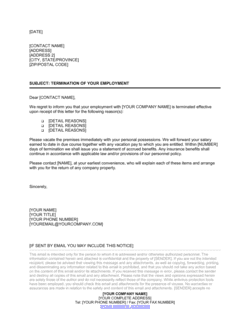
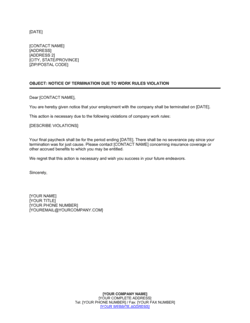
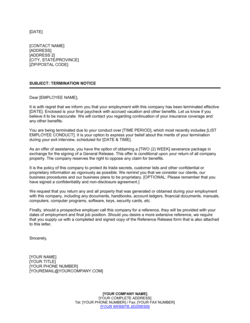
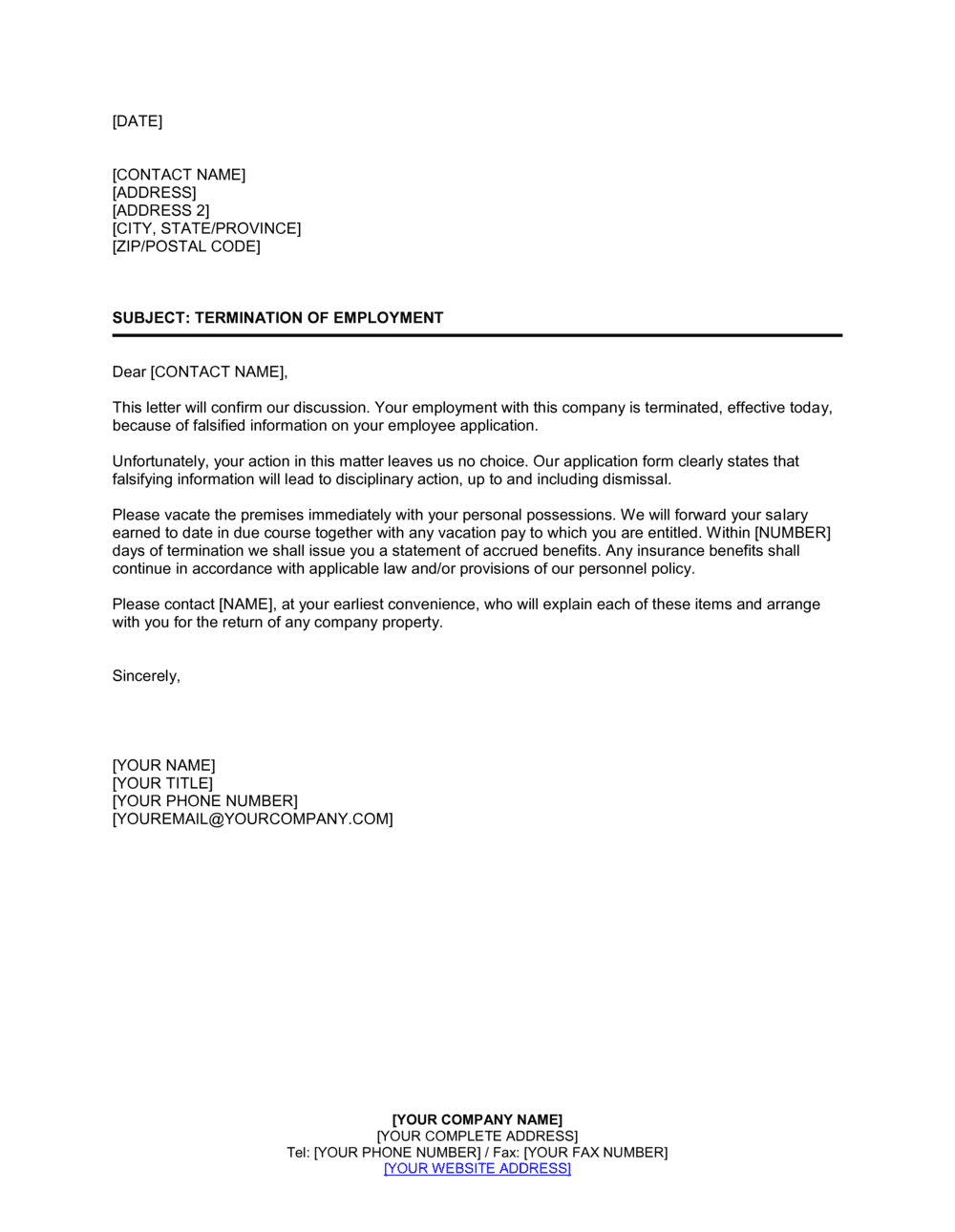
A Notice of Termination for False Employee Information is a formal written letter an employer sends to an employee being dismissed because they provided materially false, falsified, or misleading information during the hiring process or in official company records. This free Word download gives you a structured, professionally worded template you can edit online and export as PDF in minutes.
When you need it
Use it when you have documented evidence that an employee fabricated credentials, falsified a job application, misrepresented prior employment, or submitted fraudulent records β€” and you have made the decision to terminate for cause on that basis.
What's inside
Employer and employee identification, a clear statement of termination effective date, a factual description of the false information discovered, the specific company policy or representation violated, final pay and benefits details, and instructions for returning company property.

What is a Notice of Termination for False Employee Information?

A Notice of Termination for False Employee Information is a formal employer letter that documents and delivers the dismissal of an employee who provided materially false, fabricated, or misleading information during the hiring process or in official company records. It identifies the specific misrepresentation discovered, connects it to the policy or certification the employee violated, states the effective termination date, and confirms final pay and property-return obligations. Unlike a general dismissal letter, this notice is cause-specific β€” it creates a precise written record of the dishonesty and the employer's reliance on it, which is what protects the organization if the termination is later disputed.

Why You Need This Document

Terminating an employee for falsifying records without a written, cause-specific notice leaves your organization exposed on multiple fronts. Without documentation of what was falsified and why it mattered, a former employee can credibly claim they were dismissed arbitrarily β€” or that the real reason was something unlawful. HR files with no paper trail are the leading reason employers lose unemployment claims and wrongful-termination challenges they should win. A properly completed notice records the exact misrepresentation, the evidence that uncovered it, the policy breach, and the final pay terms in one document β€” giving your HR file everything it needs to defend the decision. This template gives you that structure in a professionally worded format you can complete, review, and deliver in under an hour.

Which variant fits your situation?

If your situation is…Use this template
Employee falsified academic credentials or professional certificationsNotice of Termination β€” False Employee Information
Employee was dismissed for general misconduct unrelated to false recordsEmployee Dismissal Letter
Employee performance was the primary reason for dismissalNotice of Termination β€” Unsatisfactory Performance
Employee is being let go due to downsizing with no causeNotice of Termination β€” Layoff
Employer needs to warn before terminating for a correctable issueWritten Warning Letter
Employee violated a confidentiality or non-disclosure agreementNotice of Termination β€” Policy Violation

Common mistakes to avoid

❌ Vague description of the falsification

Why it matters: A letter that says only 'discrepancies were found' gives the employee grounds to claim they were not told what the actual problem was, complicating any unemployment claim or lawsuit defense.

Fix: State the specific credential, record, or statement that was false, the date it was submitted, and the evidence that proves the falsification.

❌ Omitting the effective termination date

Why it matters: Without a specific date, both parties may disagree on when employment ended, creating wage liability and benefits continuation disputes.

Fix: State the effective date explicitly in the opening paragraph β€” e.g., 'effective Friday, May 9, 2026' β€” and repeat it in the final pay section.

❌ No reference to the policy or certification the employee signed

Why it matters: Without connecting the falsehood to a contractual or policy obligation, the letter documents a fact but not a breach β€” making the for-cause basis harder to defend.

Fix: Quote the specific policy section or application certification language the employee acknowledged, and state how their conduct violated it.

❌ Failing to note final pay obligations

Why it matters: Most jurisdictions impose statutory deadlines for final wage payment after involuntary termination. Missing them creates a separate wage-claim exposure independent of the termination itself.

Fix: Research and state the applicable final-pay deadline for your state or province and confirm the payment method in the letter.

The 9 key clauses, explained

Date, addressee, and sender block

In plain language: Opens the letter with the issue date, the employee's full name and address, and the employer's name and contact details.

Sample language
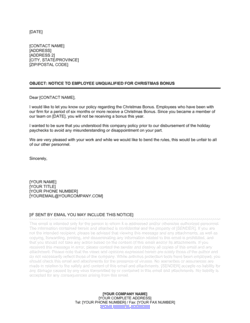
[DATE] | [EMPLOYEE FULL NAME] | [EMPLOYEE ADDRESS] | Re: Notice of Termination β€” [COMPANY NAME]

Common mistake: Using only a first name or nickname in the addressee block. The letter must match the employee's name in payroll records to function as a legal HR document.

Opening statement of termination

In plain language: States clearly and unambiguously that the employee's employment is terminated and provides the effective date.

Sample language
This letter serves as formal notice that your employment with [COMPANY NAME] is terminated effective [DATE], for the reasons set out below.

Common mistake: Softening the language to the point of ambiguity β€” phrases like 'we may need to let you go' or 'we are considering ending your role' create disputes about whether termination actually occurred.

Statement of false information discovered

In plain language: Describes specifically what false or falsified information was provided β€” the exact credential, date, record, or statement β€” and when and how it was discovered.

Sample language
During a background verification conducted on [DATE], it was found that the [DEGREE / CERTIFICATION / EMPLOYMENT RECORD] you represented on your application dated [DATE] is false. Specifically, [DESCRIPTION OF DISCREPANCY].

Common mistake: Describing the misrepresentation in vague terms such as 'discrepancies in your file.' Vague descriptions make the letter harder to rely on if the termination is later contested.

Reference to the representation or policy violated

In plain language: Ties the discovered falsehood to the specific section of the employment application, offer letter, or company policy that the employee certified was accurate.

Sample language
On your employment application dated [DATE], you certified that all information provided was true and complete. Section [X] of the Company's Code of Conduct also prohibits the falsification of employment records.

Common mistake: Omitting the policy reference entirely. Without it, the employer has stated a fact but not connected it to a contractual or policy obligation β€” weakening the for-cause basis.

Company's reliance on the false information

In plain language: States that the employer made the hiring decision based on the representation provided, establishing materiality.

Sample language
The [CREDENTIAL / REPRESENTATION] was a material factor in the Company's decision to hire you for the position of [JOB TITLE]. Had the true information been known, the Company would not have extended an offer of employment.

Common mistake: Skipping this clause when the employee's role did not obviously require the falsified credential. Without a reliance statement, the materiality of the misrepresentation is harder to establish.

Final pay and benefits statement

In plain language: Confirms when and how the employee will receive their final paycheck, the treatment of accrued vacation, and the status of benefits after the effective date.

Sample language
Your final pay, including all wages earned through [DATE] and [accrued vacation / any applicable severance], will be issued on [DATE] via [METHOD]. Your benefits coverage will end on [DATE]; information on COBRA continuation will be mailed separately.

Common mistake: Omitting the final pay date entirely. Most jurisdictions impose a deadline for final wage payment after termination β€” failing to state or meet it can create a separate wage-claim liability.

Return of company property

In plain language: Lists property the employee must return β€” equipment, access cards, documents, credentials β€” and the deadline and method for doing so.

Sample language
You are required to return all Company property, including [LAPTOP / ACCESS BADGE / DOCUMENTS / KEYS], to [NAME / LOCATION] no later than [DATE]. Failure to return property may result in deductions from final pay to the extent permitted by applicable law.

Common mistake: Listing property categories so broadly that the employee does not know what specifically to return. A clear, itemized list prevents disputes about what was or was not handed back.

Confidentiality reminder

In plain language: Reminds the employee that any confidentiality or non-disclosure obligations from their employment agreement survive termination.

Sample language
Your obligations under the Confidentiality Agreement dated [DATE] remain in full force and effect following your separation. You must not disclose, use, or retain any proprietary or confidential information of [COMPANY NAME].

Common mistake: Referencing a confidentiality agreement without confirming the date or that the employee signed it. If the agreement cannot be located, this clause becomes unenforceable.

Closing and authorized signature block

In plain language: Closes the letter professionally, provides a contact for questions, and includes the name, title, and signature line of the authorized HR or management representative.

Sample language
If you have any questions regarding this notice, please contact [HR CONTACT NAME] at [EMAIL / PHONE]. Sincerely, [AUTHORIZED SIGNATORY NAME] | [TITLE] | [COMPANY NAME]

Common mistake: Having an unauthorized employee sign the letter β€” e.g., a direct supervisor without HR authority. The signatory should be an HR officer or senior manager with documented authority to terminate.

How to fill it out

  1. 1

    Confirm the investigation and decision are complete

    Before drafting the letter, ensure your HR investigation is documented β€” gather the original application, the background check report or other evidence of falsification, and notes from any employee interview conducted.

    πŸ’‘ The letter is the final step, not the investigation tool. Issue it only after the decision to terminate is firm and documented separately.

  2. 2

    Enter the parties' details and effective date

    Fill in the employer's legal name, the employee's full legal name as it appears in payroll records, and the specific calendar date on which termination takes effect.

    πŸ’‘ Set the effective date to match your jurisdiction's final-pay deadline requirements β€” in many US states, final wages are due on the next regular payday or sooner.

  3. 3

    Describe the false information with specifics

    Name the exact credential, record, or statement that was falsified β€” degree title and institution, prior employer name, certification number, or any other concrete detail. Include the date the misrepresentation was discovered and the source.

    πŸ’‘ Quote the employee's original application language directly, then state what the verified facts show. Side-by-side specificity makes the discrepancy undeniable.

  4. 4

    Reference the policy or agreement violated

    Cite the section number of the application certification, employee handbook policy, or employment contract clause the employee breached by providing false information.

    πŸ’‘ If your application includes an 'I certify the above is true' statement, quote that exact language β€” it is your clearest evidence of the employee's representation.

  5. 5

    Complete the final pay and benefits section

    State the exact final pay date, the payment method, and how accrued paid time off is treated under your policy or applicable state law. Note the benefits end date and confirm COBRA notice will be sent if applicable.

    πŸ’‘ Check your state's wage payment statute for the deadline β€” California requires final wages on the last day of employment for involuntary terminations.

  6. 6

    List company property to be returned

    Itemize every piece of company property the employee holds β€” laptop model and serial number, access badge number, mobile device, physical keys, and any confidential documents.

    πŸ’‘ Preparing a property return receipt for the employee to sign at handover removes any later dispute about what was returned.

  7. 7

    Have the letter reviewed and signed by an authorized person

    Route the completed letter through HR or a senior manager with termination authority before delivery. Deliver it in person if possible, or by certified mail with return receipt.

    πŸ’‘ Keep a copy of the signed letter, delivery confirmation, and the underlying investigation file in the employee's HR record for at least three years.

Frequently asked questions

Can an employer terminate an employee for providing false information?

Yes. Providing materially false information on an employment application or in company records is generally recognized as legitimate grounds for termination for cause in most jurisdictions. Courts and employment tribunals typically uphold such dismissals when the employer can document what was falsified, when it was discovered, and that the employee certified the accuracy of the information at the time of hiring. Consult an employment attorney if the circumstances are complex.

Does a termination for false information require prior warning?

No. Unlike performance-based dismissals, termination for falsifying records or misrepresenting credentials is typically treated as a fundamental breach of trust that does not require a prior warning or progressive discipline process. The key is that the employer has clear evidence of the falsification and can show it was material to the hiring decision.

What documentation should an employer keep when terminating for false information?

Retain the original employment application with the employee's certification, the background check report or other evidence of the discrepancy, any notes from an HR investigation interview, the signed termination notice, and proof of delivery. This file should be kept for at least three to five years, or longer if litigation is anticipated.

Is the employee entitled to severance when terminated for providing false information?

In most cases, no. Termination for cause based on material misrepresentation typically eliminates any contractual or discretionary severance obligation. However, statutory minimums in some provinces and countries β€” such as Ontario or the UK β€” may still apply unless the falsification rises to a level that constitutes gross misconduct. Review your employment contract and local law before confirming the severance position in the letter.

Should the termination letter be delivered in person or by mail?

In-person delivery is generally preferred because it creates a clear record of receipt and allows the employer to collect company property at the same time. If in-person delivery is not possible, send the letter by certified mail with return receipt requested, and follow up with an email copy. Document the delivery method and date in the employee's file.

What if the employee denies providing false information?

If an employee contests the allegation, having a documented investigation file β€” original application, verification report, and any interview notes β€” is what protects the employer. The letter should state facts, not characterizations. If a dispute escalates to an employment tribunal or lawsuit, the employer's ability to produce that documentation is what determines the outcome.

Can the employee file for unemployment benefits after being terminated for false information?

Eligibility for unemployment benefits after a for-cause termination depends on jurisdiction. In many US states, a termination for misconduct β€” including deliberate falsification β€” disqualifies the employee from receiving benefits. The employer typically submits the termination notice and investigation records to the state agency as evidence. Rules vary significantly by state, so review your state's unemployment statute.

Does this letter need to be signed by both parties?

No. A termination notice is a unilateral employer communication β€” it does not require the employee's signature to be valid. The employer's authorized representative signs the letter. The employee may be asked to sign a separate acknowledgment of receipt, but refusing to do so does not invalidate the termination.

How this compares to alternatives

vs Employee Dismissal Letter

A general employee dismissal letter documents a termination decision without specifying a cause category. The Notice of Termination for False Employee Information is cause-specific β€” it records the exact misrepresentation, ties it to a policy breach, and establishes the materiality of the falsehood. Use the general dismissal letter when cause is performance or conduct unrelated to falsification.

vs Notice of Termination β€” Unsatisfactory Performance

A performance-based termination notice documents a pattern of underperformance and typically references prior warnings or PIPs. The false information notice addresses a single disqualifying act of dishonesty that does not require progressive discipline. The two documents serve very different factual and legal scenarios.

vs Written Warning Letter

A written warning is issued when an employer wants to put an employee on notice about correctable behavior before termination. Falsification of employment records is generally not a correctable behavior β€” the misrepresentation already occurred and the trust relationship is broken. A warning letter is the wrong tool when the decision to terminate for cause has already been made.

vs Notice of Termination β€” Layoff

A layoff notice documents an involuntary separation driven by business conditions rather than employee conduct. It typically includes severance and WARN Act notice where applicable. A notice for false information is a for-cause termination β€” no severance is generally owed, and the reason for separation is the employee's own dishonesty rather than an organizational decision.

Industry-specific considerations

Healthcare

Falsified clinical licenses or certifications pose direct patient safety risks, making prompt documented termination critical for regulatory compliance and liability protection.

Financial Services

Misrepresented FINRA registrations, CPA credentials, or prior employment at regulated firms can trigger regulatory scrutiny of the employer itself if not addressed quickly.

Construction and Trades

Falsified trade certifications or safety training records expose employers to worksite liability and regulatory fines if the employee performs work requiring a genuine credential.

Professional Services

Law firms, accounting firms, and consultancies face reputational and malpractice exposure when an employee misrepresents a bar admission, CPA license, or degree used to service clients.

Template vs pro β€” what fits your needs?

PathBest forCostTime
Use the templateHR managers and small business owners handling a straightforward falsification case with clear documented evidenceFree15–30 minutes
Template + professional reviewCases involving a senior employee, a disputed falsification, or a regulated industry where the credential mattered for compliance$150–$400 for an employment attorney review1–2 days
Custom draftedComplex dismissals with potential wrongful termination exposure, union agreements, or cross-border employment$500–$1,500+3–7 days

Glossary

Termination for Cause
Dismissal triggered by a specific, documented employee misconduct or breach β€” such as dishonesty or falsification β€” rather than layoff or mutual agreement.
Misrepresentation
A false statement of fact made by an employee during hiring or employment that the employer relied on in making a decision.
Material Misrepresentation
A falsehood significant enough that, had the employer known the truth, it would not have made the same hiring or retention decision.
Effective Date of Termination
The specific calendar date on which the employment relationship legally ends and final pay obligations begin.
Final Pay
All wages, accrued vacation, and any other earned compensation owed to the employee up to and including the effective date of termination.
Paper Trail
The collection of written records β€” notices, investigation notes, HR files β€” that document the basis for a personnel decision and protect the employer from later disputes.
At-Will Employment
An employment relationship in most US states where either party may end employment at any time for any lawful reason, though a for-cause termination letter still provides important documentation.
Background Check Discrepancy
A factual inconsistency between information an employee provided and what a third-party background screening report reveals.
Fraudulent Inducement
When an employee's false representations were used to persuade the employer to enter the employment relationship β€” potentially giving rise to claims beyond simple termination.
COBRA / Benefits Continuation
US federal provisions requiring employers to notify terminated employees of their right to continue group health insurance coverage at their own expense after separation.

Part of your Business Operating System

This document is one of 3,000+ business & legal templates included in Business in a Box.

  • Fill-in-the-blanks β€” ready in minutes
  • 100% customizable Word document
  • Compatible with all office suites
  • Export to PDF and share electronically

Create your document in 3 simple steps.

From template to signed document β€” all inside one Business Operating System.
1
Download or open template

Access over 3,000+ business and legal templates for any business task, project or initiative.

2
Edit and fill in the blanks with AI

Customize your ready-made business document template and save it in the cloud.

3
Save, Share, Send, Sign

Share your files and folders with your team. Create a space of seamless collaboration.

Save time, save money, and create top-quality documents.

β˜…β˜…β˜…β˜…β˜…

"Fantastic value! I'm not sure how I'd do without it. It's worth its weight in gold and paid back for itself many times."

Managing Director Β· Mall Farm
Robert Whalley
Managing Director, Mall Farm Proprietary Limited
β˜…β˜…β˜…β˜…β˜…

"I have been using Business in a Box for years. It has been the most useful source of templates I have encountered. I recommend it to anyone."

Business Owner Β· 4+ years
Dr Michael John Freestone
Business Owner
β˜…β˜…β˜…β˜…β˜…

"It has been a life saver so many times I have lost count. Business in a Box has saved me so much time and as you know, time is money."

Owner Β· Upstate Web
David G. Moore Jr.
Owner, Upstate Web

Run your business with a system β€” not scattered tools

Stop downloading documents. Start operating with clarity. Business in a Box gives you the Business Operating System used by over 250,000 companies worldwide to structure, run, and grow their business.

Start freeΒ Β·Β No credit card required