- At-Will Employment
- An employment arrangement in the US where either party may end the relationship at any time for any lawful reason, without advance notice or cause.
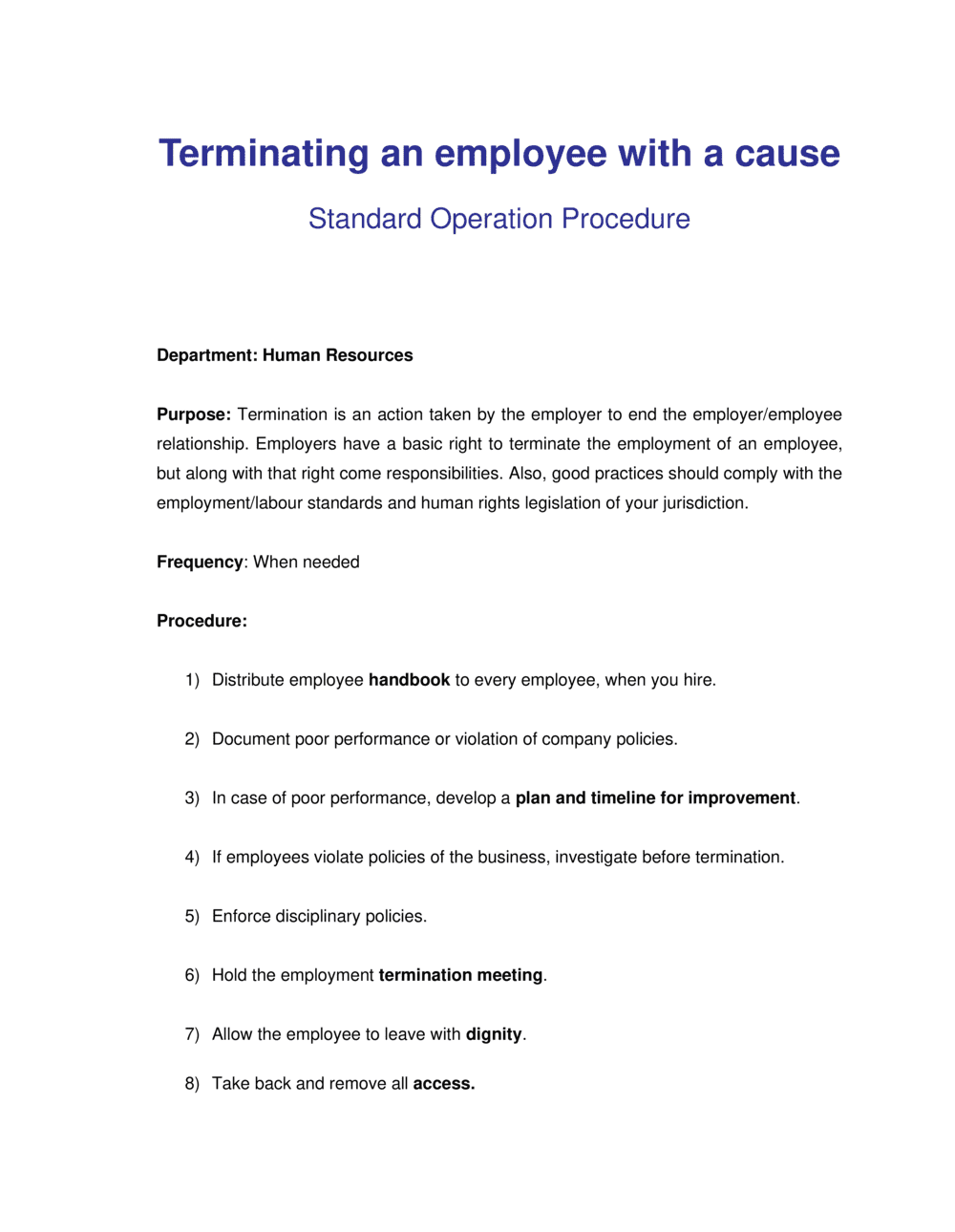
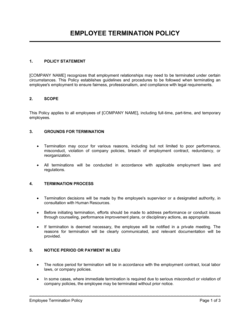
- Termination for Cause
- Dismissal based on specific documented misconduct, fraud, or gross negligence that justifies ending employment without severance in many jurisdictions.
- Wrongful Termination
- A dismissal that violates an employment contract, anti-discrimination law, or public policy — exposing the employer to litigation and damages.
- Final Pay
- All wages, accrued vacation, commissions, and other earned compensation owed to an employee on or by the termination date, as governed by state or provincial law.
- COBRA
- A US federal law requiring employers with 20 or more employees to offer continued health coverage to terminated workers at the employee's own cost for up to 18 months.
- Severance
- Compensation paid to a departing employee beyond their final paycheck, typically tied to length of service and conditioned on signing a release of claims.
- Release of Claims
- A legal agreement in which the departing employee waives the right to sue the employer in exchange for severance or other consideration.
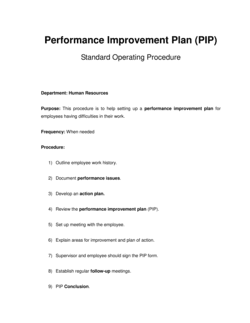
- Performance Improvement Plan (PIP)
- A formal documented program outlining specific performance deficiencies, measurable targets, and a defined timeline for improvement before further action is taken.
- Constructive Dismissal
- A situation where an employer unilaterally changes working conditions so significantly that the employee is effectively forced to resign, which courts treat as termination.
- Offboarding
- The full set of administrative, operational, and interpersonal steps taken to transition a departing employee out of the organization.