Confirmation of Verbal Order Template

Free Word download β€’ Edit online β€’ Save & share with Drive β€’ Export to PDF

1 pageβ€’20–30 min to fillβ€’Difficulty: Standardβ€’Signature requiredβ€’Legal review recommended
Learn more ↓
FreeConfirmation of Verbal Order Template

At a glance

What it is
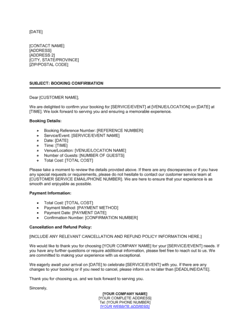
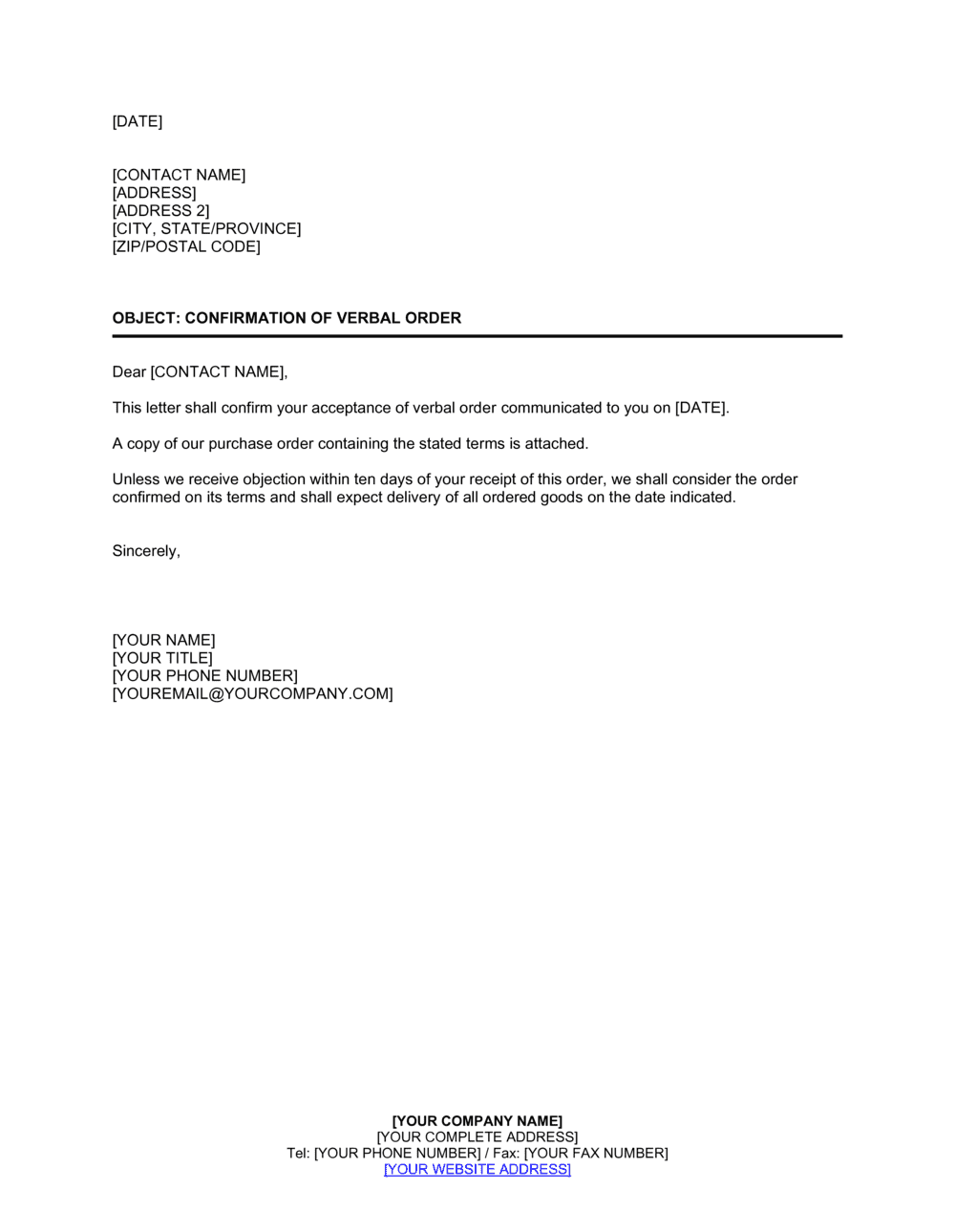
A Confirmation of Verbal Order is a written document that converts an oral purchase agreement β€” made by phone, in person, or via another verbal channel β€” into a formal, documented record both parties can rely on. This free Word download lets you capture the agreed goods or services, quantities, pricing, delivery schedule, and payment terms in a single letter-format document you can edit online and export as PDF for signature and filing.
When you need it
Use it immediately after any verbal order is placed β€” typically within 24 to 48 hours β€” to prevent disputes about what was agreed, lock in pricing before it changes, and create an enforceable paper trail. It is especially critical for orders above a few hundred dollars or those with specific delivery deadlines.
What's inside
Seller and buyer identification, reference to the original verbal agreement including date and parties involved, itemized order details with quantities and unit prices, delivery and shipping terms, payment terms and due date, a confirmation clause, and a signature block for acknowledgment by both parties.

What is a Confirmation of Verbal Order?

A Confirmation of Verbal Order is a written document that converts an oral purchase or supply agreement into a formal, documented record that both the buyer and seller can rely on. When a customer places an order by phone, in person, or through any other verbal channel, no paper trail exists to prove what was agreed β€” what items, at what price, for delivery when, and on what payment terms. This confirmation closes that gap by capturing every material term in writing and asking both parties to acknowledge the record by signature, typically within 24 to 48 hours of the original conversation.

The document functions both as evidence of the original agreement and as a lightweight standalone contract. Under the Uniform Commercial Code's merchant confirmation rule in the United States, a properly sent written confirmation can bind both parties even if only one signs it, provided the recipient fails to object within 10 days. In Canada, the UK, and the EU, a signed confirmation similarly satisfies the written-evidence requirements that make contracts enforceable in commercial disputes.

Why You Need This Document

Every verbal order carries the same risk: two people remember the conversation differently. Price, quantity, delivery date, and payment terms are the four most common points of dispute β€” and without a written record, resolving any one of them requires convincing a judge whose word to believe. A confirmation of verbal order eliminates that uncertainty before goods ship or work begins. Without it, a seller who delivers 500 units at an agreed price has no written proof of the price if the buyer later claims a lower figure was discussed. A buyer who was promised delivery by a specific date has no recourse if the seller disputes the timeline. The costs of these disputes β€” refunds, restocking, legal fees, and lost relationships β€” consistently exceed the five minutes it takes to complete and send a confirmation. This template gives you a pre-structured, legally sound form you can complete immediately after the call, send to the counterparty the same day, and file as part of your permanent transaction record.

Which variant fits your situation?

If your situation is…Use this template
Confirming a verbal order from a customer to a sellerConfirmation of Verbal Order (Seller to Buyer)
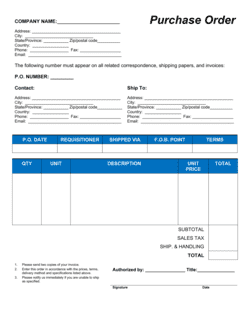
Issuing a formal purchase order for planned procurementPurchase Order
Confirming a service engagement agreed verballyService Agreement
Following up on a sales quote that was verbally acceptedSales Order Confirmation
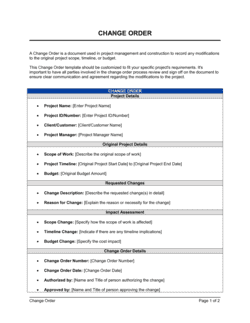
Documenting a change to an existing written orderChange Order
Confirming terms of a verbal supply arrangementSupply Agreement
Creating a complete goods supply contract going forwardSales Contract

Common mistakes to avoid

❌ Sending the confirmation days after the verbal order

Why it matters: A multi-day delay creates a window during which the buyer can claim the terms have changed or that they never agreed to what is written. Goods may already be in transit by the time disputes surface.

Fix: Establish an internal rule that all verbal orders receive a written confirmation within 24 hours. Treat confirmation as part of order processing, not an optional follow-up.

❌ Using vague item descriptions

Why it matters: Descriptions like 'office supplies as discussed' or '5 units of product' give the buyer room to dispute specifications, grade, or model β€” especially if a cheaper alternative was substituted.

Fix: Include the product name, SKU or model number, and grade or specification for every line item. If a catalog or quote number exists, reference it.

❌ No objection window clause

Why it matters: Without a deadline for the buyer to object, they can raise discrepancies after goods have shipped or work has started β€” leaving the seller with no practical recourse.

Fix: Always include a 24- to 72-hour objection window tied to receipt of the confirmation. State explicitly that silence constitutes acceptance.

❌ Signature by an unauthorized person

Why it matters: A signature from someone who lacks authority to bind the company β€” a receptionist, warehouse worker, or junior employee β€” may render the confirmation unenforceable against the buyer entity.

Fix: Direct the confirmation to a named purchasing manager, owner, or officer. Ask verbally who is authorized to approve orders above a given dollar threshold and confirm that person signs.

❌ Omitting cancellation and change terms

Why it matters: Without cancellation provisions, a buyer who backs out of an order forces the seller to prove and quantify damages under general contract law β€” a slow and uncertain process.

Fix: Include a straightforward cancellation fee β€” typically 15–25% of the order value for cancellations after a defined cutoff β€” and a requirement that all changes be made in writing.

❌ No governing law clause on cross-border orders

Why it matters: When the buyer is in a different state, province, or country, the absence of a governing law clause means both parties may argue different legal regimes apply β€” dramatically increasing the cost and complexity of any dispute.

Fix: Always specify the governing jurisdiction, even for domestic orders. For international orders, consider whether to apply CISG or opt out of it explicitly in the governing law clause.

The 10 key clauses, explained

Parties and Reference to Verbal Agreement

In plain language: Identifies both the buyer and the seller by their full legal names and references the specific verbal order β€” including the date and method of communication β€” that this document confirms.

Sample language
This Confirmation of Verbal Order is issued by [SELLER LEGAL NAME] ('Seller') to [BUYER LEGAL NAME] ('Buyer') and confirms the verbal order placed on [DATE] via [PHONE / IN-PERSON MEETING / OTHER METHOD] between [SELLER REPRESENTATIVE NAME] and [BUYER REPRESENTATIVE NAME].

Common mistake: Omitting the date and channel of the original verbal order. Without this, the document does not clearly tie back to a specific agreement, undermining its value as evidence in a dispute.

Description of Goods or Services

In plain language: Itemizes every product or service covered by the order with enough specificity β€” product name, SKU, model number, or service description β€” to eliminate ambiguity about what was agreed.

Sample language
The Buyer has ordered the following goods/services: [ITEM DESCRIPTION] | SKU: [SKU/MODEL NUMBER] | Quantity: [QTY] | Unit of Measure: [EACH / CASE / HOUR].

Common mistake: Using a generic description like 'assorted goods' or 'services as discussed.' Vague descriptions make it impossible to establish exactly what was ordered if the counterparty disputes quantity or specification.

Quantity and Unit Price

In plain language: States the exact quantity ordered and the agreed price per unit, locking in the commercial terms at the time the verbal agreement was made.

Sample language
Quantity: [NUMBER] [UNITS]. Unit Price: $[AMOUNT] per [UNIT]. Extended Amount: $[TOTAL LINE AMOUNT].

Common mistake: Listing only a total price without a per-unit breakdown. If the quantity is disputed later, there is no way to recalculate what is owed for a partial delivery.

Order Total and Currency

In plain language: Confirms the total value of the order β€” including any applicable taxes, freight, or surcharges β€” and states the currency to avoid ambiguity in cross-border transactions.

Sample language
Total Order Value: $[AMOUNT] [CURRENCY CODE], inclusive of [APPLICABLE TAXES / FREIGHT / OTHER CHARGES]. Exclusive of: [ANY EXCLUDED ITEMS].

Common mistake: Omitting the currency code on orders involving international parties. USD and CAD are easily confused; EUR and GBP differ meaningfully β€” and a wrong assumption compounds into a significant dispute.

Delivery Terms and Schedule

In plain language: Specifies when and where goods will be delivered or services performed, who bears the shipping cost and risk of loss, and what happens if delivery is delayed.

Sample language
Delivery Location: [ADDRESS]. Expected Delivery Date: [DATE]. Shipping Terms: [FOB DESTINATION / FOB ORIGIN / OTHER]. Risk of loss transfers to Buyer upon [DELIVERY TO CARRIER / RECEIPT AT DESTINATION].

Common mistake: Stating only an expected delivery date with no risk-of-loss allocation. If goods are damaged in transit, the absence of FOB terms creates an immediate dispute over who bears the loss.

Payment Terms and Due Date

In plain language: Sets out when payment is due, the accepted payment methods, and any deposit or early-payment discount that was verbally agreed.

Sample language
Payment is due [NET 30 FROM INVOICE DATE / ON DELIVERY / [X]% DEPOSIT UPON CONFIRMATION, BALANCE ON DELIVERY]. Accepted methods: [WIRE TRANSFER / CHECK / CREDIT CARD]. Late payment interest: [X]% per month on balances unpaid after [X] days.

Common mistake: Leaving payment terms blank or writing 'as previously discussed.' If the verbal conversation is disputed, there is nothing in the written record to resolve the disagreement.

Acceptance and Objection Window

In plain language: Gives the receiving party a defined window β€” typically 24 to 72 hours β€” to raise any objection to the stated terms, after which silence is treated as acceptance.

Sample language
Unless Buyer notifies Seller in writing of any discrepancy within [48] hours of receiving this confirmation, the terms stated herein shall be deemed accepted and binding on both parties.

Common mistake: Setting no objection window at all. Without a deadline for disputes, the receiving party can raise objections weeks later β€” potentially after goods have shipped or work has begun.

Cancellation and Change Terms

In plain language: States the conditions under which the order may be cancelled or modified, and what penalties or costs apply if cancellation occurs after a certain point.

Sample language
This order may not be cancelled or modified without written consent from Seller. Cancellations received after [DATE / NUMBER OF DAYS BEFORE DELIVERY] are subject to a cancellation fee of [X]% of the total order value.

Common mistake: Omitting any cancellation clause. Without one, the aggrieved party must rely on general contract law damages β€” which are harder to calculate and enforce than a pre-agreed cancellation fee.

Governing Law and Jurisdiction

In plain language: Specifies which jurisdiction's law applies to the agreement and where disputes will be heard, avoiding uncertainty when the buyer and seller are in different states or countries.

Sample language
This Confirmation shall be governed by the laws of [STATE / PROVINCE / COUNTRY], without regard to conflict-of-law principles. Any dispute shall be resolved exclusively in the courts of [CITY / COUNTY / JURISDICTION].

Common mistake: Omitting governing law entirely on a domestic order because both parties are in the same country. State or provincial commercial law still varies significantly β€” specifying the jurisdiction prevents arguments about which rules apply.

Signature and Authorization Block

In plain language: Provides a formal acknowledgment block where authorized representatives of both parties sign and date the document, confirming they have read and agree to the stated terms.

Sample language
Accepted and agreed on behalf of [SELLER LEGAL NAME]: _________________________ Name: [NAME] Title: [TITLE] Date: [DATE]. Accepted and agreed on behalf of [BUYER LEGAL NAME]: _________________________ Name: [NAME] Title: [TITLE] Date: [DATE].

Common mistake: Obtaining a signature from a person with no authority to bind the company β€” such as a warehouse receiving agent or a junior sales assistant. Unauthorized signatures can void the confirmation's enforceability.

How to fill it out

  1. 1

    Record the verbal order details immediately

    As soon as the verbal order is placed, note the date, the names of both representatives involved, the communication channel, and every material term discussed. Do not rely on memory β€” even a few hours of delay introduces errors.

    πŸ’‘ Keep a standard verbal order intake form or notepad by the phone. Transfer those raw notes directly into the template within the hour.

  2. 2

    Enter both parties' legal names and contact details

    Use the full registered legal names of both the buyer and the seller entities β€” not trade names or nicknames. Include mailing addresses and the names of the authorized representatives who conducted the conversation.

    πŸ’‘ Cross-check the buyer's legal name against a prior invoice or their website's legal footer before entering it β€” errors here can create enforcement problems.

  3. 3

    Itemize the goods or services with full specifications

    List every item ordered on its own line with a product name, SKU or model number if applicable, quantity, and unit of measure. For services, describe the scope specifically β€” hours, deliverables, or work location.

    πŸ’‘ If the verbal order was ambiguous about specifications, clarify with the buyer before sending the confirmation β€” not after. Once signed, the document locks in whatever is written.

  4. 4

    Set the unit price, order total, and currency

    Enter the agreed unit price for each line item, calculate the extended amount, and sum to a total. State the currency explicitly β€” particularly for any cross-border order.

    πŸ’‘ Confirm the price with the sales representative or price list before locking it in. A verbal price quote may differ from the current list price if a discount was verbally offered.

  5. 5

    Specify delivery terms and the expected delivery date

    Enter the delivery address, expected delivery date, Incoterms (FOB Origin or FOB Destination), and the carrier if known. State clearly at what point risk of loss transfers.

    πŸ’‘ For time-sensitive orders, add a line noting that late delivery allows the buyer to cancel without penalty. This protects both sides.

  6. 6

    State payment terms and accepted payment methods

    Enter the agreed payment schedule β€” Net 30, deposit plus balance, or payment on delivery β€” along with accepted payment methods and any late-payment interest rate.

    πŸ’‘ Even if no late fee was discussed verbally, adding a 1.5% per-month late-payment clause is standard practice and rarely contested once in writing.

  7. 7

    Set the acceptance window and send promptly

    Insert a 24- to 48-hour objection window, then send the completed confirmation to the buyer's authorized representative by email with a read receipt or delivery confirmation.

    πŸ’‘ Send it to the accounts-payable or purchasing contact β€” not just the person you spoke with β€” to ensure it reaches someone who can formally accept it.

  8. 8

    Obtain signatures and file the executed document

    Request a signed copy from the buyer's authorized representative before shipping goods or beginning work. File the executed confirmation alongside the eventual invoice for a complete transaction record.

    πŸ’‘ Use an eSignature tool so the signature timestamp is automatically logged β€” this is important evidence if the order is disputed later.

Frequently asked questions

What is a confirmation of verbal order?

A confirmation of verbal order is a written document that reduces an oral purchase or supply agreement to writing after the fact. It records the material terms of what was agreed β€” goods or services, quantity, price, delivery, and payment β€” and asks both parties to acknowledge the record by signature. It bridges the gap between an informal verbal commitment and a fully documented, enforceable contract.

Is a verbal order legally binding?

In many jurisdictions, a verbal order can be legally binding as a contract if it contains the essential elements of offer, acceptance, and consideration. However, the Statute of Frauds in the US (under the Uniform Commercial Code, Β§2-201) generally requires written evidence for contracts involving goods valued at $500 or more to be enforceable. In the UK, Canada, and the EU, similar thresholds apply in various forms. Verbal orders are difficult to prove and enforce without a written confirmation.

When should I send a confirmation of verbal order?

Send it within 24 hours of the verbal agreement β€” ideally the same business day. The sooner the confirmation goes out, the less opportunity either party has to misremember, reinterpret, or dispute what was agreed. For large-value or time-sensitive orders, consider confirming the key terms by email immediately after the call, then following up with the formal signed document.

Does a confirmation of verbal order need to be signed?

Yes β€” a signature from an authorized representative of both parties is strongly recommended. An unsigned confirmation documents the seller's version of events but does not constitute bilateral agreement. A signed confirmation is far more effective evidence in a dispute and is generally treated as a binding contract modification or standalone agreement once both parties execute it.

What happens if the buyer does not respond to the confirmation?

If your confirmation includes an acceptance-by-silence clause β€” stating that failure to object within a defined window constitutes acceptance β€” the buyer's silence can be treated as agreement to the stated terms. Whether this is fully enforceable depends on jurisdiction and prior course of dealing. It is always preferable to obtain an explicit written acknowledgment. Courts in some jurisdictions do not enforce silence-as-acceptance clauses unless the parties had a prior practice of operating that way.

What is the difference between a confirmation of verbal order and a purchase order?

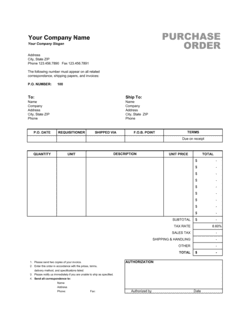
A purchase order is a formal procurement document issued by the buyer to the seller before or at the time of the order, authorizing a specific transaction. A confirmation of verbal order is issued after a verbal agreement has already been made, typically by the seller, to document what was discussed. The purchase order initiates the transaction; the verbal order confirmation memorializes a transaction that was already initiated orally.

Can I use this document for service orders, not just goods?

Yes. While the confirmation of verbal order is most commonly associated with product purchases, the same document structure applies to service engagements agreed verbally β€” for example, a contractor agreeing by phone to perform repairs, or a consultant agreeing to a project scope in a meeting. Adapt the item description fields to capture the service scope, hourly rate or flat fee, and performance timeline in place of product SKUs and delivery addresses.

What should I do if the buyer disputes the terms after receiving the confirmation?

If the buyer objects within the stated objection window, treat it as a negotiation: identify the specific term in dispute, discuss, and issue a revised confirmation with both parties' corrections. If the buyer objects after the window closes β€” particularly after goods have shipped β€” you have a stronger legal position with a signed or objection-window-lapsed confirmation. Document all communications about the dispute in writing and consult a commercial lawyer if the value warrants it.

Does this document need to be notarized?

Notarization is not required for a confirmation of verbal order to be enforceable in most commercial contexts. A standard signature from an authorized representative is sufficient. Notarization may be appropriate for very high-value orders or where a specific jurisdiction requires it for certain types of commercial documents, but this is uncommon for routine trade transactions.

How this compares to alternatives

vs Purchase Order

A purchase order is issued by the buyer before the transaction to authorize and initiate a purchase. A confirmation of verbal order is issued after the verbal agreement β€” typically by the seller β€” to document what was already discussed. Use a purchase order when you have a formal procurement workflow; use the verbal order confirmation for ad hoc or urgent orders placed outside that workflow.

vs Sales Contract

A sales contract is a comprehensive bilateral agreement negotiated and signed before any transaction begins, covering warranties, dispute resolution, and long-term supply terms. A confirmation of verbal order is a lighter document that memorializes a single transaction after a verbal agreement. Use a sales contract for an ongoing or high-value supply relationship; use the verbal order confirmation for one-off or emergency orders.

vs Service Agreement

A service agreement establishes the full terms of an ongoing or multi-phase service engagement β€” deliverables, IP ownership, liability, and termination rights. A verbal order confirmation is appropriate for a single, discrete service transaction agreed informally. For any service relationship expected to last more than a few weeks or involve meaningful IP, a full service agreement is the appropriate document.

vs Change Order

A change order modifies a specific term of an existing written contract β€” typically adjusting scope, price, or timeline. A verbal order confirmation documents the original agreement where no prior written contract exists. If a verbal order was made to modify an existing written order, a change order is the correct document; if no written order preceded the verbal discussion, use the verbal order confirmation.

Industry-specific considerations

Wholesale and Distribution

Phone-in and rep-placed orders are standard; written confirmations protect sellers from buyer disputes about quantities, pricing, and promised delivery windows on high-volume SKUs.

Construction and Trades

Verbal agreements for materials and subcontractor services on job sites are common; confirmations establish the scope and price before work begins, reducing lien and payment disputes.

Professional Services

Consultants and agencies often receive verbal go-aheads before a formal contract is signed; a confirmation letter bridges the gap and documents the agreed fee, scope, and start date.

Retail and E-commerce

Telephone and in-store custom orders require written confirmation to document exact specifications, pricing, and lead times β€” particularly for made-to-order or special-import goods.

Jurisdictional notes

United States

Under UCC Article 2, contracts for the sale of goods valued at $500 or more must be evidenced by a writing signed by the party against whom enforcement is sought (the Statute of Frauds, Β§2-201). A signed confirmation of verbal order satisfies this requirement. The UCC 'merchant confirmation rule' (Β§2-201(2)) also allows a written confirmation sent by one merchant to another to be binding on both if the recipient does not object in writing within 10 days of receipt.

Canada

Canadian provinces generally follow common-law contract principles under which verbal agreements are enforceable but difficult to prove. The Sale of Goods Act in most provinces mirrors older UK law and imposes writing requirements for certain goods contracts. Quebec operates under the Civil Code, which has distinct rules on contract formation and written evidence. A signed confirmation of verbal order provides the written evidence needed to enforce the agreement in any province.

United Kingdom

English law does not generally require commercial contracts to be in writing to be enforceable, but proof of an oral agreement in litigation is difficult and expensive. The Sale of Goods Act 1979 and Consumer Rights Act 2015 govern goods and service transactions respectively. A written confirmation signed by both parties creates a clear evidential record and significantly reduces dispute risk. Electronic signatures are valid under the Electronic Communications Act 2000.

European Union

EU member states have varying approaches to the enforceability of verbal commercial contracts, but most require written evidence for higher-value transactions. The UN Convention on Contracts for the International Sale of Goods (CISG) applies by default to cross-border goods transactions between businesses in member states that have ratified it, and it permits verbal contracts β€” but a written confirmation eliminates evidentiary uncertainty. GDPR applies to any personal data (names, contact details) captured in the confirmation document.

Template vs lawyer β€” what fits your deal?

PathBest forCostTime
Use the templateRoutine commercial orders up to a few thousand dollars between established trading partnersFree10–15 minutes per confirmation
Template + legal reviewHigher-value orders, new counterparties, or orders with complex delivery and payment terms$150–$400 for a one-time lawyer review to customize your standard form1–2 business days
Custom draftedHigh-value, cross-border, or regulated-industry orders where enforceability is critical$500–$2,000 for a bespoke confirmation letter or standing order confirmation framework3–7 business days

Glossary

Verbal Order
A purchase or supply commitment made orally β€” by phone, in person, or via verbal instruction β€” without an initial written document.
Written Confirmation
A document that reduces an oral agreement to writing, creating a record that is generally enforceable in the event of a dispute.
Statute of Frauds
A legal doctrine in many jurisdictions requiring certain contracts β€” typically those for goods above a set dollar threshold β€” to be in writing to be enforceable.
Offer and Acceptance
The two core elements of contract formation: one party proposes terms (offer) and the other agrees to them (acceptance), creating a binding obligation.
Consideration
Something of value exchanged between parties β€” such as goods for payment β€” that makes a contract legally binding rather than a mere promise.
Delivery Terms (Incoterms)
Standardized trade terms defining where title and risk of loss transfer from seller to buyer β€” for example, FOB Origin or FOB Destination.
Payment Terms
The agreed schedule for when and how the buyer must pay β€” e.g., Net 30 from invoice date, 50% deposit on order, or payment on delivery.
Acknowledgment
A party's signed or written confirmation that they received, reviewed, and agree to the stated terms of a document.
Material Terms
The essential elements of a contract β€” price, quantity, description of goods or services, and delivery date β€” without which an agreement is too vague to enforce.
Course of Dealing
A pattern of prior conduct between contracting parties that courts use to interpret ambiguous or incomplete terms in a current agreement.
Parol Evidence Rule
A legal rule limiting the use of oral or external statements to contradict or vary the terms of a final written agreement.

Part of your Business Operating System

This document is one of 3,000+ business & legal templates included in Business in a Box.

  • Fill-in-the-blanks β€” ready in minutes
  • 100% customizable Word document
  • Compatible with all office suites
  • Export to PDF and share electronically

Create your document in 3 simple steps.

From template to signed document β€” all inside one Business Operating System.
1
Download or open template

Access over 3,000+ business and legal templates for any business task, project or initiative.

2
Edit and fill in the blanks with AI

Customize your ready-made business document template and save it in the cloud.

3
Save, Share, Send, Sign

Share your files and folders with your team. Create a space of seamless collaboration.

Save time, save money, and create top-quality documents.

β˜…β˜…β˜…β˜…β˜…

"Fantastic value! I'm not sure how I'd do without it. It's worth its weight in gold and paid back for itself many times."

Managing Director Β· Mall Farm
Robert Whalley
Managing Director, Mall Farm Proprietary Limited
β˜…β˜…β˜…β˜…β˜…

"I have been using Business in a Box for years. It has been the most useful source of templates I have encountered. I recommend it to anyone."

Business Owner Β· 4+ years
Dr Michael John Freestone
Business Owner
β˜…β˜…β˜…β˜…β˜…

"It has been a life saver so many times I have lost count. Business in a Box has saved me so much time and as you know, time is money."

Owner Β· Upstate Web
David G. Moore Jr.
Owner, Upstate Web

Run your business with a system β€” not scattered tools

Stop downloading documents. Start operating with clarity. Business in a Box gives you the Business Operating System used by over 250,000 companies worldwide to structure, run, and grow their business.

Start freeΒ Β·Β No credit card required