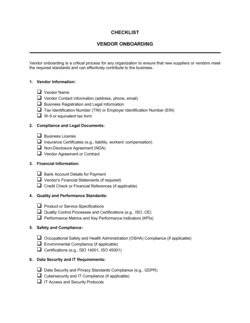
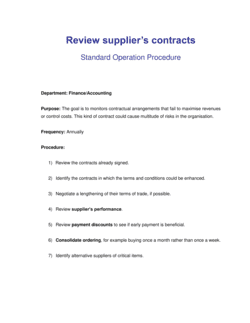
Supplier Management Templates
★★★★★4.7from 280+ reviews· Trusted by 20M+ businesses
Cover every stage of the supplier lifecycle — from sourcing and contracting to performance review and compliance.
WordEditable onlinePDF15+ supplier management templates
Other Production & Operations categories
Most popular supplier management templates
Supplier performance and compliance
Vendor and supplier policies
More supplier management templates
250K+Clients
20M+Free users
20+Years
190+Countries
10,000+Law firms
50M+Downloads
Trusted across review platforms
- Capterra★★★★☆4.649 reviews
- G2★★★★☆4.713 reviews
- GetApp★★★★☆4.649 reviews
- Google Play★★★★☆4.6179 ratings
- Google Reviews★★★★☆4.567 reviews
Frequently asked questions
What is a supplier management policy?
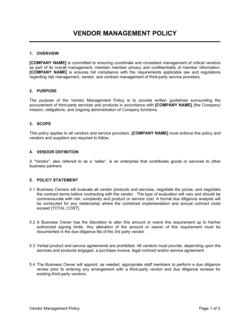
A supplier management policy is an internal company document that defines how your organization selects, onboards, monitors, and exits supplier relationships. It sets standards for due diligence, contract requirements, performance review frequency, and escalation procedures. Having a written policy ensures all departments follow consistent procurement practices and reduces the risk of unvetted vendors entering your supply chain.
What should a supply agreement include?
A supply agreement should cover the scope and specifications of the goods being supplied, pricing and payment terms, delivery schedules and lead times, quality standards and inspection rights, exclusivity provisions if applicable, term and renewal, and termination rights. It should also address liability, indemnification, and any regulatory compliance obligations the supplier must meet.
What is a supplier scorecard used for?
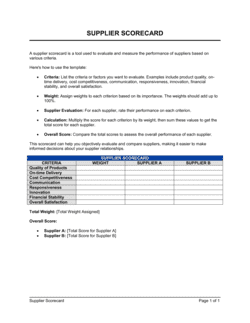
A supplier scorecard is a structured evaluation tool used to measure a supplier's performance against agreed criteria — typically delivery reliability, product quality, responsiveness, pricing accuracy, and compliance. Scorecards are usually completed on a quarterly or annual basis and used to support contract renewals, renegotiations, or supplier replacement decisions. They also give suppliers clear, actionable feedback.
What is a supplier code of conduct?
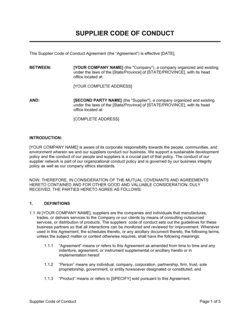
A supplier code of conduct is a document that sets the ethical, labor, environmental, and business conduct standards your company requires all suppliers to follow as a condition of doing business with you. It typically covers areas such as anti-corruption, child labor prohibition, workplace safety, data protection, and environmental responsibility. Many companies ask suppliers to sign the code as part of onboarding.
When do I need an exclusive supply agreement?
You need an exclusive supply agreement when you want to prevent a supplier from selling the same product to your direct competitors, or when a supplier wants assurance that you won't source the same product from a competing vendor. Exclusivity provisions typically require consideration on both sides — a minimum purchase commitment from the buyer in exchange for the supply restriction on the seller. Consult a lawyer before agreeing to broad exclusivity terms.
How often should supplier performance be reviewed?
Most businesses conduct formal supplier reviews quarterly for critical or high-spend suppliers and annually for lower-risk vendors. The review frequency should be written into your Vendor and Supplier Management Policy so it's applied consistently. High-volume or strategically important suppliers may warrant monthly operational reviews in addition to formal scoring cycles.
What is the difference between a supplier and a vendor?
In most business contexts the terms are used interchangeably. When a distinction is made, "supplier" typically refers to a party that provides raw materials, components, or goods used in production, while "vendor" refers to a party that provides finished goods or services for resale or internal use. For legal and contractual purposes, the definition in your specific agreement controls — not the general usage.
Does a supply agreement need to be reviewed by a lawyer?
For straightforward, lower-value supply relationships a well-drafted template is often sufficient. Legal review is recommended when the agreement involves significant financial exposure, international parties, exclusivity obligations, or complex IP and manufacturing terms. A 1–2 hour review by a commercial lawyer typically costs $300–$600 and can prevent far more expensive disputes later.
Supplier Management vs. related documents
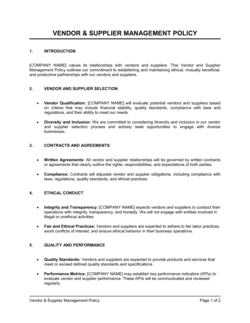
A Vendor and Supplier Management Policy sets the internal rules for how your organization selects, contracts with, and oversees all external vendors. A Supply Agreement is an external contract signed with a specific supplier that governs a particular supply relationship. The policy governs your team's behavior; the agreement governs the supplier's obligations. You typically need both — the policy to standardize procurement internally, and the agreement to bind each supplier contractually.
Supplier Management vs. Procurement Agreement
A supply agreement and a procurement agreement cover similar ground — both formalize the purchase of goods or services from a third party. "Supply agreement" is the more common term when the relationship is ongoing and volume-based; "procurement agreement" often appears in government contracting or one-time purchase contexts. For most commercial supplier relationships, a supply agreement is the right instrument.
Supplier Management vs. Distributor Agreement
A supply agreement governs what you buy from a supplier and how it's delivered to you. A distributor agreement governs how a third party sells and distributes your products to end customers. If you're sourcing goods to resell, you likely need a supply agreement with your vendor and a separate distributor agreement with your sales channel.
Supplier Management vs. Service Level Agreement (SLA)
A supply agreement covers the sale and delivery of physical goods or content. A service level agreement focuses on the performance standards for a service — uptime, response times, resolution windows. Where a supplier provides both goods and ongoing services (for example, a managed inventory service), the two documents are often used together.
Key clauses every Supplier Management contains
Most supplier management contracts share a core set of clauses that define the commercial relationship, allocate risk, and create accountability on both sides.
- Scope of supply. Describes precisely what goods, materials, or content the supplier will provide, including specifications, SKUs, or volume commitments.
- Pricing and payment terms. Sets unit prices, invoicing schedules, payment deadlines, and any pricing adjustment mechanisms such as inflation indexing.
- Delivery and lead times. Specifies where and when goods must be delivered, including acceptable lead times and consequences for late delivery.
- Quality standards and inspection rights. Defines the quality benchmarks goods must meet and the buyer's right to inspect, test, or reject non-conforming products.
- Term and renewal. States how long the agreement lasts and whether it auto-renews, requires notice to terminate, or expires on a fixed date.
- Exclusivity provisions. Where applicable, restricts the supplier from selling the same goods to your direct competitors during the agreement term.
- Indemnification and liability cap. Allocates financial responsibility for losses caused by defective goods, late delivery, or breach, often with a cap tied to contract value.
- Termination and exit rights. Describes the conditions under which either party can end the agreement, including for cause, convenience, or insolvency.
- Supplier code of conduct compliance. Requires the supplier to comply with labor, environmental, data protection, and anti-corruption standards as a condition of doing business.
How to write a supplier management agreement
A solid supplier agreement starts with clarity about what you're buying, from whom, and what happens when something goes wrong.
1
Identify the parties and relationship type
Use the supplier's full legal entity name and clarify whether the relationship is exclusive, preferred, or standard.
2
Define the scope of supply
List exactly what goods or materials are being supplied — product codes, specifications, minimum order quantities, and any approved substitutes.
3
Set pricing, payment, and adjustment terms
Agree on unit prices, invoicing cycles, payment windows, and any mechanism for price changes over the agreement term.
4
Specify delivery obligations
Confirm delivery locations, lead times, shipping responsibility (Incoterms if applicable), and remedies for late or short delivery.
5
Include quality, inspection, and rejection rights
State the quality standards that apply, your right to inspect shipments, and the process for rejecting and returning non-conforming goods.
6
Add compliance and conduct requirements
Reference your Supplier Code of Conduct and any regulatory requirements (labor laws, environmental standards, data protection) the supplier must follow.
7
Address term, renewal, and termination
Specify the agreement's duration, renewal mechanics, and the conditions and notice periods under which either party can exit.
8
Allocate risk with indemnification and liability clauses
Define who bears responsibility for defective goods, supply failures, or third-party claims, and cap each party's financial exposure appropriately.
At a glance
- What it is
- Supplier management is the set of processes a business uses to identify, contract with, evaluate, and maintain relationships with the vendors and suppliers it depends on. Done well, it reduces supply disruptions, controls costs, and ensures vendors meet quality and compliance standards.
- When you need one
- Any time your business relies on an external party for goods, materials, or services that affect your operations, you need formal supplier management documents in place before problems arise.
Which Supplier Management do I need?
The right document depends on where you are in the supplier relationship — selecting a new vendor, formalizing a supply deal, setting conduct expectations, or measuring ongoing performance. Match your situation below.
Your situation
Recommended template
Formalizing terms with a new supplier for ongoing product supply
Establishes pricing, delivery terms, and obligations for a standard supply relationship.Supply Agreement
Locking in a single supplier as your exclusive source for a product
Adds exclusivity obligations to prevent the supplier from serving your competitors.Exclusive Supply Agreement
Working with a supplier who also manufactures the goods they supply
Combines production specifications and supply terms in a single contract.Manufacturing and Supply Agreement
Setting behavioral and ethical expectations across all vendors
Documents the labor, environmental, and ethics standards all suppliers must meet.Measuring and tracking supplier performance over time
Provides a structured framework to rate delivery, quality, and responsiveness.Establishing company-wide rules for how suppliers are selected and managed
Creates consistent internal standards for procurement and vendor oversight.Welcoming and onboarding a newly approved supplier
Sets the tone for the relationship and communicates key expectations upfront.Welcome to New Supplier
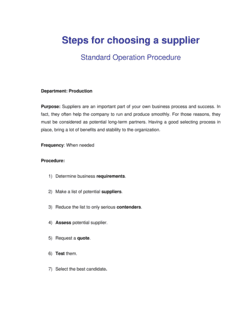
Running a structured process to evaluate and choose between suppliers
Guides the evaluation process with consistent scoring criteria.Glossary
- Supply agreement
- A contract between a buyer and a supplier that sets the terms under which goods or materials will be provided over a defined period.
- Vendor management policy
- An internal policy that defines how a company selects, contracts with, monitors, and exits supplier and vendor relationships.
- Supplier scorecard
- A structured performance evaluation tool used to rate a supplier against agreed criteria such as quality, delivery, and responsiveness.
- Supplier code of conduct
- A document specifying the ethical, labor, environmental, and compliance standards a supplier must follow to do business with your company.
- Exclusivity provision
- A contractual clause that prevents one or both parties from entering into similar supply arrangements with competitors during the agreement term.
- Lead time
- The period between placing an order and receiving the goods; a key performance metric in supply agreements.
- Incoterms
- Internationally recognized trade terms (published by the ICC) that define where delivery responsibility and risk transfer between buyer and supplier.
- Preferred supplier
- A supplier that has been approved and ranked above alternatives, typically granted first-right-of-refusal for new orders within a category.
- Supplier onboarding
- The process of formally approving, documenting, and integrating a new supplier into a company's procurement systems and policies.
- Indemnification clause
- A contractual provision requiring one party to compensate the other for losses arising from specific events such as defective goods or regulatory breaches.
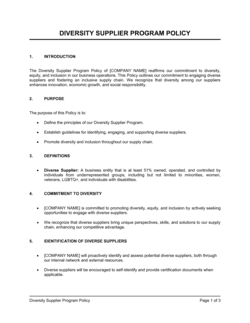
- Diversity supplier program
- A procurement initiative that sets targets or preferences for sourcing from minority-owned, women-owned, or other underrepresented business categories.
- Supply chain management
- The coordination of all activities involved in sourcing, procurement, production, and delivery of goods from raw materials to end customer.
What is supplier management?
Supplier management is the discipline of overseeing every stage of a business's relationship with the external parties that provide it with goods, materials, or content — from initial qualification through contracting, ongoing performance monitoring, and eventual exit or renewal. It encompasses the policies, agreements, scorecards, and processes that ensure suppliers deliver what they promised, comply with your standards, and remain aligned with your business needs over time.
Effective supplier management typically spans three layers: the contractual layer (supply agreements, exclusivity clauses, and codes of conduct that define what is legally required), the operational layer (onboarding checklists, scorecards, and review processes that govern day-to-day interactions), and the policy layer (internal vendor management policies that standardize how your procurement team selects and manages all vendors). Most supplier failures trace back to gaps in one of these three layers — an informal relationship with no written terms, a signed contract that is never reviewed, or a team with no consistent process for evaluating suppliers before signing.
Supplier management is relevant to virtually every business that buys anything from an external source — manufacturers sourcing components, retailers sourcing inventory, professional services firms sourcing subcontractors, and media companies sourcing content.
When you need supplier management documents
Every time you bring a new supplier into your operations — or extend a relationship with an existing one — you need documents that define expectations on both sides before the first delivery or invoice arrives. Informal supplier relationships create legal and operational exposure that is difficult to remedy after the fact.
Common triggers:
- Signing a new supplier to provide raw materials, components, or finished goods
- Granting a supplier exclusive rights to serve your business in a category
- Onboarding a manufacturer who will both produce and supply a product
- Requiring all vendors to formally acknowledge your ethical and compliance standards
- Running a structured process to evaluate and select between competing suppliers
- Measuring an existing supplier's delivery, quality, and responsiveness against agreed benchmarks
- Establishing company-wide procurement rules so all departments follow the same vendor standards
- Building a diverse supplier program with documented selection and tracking criteria
Skipping supplier documentation doesn't eliminate risk — it just shifts it entirely onto your business. Without a signed supply agreement, price disputes, delivery failures, and quality rejections have no contractual basis for resolution. Without a supplier scorecard or management policy, underperforming vendors can remain in your supply chain long after they should have been replaced. The templates in this folder give you the structure to manage suppliers systematically, regardless of the size or complexity of your supply chain.
Award-winning platform
- Great Place to Work 2025
- BIG Award — Product of the Year 2025
- Smartest Companies 2025
- Global 100 Excellence 2026
- Best of the Best 2025
Create your document in 3 simple steps.
From template to signed document — all inside one Business Operating System.
1
Download or open template
Access over 3,000+ business and legal templates for any business task, project or initiative.
2
Edit and fill in the blanks with AI
Customize your ready-made business document template and save it in the cloud.
Share your files and folders with your team. Create a space of seamless collaboration.
Save time, save money, and create top-quality documents.
★★★★★
"Fantastic value! I'm not sure how I'd do without it. It's worth its weight in gold and paid back for itself many times."
Managing Director · Mall Farm
RW
Robert Whalley
Managing Director, Mall Farm Proprietary Limited
★★★★★
"I have been using Business in a Box for years. It has been the most useful source of templates I have encountered. I recommend it to anyone."
Business Owner · 4+ years
MF
Dr Michael John Freestone
Business Owner
★★★★★
"It has been a life saver so many times I have lost count. Business in a Box has saved me so much time and as you know, time is money."
Owner · Upstate Web
DM
David G. Moore Jr.
Owner, Upstate Web