Checklist Temporary Help Agency Screening

Free download β€’ Use as a template β€’ Print or share

2 pagesβ€’20–25 min to useβ€’Difficulty: Standard
Learn more ↓
FreeChecklist Temporary Help Agency Screening Template

At a glance

What it is
A Temporary Help Agency Screening Checklist is a structured form used by HR and procurement teams to evaluate and compare staffing agencies before engaging them to supply contingent workers. This free Word download gives you a consistent scoring sheet you can edit online and export as PDF, covering licensing, insurance, candidate screening practices, billing terms, and performance history.
When you need it
Use it before signing a staffing agency contract, when adding a new vendor to your approved supplier list, or when an existing agency relationship is up for annual review.
What's inside
Agency identification details, licensing and insurance verification fields, candidate sourcing and screening criteria, reference and compliance checks, fee structure and billing terms, and a summary scoring section for side-by-side agency comparison.

What is a Checklist Temporary Help Agency Screening?

A Temporary Help Agency Screening Checklist is a structured evaluation form that HR managers, procurement officers, and operations teams use to assess staffing agencies before approving them to supply temporary or contingent workers. It captures licensing status, insurance certificates, candidate screening practices, fee structure, client references, and safety responsibilities in a single scored document β€” replacing ad hoc conversations with a consistent, auditable process. The form functions as both a vendor qualification record and a comparison tool when evaluating multiple agencies side by side.

Why You Need This Document

Engaging a staffing agency without a documented screening process creates exposure on multiple fronts: an agency with lapsed workers' compensation insurance leaves your business liable for injuries to placed workers; an agency that classifies placements as independent contractors rather than employees can trigger joint-employer claims against you; and an agency with no defined replacement guarantee can leave a production line or front desk unmanned while you scramble for alternatives. This checklist closes those gaps by forcing every critical question to be asked, answered, and filed before a single worker is placed β€” giving you a defensible due-diligence record for auditors, insurers, and legal counsel, and a practical basis for choosing the agency most likely to perform.

Which variant fits your situation?

If your situation is…Use this template
Evaluating a staffing agency for long-term or permanent-placement rolesStaffing Agency Evaluation Form
Screening individual temporary worker candidates directlyEmployee Screening Checklist
Formalizing the agency relationship after approvalTemporary Staffing Agency Agreement
Tracking ongoing performance of an approved agencyVendor Performance Review Template
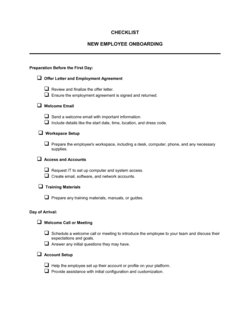
Onboarding a temporary worker placed by the agencyNew Employee Onboarding Checklist
Documenting the full vendor qualification process for procurement recordsVendor Qualification Questionnaire

Common mistakes to avoid

❌ Skipping insurance verification

Why it matters: A placed worker injured on your premises can trigger a workers' compensation claim against your policy if the agency's coverage lapses or excludes the placement. The financial exposure can far exceed the cost of a 10-minute certificate review.

Fix: Request a current certificate of insurance naming your company as an additional insured before the first worker is placed, and set a tickler to re-verify annually.

❌ Comparing agencies on bill rate alone

Why it matters: A lower hourly bill rate with a higher mark-up, shorter free-replacement window, or weaker screening process can result in higher total cost and more operational disruption than a nominally more expensive agency.

Fix: Use the fee structure field to calculate an all-in cost per role type for each agency, and weight screening quality and replacement terms alongside price.

❌ Accepting written testimonials instead of live reference calls

Why it matters: Curated testimonials never surface billing disputes, placement failures, or poor response times β€” the exact issues most likely to affect your operations.

Fix: Require at least two live reference calls with contacts in a similar industry, and document the substance of each call in the checklist.

❌ Leaving safety orientation responsibility undefined

Why it matters: When a placed worker is injured and neither the agency nor the client has documented who was responsible for site-specific safety training, both parties share exposure to OSHA citations and negligence claims.

Fix: Complete the health and safety field in full, specifying which party owns pre-placement training, site orientation, and OSHA recordkeeping for placed workers.

The 10 key fields, explained

Agency identification

Licensing and registration status

Insurance verification

Candidate sourcing and screening practices

Compliance with employment law

Fee structure and billing terms

Client references

Health, safety, and site orientation

Performance and replacement guarantee

Overall screening score and recommendation

How to fill it out

  1. 1

    Gather the agency's credentials before the meeting

    Request the agency's license number, certificate of insurance, sample candidate screening report, and two client references at least 48 hours before your scheduled review call.

    πŸ’‘ A well-run agency will provide all of these without hesitation β€” delays or refusals are a signal worth noting in the screening record.

  2. 2

    Complete the identification and licensing fields

    Enter the agency's full legal name and verify the license number against your state or provincial staffing industry registry. Record the expiry date and flag it for annual re-verification.

    πŸ’‘ Set a calendar reminder 60 days before the license expiry so you can request a renewal certificate before the gap appears in your records.

  3. 3

    Request and review the certificate of insurance

    Confirm that workers' compensation, general liability, and E&O policies are all active, that coverage limits meet your minimum thresholds, and that your company is named as an additional insured.

    πŸ’‘ Your legal or risk team should define minimum coverage limits by role type β€” $1M per occurrence for general liability is a common floor for light industrial placements.

  4. 4

    Document screening and compliance practices

    Ask the agency to describe their background check provider, the specific checks run, their worker classification policy, and their I-9 verification process. Record each answer in the corresponding field.

    πŸ’‘ Request a sample (redacted) screening report so you can confirm the actual depth of checks rather than relying on a verbal summary.

  5. 5

    Record fee structure in detail

    Enter the mark-up rate, billing cycle, overtime billing policy, and any conversion or cancellation fees. Calculate the all-in hourly cost for a representative role so you can compare agencies on a like-for-like basis.

    πŸ’‘ Ask explicitly about billing for no-shows and late cancellations β€” these charges vary widely and can add up quickly during a high-volume placement period.

  6. 6

    Conduct and record two live reference calls

    Contact each reference directly by phone. Ask about placement quality, billing accuracy, issue resolution, and whether they would re-engage the agency. Summarize each call in the reference fields.

    πŸ’‘ Ask references specifically about the agency's behavior when a placement went wrong β€” how they handled it reveals more than any positive feedback.

  7. 7

    Score and record the approval decision

    Assign a score for each criterion, calculate the total, and record your pass, fail, or conditional recommendation in the summary field. Sign and date the completed checklist.

    πŸ’‘ File the completed checklist in the agency's vendor folder β€” it serves as your due-diligence record if the relationship is ever audited or disputed.

Frequently asked questions

What is a temporary help agency screening checklist?

A temporary help agency screening checklist is a structured form HR and procurement teams use to evaluate staffing agencies before engaging them to supply contingent or temporary workers. It covers licensing, insurance, candidate screening practices, fee structure, and client references β€” giving you a consistent, documented basis for approving or rejecting an agency as a vendor.

Why should I screen temporary staffing agencies before using them?

Using an unvetted staffing agency exposes your business to co-employment liability, uninsured workplace injury claims, and workers supplied without adequate background checks. A structured screening process confirms the agency is licensed, properly insured, and running candidate checks that meet your minimum standards β€” before a single worker sets foot on your site.

What insurance should a temporary staffing agency carry?

At minimum, a staffing agency should carry active workers' compensation insurance, commercial general liability, and errors and omissions coverage. Your company should be named as an additional insured on the general liability policy. Minimum coverage limits vary by industry β€” consult your risk manager or insurance broker for thresholds appropriate to your placement roles.

What is co-employment risk and how does this checklist help?

Co-employment risk arises when a client exercises sufficient day-to-day control over a placed worker's tasks, hours, or conditions to be treated as a joint employer under applicable law β€” creating exposure for benefits, overtime, and wrongful termination claims. Screening the agency's worker classification practices and formalizing the division of responsibilities in writing reduces the likelihood of a co-employment finding.

How often should I re-screen an approved staffing agency?

Best practice is an annual re-screening aligned to the vendor contract renewal date. At minimum, re-verify the certificate of insurance each year and confirm license renewal. Trigger an out-of-cycle review any time the agency changes ownership, your volume with them increases significantly, or a placement issue raises a service-quality concern.

Can I use this checklist for permanent-placement agencies too?

This checklist is designed specifically for temporary and contingent staffing agencies where the agency retains employer-of-record status. For permanent-placement or executive-search firms, most of the insurance and co-employment fields are less relevant β€” use a dedicated staffing agency evaluation form tailored to retained or contingency search engagements.

How many agencies should I screen before selecting one?

Screen at least three agencies for any new placement category so you have a genuine comparison. For high-volume or long-term needs, screening four to six agencies and establishing a two- to three-vendor preferred list gives you redundancy if your primary agency cannot fill a surge.

Does completing this checklist replace a formal staffing agreement?

No. The screening checklist is a due-diligence and selection tool β€” it does not create contractual obligations. Once an agency passes screening, formalize the relationship with a signed Temporary Staffing Agency Agreement that documents mark-up rates, replacement guarantees, indemnification, and termination terms.

How this compares to alternatives

vs Temporary Staffing Agency Agreement

The screening checklist is a pre-contract evaluation tool β€” it determines whether an agency meets your minimum standards before you commit. The staffing agency agreement is the binding contract that governs the placement relationship once the agency is approved. The checklist should be completed first; the agreement formalizes what follows.

vs Employee Screening Checklist

An employee screening checklist evaluates individual job candidates β€” verifying their background, references, and qualifications. The temporary help agency screening checklist evaluates the vendor that will supply those candidates. Both are necessary but operate at different levels of the hiring process.

vs Vendor Qualification Questionnaire

A vendor qualification questionnaire is a broader supplier due-diligence tool covering financial stability, quality management systems, and general compliance. The temporary help agency screening checklist is narrower and tailored specifically to staffing risks β€” insurance for placed workers, co-employment exposure, and candidate screening depth.

vs New Employee Onboarding Checklist

A new employee onboarding checklist manages the steps required after a hiring decision β€” paperwork, system access, and orientation. The agency screening checklist is used before any placement decision is made. The two are sequential: agency screening leads to placement, which triggers onboarding.

Industry-specific considerations

Manufacturing

High-volume seasonal placements require verified safety training, OSHA recordkeeping clarity, and workers' compensation limits scaled to physical injury exposure.

Retail

Peak-season staffing surges demand fast replacement guarantees and agencies with proven retail candidate pools and basic background screening for customer-facing roles.

Professional Services

Temporary administrative, legal, or finance staff require verification of skills testing depth and confidentiality practices given access to sensitive client data.

Healthcare

Credentialing verification, license confirmation, and immunization record checks are mandatory screening fields alongside standard insurance and background check criteria.

Template vs pro β€” what fits your needs?

PathBest forCostTime
Use the templateHR and procurement teams screening one to six staffing agencies for standard temporary placementsFree30–60 minutes per agency
Template + professional reviewOrganizations with high-volume placements, regulated industries, or complex co-employment exposure$200–$500 for a one-hour review with an employment lawyer or risk consultant1–2 days
Custom draftedEnterprise procurement programs screening dozens of agencies with weighted scoring models and legal sign-off$1,000–$3,000 for a custom vendor qualification framework1–3 weeks

Glossary

Temporary Help Agency
A staffing firm that employs workers and places them at client worksites for defined periods, retaining employer-of-record status.
Employer of Record
The entity legally responsible for payroll, tax withholding, workers' compensation, and employment obligations for a placed worker.
Mark-up Rate
The percentage added to a temporary worker's hourly pay rate to cover agency overhead, profit, and employment costs β€” typically expressed as a multiplier of the base wage.
Workers' Compensation Insurance
Mandatory insurance covering medical costs and lost wages if a placed worker is injured on the client's premises β€” carried by the employer of record.
General Liability Insurance
Coverage protecting against third-party claims for bodily injury or property damage arising from the agency's operations or placements.
Indemnification Clause
A contractual provision in a staffing agreement requiring one party to compensate the other for losses caused by its own negligence or breach.
Conversion Fee
A fee charged by a staffing agency when the client hires a temporary worker directly as a permanent employee, typically a percentage of the worker's annual salary.
Background Screening
Pre-placement checks β€” criminal history, employment verification, and identity confirmation β€” conducted by the agency or a third-party service before a worker is assigned.
Co-employment Risk
The legal exposure that arises when a client exercises enough control over a temporary worker's day-to-day activities to be treated as a joint employer under applicable law.
Preferred Vendor List
A curated list of pre-approved suppliers β€” in this case staffing agencies β€” that meet minimum qualification standards and have negotiated standing terms.

Part of your Business Operating System

This document is one of 3,000+ business & legal templates included in Business in a Box.

  • Fill-in-the-blanks β€” ready in minutes
  • 100% customizable Word document
  • Compatible with all office suites
  • Export to PDF and share electronically

Create your document in 3 simple steps.

From template to signed document β€” all inside one Business Operating System.
1
Download or open template

Access over 3,000+ business and legal templates for any business task, project or initiative.

2
Edit and fill in the blanks with AI

Customize your ready-made business document template and save it in the cloud.

3
Save, Share, Send, Sign

Share your files and folders with your team. Create a space of seamless collaboration.

Save time, save money, and create top-quality documents.

β˜…β˜…β˜…β˜…β˜…

"Fantastic value! I'm not sure how I'd do without it. It's worth its weight in gold and paid back for itself many times."

Managing Director Β· Mall Farm
Robert Whalley
Managing Director, Mall Farm Proprietary Limited
β˜…β˜…β˜…β˜…β˜…

"I have been using Business in a Box for years. It has been the most useful source of templates I have encountered. I recommend it to anyone."

Business Owner Β· 4+ years
Dr Michael John Freestone
Business Owner
β˜…β˜…β˜…β˜…β˜…

"It has been a life saver so many times I have lost count. Business in a Box has saved me so much time and as you know, time is money."

Owner Β· Upstate Web
David G. Moore Jr.
Owner, Upstate Web

Run your business with a system β€” not scattered tools

Stop downloading documents. Start operating with clarity. Business in a Box gives you the Business Operating System used by over 250,000 companies worldwide to structure, run, and grow their business.

Start freeΒ Β·Β No credit card required