Product Development Lifecycle Templates
★★★★★4.7from 280+ reviews· Trusted by 20M+ businesses
Plan, build, and launch products faster with templates for every stage of the development lifecycle.
WordEditable onlinePDF10+ product development lifecycle templates
Other Product Management categories
Research, innovation, and R&D
250K+Clients
20M+Free users
20+Years
190+Countries
10,000+Law firms
50M+Downloads
Trusted across review platforms
- Capterra★★★★☆4.649 reviews
- G2★★★★☆4.713 reviews
- GetApp★★★★☆4.649 reviews
- Google Play★★★★☆4.6179 ratings
- Google Reviews★★★★☆4.567 reviews
Frequently asked questions
What are the stages of a product development lifecycle?
Most frameworks include six to eight stages: ideation, concept definition, design and prototyping, development and testing, validation, launch, and post-launch review. The exact number varies by industry and company size, but every stage produces a documented output — a brief, a roadmap, a checklist — that feeds the next stage and creates an auditable record of decisions made.
What is the difference between a product roadmap and a product development lifecycle plan?
A product development lifecycle plan governs the full process from idea to post-launch, including strategy, resourcing, risk, and governance. A product roadmap is a time-based delivery schedule showing features and milestones. The lifecycle plan is the parent document; the roadmap is one of the artifacts produced within it.
How do I manage a product launch with a checklist?
Start the checklist 8–12 weeks before launch and organize items by workstream: product readiness, QA sign-off, marketing assets, pricing, sales enablement, support documentation, and legal clearances. Assign an owner and a due date to every item. The Checklist Product Launch template (D13620) in this folder provides a ready-made structure you can adapt to your release cycle.
When does a product development project need a formal development agreement?
Any time you engage a third party — a software agency, a hardware manufacturer, a multimedia studio — to build or co-develop a product, a written agreement is required. Without one, IP ownership, payment milestones, change-order procedures, and confidentiality obligations are all ambiguous. Agreements in this folder cover custom software, joint development, multimedia, and web development scenarios.
What should a product brief include?
A product brief should cover the target customer, the problem being solved, the proposed solution at a high level, success metrics, constraints (budget, timeline, technical), and stakeholders who must sign off. It is intentionally short — one to two pages — so it can be read and approved before significant development resources are committed.
How often should a product roadmap be updated?
Most product teams review and update the roadmap on a quarterly cycle, with lighter weekly or sprint-level adjustments to near-term milestones. The roadmap should reflect current priorities, not serve as a historical record — items that have been deprioritized should be archived rather than left in place as clutter.
What is a stage gate in product development?
A stage gate is a formal decision checkpoint between two lifecycle phases where a defined set of stakeholders reviews the work completed, evaluates it against pre-set criteria, and decides whether to proceed, revise, or stop. Stage gates prevent teams from investing resources in products that fail market, technical, or financial tests early in development.
Can small teams or solo founders use product development lifecycle templates?
Yes — the templates in this folder scale down as well as up. A solo founder can use the Product Strategy Sheet and Product Brief to crystallize thinking before building, and the Checklist Product Launch to manage a first release without a dedicated project manager. Larger teams layer in roadmaps, development agreements, and formal stage-gate reviews as headcount and complexity increase.
Product Development Lifecycle vs. related documents
Product Development Lifecycle vs. Product roadmap
A product development lifecycle document covers the full end-to-end process from ideation to post-launch — it is the governing framework. A product roadmap is one artifact within that lifecycle: a time-based view of what gets built and when. Use the lifecycle plan to set the process; use the roadmap to communicate feature delivery to stakeholders.
Product Development Lifecycle vs. Project plan
A project plan is task- and timeline-focused for a defined scope of work, typically owned by a project manager. A product development lifecycle plan is strategy-first and spans multiple projects, releases, and cross-functional teams. Product plans answer "what are we building and why?"; project plans answer "who does what by when?"
A product development lifecycle template is an internal planning tool used by your team. A software development agreement is a legal contract with a third-party vendor or partner that governs deliverables, IP, payment, and timelines. You need both when development is outsourced: the plan drives internal alignment, the agreement protects your interests externally.
A product launch plan covers the go-to-market activities in the final stage of the lifecycle — pricing, marketing, distribution, and sales enablement. The full lifecycle plan encompasses everything from ideation through that launch. Think of the launch plan as the final chapter of the broader lifecycle document.
Key clauses every Product Development Lifecycle contains
Regardless of which stage template you use, effective product development lifecycle documents share the same core components.
- Problem statement and opportunity. Defines the customer problem being solved and the market opportunity that justifies building the product.
- Product goals and success metrics. States what success looks like in measurable terms — activation rates, revenue targets, defect thresholds, or time to market.
- Scope and out-of-scope definition. Explicitly states what the current lifecycle phase includes and, critically, what it excludes to prevent scope creep.
- Stage gates and approval checkpoints. Identifies the decision points where stakeholders review progress and authorize the team to proceed to the next phase.
- Roles and accountabilities. Maps each lifecycle activity to an owner — product manager, engineering lead, designer, QA — so nothing falls through the cracks.
- Risk register. Logs known risks to delivery — technical, market, resource — along with the mitigation plan for each.
- Timeline and milestones. Anchors the lifecycle to calendar dates, sprint cycles, or release windows so the team can track progress against plan.
- Launch and post-launch review criteria. Sets the conditions that must be met before launch and defines how performance will be reviewed in the weeks after release.
How to write a product development lifecycle plan
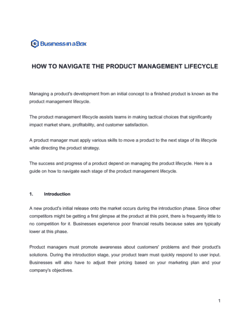
A lifecycle plan turns a product idea into an actionable, stage-by-stage framework that keeps cross-functional teams aligned from first concept to post-launch review.
1
Define the problem and market opportunity
Write a crisp problem statement and quantify the market: who has this problem, how many of them exist, and what it costs them today.
2
Set product goals and measurable success criteria
Translate the opportunity into 2–4 specific outcomes the product must achieve — revenue, retention, activation, or time-to-market targets.
3
Map the stages and stage gates
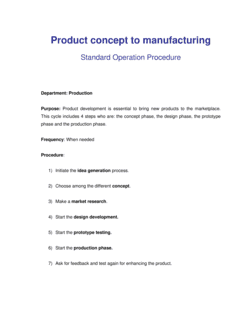
List the phases your product will move through (ideation, definition, design, build, test, launch, review) and define the criteria to pass each gate.
4
Assign roles and accountabilities
Name the owner for each stage and for each cross-functional workstream — product, engineering, design, marketing, legal, and operations.
5
Build the timeline and milestone schedule
Anchor each stage to a target date or sprint; identify the critical path and flag dependencies that could delay downstream stages.
6
Identify risks and mitigation actions
List the top 5–8 risks — technical debt, supplier delays, regulatory hurdles, market shifts — and assign a mitigation owner to each.
7
Document launch criteria and post-launch review
Specify the minimum conditions required for release and schedule a post-launch retrospective at 30, 60, and 90 days.
At a glance
- What it is
- A product development lifecycle is the structured sequence of stages a product moves through — from initial idea and strategy through design, build, validation, and market launch. Templates for this lifecycle give product managers, founders, and development teams a repeatable framework so nothing is skipped between concept and customer.
- When you need one
- Any time a team is taking a new product — or a major update — from idea to market, structured lifecycle documents reduce rework, align stakeholders, and create an auditable record of decisions made at each stage.
Which Product Development Lifecycle do I need?
The right template depends on which stage of the lifecycle you're in and whether you need a planning document, a process guide, a strategy artifact, or a formal agreement. Match your current situation below.
Your situation
Recommended template
Starting a new product from scratch and need an end-to-end plan
Covers ideation through launch in a single structured planning document.Mapping out feature delivery across quarters for stakeholders
Organizes milestones, owners, and timelines in a shareable visual format.Coordinating all tasks in the final weeks before a product launch
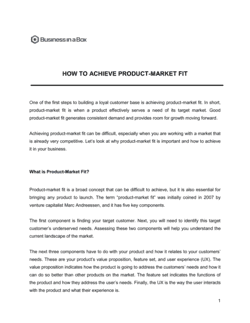
Ensures no launch-critical step — from QA to marketing — is missed.Defining a product's positioning, goals, and success metrics
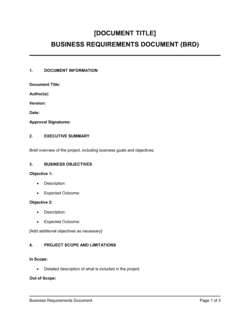
One-page artifact that aligns the team on what the product is and why.Writing a concise brief to align stakeholders before development begins
Short-form document capturing scope, audience, and objectives upfront.Evaluating multiple product options before choosing one to build
Side-by-side framework for scoring features, costs, and fit against goals.Commissioning a third party to build custom software
Legally governs deliverables, IP ownership, timelines, and payment terms.Partnering with another company to co-develop a product
Defines each party's contributions, IP rights, and revenue sharing upfront.Glossary
- Stage gate
- A formal review checkpoint between lifecycle phases where stakeholders approve or redirect the product before resources are committed to the next stage.
- Product brief
- A short document — typically one to two pages — that defines the problem, target customer, proposed solution, and success metrics before development begins.
- Product roadmap
- A time-based plan showing which features, fixes, or milestones will be delivered and when, used to communicate priorities to stakeholders.
- Go-to-market (GTM)
- The plan for how a product will reach its target customers at launch, covering pricing, distribution, marketing, and sales enablement.
- Scope creep
- The gradual expansion of a product's requirements beyond what was originally agreed, which extends timelines and increases costs without formal approval.
- MVP (minimum viable product)
- The smallest version of a product that can be released to real users to validate assumptions before full-scale development is funded.
- Joint development agreement
- A contract between two or more parties that defines how they will collaborate to build a product, including IP ownership, cost sharing, and revenue splits.
- Product strategy
- The high-level plan that defines what a product will achieve, who it serves, and how it will differentiate from competing solutions.
- Risk register
- A log of identified risks to a project or product, each with a likelihood rating, impact assessment, and named mitigation owner.
- Post-launch review
- A structured evaluation conducted after a product goes live to measure performance against launch targets and capture lessons for the next release cycle.
- IP assignment
- A legal provision in a development agreement that transfers ownership of intellectual property created during the project to the commissioning party.
What is a product development lifecycle?
A product development lifecycle is the structured sequence of stages a
product moves through from initial concept to market release and ongoing
iteration. It gives product managers, founders, and cross-functional teams
a shared framework — documented in plans, briefs, roadmaps, checklists, and
agreements — that governs how decisions are made, who approves what, and
what must be true before the team moves from one phase to the next.
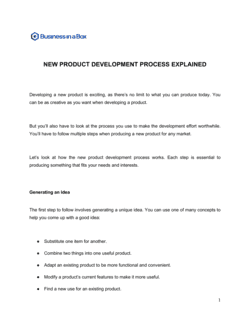
The lifecycle typically spans ideation, concept definition, design and
prototyping, development, testing and validation, launch, and post-launch
review. Each stage produces a tangible artifact: a product brief, a strategy
sheet, a roadmap, a launch checklist. Those artifacts are not bureaucratic
overhead — they are the mechanism by which large or small teams stay aligned,
avoid rework, and create a record of why the product was built the way it was.
Templates for the product development lifecycle range from one-page strategy
sheets used before a line of code is written to formal joint development
agreements used when multiple organizations are co-building a product. The
right template for a given moment depends on the stage you're in and whether
you need an internal planning tool, a stakeholder communication artifact, or
a legally binding agreement with a third party.
When you need a product development lifecycle template
Whenever a team moves from "we have an idea" to "we are shipping something,"
structured lifecycle documents reduce the risk of building the wrong thing,
launching before the product is ready, or losing IP to an undocumented
vendor engagement.
Common triggers:
- A startup founder is building a first product and needs a plan that communicates the roadmap to early investors
- A product manager is kicking off a new feature cycle and needs to align engineering, design, and marketing on scope and timeline
- A company is bringing in an outside agency to build custom software and needs a development agreement before work begins
- Two companies are co-developing a hardware or software product and need a joint development agreement to protect each party's IP
- A team is four weeks from launch and needs a checklist to ensure QA, pricing, marketing, and legal are all ready
- A product leader is comparing two competing concepts before committing a development budget
- An entrepreneur is documenting a product strategy for the first time to get internal buy-in from leadership
Skipping lifecycle documentation does not make development faster — it
concentrates risk. Missed stage gates allow flawed products to reach
expensive build phases. Undocumented vendor relationships leave IP ownership
ambiguous. Unwritten launch criteria lead to premature releases. The
templates in this folder give teams the structure to move quickly without
cutting the corners that cause expensive reversals later.
Award-winning platform
- Great Place to Work 2025
- BIG Award — Product of the Year 2025
- Smartest Companies 2025
- Global 100 Excellence 2026
- Best of the Best 2025