Branding Templates
★★★★★4.7from 280+ reviews· Trusted by 20M+ businesses
Build, protect, and extend your brand with ready-to-use policies, agreements, and strategy guides.
WordEditable onlinePDF17+ branding templates
Other Sales & Marketing categories
Most popular branding templates
Brand governance and compliance
Co-branding and partnerships
Brand strategy and growth
250K+Clients
20M+Free users
20+Years
190+Countries
10,000+Law firms
50M+Downloads
Trusted across review platforms
- Capterra★★★★☆4.649 reviews
- G2★★★★☆4.713 reviews
- GetApp★★★★☆4.649 reviews
- Google Play★★★★☆4.6179 ratings
- Google Reviews★★★★☆4.567 reviews
Frequently asked questions
What is a branding policy?
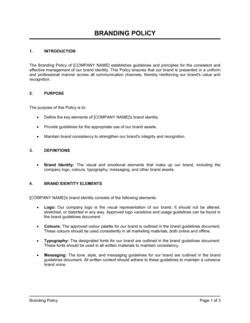
A branding policy is an internal document that defines how a company's brand assets — logos, colors, typefaces, taglines — must be used by employees, contractors, and partners. It sets rules for permitted and prohibited uses, specifies who can approve exceptions, and explains what happens when the rules are violated. Without one, brand inconsistency accumulates over time and weakens the brand's market recognition.
Why do I need a branding and trademarks policy?
If you own registered trademarks, a standalone branding policy may not be enough. A branding and trademarks policy adds guidance on how marks must be displayed (with ® or ™), how licensing to third parties works, and how violations are handled. Consistent trademark usage is generally required to maintain and enforce your registration in most jurisdictions.
What should a co-branding agreement cover?
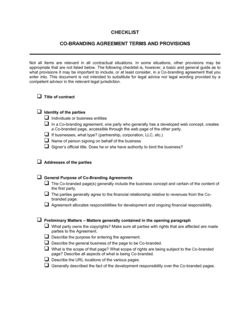
A co-branding agreement should define which brand assets each party may use, how approvals work for materials carrying both brands, how revenue or credit is shared, who owns jointly created IP, what happens to materials if the partnership ends, and which jurisdiction's law governs disputes. The co-branding checklist template is a useful companion for making sure nothing is missed before signing.
What is a personal branding strategy?
A personal branding strategy is a documented plan for how an individual — typically a founder, executive, consultant, or creative — presents their expertise, values, and personality to a professional audience. It covers positioning, target audience, content pillars, channels, and goals. A written strategy keeps the personal brand consistent across LinkedIn, speaking engagements, media appearances, and other touchpoints.
How is social media branding different from general brand strategy?
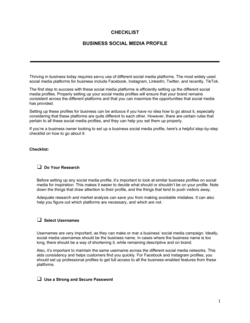
Brand strategy defines your identity at a foundational level — your voice, values, and visual system. Social media branding applies those foundations to specific platforms, specifying tone adjustments per channel, image formats, hashtag strategy, engagement rules, and publishing cadence. You need the brand strategy first; the social media branding document translates it into platform-specific execution.
Do small businesses need branding documents?
Yes, especially as soon as a second person starts creating content or communicating on behalf of the business. Even a one-page branding policy prevents the logo from being stretched, the wrong color from appearing in a proposal, or a contractor from using an outdated tagline. The cost of inconsistency compounds — it is far cheaper to set standards early than to rebuild brand recognition later.
Can a branding template be customized for my industry?
All templates in this folder are designed to be edited in Word or online and customized to your company name, assets, tone, and specific rules. Regulated industries — financial services, healthcare, pharmaceuticals — may need additional review to ensure brand communications comply with sector-specific disclosure or advertising requirements.
What are branding guidelines and how do they differ from a policy?
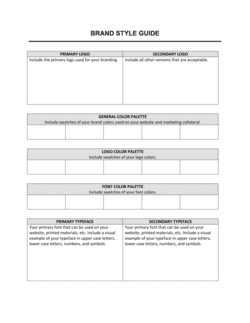
Branding guidelines (sometimes called a brand style guide) show how to apply brand assets correctly — with visual examples, color swatches, and do/don't comparisons. A branding policy is a formal governance document that sets rules and consequences. Guidelines are typically shared with designers and external partners; the policy is signed off by management and enforced internally. Both serve complementary roles.
Branding vs. related documents
A branding policy is an internal governance document that tells employees and vendors how they must use brand assets. Brand guidelines are a reference document — often a PDF or webpage — that shows designers and partners exactly how the brand looks and sounds. Many companies maintain both: the policy sets the rules, the guidelines show how to apply them.
A branding and trademarks policy governs how your registered marks are used internally and by partners. It does not register a trademark — that requires a formal application to a national IP office (e.g., the USPTO). The policy supports enforcement of marks you already own; registration creates the legal right itself.
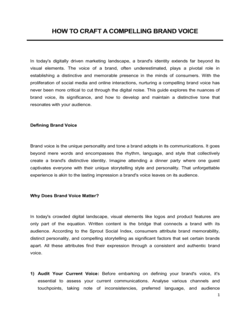
Branding defines who you are — your identity, values, voice, and visual system. Marketing strategy defines how you reach and convert customers using that identity. The two are closely linked but distinct: brand strategy is the foundation; marketing strategy is the execution plan built on top of it.
A co-branding agreement places both companies' brands visibly on a product or campaign, and each party retains its own identity. White- labeling means one company's brand is hidden entirely — a manufacturer produces a product that a reseller markets under its own brand alone. If both logos will appear, you need a co-branding agreement; if only one will, a white-label or OEM agreement is more appropriate.
Key clauses every Branding contains
Whether you're drafting a brand policy or a co-branding agreement, the same core elements appear across every branding document.
- Brand asset definitions. Specifies exactly which assets are covered — logos, color palettes, typefaces, taglines, and trade dress.
- Permitted and prohibited uses. Lists what users may and may not do with brand assets, including size minimums, color alterations, and context restrictions.
- Approval and review process. Defines who must approve new uses of brand assets before they go live, and how requests are submitted.
- Trademark ownership and licensing. States who owns each mark, whether any license is granted, and the scope of that license.
- Co-branding rights and obligations. In partnership documents, details each party's brand usage rights, approval rights over the other's materials, and revenue or credit sharing.
- Compliance and enforcement. Explains consequences for non-compliance, including removal of materials and termination of the agreement or policy.
- Term and termination. Defines how long the agreement or policy is in effect and what happens to brand materials when it ends.
- Governing law. Names the jurisdiction whose laws apply if a dispute arises over brand usage or trademark rights.
How to write a branding policy or brand strategy document
A strong branding document starts with clarity about your identity and ends with specific, enforceable rules or actionable steps.
1
Define your brand identity
State your mission, values, brand voice, and the emotional impression you want to leave with every audience.
2
Inventory your brand assets
List every asset the document will govern — primary and secondary logos, color codes, approved typefaces, taglines, and any registered trademarks.
3
Set usage rules for each asset
Specify what is permitted, what is prohibited, and what requires approval — including minimum sizes, clear space, and prohibited color alterations.
4
Define the approval workflow
Name the person or team responsible for approving new brand applications and state the turnaround time for requests.
5
Address external and partner use
If agencies, partners, or co-branding partners will use your assets, add a section — or a separate co-branding agreement — governing their rights.
6
Include compliance and enforcement terms
State clearly what happens when the policy is violated, from a correction request to revocation of brand access.
7
Review, approve, and distribute
Have legal or leadership sign off, then distribute the document to all staff, agencies, and partners who use your brand assets.
At a glance
- What it is
- Branding templates are ready-made documents that help businesses define, govern, and extend their brand identity across every touchpoint. They cover everything from internal usage policies and trademark rules to co-branding agreements and social media strategy frameworks.
- When you need one
- Any time you're formalizing how your brand looks and sounds, partnering with another brand, or building a personal professional identity, a branding template gives you a proven structure to start from.
Which Branding do I need?
The right branding document depends on whether you're setting internal rules, partnering with another company, or building a strategy. Pick the scenario closest to yours.
Your situation
Recommended template
Setting company-wide rules for how the brand must be used
Establishes internal standards for logo use, color, and tone across all staff.Protecting trademark rights alongside brand usage rules
Combines brand standards with trademark ownership and enforcement guidance.Partnering with another company to co-market under both brands
Defines each party's rights, obligations, and brand usage rules in a partnership.Reviewing every step before signing a co-branding deal
Ensures nothing is overlooked before committing to a co-branding arrangement.Building or formalizing your personal professional brand
Structures positioning, audience, channels, and goals for individual brand-building.Developing a consistent brand presence across social platforms
Maps platform-by-platform brand voice, visuals, and engagement tactics.Creating or auditing your logo and visual identity
Covers core logo design principles and how to apply them consistently.Defining brand strategy across marketing and communications
Outlines five actionable strategies to align marketing with brand positioning.Glossary
- Brand identity
- The visual and verbal elements — logo, colors, typefaces, voice — that make a brand recognizable and distinct.
- Trademark
- A registered or unregistered mark (word, symbol, or design) that identifies the source of goods or services and distinguishes them from competitors.
- Co-branding
- A partnership where two brands appear together on a product, campaign, or service, with both retaining their own identities.
- Brand guidelines
- A reference document showing designers and partners how to apply brand assets correctly, typically with visual examples.
- Brand voice
- The consistent personality and tone a brand uses in all written and spoken communications.
- Trade dress
- The overall commercial image of a product or service — including packaging, color scheme, and design — that can be protected like a trademark.
- Personal brand
- The professional reputation and public identity of an individual, shaped by their expertise, values, and how they present themselves.
- Usage rights
- The specific permissions granted to an employee, partner, or licensee to use brand assets, as defined in a policy or agreement.
- Brand equity
- The commercial value a brand name adds to a product or service beyond its functional attributes, built through consistency and reputation.
- White-labeling
- An arrangement where one company's product or service is rebranded and sold under another company's name, with the original brand hidden.
What is a branding template?
A branding template is a professionally structured document that helps a business define, govern, or extend its brand identity. Branding templates span a wide range of use cases: internal policies that govern how employees and contractors use logos and trademarks, agreements that structure partnerships between two brands, and strategy guides that help founders and executives build a consistent brand presence across channels.
Strong branding is built on documented decisions. A brand that exists only in the founder's head is fragile — every new hire, agency, or partner introduces variation. Branding documents capture those decisions in a durable, shareable form. They specify which version of the logo to use, how a brand partnership is structured legally, and what a company's social media voice should sound like on each platform.
The templates in this folder cover the full branding lifecycle: setting governance rules, protecting trademarks, formalizing co-branding partnerships, and building strategy for personal and organizational brands.
When you need a branding template
The need for formal branding documents typically arises the moment a second person starts acting on behalf of the brand — whether that's an employee, a freelance designer, a marketing agency, or a partner company. At that point, undocumented brand standards become a liability.
Common triggers:
- A company is onboarding its first marketing hire or external agency and needs documented brand standards
- Two companies are exploring a co-branded campaign, product, or event and need an agreement governing each party's rights
- A fast-growing business is discovering inconsistent logo usage, off-brand colors, or rogue taglines across its materials
- A founder or executive wants to build a personal brand and needs a structured strategy to stay consistent across LinkedIn, speaking, and media
- A company has registered a trademark and needs a policy to ensure it is used correctly and enforced consistently
- A team is launching a social media presence and needs platform-by-platform brand guidelines before publishing begins
Without documented branding standards, inconsistency compounds silently. A stretched logo here, a wrong color there, a partner misusing your mark — each instance erodes the recognition and trust you've worked to build. A branding policy or co-branding agreement turns informal expectations into enforceable standards, protecting the asset at the center of everything your marketing does.
Award-winning platform
- Great Place to Work 2025
- BIG Award — Product of the Year 2025
- Smartest Companies 2025
- Global 100 Excellence 2026
- Best of the Best 2025