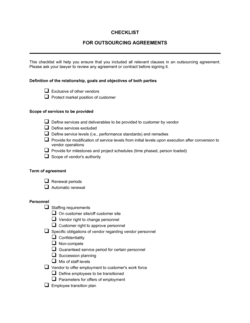
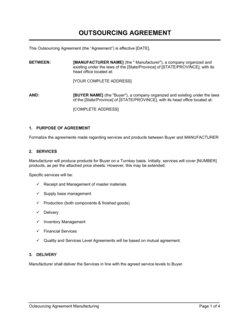
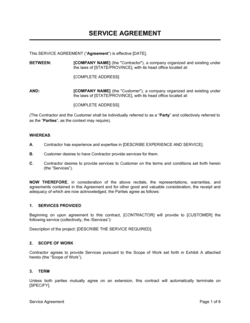
- Scope of Services
- The precise description of what the service provider is contracted to perform, used as the reference point for deliverable disputes.
- Service Level Agreement (SLA)
- A schedule within or attached to the outsourcing agreement that sets measurable performance standards — uptime percentages, response times, or error rates — and the remedies for missing them.
- Deliverable
- A specific output — report, software build, processed payroll run, or completed module — that the service provider must produce by a defined date.
- Step-In Right
- A contractual right allowing the client to take over the performance of the outsourced function directly, or appoint a replacement provider, when the vendor fails to meet its obligations.
- Transition Assistance
- A post-termination obligation requiring the outgoing provider to assist the client in transferring processes, data, and knowledge to an in-house team or new vendor.
- Subcontracting
- The provider's use of a third party to perform part of the contracted services — typically permitted only with the client's prior written consent.
- Intellectual Property Assignment
- A clause transferring ownership of any work product, tools, or software created by the provider specifically for the client to the client upon payment.
- Indemnification
- A contractual obligation by which one party agrees to compensate the other for losses, claims, or damages arising from a defined trigger event.
- Force Majeure
- A clause excusing a party from performance obligations when a specified extraordinary event — flood, pandemic, war — makes performance impossible or commercially impractical.
- Limitation of Liability
- A clause capping the maximum financial exposure of either party — typically expressed as a multiple of fees paid in the prior 12 months.
- Change Order
- A written amendment to the original scope of services, signed by both parties, that authorizes additional work and adjusts the fee accordingly.