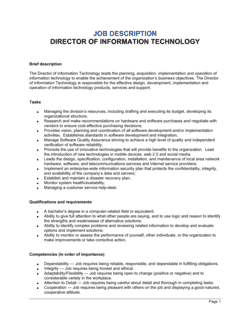
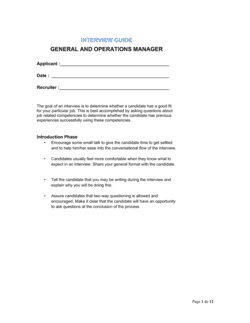
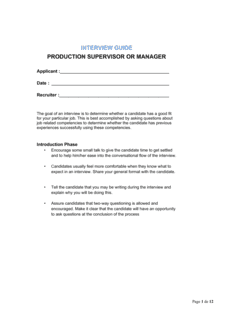
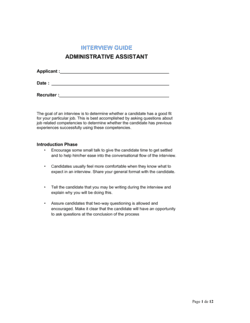
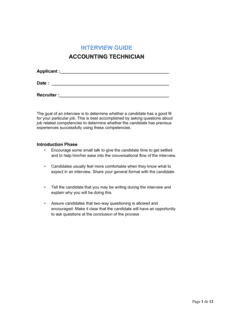
Interview Guide Director of Information Technology

Free to read β€’ Save or share with one click

FreeInterview Guide Director of Information Technology Template

At a glance

What it is
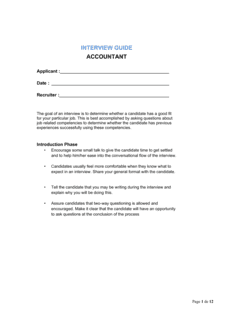
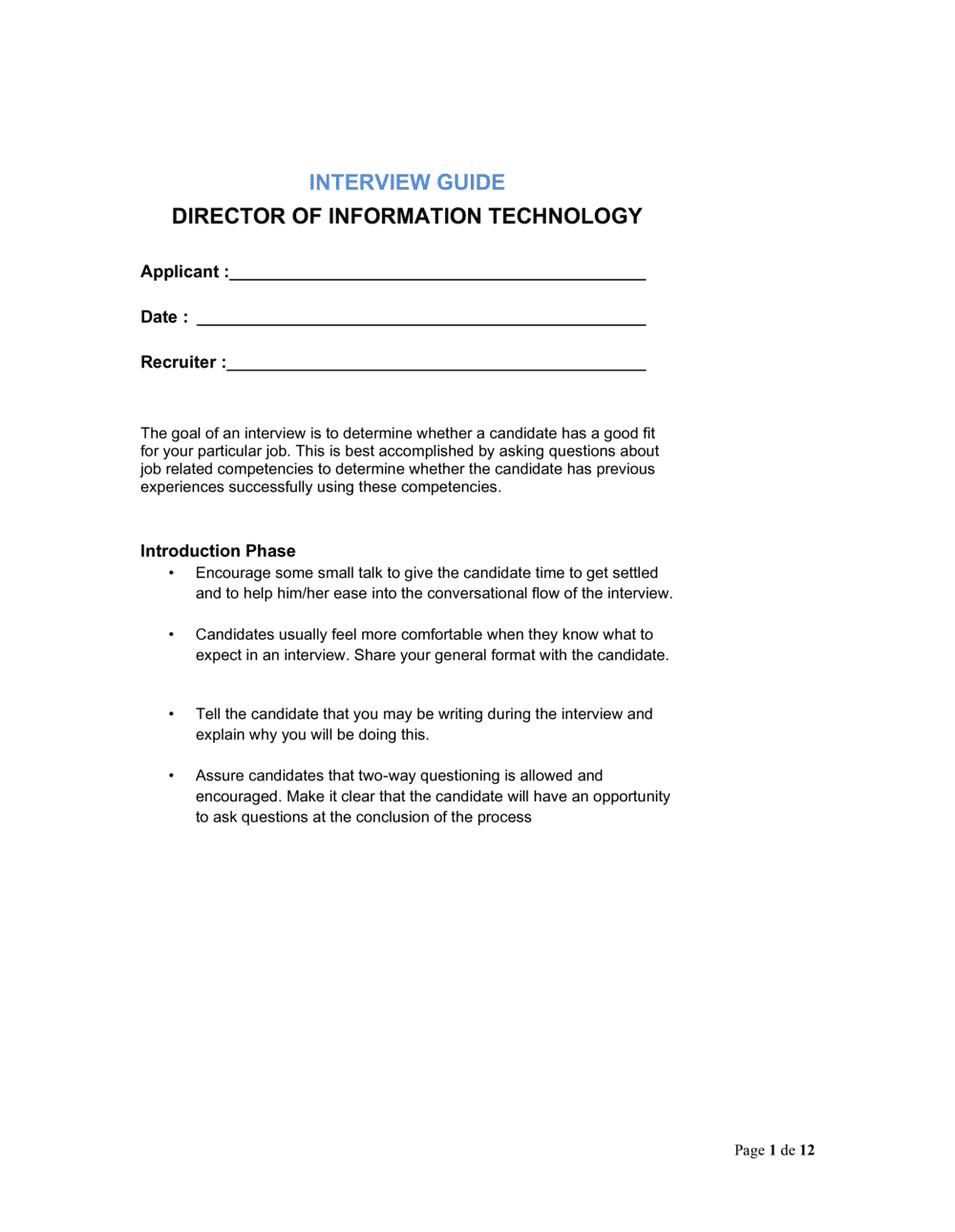
An Interview Guide for Director of Information Technology is a structured evaluation document that standardizes how hiring teams assess candidates for a senior IT leadership role. This free Word download provides pre-built interview questions, scoring rubrics, and competency-based evaluation criteria you can customize for your organization and use across all interviewers in a panel process.
When you need it
Use it when your organization is hiring, promoting into, or backfilling a Director of IT position and needs a consistent, defensible process across multiple interviewers, rounds, or hiring committee members.
What's inside
Role overview and scoring instructions, competency framework, behavioral and situational questions organized by domain (technical strategy, team leadership, security, vendor management, and budget), a candidate scoring matrix, and a post-interview debrief worksheet.

What is an Interview Guide for Director of Information Technology?

An Interview Guide for Director of Information Technology is a structured hiring document that equips interview panels with pre-built, competency-based questions, scoring rubrics, and evaluation criteria calibrated specifically for a senior IT leadership role. Rather than leaving each interviewer to improvise questions, the guide assigns specific competency domains β€” technical strategy, team leadership, cybersecurity, vendor management, and executive communication β€” to each panel member with anchored scoring scales and probing follow-ups. The result is a process that compares every candidate on the same dimensions, reduces the influence of interviewer bias, and produces a documented, defensible hiring decision.

Why You Need This Document

Hiring a Director of Information Technology without a structured guide exposes your organization to three concrete risks: inconsistent evaluation across interviewers who are effectively assessing different roles, a final decision driven by personal rapport rather than demonstrated competency, and no documented rationale if the decision is later challenged. At the director level, the cost of a mis-hire β€” conservative estimates put it at 50–200% of annual salary when you account for severance, re-recruitment, and productivity loss during the gap β€” makes a rigorous process an operational necessity rather than an HR formality. This template gives your panel a ready-to-use framework that covers every critical competency domain, forces independent scoring before group discussion, and retains the documentation your organization needs for both compliance and future hiring calibration.

Which variant fits your situation?

If your situation is…Use this template
Hiring a head of IT for a company under 100 employeesInterview Guide β€” IT Manager
Filling a VP of Technology or CTO role at a tech companyInterview Guide β€” Chief Technology Officer
Evaluating candidates for a cybersecurity leadership roleInterview Guide β€” Chief Information Security Officer
Conducting a first-round phone screen before the structured interviewPhone Screen Interview Guide
Assessing an internal candidate for promotion to IT directorPerformance Review β€” Senior IT Staff
Running a competency-based hiring process across multiple senior rolesInterview Scorecard Template
Onboarding a newly hired IT director after the selection process30-60-90 Day Plan β€” IT Director

Common mistakes to avoid

❌ Using the same guide for IT manager and IT director candidates

Why it matters: Director-level questions must probe strategic thinking, budget accountability, and board-level communication β€” not just technical execution. Manager-level questions produce answers that do not differentiate senior candidates.

Fix: Ensure at least 60% of questions in the guide explicitly require examples involving executive stakeholders, cross-functional influence, or multi-year planning horizons.

❌ Scoring independently after the group debrief instead of before

Why it matters: Post-discussion scoring is contaminated by anchoring bias β€” whoever speaks first in the debrief disproportionately shapes everyone else's ratings, effectively making the structured process unstructured.

Fix: Build the independent scoring step into the interview schedule itself: block 30 minutes for each interviewer to submit scores before any group communication about the candidate.

❌ Asking only technical questions and treating leadership as a soft add-on

Why it matters: A Director of IT's primary output is team performance and organizational alignment, not individual technical work. Candidates who score highest on technical questions often fail in the role due to leadership and communication gaps.

Fix: Assign equal weighting to technical strategy, team leadership, and stakeholder communication in the scoring matrix β€” typically 25% each, with the remaining 25% split across security and budget.

❌ Failing to document the rationale for the hire or no-hire decision

Why it matters: Undocumented decisions cannot be defended against a discrimination or bias claim, and offer no data to improve future searches. They also make onboarding harder β€” the new hire's manager has no record of what gaps were identified.

Fix: Complete the debrief worksheet with a minimum of three sentences of written rationale for every final recommendation, retained in the candidate file for at least three years.

The 9 key sections, explained

Role Overview and Interview Instructions

Competency Framework

Technical Strategy and Architecture Questions

Team Leadership and Talent Development Questions

Cybersecurity and Risk Management Questions

Vendor Management and Budget Questions

Stakeholder Communication and Influence Questions

Candidate Scoring Matrix

Post-Interview Debrief Worksheet

How to fill it out

  1. 1

    Customize the role overview for your organization

    Update the reporting line, team size, key accountabilities, and top three success metrics for your specific Director of IT role. Remove any responsibilities that don't apply to your organization's IT scope.

    πŸ’‘ Pull the key accountabilities directly from the finalized job description β€” this keeps the interview criteria and the job posting aligned.

  2. 2

    Select and assign competencies to interviewers

    Choose four to six competencies from the framework and assign each to a specific interviewer or interview round. Distribute so that no single interviewer covers more than two competencies in depth.

    πŸ’‘ Assign the cybersecurity competency to the interviewer with the most security knowledge, even if that person is not the hiring manager.

  3. 3

    Select eight to twelve questions per interview round

    Pick the questions most relevant to your organization's current IT challenges. For each competency, select one behavioral question and one situational question to give candidates multiple ways to demonstrate the skill.

    πŸ’‘ Prioritize questions tied to the problems the new hire will face in the first 90 days β€” generic questions produce generic answers.

  4. 4

    Set scoring anchors before the first interview

    For each competency, write a one-sentence description of what a score of 5 looks like for your organization specifically. Share these anchors with all interviewers before the first candidate.

    πŸ’‘ Calibrate scoring anchors with the hiring manager and one current IT director-level peer β€” their definitions of 'excellent' will differ more than you expect.

  5. 5

    Brief all interviewers on the process

    Send the completed guide to every interviewer at least 48 hours before the first interview. Hold a 20-minute calibration call to walk through the scoring rubric and assign sections.

    πŸ’‘ Record the calibration call for any interviewer who cannot attend live β€” a misaligned interviewer scoring on the wrong criteria undermines the whole process.

  6. 6

    Conduct interviews and complete individual scorecards independently

    Each interviewer completes their section of the scoring matrix within two hours of their interview, before any group discussion. Notes should reference specific candidate statements, not general impressions.

    πŸ’‘ Set a calendar block immediately after each interview for scoring β€” memory degrades rapidly, and notes written three hours later lack the specificity needed for defensible decisions.

  7. 7

    Run the structured debrief and document the outcome

    Follow the debrief worksheet agenda: share scores before discussion, address divergent ratings, identify reference check priorities, and capture the final recommendation with written rationale.

    πŸ’‘ If the group cannot reach a clear hire/no-hire decision, identify the specific open question β€” typically a single competency gap β€” and design a targeted reference check question to resolve it.

  8. 8

    File the completed guide for compliance and calibration

    Retain the fully scored guide, debrief notes, and final recommendation for at least three years. Use completed guides from successful hires as calibration benchmarks for the next IT director search.

    πŸ’‘ Redact candidate names before using past guides for calibration β€” evaluating the quality of your questions without anchoring on whether that specific candidate worked out.

Frequently asked questions

What is an interview guide for a Director of Information Technology?

An interview guide for a Director of IT is a structured document that gives hiring teams pre-built, competency-based questions, scoring rubrics, and evaluation criteria specifically calibrated for a senior IT leadership role. It ensures every candidate is assessed on the same dimensions β€” technical strategy, team leadership, cybersecurity, vendor management, and stakeholder communication β€” by every interviewer in the process, making the hiring decision more consistent and defensible.

What competencies should a Director of IT interview assess?

A Director of IT interview should cover five core competency domains: technology strategy and architecture, team leadership and talent development, cybersecurity and risk management, vendor and contract management, and executive communication and stakeholder influence. Budget accountability is often incorporated into either the vendor management or strategy domain depending on the organization's structure. Weighting each competency in the scoring matrix ensures the final decision reflects the role's actual priorities.

How is a Director of IT interview different from an IT manager interview?

Director-level interviews focus on multi-year strategic thinking, budget ownership, board-level communication, and organizational design β€” not day-to-day technical execution. Questions should require examples involving executive stakeholders, capital allocation decisions, and cross-functional influence. An IT manager interview appropriately focuses on team coordination, project delivery, and technical problem-solving within a defined scope.

How many interviewers should participate in a Director of IT hiring process?

Three to five interviewers is the standard range for a director-level IT hire. A typical panel includes the hiring manager (CEO, COO, or CFO), one or two internal IT leaders or technical peers, an HR representative, and an executive stakeholder from a major IT-dependent business unit. More than five interviewers adds diminishing returns and creates scheduling friction that can cause strong candidates to withdraw.

What is the STAR method and should I require candidates to use it?

STAR stands for Situation, Task, Action, Result β€” a structured response format for behavioral interview questions. You should not require candidates to explicitly state each component, but interviewers should use STAR as a probing framework: if a candidate gives a vague answer, follow up to extract the specific situation, the action they personally took, and the measurable result. Responses that lack a concrete result are generally not scoreable at a 4 or 5 level.

How should I score responses in a structured IT director interview?

Use a 1–5 rubric for each competency with anchored descriptions written before the first interview: 1 = no relevant experience or significant gaps, 3 = meets expectations with specific examples, 5 = exceeds expectations with quantified, complex, or large-scale examples. Each interviewer completes scores independently within two hours of the interview. Weighted averages across competencies produce the overall candidate score for comparison.

Should the interview guide include questions about specific technologies?

Technology-specific questions are appropriate for a brief technical screen or a dedicated technical interviewer, but they should not dominate a Director of IT guide. At the director level, the relevant question is not whether a candidate has used Azure or AWS, but whether they can make a sound build-vs-buy decision, manage a multi-cloud vendor relationship, and align infrastructure choices to a 3-year business strategy.

How long should a Director of IT interview process take?

A thorough Director of IT process typically runs three to four rounds over two to three weeks: a recruiter phone screen (30 minutes), a hiring manager interview (60 minutes), a panel interview covering technical and leadership competencies (90–120 minutes), and a final executive or board-level conversation (45–60 minutes). Extending beyond four weeks significantly increases the risk of losing top candidates to competing offers.

What reference check questions should follow the structured interview?

Reference checks for a Director of IT should focus on the competency gaps or mixed signals surfaced in the interview β€” not generic questions about strengths and weaknesses. Targeted examples: 'We observed that [CANDIDATE] described their approach to vendor negotiation as [APPROACH] β€” how would you characterize their vendor management style?' and 'How did [CANDIDATE] handle a significant technology failure or security incident? What did they do well and what would you coach them on?'

How this compares to alternatives

vs Generic IT Manager Interview Guide

An IT manager guide assesses project delivery, team coordination, and technical execution within a defined scope. A Director of IT guide adds strategic planning, budget ownership, board communication, and organizational design. Using the manager guide for a director search produces candidates who can execute but cannot lead the function at the required level.

vs Job Description β€” Director of Information Technology

A job description defines the requirements and responsibilities used to attract candidates. An interview guide operationalizes those requirements into scored questions and evaluation criteria used to select among them. Both documents are needed: the job description fills the pipeline; the interview guide makes the decision.

vs Performance Review Template β€” IT Director

A performance review evaluates an incumbent employee against goals and behaviors after they are in the role. An interview guide evaluates external candidates before hire. The competency framework is closely related β€” organizations that align both documents create continuity from selection through performance management.

vs Interview Scorecard Template

An interview scorecard is a generic rating tool that can be applied to any role. A Director of IT interview guide includes the scorecard as one section but also provides the full question bank, competency framework, and debrief worksheet specific to the IT leadership context. For a critical senior hire, the role-specific guide produces more consistent and defensible decisions than a blank scorecard.

Industry-specific considerations

Financial Services

Regulatory compliance questions (SOX, PCI-DSS) carry higher weight; candidates must demonstrate experience managing audits and communicating control gaps to boards.

Healthcare

HIPAA compliance, EHR system management, and clinical system uptime standards are required competency areas alongside standard IT leadership domains.

Manufacturing

OT/IT convergence, plant-floor network security, and ERP integration experience are critical evaluation criteria often absent from general IT director guides.

Professional Services

Client data security, billable system uptime, and the ability to support a geographically distributed workforce on a constrained IT budget are primary differentiators.

Template vs pro β€” what fits your needs?

PathBest forCostTime
Use the templateHR teams and hiring managers conducting a Director of IT search with an internal panelFree1–2 hours to customize and calibrate
Template + professional reviewOrganizations conducting their first senior IT hire or adding a competency-based process to an existing panel$300–$800 for an HR consultant or I/O psychologist review2–5 business days
Custom draftedExecutive search firms or regulated industries requiring a fully validated, legally audited interview process$2,000–$8,000 for a custom competency model and validated interview protocol3–6 weeks

Glossary

Structured Interview
An interview format in which every candidate is asked the same pre-determined questions in the same order, rated against consistent scoring criteria.
Behavioral Question
A question that asks the candidate to describe a specific past situation to predict future behavior β€” typically framed as 'Tell me about a time when...'
Situational Question
A hypothetical scenario question that asks how the candidate would handle a specific future challenge in the role.
Competency Framework
A defined set of skills, behaviors, and knowledge areas that a role requires, used as the basis for structuring interview questions and evaluating responses.
STAR Method
A response format for behavioral questions: Situation, Task, Action, Result β€” used by interviewers to probe and by candidates to structure answers.
Scoring Rubric
A predefined scale (typically 1–5) with anchored descriptions for each score level, used to rate candidate responses consistently across interviewers.
Panel Interview
An interview format in which multiple interviewers assess the same candidate simultaneously or in sequence, each covering assigned competency domains.
IT Governance
The framework of policies, processes, and accountability structures that ensure an organization's IT investments and operations align with business objectives.
Vendor Management
The process of selecting, contracting, overseeing, and renewing relationships with external technology suppliers and service providers.
Technology Roadmap
A multi-year plan that maps planned technology investments, infrastructure changes, and capability-building initiatives to business goals and timelines.

Part of your Business Operating System

This document is one of 3,000+ business & legal templates included in Business in a Box.

  • Fill-in-the-blanks β€” ready in minutes
  • Compatible with all office suites
  • Export to PDF and share electronically

Create your document in 3 simple steps.

From template to signed document β€” all inside one Business Operating System.
1
Download or open template

Access over 3,000+ business and legal templates for any business task, project or initiative.

2
Edit and fill in the blanks with AI

Customize your ready-made business document template and save it in the cloud.

3
Save, Share, Send, Sign

Share your files and folders with your team. Create a space of seamless collaboration.

Save time, save money, and create top-quality documents.

β˜…β˜…β˜…β˜…β˜…

"Fantastic value! I'm not sure how I'd do without it. It's worth its weight in gold and paid back for itself many times."

Managing Director Β· Mall Farm
Robert Whalley
Managing Director, Mall Farm Proprietary Limited
β˜…β˜…β˜…β˜…β˜…

"I have been using Business in a Box for years. It has been the most useful source of templates I have encountered. I recommend it to anyone."

Business Owner Β· 4+ years
Dr Michael John Freestone
Business Owner
β˜…β˜…β˜…β˜…β˜…

"It has been a life saver so many times I have lost count. Business in a Box has saved me so much time and as you know, time is money."

Owner Β· Upstate Web
David G. Moore Jr.
Owner, Upstate Web

Run your business with a system β€” not scattered tools

Stop downloading documents. Start operating with clarity. Business in a Box gives you the Business Operating System used by over 250,000 companies worldwide to structure, run, and grow their business.

Free Forever PlanΒ Β·Β No credit card required