How to Sign an NDA Agreement

Free to read β€’ Save or share with one click

FreeHow to Sign an NDA Agreement Template

At a glance

What it is
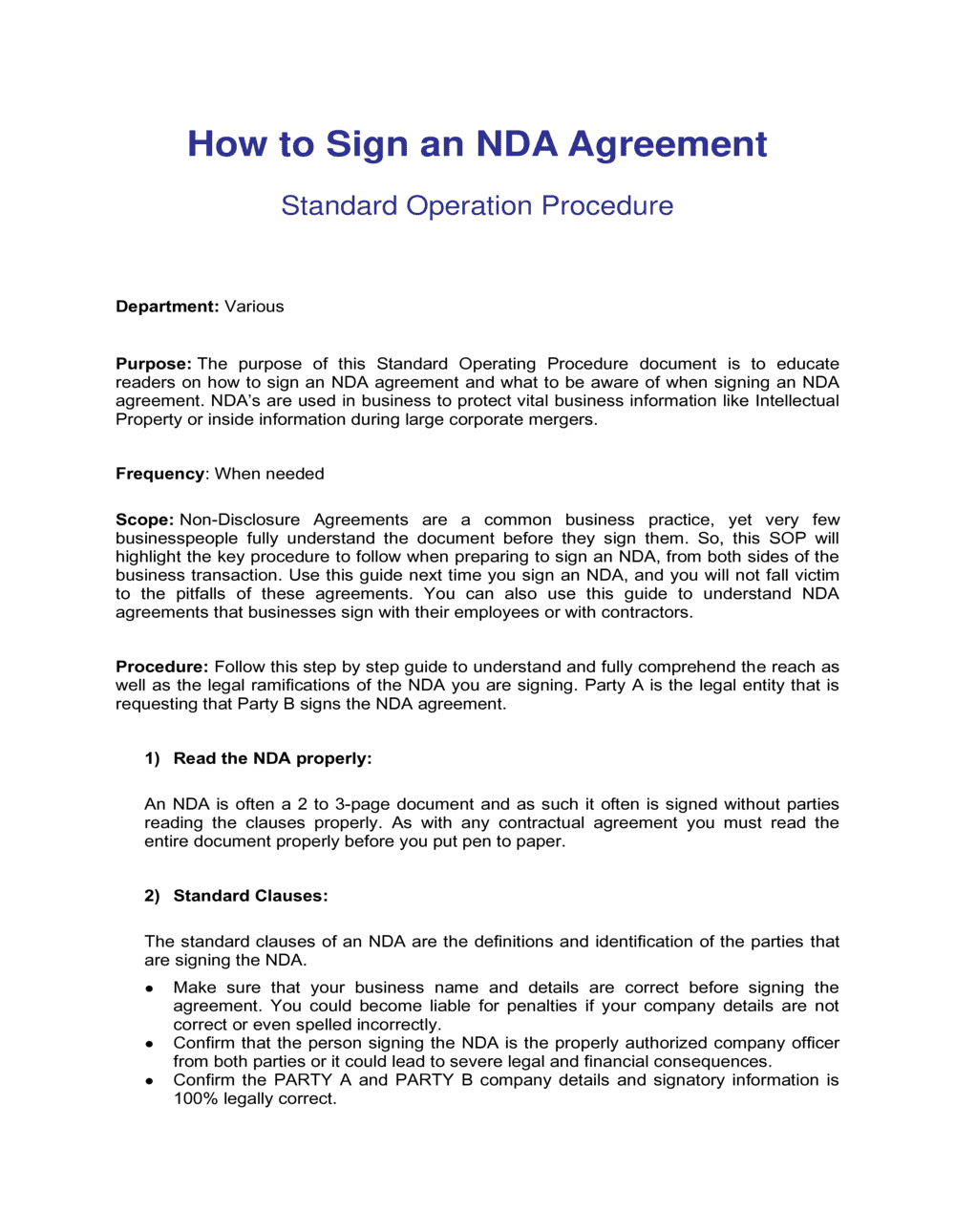
A How To Sign An NDA Agreement guide is an operational document that walks individuals and businesses through the step-by-step process of reviewing, negotiating, and executing a non-disclosure agreement correctly. This free Word download gives you a structured checklist and explanation of every key clause to examine before you sign, helping you avoid common pitfalls that create unintended obligations.
When you need it
Use it whenever you are presented with an NDA by a potential employer, business partner, investor, or vendor β€” or when you need to onboard team members to a standard signing procedure. It is especially valuable when you are signing as an individual and have no in-house counsel to guide the review.
What's inside
A pre-signature review checklist, plain-English explanations of each standard NDA clause, a list of red-flag terms to watch for, guidance on what can typically be negotiated, and instructions for proper execution and record-keeping after signing.

What is a How To Sign An NDA Agreement guide?

A How To Sign An NDA Agreement guide is an operational document that walks individuals and businesses through the structured process of reviewing, evaluating, and properly executing a non-disclosure agreement. Rather than being the NDA itself, it functions as a step-by-step companion that explains what each standard NDA clause means in plain language, which terms are negotiable, which red flags to watch for before signing, and how to handle the agreement correctly after execution. It is designed for anyone who regularly receives NDAs from employers, partners, clients, or investors and needs a repeatable framework for reviewing them consistently.

Why You Need This Document

Signing an NDA without fully understanding its terms can lock you into obligations that restrict your work, expose you to liability for inadvertent disclosures, or bind you to perpetual confidentiality duties you never intended to accept. Common oversights β€” like missing a residuals clause, accepting an undefined term, or failing to record an expiry date β€” create real legal exposure that surfaces only after something goes wrong. Without a structured review process, different people in your organization may handle NDAs inconsistently, with some signing immediately and others flagging terms that should have been caught earlier. This template gives you a reusable checklist that eliminates those gaps, ensures every NDA is reviewed against the same standard, and creates a documented record that you approached the process with due care.

Which variant fits your situation?

If your situation is…Use this template
Signing an NDA as an individual employee or contractorHow To Sign An NDA Agreement
Drafting a one-way NDA to protect your own confidential informationNon-Disclosure Agreement (One-Way)
Entering a mutual NDA where both parties share confidential informationMutual Non-Disclosure Agreement
Protecting confidential information shared with a prospective business partnerBusiness Partnership NDA
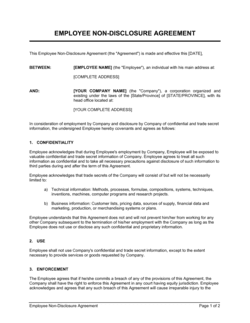
Onboarding employees who will access trade secrets or proprietary systemsEmployee Non-Disclosure Agreement
Sharing confidential information before a potential acquisition or mergerM&A Non-Disclosure Agreement
Engaging a freelancer or vendor who will access proprietary processesIndependent Contractor NDA

Common mistakes to avoid

❌ Signing without reading the confidential information definition

Why it matters: A poorly scoped definition can obligate you to protect information you already knew, information that is publicly available, or information so broadly defined it covers anything the disclosing party later claims is confidential.

Fix: Read the definition clause in full, verify the carve-outs are present, and request amendments if prior knowledge or publicly available information is not explicitly excluded.

❌ Overlooking a residuals clause

Why it matters: A residuals clause permits the receiving party to use anything retained in unaided human memory, which β€” from the disclosing party's perspective β€” can hollow out the NDA's entire purpose.

Fix: If you are the disclosing party, identify and remove or narrow residuals clauses before signing. If you are the receiving party and the clause favors you, ensure you understand what it does and does not permit.

❌ Accepting a perpetual or undefined term

Why it matters: An NDA with no fixed end date creates an indefinite obligation to protect general business information β€” a standard that is difficult to operationalize and may be unenforceable in some jurisdictions.

Fix: Negotiate a fixed term of two to five years for general confidential information, reserving perpetual protection only for explicitly identified trade secrets.

❌ Filing the NDA without recording the expiry date

Why it matters: Without a calendar reminder, the return-or-destruction obligation passes unnoticed, leaving confidential materials in your possession after the agreement has lapsed β€” creating ongoing breach exposure.

Fix: Record the effective date, term, and expiry date in your contracts register immediately after signing, and set a 30-day advance reminder to initiate the return or destruction process.

❌ Signing on behalf of a company without verifying authority

Why it matters: If you sign an NDA in a company's name without the authority to do so, you may be personally liable for the obligations β€” and the NDA may be unenforceable by the company.

Fix: Confirm your signing authority before execution. If in doubt, have a director or authorized officer countersign, or obtain a board resolution authorizing execution.

❌ Not briefing internal recipients before sharing information

Why it matters: An NDA binds the signatory, but confidential information leaked by an employee or contractor who was never told about the NDA still results in the signing party's liability.

Fix: Before sharing any protected information, brief all recipients in writing on the NDA scope, document that briefing, and ensure they are bound by equivalent obligations.

The 10 key sections, explained

Purpose and Scope Statement

Definition of Confidential Information

Obligations of the Receiving Party

Permitted Disclosures

Term and Duration

Exclusions and Carve-Outs

Return or Destruction of Confidential Information

Remedies and Injunctive Relief

Governing Law and Dispute Resolution

Signature Block and Effective Date

How to fill it out

  1. 1

    Identify the type of NDA and the parties

    Determine whether the NDA is one-way or mutual. Confirm the full legal name of each party β€” not a trade name or abbreviation β€” and verify that the person presenting the NDA has authority to sign on the organization's behalf.

    πŸ’‘ For any company, search the corporate registry to confirm the legal entity name matches exactly what appears in the signature block.

  2. 2

    Read the definition of confidential information in full

    Do not skim this clause. Check what is included, what is excluded, and whether any carve-outs apply to information you already possess. Note whether the definition requires information to be marked 'Confidential' in writing or whether verbal disclosures are also covered.

    πŸ’‘ If verbal disclosures are covered, ask the disclosing party to confirm in writing within 24–48 hours of any oral disclosure β€” or negotiate this requirement into the agreement.

  3. 3

    Check the purpose clause and permitted uses

    Confirm the NDA is scoped to a specific transaction or purpose β€” not open-ended. Verify that the permitted use matches what you actually intend to do with the information.

    πŸ’‘ If the purpose clause is vague or covers 'any future business dealings,' narrow it to the specific project or evaluation before signing.

  4. 4

    Review the term and note the expiry date

    Record the start date, the term length, and the calculated expiry date in your calendar. Note whether any obligations β€” particularly for trade secrets β€” survive beyond the stated term.

    πŸ’‘ Set a calendar reminder 30 days before expiry to initiate return or destruction of materials if the relationship is not continuing.

  5. 5

    Flag unusual or one-sided clauses

    Look specifically for residuals clauses, perpetual terms, unreasonably broad definitions of confidential information, or restrictions on your ability to work in your field. These are the four most common red flags that warrant negotiation or refusal.

    πŸ’‘ A residuals clause can effectively neutralize an NDA for any information a recipient holds in memory β€” if one appears, request its removal or narrowing.

  6. 6

    Sign using the correct name and title

    If signing on behalf of a company, use your full legal name and your authorized title. If signing as an individual, sign with your legal name exactly as it appears on government-issued ID.

    πŸ’‘ For high-stakes NDAs, use a witnessed or notarized signature block even when not required β€” it eliminates later disputes about identity or authority.

  7. 7

    Retain a fully executed copy

    Store the signed NDA with both parties' signatures in a secure, searchable location β€” such as a contracts folder with naming convention [PARTY]-NDA-[YYYY-MM-DD]. Never rely solely on an email thread as your record.

    πŸ’‘ Use Business in a Box's document storage or a dedicated contracts tool to ensure the executed copy is retrievable and linked to the relevant project or relationship.

  8. 8

    Brief anyone who receives the information under the NDA

    Before sharing any confidential information with employees, contractors, or advisors, brief them on the NDA's scope and limitations. Document that briefing in writing so you can demonstrate due diligence if a breach ever occurs.

    πŸ’‘ A short internal memo summarizing the NDA terms β€” not the full document β€” is often more effective than asking staff to read a full legal agreement.

Frequently asked questions

What does it mean to sign an NDA?

Signing an NDA means you are agreeing to keep certain specified information confidential and not to use or disclose it outside the purposes defined in the agreement. Once signed, the NDA creates a legally binding obligation β€” breach can result in injunctive relief, damages, or both. Understanding exactly what you are agreeing to protect, for how long, and under what circumstances is critical before you sign.

Can I negotiate an NDA before signing it?

Yes, most NDAs are negotiable, particularly around the definition of confidential information, the term, the governing jurisdiction, and unusual clauses like residuals provisions. The party presenting the NDA may not always agree to changes, but you can always request amendments in writing. For employment NDAs, the practical room to negotiate may be smaller β€” but reviewing and understanding the terms is still important regardless of whether you can change them.

What happens if I breach an NDA I signed?

Breach of an NDA can result in the disclosing party seeking an emergency injunction to stop further disclosure, filing a lawsuit for compensatory damages based on the harm caused, and in some cases seeking punitive damages if the breach was willful. Many NDAs also include a clause acknowledging that monetary damages are insufficient, making injunctive relief easier to obtain. The severity of consequences depends on the value of the information disclosed and the specific terms of the agreement.

Do I need a lawyer to sign an NDA?

For routine NDAs covering straightforward business discussions, a thorough self-review using a structured guide is typically sufficient. You should consider involving a lawyer when the NDA is unusually long or complex, when it restricts your ability to work in your field for an extended period, when it covers particularly sensitive IP or trade secrets, or when the other party is a large organization with a legal team. A one-hour attorney review typically costs $150–$400 and is worthwhile for high-stakes situations.

What is the difference between a one-way and a mutual NDA?

A one-way NDA protects information flowing in only one direction β€” the disclosing party shares confidential information and the receiving party is bound not to disclose it. A mutual NDA treats both parties simultaneously as disclosing and receiving parties, protecting information shared in both directions. Use a mutual NDA when both sides will share proprietary information, such as in a joint venture exploration or a potential acquisition discussion.

How long does an NDA last?

The standard term for a business NDA is one to five years from the effective date. Obligations relating specifically to trade secrets often survive the stated term for as long as the information qualifies as a trade secret under applicable law. Employment NDAs sometimes specify post-termination obligations of one to two years. Always check the term clause and note the expiry date β€” and watch for NDAs that specify no end date at all.

What information is NOT covered by an NDA?

Standard NDA carve-outs exclude information that is already publicly known at the time of disclosure, information the receiving party already possessed before signing, information independently developed by the receiving party without reference to the disclosed information, and information received from a third party who was not bound by any confidentiality restriction. These carve-outs are non-negotiable in most jurisdictions and should appear in any well-drafted NDA.

Is an NDA enforceable if I signed it under pressure?

Courts in most jurisdictions will enforce a freely entered NDA even if signing was a condition of employment, a business meeting, or a deal. However, NDAs signed under duress β€” threats, fraud, or no opportunity to review β€” may be challenged on enforceability grounds. The practical lesson is to always request reasonable time to review an NDA before signing and to document that you were given that opportunity.

What should I do with the NDA after signing it?

Store the fully executed copy β€” with both parties' signatures β€” in a named, searchable location linked to the relevant project or relationship. Record the effective date and expiry date in your contracts register and set a 30-day advance reminder before expiry. Brief anyone internally who will receive information under the NDA, and document that briefing. Never treat the NDA as filed-and-forgotten β€” active compliance requires knowing it exists and when it ends.

How this compares to alternatives

vs Non-Disclosure Agreement (NDA)

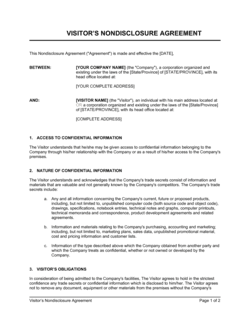
The NDA itself is the binding legal contract; the How To Sign An NDA guide is an operational companion document that helps the signing party understand, review, and execute it correctly. You need the NDA to create the obligation and the guide to ensure you sign it with full awareness of its terms. Use both together β€” the guide first, then the NDA.

vs Mutual Non-Disclosure Agreement

A Mutual NDA protects information flowing in both directions between two parties; a standard one-way NDA only protects the disclosing party's information. The How To Sign guide applies to both types, but users reviewing a mutual NDA must check that the protections and obligations are balanced across both sides β€” not heavier on one party.

vs Confidentiality Agreement

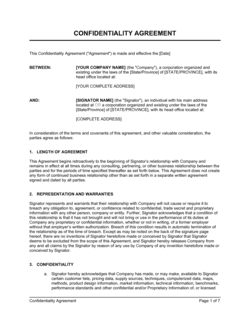
A Confidentiality Agreement is functionally equivalent to a one-way NDA and the terms are often used interchangeably. The primary distinction is context: 'confidentiality agreement' is more common in employment and vendor settings, while 'NDA' is typical in partnership, investment, and M&A contexts. The signing process and the red flags to review are the same for both.

vs Independent Contractor Agreement

An Independent Contractor Agreement often includes a built-in confidentiality clause, which may make a separate NDA unnecessary. However, the embedded clause is typically shorter and less detailed than a standalone NDA. If the contractor will access sensitive IP, a separate NDA provides stronger and more clearly defined protection and is worth executing alongside the main contract.

Industry-specific considerations

Technology / SaaS

NDAs cover source code, product roadmaps, and proprietary algorithms β€” frequently signed before any technical due diligence, API access, or integration discussion.

Professional Services

Consultants and advisors regularly sign client NDAs before receiving financial data, operational processes, or client lists needed to scope an engagement.

Healthcare / MedTech

NDAs protect clinical trial data, device specifications, and patient data handling processes β€” often required before any vendor or research partner discussion begins.

Manufacturing

Suppliers and partners sign NDAs to access product designs, materials formulas, and production methods β€” frequently combined with IP assignment clauses for custom tooling.

Financial Services

NDAs are required before sharing proprietary trading strategies, client portfolios, or financial models β€” and often include specific data security obligations tied to regulatory requirements.

Creative and Marketing Agencies

Agencies sign client NDAs before receiving brand strategy documents, unreleased campaign assets, and market research β€” and should ensure permitted use aligns with the agency's workflow.

Template vs pro β€” what fits your needs?

PathBest forCostTime
Use the templateIndividuals and small businesses reviewing routine business or employment NDAs with standard termsFree30–60 minutes per NDA reviewed
Template + professional reviewNDAs covering high-value IP, long restriction periods, or unusual clauses like residuals or non-compete provisions$150–$400 for a one-hour attorney review1–2 business days
Custom draftedComplex M&A, cross-border agreements, or NDAs that form the basis of a significant commercial relationship$500–$2,000+3–7 business days

Glossary

Non-Disclosure Agreement (NDA)
A legally binding contract in which one or both parties agree not to share or use specified confidential information outside the purposes defined in the agreement.
Confidential Information
The defined category of information protected by the NDA β€” typically including trade secrets, financial data, product roadmaps, and customer lists.
Disclosing Party
The party that shares confidential information under the NDA and whose information is being protected.
Receiving Party
The party that receives confidential information and is bound by the obligation not to disclose or misuse it.
Mutual NDA
An NDA where both parties simultaneously act as disclosing and receiving parties, each protecting the other's confidential information.
One-Way NDA
An NDA where only one party discloses confidential information and the other party is bound by the non-disclosure obligation.
Term (Duration)
The period during which the NDA's obligations remain in force β€” typically one to five years from the date of signing, though some confidentiality obligations survive termination indefinitely.
Residuals Clause
A provision that permits the receiving party to use confidential information retained in unaided human memory, effectively creating a significant carve-out from the NDA's restrictions.
Return or Destruction of Information
A clause requiring the receiving party to return or certifiably destroy all confidential materials upon termination of the agreement or upon request.
Injunctive Relief
A court order requiring a party to stop an action immediately β€” NDA agreements typically state that breach entitles the disclosing party to seek injunctive relief without proving monetary damages.
Carve-Out
An explicit exception to the confidentiality obligation β€” such as information already in the public domain, independently developed by the receiving party, or required to be disclosed by law.

Part of your Business Operating System

This document is one of 3,000+ business & legal templates included in Business in a Box.

  • Fill-in-the-blanks β€” ready in minutes
  • Compatible with all office suites
  • Export to PDF and share electronically

Create your document in 3 simple steps.

From template to signed document β€” all inside one Business Operating System.
1
Download or open template

Access over 3,000+ business and legal templates for any business task, project or initiative.

2
Edit and fill in the blanks with AI

Customize your ready-made business document template and save it in the cloud.

3
Save, Share, Send, Sign

Share your files and folders with your team. Create a space of seamless collaboration.

Save time, save money, and create top-quality documents.

β˜…β˜…β˜…β˜…β˜…

"Fantastic value! I'm not sure how I'd do without it. It's worth its weight in gold and paid back for itself many times."

Managing Director Β· Mall Farm
Robert Whalley
Managing Director, Mall Farm Proprietary Limited
β˜…β˜…β˜…β˜…β˜…

"I have been using Business in a Box for years. It has been the most useful source of templates I have encountered. I recommend it to anyone."

Business Owner Β· 4+ years
Dr Michael John Freestone
Business Owner
β˜…β˜…β˜…β˜…β˜…

"It has been a life saver so many times I have lost count. Business in a Box has saved me so much time and as you know, time is money."

Owner Β· Upstate Web
David G. Moore Jr.
Owner, Upstate Web

Run your business with a system β€” not scattered tools

Stop downloading documents. Start operating with clarity. Business in a Box gives you the Business Operating System used by over 250,000 companies worldwide to structure, run, and grow their business.

Free Forever PlanΒ Β·Β No credit card required