Product Roadmap Templates

4.7from 280+ reviews Trusted by 20M+ businesses

Plan, align, and execute every stage of your product lifecycle with the right roadmap for your team.

WordEditable onlinePDF10+ product management templates

Other Product Management categories

250K+Clients
20M+Free users
20+Years
190+Countries
10,000+Law firms
50M+Downloads

Trusted across review platforms

  • Capterra★★★★☆4.649 reviews
  • G2★★★★☆4.713 reviews
  • GetApp★★★★☆4.649 reviews
  • Google Play★★★★☆4.6179 ratings
  • Google Reviews★★★★☆4.567 reviews

Related categories

Frequently asked questions

What should a product roadmap include?
A product roadmap should include a product vision statement, measurable goals, a prioritized list of features or initiatives, a timeline with milestones, owner assignments, and a record of known dependencies or risks. The level of detail varies by audience — engineering teams need task-level specificity, while executive roadmaps typically stay at the milestone or theme level.
How is a product roadmap different from a project plan?
A project plan is a time-bounded document that manages the tasks, resources, and deadlines for a single deliverable. A product roadmap is a living strategic document that evolves across multiple releases and planning cycles. They serve different purposes: the roadmap communicates direction and priorities; the project plan manages execution of individual items within it.
How often should a product roadmap be updated?
Most product teams review and update their roadmap monthly at a minimum, with a more thorough revision at the end of each quarter. Roadmaps should also be updated whenever strategy shifts materially, a major dependency changes, or a significant new customer insight emerges. A roadmap that hasn't changed in six months is usually not being used.
What is a minimum viable product (MVP) framework?
An MVP framework is a structured document that defines the smallest set of features needed to test a core product hypothesis with real users. It captures the problem being solved, the riskiest assumptions, the test criteria, and what a validated result looks like. Using an MVP framework prevents teams from over-building before they have evidence of product-market fit.
Do I need a product roadmap template or a product brief?
Start with a product brief to define the problem, target user, and success criteria before any development begins. Build the product roadmap once that brief is validated — the roadmap translates the brief's goals into a sequenced plan of features and milestones. Think of the brief as the "why" and the roadmap as the "what and when."
Who owns the product roadmap?
The product manager typically owns the roadmap and is responsible for maintaining, updating, and communicating it. However, roadmap input should come from engineering, design, sales, customer success, and executive leadership to reflect the full range of constraints and priorities. A roadmap owned by one function without cross-functional input is frequently out of sync with reality.
Can I use a product roadmap template for a software product?
Yes. The core components of a product roadmap — vision, goals, initiatives, timeline, owners, and dependencies — apply equally to software products, physical products, and services. Software-specific roadmaps often add sprint alignment, technical debt buckets, and API or platform dependencies, all of which can be incorporated into any of the templates in this folder.
What is product-market fit and how do I know I've reached it?
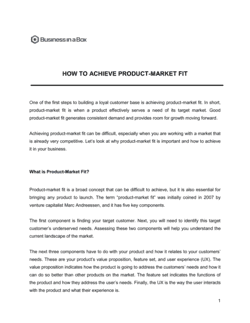
Product-market fit is the point at which a product reliably satisfies a strong market demand — typically evidenced by organic growth, low churn, and unprompted customer referrals. Quantitative signals include retention curves that flatten, Net Promoter Scores above 40, and conversion rates that improve without increased spend. The How to Achieve Product-Market Fit template in this folder provides a structured framework for measuring and tracking these signals.

Product Roadmap vs. related documents

Product Roadmap vs. Product brief

A product brief defines the problem to solve, the target user, and the success criteria before any development work starts. A product roadmap translates that brief into a timeline of features, milestones, and owners. Write the brief first; build the roadmap from it.

Product Roadmap vs. Product launch plan

A product roadmap spans the full development journey — from concept through multiple releases. A product launch plan focuses narrowly on the activities, owners, and deadlines needed to get one specific release into market. Teams typically run both documents simultaneously during a launch cycle.

Product Roadmap vs. Project plan

A project plan manages a specific, time-bounded set of tasks with a defined end date. A product roadmap is a living document that evolves over many releases and cycles. A product roadmap communicates strategic direction; a project plan manages tactical execution of a single initiative within it.

Product Roadmap vs. Product strategy sheet

A product strategy sheet articulates the vision, target market, and competitive differentiation at a high level — usually on one page for leadership alignment. A product roadmap operationalizes that strategy into a sequenced set of deliverables with owners and timelines. Both documents are needed; the strategy sheet feeds the roadmap.

Key clauses every Product Roadmap contains

Effective product roadmaps and planning documents share a common set of components regardless of the specific format or stage.

  • Product vision statement. A one- or two-sentence description of the long-term outcome the product is designed to deliver.
  • Goals and success metrics. Quantified objectives — revenue targets, adoption rates, retention benchmarks — that define what success looks like.
  • Feature or initiative list. The prioritized set of deliverables, features, or capabilities planned for each time horizon.
  • Timeline and milestones. The sequencing of work across weeks, quarters, or phases, with named gates or release dates.
  • Owner assignments. Named individuals or teams responsible for each initiative, ensuring accountability across functions.
  • Dependencies and risks. Cross-functional dependencies, technical blockers, or market risks that could affect delivery.
  • Stakeholder alignment notes. A record of who reviewed and approved the roadmap, avoiding misaligned expectations downstream.
  • Review cadence. The agreed schedule for roadmap reviews and updates — typically monthly or at the end of each sprint cycle.

How to write a product roadmap

A useful product roadmap takes about 2–4 hours to draft if the underlying strategy is clear. These steps apply whether you're planning a first release or a multi-year product line.

  1. 1

    Define the product vision and goals

    Write a one-sentence vision and three to five measurable goals that the roadmap must serve — without these, prioritization has no anchor.

  2. 2

    Identify your audience

    Decide whether this roadmap is for engineering teams (detailed), executives (milestone-level), or customers (outcome-focused), and adjust the level of detail accordingly.

  3. 3

    Gather and prioritize initiatives

    Collect feature requests, strategic bets, and technical debt items, then rank them by customer impact, business value, and development cost.

  4. 4

    Choose a time horizon

    Set a planning window — typically 3 months for near-term delivery, 12 months for strategic alignment, 3 years for vision communication.

  5. 5

    Assign owners and timelines

    Map each initiative to a named owner and a realistic delivery window, accounting for team capacity and known dependencies.

  6. 6

    Identify risks and dependencies

    Flag any cross-team dependencies, third-party requirements, or market assumptions that could shift priorities mid-cycle.

  7. 7

    Present, validate, and publish

    Walk key stakeholders through the draft, capture feedback, make final adjustments, and store the approved version somewhere the whole team can access.

  8. 8

    Schedule regular reviews

    Set a monthly or quarterly review cadence to update priorities, retire completed items, and reflect changes in strategy or market conditions.

At a glance

What it is
A product roadmap is a strategic planning document that communicates the direction, priorities, and timeline for a product's development and launch. It aligns product teams, stakeholders, and leadership around a shared plan of record.
When you need one
Any time you're launching a new product, planning a major release, or communicating product direction to internal teams or external stakeholders.

Which Product Roadmap do I need?

The right template depends on where you are in the product lifecycle and who you're planning for. Pick the scenario that matches your current situation.

Your situation
Recommended template

Mapping a product's features and timeline across quarters

Provides a structured visual timeline for features, milestones, and owners.

Defining scope, goals, and requirements before development begins

Captures the problem statement, target users, and success metrics in one doc.

Validating a new idea with the smallest possible working product

Structures assumptions, hypotheses, and test criteria for an MVP build.

Planning all activities needed to bring a product to market

Covers go-to-market tasks, owners, timelines, and cross-functional dependencies.

Building a full development plan from concept to release

Walks through each development phase with gates, resources, and milestones.

Summarizing a product's strategic position on a single page

Communicates vision, differentiation, and priorities for leadership alignment.

Analyzing where a product sits in its commercial lifespan

Maps introduction, growth, maturity, and decline stages to strategic actions.

Writing a business case for a new product investment

Structures market opportunity, financials, and go-to-market rationale for investors.

Glossary

Product roadmap
A strategic document that communicates a product's direction, priorities, and timeline to internal teams and stakeholders.
Product brief
A short planning document that defines the problem to solve, the target user, and the success criteria before development begins.
Minimum viable product (MVP)
The smallest working version of a product that can be used to test a core hypothesis with real users.
Product-market fit
The state in which a product satisfies a strong, repeatable market demand, typically evidenced by organic retention and growth.
Product lifecycle
The stages a product moves through from introduction to growth, maturity, and eventual decline.
Go-to-market plan
The coordinated set of activities — pricing, positioning, channels, and launch timing — used to bring a product to its target market.
Product strategy
The high-level plan that defines a product's vision, target market, competitive differentiation, and long-term objectives.
Initiative
A named theme or area of investment on a roadmap, typically encompassing multiple features or tasks.
Milestone
A specific, measurable checkpoint in the roadmap that marks the completion of a phase or a key deliverable.
Dependency
A task, resource, or decision controlled by another team or external party that must be resolved before a roadmap item can be completed.
Product owner
The person accountable for defining, prioritizing, and accepting work on a product backlog, often in an agile development context.
Product backlog
An ordered list of features, fixes, and improvements that a product team intends to work on in future development cycles.

What is a product roadmap?

A product roadmap is a strategic planning document that communicates a product's direction, priorities, and timeline to everyone who needs to understand and act on them — engineering teams, designers, executives, investors, and sometimes customers. It translates a product vision into a sequenced plan of features, milestones, and owner assignments across a defined time horizon. Unlike a project plan, a product roadmap is a living document: it evolves as market conditions shift, customer feedback arrives, and strategic priorities are refined.

Product roadmaps come in several forms depending on the audience. A now-next-later roadmap organizes work by rough priority without locking in dates — useful for fast-moving teams that need flexibility. A timeline roadmap plots features and milestones on a calendar — useful for communicating delivery commitments to stakeholders. A goal-oriented roadmap organizes work around outcomes rather than features — useful for aligning teams on what the product must achieve, not just what it must build. The templates in this folder cover all of these approaches, plus the supporting documents that sit alongside a roadmap: product briefs, launch plans, MVP frameworks, lifecycle analyses, and strategy sheets.

When you need a product roadmap

If your team is building, iterating, or launching a product and more than one person needs to understand what's happening and why, you need a product roadmap. The document becomes especially important when development spans multiple teams, when leadership needs regular visibility into progress, or when a product is moving from internal development into market-facing releases.

Common triggers:

  • A product team is starting a new development cycle and needs to align on priorities
  • Engineering and design need a shared view of what's being built and in what order
  • A product manager is presenting a quarterly plan to executive leadership
  • A startup is building its first product and needs to structure an MVP experiment
  • A company is planning a product launch and needs to coordinate go-to-market activities across sales, marketing, and support
  • A product line is maturing and a lifecycle analysis is needed to decide what to retire, invest in, or reposition
  • A new product manager is joining the team and needs to understand the existing plan and rationale

Without a roadmap, teams default to informal alignment — which breaks down as soon as the team grows, the product gets complex, or a stakeholder asks why something isn't done yet. A documented roadmap makes decisions visible, makes trade-offs explicit, and gives the whole organization a single source of truth for where the product is going.

Award-winning platform

  • Great Place to Work 2025
  • BIG Award — Product of the Year 2025
  • Smartest Companies 2025
  • Global 100 Excellence 2026
  • Best of the Best 2025

Create your document in 3 simple steps.

From template to signed document — all inside one Business Operating System.
1
Download or open template

Access over 3,000+ business and legal templates for any business task, project or initiative.

2
Edit and fill in the blanks with AI

Customize your ready-made business document template and save it in the cloud.

3
Save, Share, Send, Sign

Share your files and folders with your team. Create a space of seamless collaboration.

Save time, save money, and create top-quality documents.

★★★★★

"Fantastic value! I'm not sure how I'd do without it. It's worth its weight in gold and paid back for itself many times."

Managing Director · Mall Farm
Robert Whalley
Managing Director, Mall Farm Proprietary Limited
★★★★★

"I have been using Business in a Box for years. It has been the most useful source of templates I have encountered. I recommend it to anyone."

Business Owner · 4+ years
Dr Michael John Freestone
Business Owner
★★★★★

"It has been a life saver so many times I have lost count. Business in a Box has saved me so much time and as you know, time is money."

Owner · Upstate Web
David G. Moore Jr.
Owner, Upstate Web

Run your business with a system — not scattered tools

Stop downloading documents. Start operating with clarity. Business in a Box gives you the Business Operating System used by over 250,000 companies worldwide to structure, run, and grow their business.

Free Forever Plan · No credit card required