- Business Requirements Document (BRD)
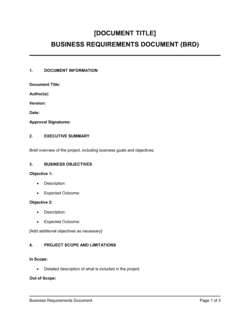
- A document that describes what a business needs to achieve, written before any technical solution is defined.
- Product Requirements Document (PRD)
- A document that specifies what a product must do and how it must behave, used to guide engineering and design.
- Functional requirement
- A statement describing a specific capability or behaviour the product must have.
- Non-functional requirement
- A constraint on how the product must perform — covering speed, security, reliability, and compliance.
- Acceptance criteria
- The specific conditions a feature must meet before it is considered complete and ready to ship.
- Minimum Viable Product (MVP)
- The smallest version of a product that can test a specific hypothesis with real users.
- Product roadmap
- A prioritised, time-ordered plan showing which product capabilities will be built and when.
- Product brief
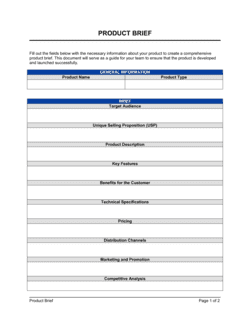
- A short document summarising the problem, target user, and success criteria for a proposed product or feature.
- Scope creep
- The gradual addition of unplanned features or requirements during development, usually caused by unclear upfront scope.
- User story
- A short, user-centred requirement written in the format 'As a [user], I want [action] so that [benefit].'
- Product lifecycle
- The stages a product moves through from conception and development through launch, growth, maturity, and decline.
- Go-to-market strategy
- The plan that defines how a product will reach its target customers, including positioning, pricing, and distribution.