- Total Addressable Market (TAM)
- The total revenue opportunity available if a product captured 100% of its target market, used to size the maximum potential of an opportunity.
- Serviceable Addressable Market (SAM)
- The portion of the TAM that a company can realistically reach with its current business model, distribution, and geography.
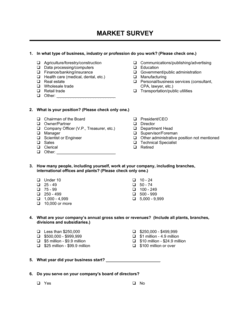
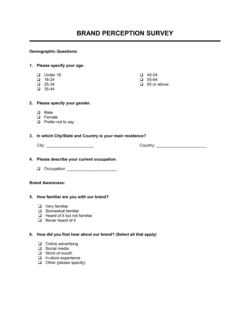
- Primary research
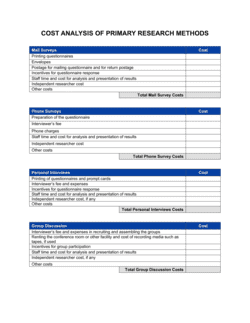
- Original data collected directly from respondents or observations, such as surveys, interviews, and focus groups.
- Secondary research
- Analysis of data already collected by others, such as industry reports, trade publications, and government statistics.
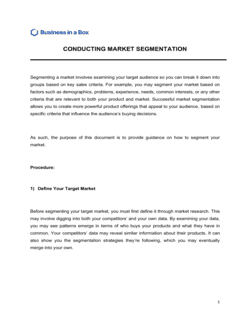
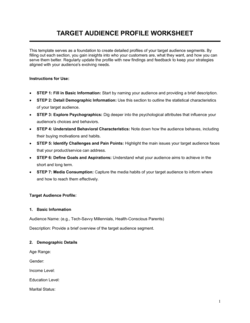
- Market segmentation
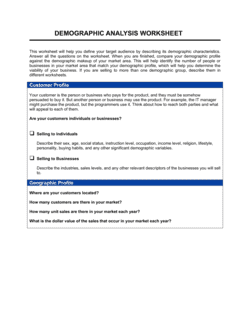
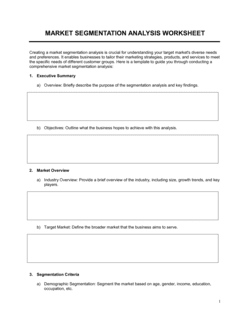
- The practice of dividing a market into distinct groups of buyers who share similar characteristics, needs, or behaviors.
- SWOT analysis
- A structured framework that identifies internal Strengths and Weaknesses alongside external Opportunities and Threats.
- PESTLE analysis
- An external environment scan covering Political, Economic, Social, Technological, Legal, and Environmental factors.
- Competitive landscape
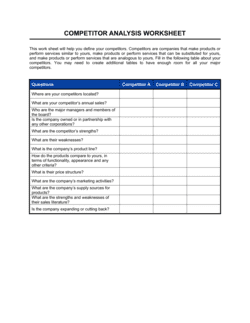
- A map of the key companies competing in a given market, including their products, pricing, market share, and positioning.
- Go-to-market (GTM) plan
- A tactical plan that defines how a company will reach its target customers and achieve a competitive advantage at launch.
- Market opportunity
- A gap between what customers currently have and what they want or need, representing a potential space for a new product or service.
- Demand analysis
- Research that estimates how many buyers exist for a product or service and how purchasing behavior is likely to change over time.