1
Define eligible employee classifications
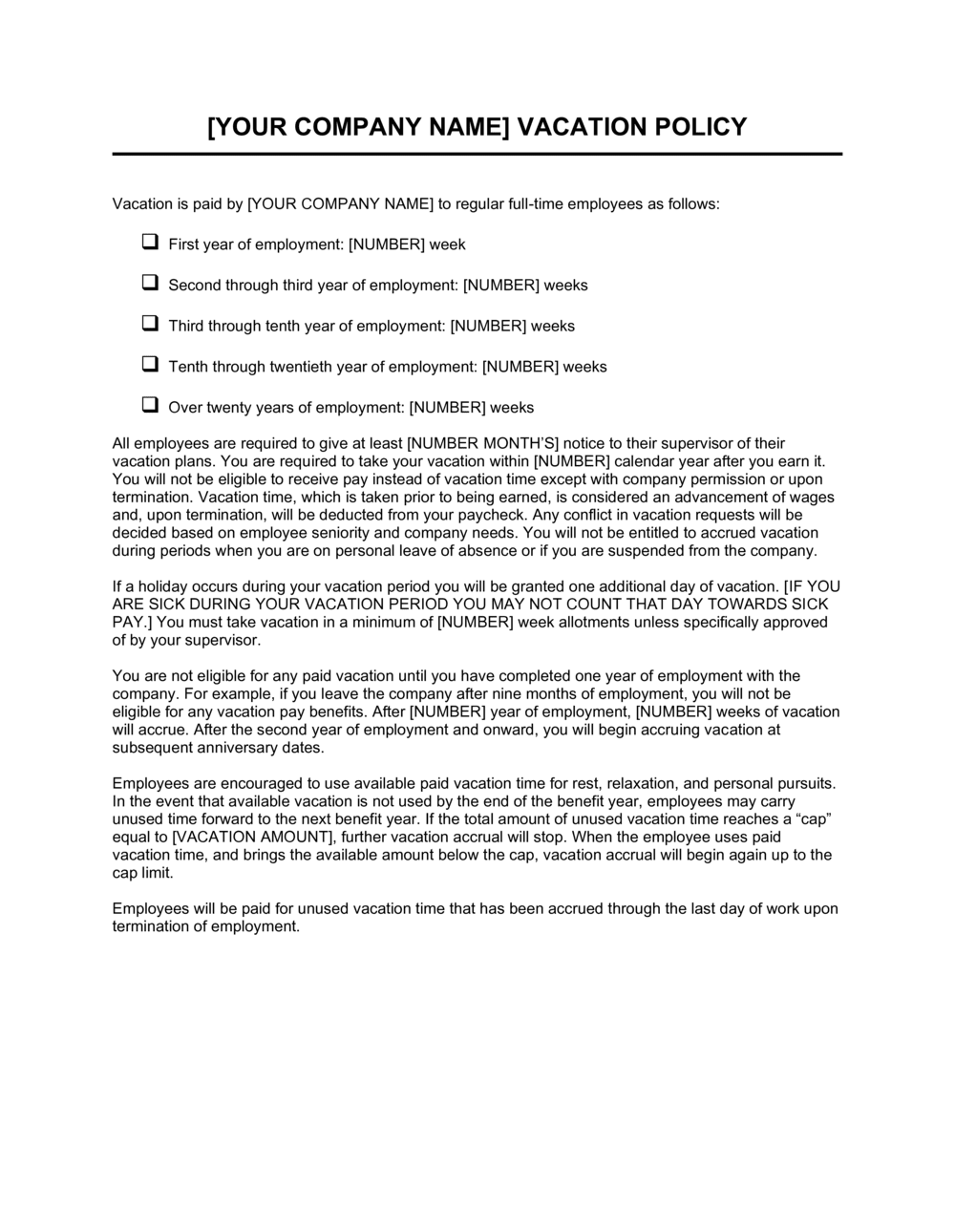
List every classification your company uses — full-time, part-time, exempt, non-exempt — and specify whether each is covered, excluded, or covered on a pro-rated basis. Include all locations or legal entities the policy governs.
💡 If you operate in multiple states or provinces, list them explicitly so there is no ambiguity about which employees are covered.
2
Set the waiting period and accrual start date
Choose 30, 60, or 90 days based on your standard onboarding period. Decide whether accrual runs during the waiting period (balance builds but cannot be used) or begins only after the waiting period ends.
💡 Accrual-during-waiting is more generous but creates a positive first-day balance on the payroll ledger — factor this into your vacation liability projections.
3
Build the accrual schedule by tenure tier
Enter the days earned per year for each tenure band and convert to a per-pay-period rate that matches your payroll cycle (bi-weekly, semi-monthly, or monthly). Confirm the per-period rate matches the annual total before publishing.
💡 Use exact decimal figures in your HRIS — entering 1.5385 days per bi-weekly period (for 20 days/year) prevents rounding errors that compound over a full year.
4
Set the accrual cap and carryover limit
Cap the maximum balance at 1.0–1.5 times the annual entitlement to limit balance-sheet exposure. Set a carryover limit that incentivizes use without creating a cliff-edge forfeiture employees see as unfair.
💡 Check your state and provincial laws before applying any forfeiture rule — California, Colorado, Illinois, and most Canadian provinces require payout or carryover of all earned vacation.
5
Write the request and approval procedure
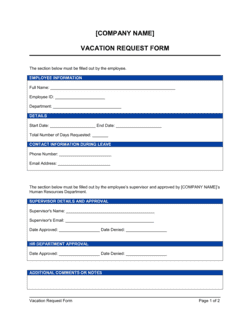
Specify the minimum advance notice (7–14 days for standard requests, 30+ days for extended leave), the system or form used to submit, and the criteria for resolving conflicts when multiple employees request the same dates.
💡 A first-submitted, first-approved tiebreaker is the simplest to administer and the hardest to challenge as discriminatory.
6
List blackout dates and clarify shutdown treatment
Insert your specific blackout windows (fiscal year-end, peak season, product launches) and state clearly whether mandatory company shutdowns draw from the employee's vacation balance or are provided as additional paid time.
💡 Publishing blackout dates in the policy, rather than announcing them annually, reduces the perception that blackouts are arbitrary.
7
Confirm termination payout language against local law
Draft the payout clause, then verify it against the employment standards in each jurisdiction where you have employees. Remove or carve out any forfeiture conditions that are prohibited by law in those locations.
💡 Add a savings clause — 'except where prohibited by applicable law' — so the policy automatically defers to local law in any jurisdiction you may not have specifically checked.
8
Have HR or legal review before distributing
Route the draft to your HR lead or employment counsel for a final check, especially if you have employees in California, New York, Quebec, or Ontario, where vacation rules are particularly specific.
💡 Document the review date and reviewer in the policy footer — this demonstrates due diligence if the policy is ever challenged.