- Perfect Tender Rule
- A US UCC doctrine requiring that goods and their delivery conform exactly to the contract — any deviation gives the buyer the right to reject, subject to the seller's right to cure.
- Right to Cure
- The seller's right under most commercial law frameworks to remedy a non-conforming delivery within the contract period or a reasonable additional time after notifying the buyer.
- Wrongful Rejection
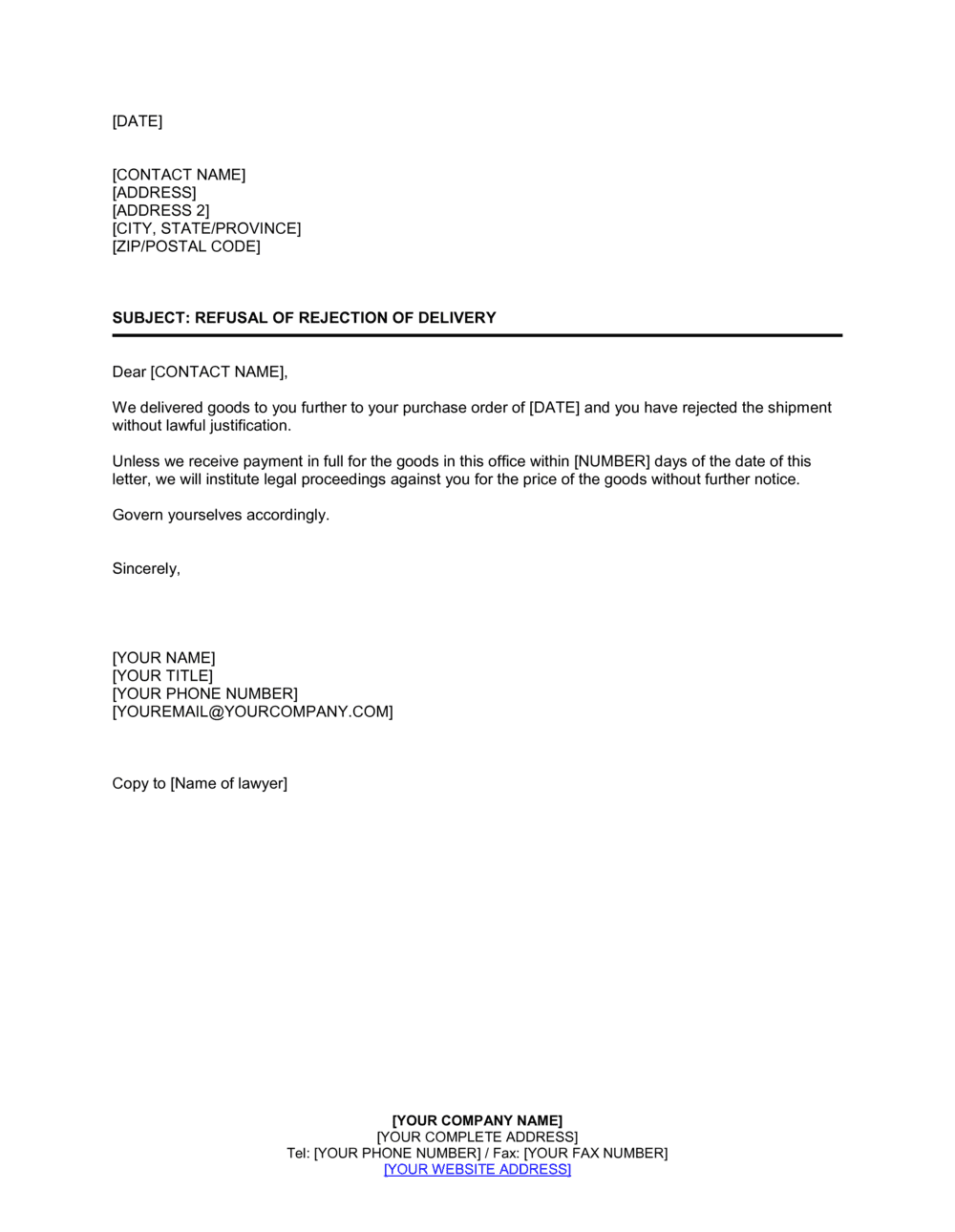
- A buyer's refusal to accept goods that conform to the contract specifications, giving the seller a cause of action for breach of contract and the full purchase price.
- Revocation of Acceptance
- A buyer's attempt to undo a prior acceptance of goods, permissible only when a defect substantially impairs the value of the goods and was not discoverable at acceptance.
- Conforming Goods
- Goods that meet all contractual specifications — description, quantity, quality, and packaging — as agreed in the purchase order or sales contract.
- Non-Conforming Goods
- Goods that deviate from the contract description or specifications in a material way, potentially entitling the buyer to reject, seek cure, or claim damages.
- Inspection Period
- The contractually or legally defined window during which a buyer must inspect delivered goods and notify the seller of any rejection — failure to reject within this period constitutes acceptance in most jurisdictions.
- Reservation of Rights
- A formal statement in a legal letter preserving all available legal claims and remedies without waiving any right by communicating or negotiating with the other party.
- Mitigation of Damages
- The legal obligation of the non-breaching party to take reasonable steps to reduce losses — a wrongfully rejecting buyer who allows goods to spoil or deteriorate may face reduced damages.
- Breach of Contract
- A failure to perform a contractual obligation, such as a buyer refusing to pay for conforming goods that were properly tendered and delivered.
- UCC Article 2
- The section of the US Uniform Commercial Code governing the sale of goods, including rules on tender, inspection, rejection, cure, and remedies for both buyers and sellers.