1
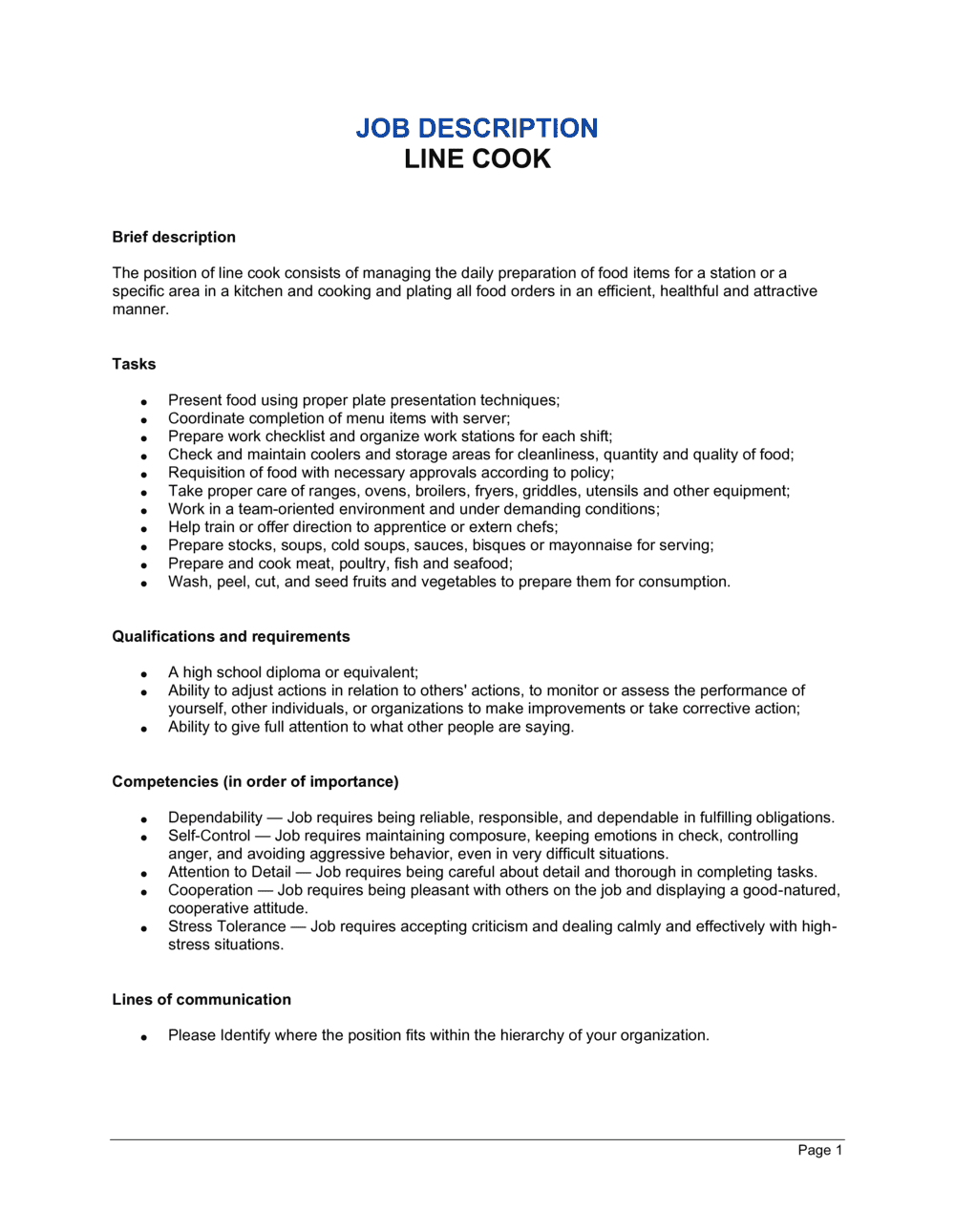
Enter the restaurant name, location, and reporting structure
Fill in the legal operating name of the restaurant or food service business, the physical address of the location, and the exact title of the person the line cook reports to. Use the supervisor's title, not just their name, so the document remains accurate after staff turnover.
💡 If the restaurant is part of a multi-unit group, include the specific location identifier (e.g., 'Unit 04 — Downtown') to avoid confusion in shared HR files.
2
Write a position summary specific to your kitchen
Replace the generic overview with a 2–3 sentence description naming your cuisine type, typical covers per service, and the station this cook will primarily work. Candidates who self-select out of a mismatched environment save you onboarding costs.
💡 Mention the kitchen culture or pace — 'high-volume, team-oriented dinner service' — to attract candidates who thrive in that environment.
3
List all duties including prep, cleaning, and end-of-shift tasks
Enumerate every task the cook is expected to perform, not only cooking. Include mise en place, FIFO rotation, station sanitation, checklists, and any administrative duties like daily waste logs or temperature recording.
💡 Use action verbs at the start of each duty line — 'Prepare,' 'Maintain,' 'Rotate,' 'Communicate' — so expectations are unambiguous during performance reviews.
4
Separate required from preferred qualifications
List non-negotiable requirements (food handler certification, minimum years of experience, physical ability) in the required section. Move nice-to-have attributes — specific cuisine experience, additional certifications — to the preferred section.
💡 Check your jurisdiction's employment standards before listing physical requirements; some provinces and EU states require an employer to assess whether accommodations are possible before disqualifying a candidate.
5
State the compensation range and benefits clearly
Enter the full hourly range, pay frequency, overtime eligibility, and any benefits including employee meals, health coverage, or tip pool participation. Several US states and Canadian provinces now require posted pay ranges.
💡 If your state or province requires pay transparency, include the range even if it is broad — a range signals fairness and reduces compensation negotiation time.
6
Define schedule requirements and holiday availability
Specify the minimum weekly hours, typical shift times, and whether the role requires evening, weekend, or holiday availability. If split shifts are possible, say so explicitly.
💡 Stating schedule requirements upfront reduces early attrition — kitchen turnover most often occurs within the first 30 days when schedule expectations were not disclosed during hiring.
7
Reference specific food safety regulations by name
Replace 'all applicable regulations' with the specific health department or food safety authority for your jurisdiction — e.g., the local county health department, ServSafe, or the Food Standards Agency in the UK.
💡 Linking the conduct standards clause to your internal employee handbook by name creates a complete disciplinary paper trail for any future HR action.
8
Collect signatures before the first shift
Print two copies, have both the employee and a management representative sign and date each. Give the employee one copy and file the second in their personnel file before their first day of work.
💡 An unsigned job description has no evidentiary value in an unemployment hearing or wrongful termination claim — the signature step is the most skipped and the most consequential.