1
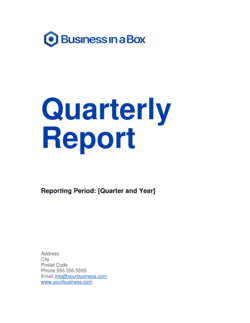
Define the scope and reporting period
Enter the department or company scope, the exact start and end dates of the reporting period, and the name and title of the person preparing the report.
💡 Use calendar dates (e.g., April 1–April 30, 2026) rather than period labels alone — this prevents ambiguity when the report is referenced months later.
2
Populate the KPI summary table with targets and actuals
Enter each KPI's predefined target and the measured actual for the period. Calculate the variance and assign a RAG status. Limit the table to 8–12 metrics tied directly to strategic objectives.
💡 Pull actuals from a single authoritative data source — your CRM, financial system, or analytics platform — and note the source in a footnote to prevent disputes about the numbers.
3
Add trend data for each KPI
Insert the prior 3–6 periods' actuals alongside the current result. Use a simple line or bar chart for each KPI to make the direction of travel immediately visible.
💡 Consistent chart formatting — same axis scale, same color coding — lets readers compare KPIs at a glance without re-reading the legend each time.
4
Break down results by department or function
Disaggregate each company-level KPI by the teams or segments that contribute to it. Identify the highest and lowest performers within each metric.
💡 Highlight the one department that most needs attention rather than giving equal space to all — this guides where leadership should focus discussion time.
5
Write root cause commentary for every Red or Amber KPI
For each off-target metric, write two to three sentences identifying the primary cause, whether it is controllable or external, and whether it is a one-time event or a recurring pattern.
💡 Use 'because' statements rather than 'due to' — forcing the word 'because' prevents vague explanations and requires a specific causal claim.
6
Assign actions, owners, and deadlines
For every underperforming KPI, document one or two specific actions, name a single accountable owner, and set a concrete deadline. Add accelerating actions for Green KPIs you want to extend.
💡 Actions should be expressed as verbs: 'Launch X', 'Increase Y by Z', 'Hire for role W by date'. Noun-based actions ('Review of pipeline') are not actionable.
7
Write the executive summary last
After all sections are complete, write a 3–5 sentence narrative that gives a senior reader the full picture in under a minute. State how many KPIs are on track, call out the biggest win, and flag the single most critical issue.
💡 The executive summary should be self-contained — a reader who only reads this section should leave knowing the three things that matter most.
8
Add the forward outlook and export
Write two to four sentences on which KPIs are at risk next period and what initiatives are expected to improve them. Export the completed report as PDF and distribute to stakeholders before the review meeting.
💡 Send the report at least 24 hours before the review meeting so attendees arrive with questions prepared, not questions about the data.