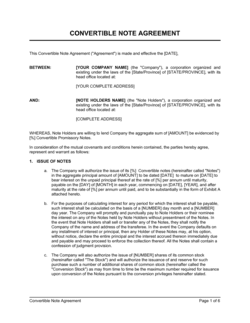
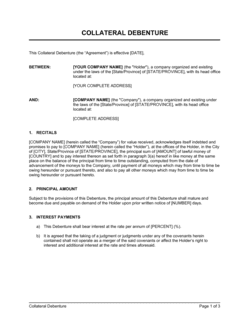
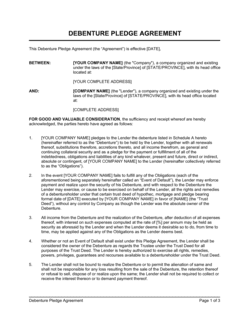
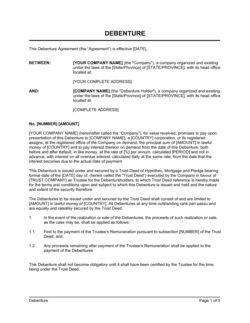
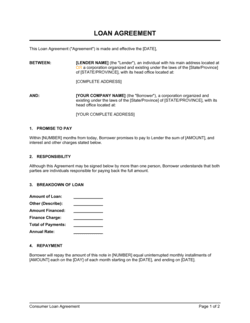
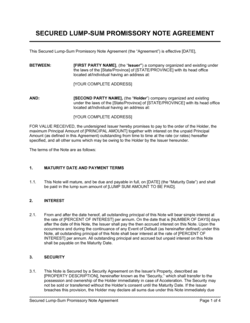
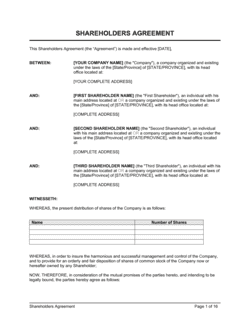
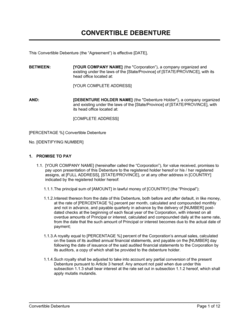
Participating and Convertible Debenture Template

Free Word download • Edit online • Save & share with Drive • Export to PDF

9 pages30–40 min to fillDifficulty: ComplexSignature requiredLegal review recommended
Learn more ↓
FreeParticipating and Convertible Debenture Template

At a glance

What it is
A Participating and Convertible Debenture is a hybrid debt instrument that gives the holder the right to convert the outstanding principal into equity at a defined price or ratio, while also granting a participation right in the issuer's profits or revenue above a set threshold. This template is a free Word download you can edit online and export as PDF — covering conversion mechanics, interest, participation rights, security interests, covenants, and default in a single binding document.
When you need it
Use it when a company raises growth or bridge capital from investors who want downside protection as a creditor and upside participation as a quasi-equity holder. It is common in pre-IPO rounds, mezzanine financing, and private placements where a straight debt or straight equity instrument does not meet both parties' risk-return requirements.
What's inside
Principal amount and interest rate, maturity date, conversion rights and conversion price formula, participation rights tied to revenue or EBITDA thresholds, security and ranking provisions, affirmative and negative covenants, events of default, repayment mechanics, and governing law.

What is a Participating and Convertible Debenture?

A Participating and Convertible Debenture is a hybrid debt instrument that combines the protections of a secured loan with two equity-linked features: a conversion right allowing the holder to exchange outstanding principal — and typically accrued interest — into shares of the issuing company at a pre-agreed price, and a participation right entitling the holder to a share of the company's profits or revenue above a defined threshold. Unlike a plain loan or a simple convertible note, this instrument is designed for investors who need both the downside protection of a creditor position and the upside of an equity-like return — making it a common structure in mezzanine financing, pre-IPO bridge rounds, and private placements where a straight debt or straight equity instrument does not meet both parties' risk-return requirements.

Why You Need This Document

Without a properly drafted participating and convertible debenture, the commercial terms agreed between the issuer and the investor exist only in emails and term sheets — neither of which creates enforceable security over assets, legally valid conversion mechanics, or a binding participation obligation. If the company grows and hits the participation threshold, an undocumented or poorly drafted arrangement becomes a disputes trigger. If the company struggles and cannot repay at maturity, the investor has no perfected security interest to enforce and no clear acceleration right. An unregistered security interest is void against a trustee in bankruptcy, turning a secured creditor into an unsecured one at the worst possible moment. This template gives both parties a complete, structured instrument — covering conversion, participation, covenants, security, and default — that can be executed, registered, and enforced from day one.

Which variant fits your situation?

If your situation is…Use this template
Short-term bridge financing converting at the next equity roundConvertible Note Agreement
Debt financing with no equity conversion featureDebenture Agreement
Equity investment with no debt component or repayment obligationShareholder Agreement
Investor loan with simple interest and a fixed repayment dateLoan Agreement
Mezzanine financing secured against specific company assetsSecured Loan Agreement
Revenue-based financing with no conversion rightRevenue Participation Agreement
Startup funding with valuation cap and discount but no participationSAFE Agreement

Common mistakes to avoid

❌ Failing to register the security interest immediately after execution

Why it matters: An unregistered security interest may be void against a trustee in bankruptcy or a subsequent secured creditor who registers first. The holder becomes an unsecured creditor in a wind-up, recovering pennies on the dollar instead of having priority over the collateral.

Fix: File the UCC-1 financing statement (US), PPSA registration (Canada), or Companies House charge (UK) on the same day the debenture is executed and retain the filing confirmation as part of the deal file.

❌ Defining the participation base ambiguously

Why it matters: If the debenture says 'profits' without specifying GAAP or IFRS, including or excluding specific items, the parties will dispute the calculation every year — and litigation costs often exceed the disputed participation amount.

Fix: Attach a Schedule defining the participation calculation in full, including the accounting standard, a list of specific inclusions and exclusions, and a worked numerical example using the issuer's most recent financials.

❌ Setting conversion price with no anti-dilution protection

Why it matters: A subsequent equity round priced below the conversion price effectively strips the holder of equity value on conversion, creating an incentive to block future financing or demand renegotiation precisely when the company most needs capital.

Fix: Include a weighted-average anti-dilution adjustment clause with a Schedule A example. Agree upfront on whether broad-based or narrow-based weighted average applies — the difference is significant for founders.

❌ Omitting cure periods in the events of default clause

Why it matters: Without a grace period, a missed wire transfer due to a bank processing delay or an unintentional covenant breach constitutes an immediate event of default, triggering full acceleration of all amounts owed and damaging an otherwise healthy lender-borrower relationship.

Fix: Include a minimum 5-business-day cure period for payment defaults and a 20–30 day cure period for covenant breaches after written notice. Reserve immediate default for insolvency events and material fraud.

❌ Using the issuer's trade name instead of the registered corporate entity

Why it matters: A debenture issued by 'Acme Tech' rather than 'Acme Technologies Inc.' may be unenforceable against the legal entity, and a security interest registered against the wrong name is legally ineffective in most jurisdictions.

Fix: Verify the exact registered name in the corporate registry and include the entity's registration number in the parties block. If the company operates under a trade name, add a 'also known as' reference for clarity.

❌ No forced-conversion or maturity fallback mechanism

Why it matters: If the issuer cannot repay at maturity and the holder has not elected to convert, neither party has a clear path forward — the company is technically in default but the holder may not want equity at that stage, creating a standoff.

Fix: Include a maturity fallback clause: either automatic conversion at the then-applicable conversion price, a 12-month extension at an increased interest rate, or a documented negotiation period before the holder can accelerate.

The 10 key clauses, explained

Parties, Principal Amount, and Issuance Date

In plain language: Identifies the issuing company and the debenture holder as legal entities, states the total principal amount advanced, and records the date the instrument is issued and becomes effective.

Sample language
This Participating and Convertible Debenture is issued on [DATE] by [COMPANY LEGAL NAME], a [STATE/PROVINCE] [ENTITY TYPE] ('Issuer'), to [HOLDER LEGAL NAME] ('Holder') in the principal amount of $[AMOUNT] ('Principal').

Common mistake: Using a trade name instead of the registered legal entity for the issuer. If the entity name does not match corporate registry records, the security interest registration and conversion mechanics may be legally unenforceable against the correct entity.

Interest Rate and Payment Schedule

In plain language: States the annual interest rate, how it accrues (simple or compound), payment frequency, and whether interest is paid in cash or accrues to principal until conversion or maturity.

Sample language
The Principal shall bear interest at [X]% per annum, calculated on a 365-day basis. Interest shall [accrue and be added to Principal / be paid in cash on the [DATE] of each [MONTH/QUARTER]] until the Maturity Date or earlier conversion.

Common mistake: Failing to specify whether interest accrues as simple or compound. Courts and tax authorities treat these differently, and compounding on a large principal over a multi-year term creates a materially different repayment obligation than simple interest.

Maturity Date and Repayment

In plain language: Sets the date on which outstanding principal and all accrued but unpaid interest become due, and specifies repayment mechanics if the holder has not converted.

Sample language
Unless earlier converted or repaid, the entire outstanding Principal and all accrued and unpaid interest shall be due and payable on [MATURITY DATE] ('Maturity Date'). Repayment shall be made by wire transfer to the account designated by Holder in writing.

Common mistake: Omitting a provision for what happens if the Issuer cannot repay at maturity. Without an automatic extension or default mechanism, the parties face an ambiguous enforcement situation when the maturity date passes without payment or conversion.

Conversion Rights and Conversion Price

In plain language: Grants the holder the right to convert all or a specified portion of the outstanding principal and accrued interest into shares of the issuer at a defined price or formula, at any time or on specified trigger events.

Sample language
Holder may, at its sole option, convert all or any portion of the outstanding Principal plus accrued interest into [CLASS] shares of Issuer at a Conversion Price of $[X] per share, subject to adjustment as set out in Schedule A. Conversion shall be effected by delivery of a written Conversion Notice to Issuer.

Common mistake: Defining a fixed conversion price with no anti-dilution adjustment. If the issuer raises a subsequent round at a lower valuation, the holder's conversion value is materially impaired without a weighted-average or full-ratchet adjustment mechanism.

Participation Rights

In plain language: Entitles the holder to receive a defined percentage of the issuer's net profits, revenue, or free cash flow above a stated threshold, in addition to interest, until conversion or repayment.

Sample language
In addition to interest, Issuer shall pay Holder [X]% of Issuer's [Net Revenue / EBITDA / Distributable Cash] exceeding $[THRESHOLD] in each fiscal year, calculated within [60] days of fiscal year end and paid within [30] days of such calculation.

Common mistake: Defining the participation base (revenue, EBITDA, or distributable cash) ambiguously or by reference to accounting standards without specifying GAAP or IFRS. Disputes over the participation calculation are among the most frequently litigated debenture terms.

Security Interest and Ranking

In plain language: Creates a security interest over specified company assets — or all assets — as collateral securing the debenture, and states the holder's ranking relative to other creditors.

Sample language
As security for the obligations under this Debenture, Issuer hereby grants Holder a [first / second] priority security interest over [all present and after-acquired personal property of Issuer / the following assets: [DESCRIPTION]]. Holder's claim ranks [senior to / pari passu with / subordinate to] [NAMED CREDITOR(S)].

Common mistake: Failing to register the security interest with the applicable registry (UCC filing in the US, PPSA registration in Canada, Companies House charge registration in the UK). An unregistered security interest may be void against third-party creditors or a trustee in bankruptcy.

Affirmative and Negative Covenants

In plain language: Lists actions the issuer must take (affirmative covenants — e.g., maintain insurance, deliver financials) and actions the issuer is prohibited from taking without the holder's written consent (negative covenants — e.g., incur senior debt, pay dividends, sell material assets).

Sample language
Issuer shall: (a) deliver audited annual financial statements within [90] days of fiscal year end; (b) maintain adequate insurance on all material assets. Without Holder's prior written consent, Issuer shall not: (i) incur indebtedness exceeding $[X] in aggregate; (ii) declare or pay any dividend; (iii) sell or encumber any material asset outside the ordinary course of business.

Common mistake: Setting negative covenant thresholds so low that ordinary operating decisions require holder consent. This creates friction that slows the business and often leads to consent fatigue — where the holder starts approving waivers reflexively, making the covenants meaningless.

Events of Default and Remedies

In plain language: Defines the specific triggers that constitute a default — missed payments, covenant breach, insolvency, material misrepresentation — and the remedies available to the holder, including acceleration of all amounts owed and immediate conversion.

Sample language
Each of the following constitutes an Event of Default: (a) failure to pay any amount due within [10] business days of the due date; (b) material breach of any covenant not remedied within [30] days of written notice; (c) commencement of insolvency or bankruptcy proceedings. Upon an Event of Default, Holder may, at its option: (i) declare the entire Principal and accrued interest immediately due and payable; or (ii) convert the outstanding Principal at the Conversion Price.

Common mistake: Omitting a cure period for non-payment defaults. Without a grace period, a wire transfer delay or administrative error triggers full acceleration — a disproportionate remedy that courts may not enforce and that poisons the lender-borrower relationship.

Anti-Dilution Adjustments

In plain language: Specifies how the conversion price is adjusted if the issuer issues new shares at a price below the current conversion price, protecting the holder's equity value on conversion.

Sample language
If Issuer issues [CLASS] shares at a price per share less than the then-current Conversion Price, the Conversion Price shall be adjusted to equal the [weighted-average price / lower issuance price], calculated as set out in Schedule A, effective immediately upon such issuance.

Common mistake: Applying a full-ratchet rather than weighted-average anti-dilution adjustment. Full ratchet is the most aggressive protection for the holder but can dramatically reduce founder equity on a down round, often triggering renegotiation or litigation.

Governing Law, Dispute Resolution, and Entire Agreement

In plain language: Specifies the jurisdiction whose law governs the debenture, the forum and mechanism for resolving disputes, and an entire-agreement clause confirming the written instrument supersedes all prior representations.

Sample language
This Debenture is governed by the laws of [STATE / PROVINCE / COUNTRY]. Any dispute shall be resolved by [binding arbitration administered by [AAA/JAMS] in [CITY] / the courts of [JURISDICTION]]. This Debenture, together with the Schedules, constitutes the entire agreement of the parties with respect to its subject matter and supersedes all prior negotiations, representations, and agreements.

Common mistake: Selecting a governing jurisdiction with no connection to the issuer's place of incorporation or the holder's domicile. Courts in several jurisdictions decline to apply the chosen law where no real nexus exists, leaving the parties in an unpredictable legal environment.

How to fill it out

  1. 1

    Identify the parties with their registered legal entity names

    Enter the issuer's full corporate name exactly as it appears on the certificate of incorporation, including entity type and jurisdiction. Do the same for the holder. Attach signing authority evidence (director resolution or incumbency certificate) to confirm who is authorized to execute.

    💡 Cross-check the issuer's current registered name against the corporate registry before execution — name changes after prior financing rounds are common and create enforcement gaps.

  2. 2

    Set the principal amount, interest rate, and accrual method

    Enter the total amount being advanced, the annual interest rate, and whether interest accrues as simple or compound. Specify whether interest is paid periodically in cash or accrues to principal and converts with it.

    💡 If the parties intend interest to accrue to principal (PIK interest), state this explicitly — courts treat silence as an obligation to pay in cash.

  3. 3

    Define the maturity date and repayment mechanics

    Set a specific calendar maturity date. Include a provision for what happens if the issuer cannot repay at maturity — automatic 12-month extension, mandatory conversion, or default. Specify the wire transfer details or payment method.

    💡 A forced-conversion fallback at maturity is more protective for the issuer than a hard repayment obligation when cash position at maturity is uncertain.

  4. 4

    Draft the conversion price and anti-dilution schedule

    Set the initial conversion price per share and choose between weighted-average and full-ratchet anti-dilution protection. Attach a Schedule A working through the adjustment formula with a numerical example.

    💡 Always include at least one worked numerical example of the anti-dilution adjustment in Schedule A — it prevents disputes when the trigger event occurs months or years later.

  5. 5

    Define the participation threshold and calculation basis

    Choose the participation base (net revenue, EBITDA, or distributable cash), set the threshold above which participation accrues, and state the percentage. Specify the accounting standard (GAAP or IFRS) and the timeline for calculation and payment.

    💡 Add an audit right — the holder's right to review relevant financial records — when participation is tied to internally calculated EBITDA rather than audited revenue.

  6. 6

    Complete the security interest and register it

    Describe the collateral precisely — all personal property, specific assets, or a defined asset class. Indicate the intended ranking. File or register the security interest with the correct registry before or immediately after execution.

    💡 In the US, UCC-1 financing statements must be filed in the debtor's state of incorporation, not the state of the collateral's location, for most personal property.

  7. 7

    Calibrate the covenants to the issuer's operating reality

    Set affirmative reporting covenants (financials, insurance, regulatory compliance notices) and negative covenant thresholds (debt cap, dividend restriction, asset sale limits) proportionate to the issuer's current revenue and debt levels. Thresholds set too low will require constant waiver requests.

    💡 Include a carve-out for ordinary-course trade payables and equipment leases so routine operations don't inadvertently trigger a negative covenant breach.

  8. 8

    Execute before funds are advanced and file all registrations within 24 hours

    Both parties must sign — typically by authorized directors or officers — before any funds are transferred. File security interest registrations the same day. In most jurisdictions, priority is determined by registration date, not execution date.

    💡 Use a closing checklist: executed debenture, corporate resolution of the issuer, UCC-1 / PPSA / Companies House filing receipt, and wire confirmation — all retained in the deal file.

Frequently asked questions

What is a participating and convertible debenture?

A participating and convertible debenture is a hybrid debt instrument that combines two features: a conversion right allowing the holder to exchange outstanding principal — and often accrued interest — into equity at a pre-agreed price, and a participation right entitling the holder to a share of the issuer's profits or revenue above a defined threshold. It gives investors downside protection as a creditor and upside participation as a quasi-equity holder, making it common in mezzanine financing and pre-IPO bridge rounds.

How is a convertible debenture different from a convertible note?

A convertible note is typically a short-term, simple instrument used in early-stage startups to bridge to the next equity round — it usually lacks a participation feature, extensive covenants, and a formal security interest. A participating and convertible debenture is a more structured, longer-term instrument with negotiated interest, participation rights, security over assets, and detailed covenants. Debentures are more common in growth-stage or middle-market transactions where the investment is larger and the investor requires more comprehensive protections.

What is the participation right in this debenture?

The participation right entitles the debenture holder to receive a percentage of the issuer's net revenue, EBITDA, or distributable cash above a defined threshold, in addition to the stated interest rate. For example, a holder might receive 5% of EBITDA exceeding $500,000 per fiscal year. This participation continues until the debenture is converted or repaid, giving the investor a profit-sharing return on top of the fixed-income component. The calculation base and accounting standard should be defined precisely to avoid disputes.

Does a convertible debenture have to be secured?

No — a convertible debenture can be unsecured, but most holders in arms-length commercial transactions require a security interest over some or all of the issuer's assets. A secured debenture gives the holder priority recovery rights over collateral in the event of default or insolvency. If secured, the security interest must be registered with the applicable registry — UCC in the US, PPSA in Canada, Companies House in the UK — to be effective against third parties.

What conversion price should I use?

The conversion price is typically set at a discount of 10–25% to the price per share in the most recent equity round, or pegged to a valuation cap agreed at the time of issuance. For pre-revenue companies, a valuation cap with an automatic discount at the next qualifying financing round is the most common structure. The key is to include an anti-dilution adjustment so the conversion price tracks future down-round pricing — otherwise the holder's equity value on conversion may be significantly less than expected.

Is a participating and convertible debenture treated as debt or equity for accounting purposes?

Under GAAP and IFRS, a participating and convertible debenture is generally classified as a compound financial instrument — part liability (the host debt contract) and part equity (the conversion option). The equity component is measured at fair value on initial recognition and recorded in equity; the debt component is the residual. The participation feature may be classified as a derivative depending on its terms. Companies should work with their auditors to determine the correct classification before issuance, as reclassification after the fact is disruptive and costly.

What happens if the company cannot repay the debenture at maturity?

Without a maturity fallback clause, the failure to repay at maturity triggers an event of default, giving the holder the right to accelerate all amounts and enforce the security interest. In practice, most well-drafted debentures include a fallback — either automatic conversion at the then-applicable conversion price, a 12-month extension at an increased interest rate, or a mandatory negotiation period. Parties should agree on the maturity mechanism at the outset rather than negotiating it under distress.

What covenants are typically included in a convertible debenture?

Affirmative covenants typically require the issuer to deliver annual and quarterly financial statements, maintain adequate insurance, preserve its corporate existence, and notify the holder of material adverse events. Negative covenants typically prohibit the issuer from incurring senior debt above a defined threshold, paying dividends, selling material assets outside the ordinary course, changing its business in a material way, or granting security interests that rank ahead of the debenture holder — all without prior written consent.

Do I need a lawyer to prepare a participating and convertible debenture?

Yes, for most transactions a lawyer review is strongly recommended. The conversion mechanics, anti-dilution provisions, participation calculation, security registration, and covenant thresholds all involve legal and financial nuances that a template alone cannot fully address for your specific situation. A template provides a solid structural starting point and reduces drafting time significantly, but a securities or corporate lawyer should review the final document — particularly for transactions above $250,000 or where the security interest and conversion terms are commercially significant.

How this compares to alternatives

vs Convertible Promissory Note

A convertible promissory note is a simpler, shorter-term instrument commonly used in early-stage startup bridge rounds. It typically carries no participation right, minimal covenants, and no formal security interest. A participating and convertible debenture is a more structured instrument with profit participation, extensive covenants, and security — appropriate for larger, longer-term transactions where the investor needs both income and upside.

vs Debenture Agreement

A standard debenture agreement is a straightforward debt instrument with interest and repayment terms but no conversion right or profit participation. A participating and convertible debenture adds both features, making it a hybrid instrument. Use a standard debenture when the investor wants fixed-income debt with no equity upside; use a participating convertible when they want both downside protection and a share of growth.

vs Loan Agreement

A loan agreement documents a straightforward debt arrangement with interest and repayment — no equity conversion and no profit participation. It is simpler, faster to execute, and appropriate when both parties want a clean debt relationship. A participating and convertible debenture is a more complex instrument designed for investors who want structured equity-like returns alongside the security of a creditor position.

vs Shareholders Agreement

A shareholders agreement governs the rights and obligations of equity holders — voting, dividends, drag-along, and tag-along rights. A participating and convertible debenture is a debt instrument that may eventually convert into equity, at which point a shareholders agreement becomes relevant. The two documents serve different stages of the capital relationship and are often used together in structured financing transactions.

Industry-specific considerations

Technology / SaaS

ARR-based participation thresholds, conversion tied to Series A or B pricing, and IP-inclusive security packages covering software and data assets.

Real estate and property development

Participation pegged to net operating income or property sale proceeds, security registered against land title, and conversion into partnership or REIT units rather than common shares.

Manufacturing

Security interests over equipment and inventory, participation tied to EBITDA margins, and negative covenants restricting capex above a defined threshold without holder consent.

Healthcare / MedTech

Milestone-linked conversion triggers tied to regulatory approval or clinical trial outcomes, participation tied to product revenue post-commercialization, and covenants covering licensing and IP maintenance.

Professional services

Participation based on annual fee revenue above a retention threshold, security over receivables and client contracts, and change-of-control provisions protecting the holder if key principals depart.

Mining and natural resources

Participation tied to commodity revenue or royalty streams, security registered against mineral rights and equipment, and conversion into shares priced relative to resource asset valuations.

Jurisdictional notes

United States

Convertible debentures issued to investors may constitute securities under federal and state law, requiring compliance with SEC exemptions — most commonly Regulation D Rule 506(b) or 506(c) for private placements. Security interests must be perfected by filing a UCC-1 financing statement in the debtor's state of incorporation. Anti-dilution provisions and conversion mechanics are subject to state corporate law, and California, Delaware, and New York each have nuances that affect enforceability.

Canada

Convertible debentures are securities under provincial securities legislation; issuances must comply with an applicable prospectus exemption — most often the accredited investor or minimum amount exemption under National Instrument 45-106. Security interests must be registered under the applicable provincial Personal Property Security Act (PPSA). Quebec uses the Civil Code security regime, requiring a hypothec published at the Registre des droits personnels et réels mobiliers (RPRM).

United Kingdom

Convertible debentures are regulated as specified investments under the Financial Services and Markets Act 2000; issuance to the public requires FCA authorization unless an exemption applies. Security charges over company assets must be registered at Companies House within 21 days of creation under the Companies Act 2006, or the charge is void against liquidators and creditors. Post-Brexit, UK and EU regulatory frameworks diverge — dual-jurisdiction transactions require separate legal advice.

European Union

Convertible debentures offered to investors in EU member states may trigger the EU Prospectus Regulation unless an exemption applies — typically the offer to qualified investors or fewer than 150 persons per member state. Security interest registration requirements vary by member state: France uses the Registre du commerce et des sociétés; Germany uses the Handelsregister for certain charges. GDPR considerations apply where the debenture documentation contains personal data of individual holders. Participation rights may also engage local profit-sharing or labor law requirements in some member states.

Template vs lawyer — what fits your deal?

PathBest forCostTime
Use the templateStraightforward debenture transactions between known parties where both sides have negotiated the key commercial terms and need a structured document to record themFree1–2 hours to complete the template
Template + legal reviewTransactions up to $1M where conversion mechanics, participation calculation, and security registration need validation by a corporate or securities lawyer$500–$1,500 for a lawyer review2–5 business days
Custom draftedTransactions above $1M, cross-border issuances, complex anti-dilution structures, regulated securities offerings, or instruments that will be traded or syndicated$3,000–$15,000+ depending on complexity1–4 weeks

Glossary

Debenture
A medium- to long-term debt instrument issued by a company to a lender, creating an obligation to repay principal and interest under defined terms.
Conversion Right
The holder's contractual option to exchange outstanding principal — and sometimes accrued interest — for shares of the issuing company at a specified price or ratio.
Conversion Price
The per-share price at which the debenture principal converts into equity, often set at a discount to the most recent round or pegged to a valuation cap.
Participation Right
A provision entitling the debenture holder to receive a share of the company's profits, revenue, or distributable cash above a defined threshold, in addition to interest.
Mezzanine Financing
A hybrid capital layer ranking below senior secured debt but above equity, combining debt repayment terms with equity-linked returns such as warrants or conversion features.
Anti-Dilution Provision
A clause adjusting the conversion price downward if the company issues shares at a lower price after the debenture is issued, protecting the holder against dilution.
Security Interest
A lender's legal claim over specific company assets — or all assets — as collateral, giving the holder priority recovery rights if the company defaults.
Negative Covenant
A contractual restriction preventing the issuer from taking specified actions — such as incurring additional debt, paying dividends, or selling key assets — without the holder's consent.
Event of Default
A defined trigger — such as missed interest payment, insolvency, or breach of covenant — that entitles the holder to demand immediate repayment or exercise conversion rights.
Maturity Date
The date on which all outstanding principal and accrued interest become due and payable if the holder has not previously exercised their conversion right.
Subordination
An agreement ranking the debenture holder's claims below those of senior secured lenders, defining the order of repayment in a liquidation or restructuring.
Accrued Interest
Interest that has accumulated on the outstanding principal since the last payment date but has not yet been paid to the holder.

Part of your Business Operating System

This document is one of 3,000+ business & legal templates included in Business in a Box.

  • Fill-in-the-blanks — ready in minutes
  • 100% customizable Word document
  • Compatible with all office suites
  • Export to PDF and share electronically

Create your document in 3 simple steps.

From template to signed document — all inside one Business Operating System.
1
Download or open template

Access over 3,000+ business and legal templates for any business task, project or initiative.

2
Edit and fill in the blanks with AI

Customize your ready-made business document template and save it in the cloud.

3
Save, Share, Send, Sign

Share your files and folders with your team. Create a space of seamless collaboration.

Save time, save money, and create top-quality documents.

★★★★★

"Fantastic value! I'm not sure how I'd do without it. It's worth its weight in gold and paid back for itself many times."

Managing Director · Mall Farm
Robert Whalley
Managing Director, Mall Farm Proprietary Limited
★★★★★

"I have been using Business in a Box for years. It has been the most useful source of templates I have encountered. I recommend it to anyone."

Business Owner · 4+ years
Dr Michael John Freestone
Business Owner
★★★★★

"It has been a life saver so many times I have lost count. Business in a Box has saved me so much time and as you know, time is money."

Owner · Upstate Web
David G. Moore Jr.
Owner, Upstate Web

Run your business with a system — not scattered tools

Stop downloading documents. Start operating with clarity. Business in a Box gives you the Business Operating System used by over 250,000 companies worldwide to structure, run, and grow their business.

Start free · No credit card required