Notice of Packing Slip Requirements Template

Free Word download β€’ Edit online β€’ Save & share with Drive β€’ Export to PDF

1 pageβ€’15–25 min to fillβ€’Difficulty: Standard
Learn more ↓
FreeNotice of Packing Slip Requirements Template

At a glance

What it is
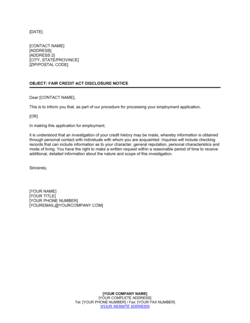
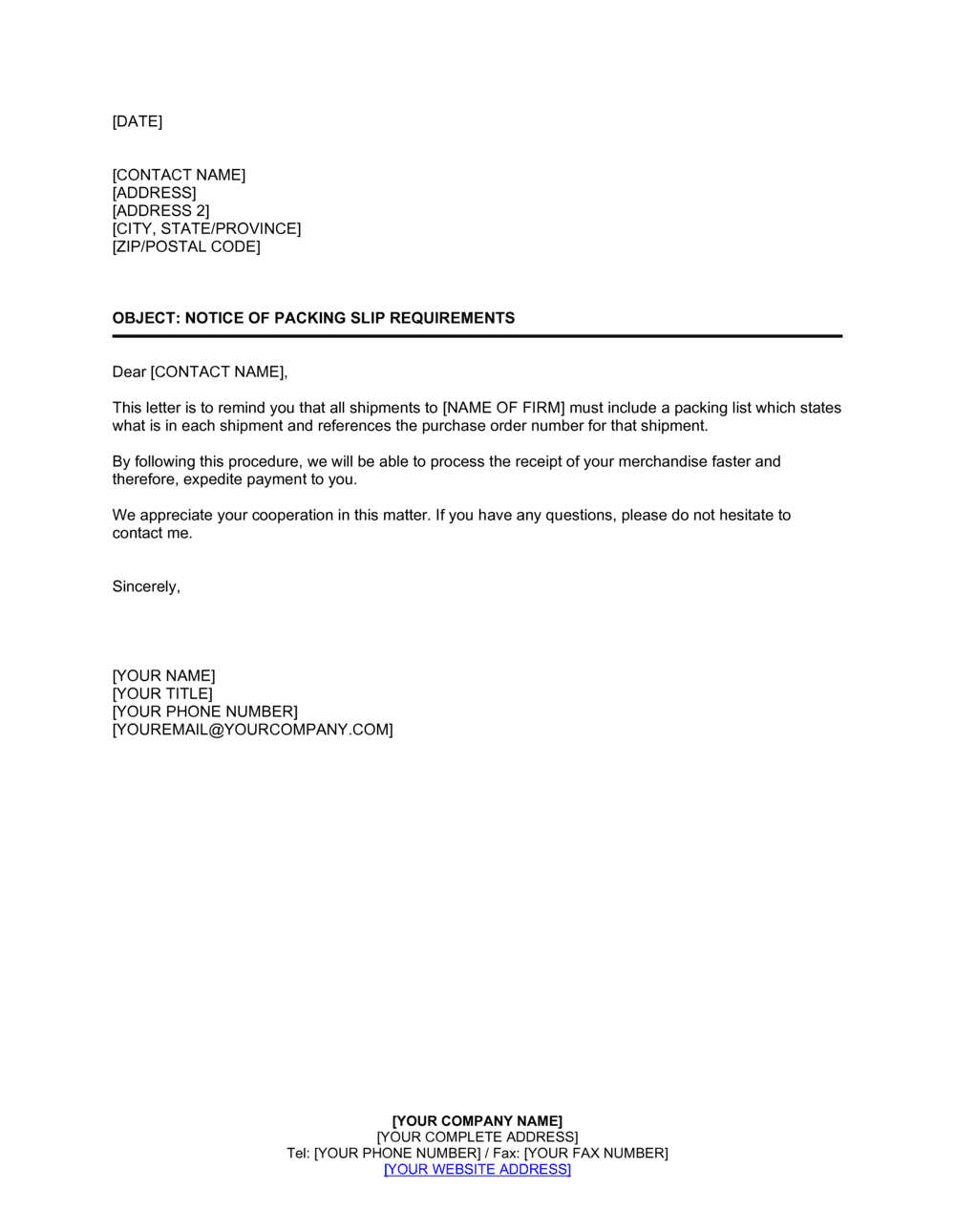
A Notice of Packing Slip Requirements is a formal business letter a buyer sends to a supplier or vendor to communicate the specific documentation and labeling standards that must accompany each shipment. This free Word download gives you a ready-to-edit template you can customize with your company's exact requirements and send to new or existing vendors in minutes.
When you need it
Use it when onboarding a new supplier, updating packaging standards across your vendor base, or addressing a recurring compliance failure where shipments arrive without correct documentation. It is also commonly issued before a new contract term begins to reset expectations.
What's inside
Recipient and sender details, a clear statement of the notice's purpose, itemized packing slip field requirements, labeling and formatting standards, consequences for non-compliance, and a contact for questions. Together these components give vendors an unambiguous reference they can hand directly to their warehouse or shipping teams.

What is a Notice of Packing Slip Requirements?

A Notice of Packing Slip Requirements is a formal business letter issued by a buyer to a supplier or vendor to communicate the exact documentation, field, labeling, and formatting standards that must accompany every inbound shipment. It replaces informal emails and verbal instructions with a single authoritative reference document that vendor operations teams can act on directly. The notice typically specifies required packing slip fields (such as PO number, SKU, and quantities), carton labeling placement, electronic advance ship notice obligations, and the consequences β€” financial chargebacks or return at vendor cost β€” that apply when a shipment arrives out of compliance.

Why You Need This Document

Without a formal notice, packing slip standards exist only as assumptions β€” and every vendor operates on different ones. Missing or incorrectly formatted packing slips delay receiving, create inventory discrepancies, and slow down payment processing, with each non-compliant shipment requiring manual intervention that compounds across a high-volume supply chain. When a chargeback dispute arises, a vendor who claims they were never informed of the requirements has a credible defense unless you can produce a documented notice they acknowledged. This template gives you the paper trail to enforce standards, the specificity to eliminate ambiguity about format and placement, and the named-contact structure to ensure the right person at each vendor actually reads and acts on it.

Which variant fits your situation?

If your situation is…Use this template
Notifying a new supplier of your packing requirements before the first shipmentNotice of Packing Slip Requirements
Formally documenting agreed packaging terms in a binding contractSupply Agreement
Addressing a specific shipment that arrived with incorrect or missing documentationVendor Non-Compliance Notice
Setting out all purchasing terms including delivery, returns, and documentationPurchase Order Terms and Conditions
Confirming a purchase and triggering fulfillmentPurchase Order
Requesting a corrected packing slip after a receiving discrepancyDiscrepancy Notice Letter
Onboarding a new vendor with all compliance and documentation requirements in one placeVendor Onboarding Checklist

Common mistakes to avoid

❌ Addressing the notice to the sales contact, not operations

Why it matters: The sales representative has no authority over warehouse processes. Requirements forwarded through sales contacts are routinely lost before reaching the team that packs and ships.

Fix: Confirm the name of the vendor's warehouse manager or compliance contact before sending and address the notice directly to them, copying the sales rep.
❌ No effective date on the notice

Why it matters: Without an effective date, vendors apply the new requirements on their own timeline β€” or not at all β€” and you have no basis to issue a chargeback.

Fix: Always include a specific calendar date and, where orders are already in production, a clearly stated grace period with its own end date.

❌ Vague non-compliance language

Why it matters: Phrases like 'may result in penalties' give vendors no urgency to comply and give you no contractual basis to apply a specific chargeback when they do not.

Fix: State the exact chargeback amount or return policy in the notice so vendors can weigh the cost of non-compliance against the cost of correcting their process.

❌ Listing fields without specifying format

Why it matters: A vendor who includes a PO number in the wrong format β€” plain digits instead of your hyphenated prefix β€” creates receiving mismatches that require manual intervention to resolve.

Fix: Provide a worked example for every field that has a format requirement, showing exactly how the data should appear on the printed slip.

The 9 key clauses, explained

Header and addressee block

In plain language: Identifies the sending company, the date, and the specific vendor or supplier contact receiving the notice.

Sample language
[YOUR COMPANY NAME] | [ADDRESS] | [DATE] | Attention: [VENDOR CONTACT NAME], [VENDOR COMPANY NAME]

Common mistake: Addressing the notice to the vendor's sales rep instead of their operations or warehouse manager β€” the person who can actually act on the requirements never sees it.

Subject line

In plain language: States the notice's purpose clearly so the recipient understands at a glance that this is a required-action document, not a routine communication.

Sample language
Re: Packing Slip Documentation Requirements for All Shipments to [YOUR COMPANY NAME]

Common mistake: Using a vague subject like 'Shipping Update' β€” vendors may deprioritize or misfile it, and you lose the paper trail showing requirements were communicated.

Purpose statement

In plain language: Opens the body with a brief paragraph explaining why the notice is being issued β€” standardization, a new system, or correcting past non-compliance.

Sample language
This notice sets out the packing slip requirements that must be met for all shipments made to [YOUR COMPANY NAME] effective [DATE]. Please ensure your warehouse and shipping teams are familiar with these requirements prior to fulfilling any outstanding or future purchase orders.

Common mistake: Skipping context entirely and jumping straight to the list. Without a purpose statement, vendors treat the letter as advisory rather than mandatory.

Required packing slip fields

In plain language: Lists every data field the packing slip must contain β€” PO number, vendor name, ship-to address, item descriptions, SKUs, quantities ordered, quantities shipped, and any back-order notation.

Sample language
Each packing slip must include: (1) [YOUR COMPANY NAME] Purchase Order Number; (2) Vendor name and ship-from address; (3) Ship-to address and department; (4) Item description and SKU; (5) Quantity ordered; (6) Quantity shipped; (7) Back-ordered quantity, if applicable.

Common mistake: Listing field names without specifying the exact format β€” e.g., not clarifying whether the PO number should appear as 'PO-2026-0047' or '20260047', causing receiving mismatches.

Labeling and formatting standards

In plain language: Specifies how the packing slip must be formatted and attached β€” placement on the carton, single vs. multi-page, font size, and whether a barcode or QR code is required.

Sample language
The packing slip must be printed on white paper, placed in a clear adhesive pouch affixed to the exterior of the master carton, and must include a scannable barcode encoding the PO number in [FORMAT β€” e.g., Code 128].

Common mistake: Omitting placement instructions β€” packing slips stuffed inside the carton delay receiving by 5–10 minutes per pallet when staff must open boxes to locate them.

Electronic or EDI requirements

In plain language: States whether an Advance Ship Notice (ASN) or EDI 856 transaction must be transmitted to the buyer's system before or at the time of physical shipment.

Sample language
In addition to the physical packing slip, an EDI 856 Advance Ship Notice must be transmitted to [YOUR COMPANY EDI ID] no later than [X] hours prior to scheduled delivery. ASNs submitted after shipment arrival will be treated as non-compliant.

Common mistake: Including EDI requirements only in the EDI setup documentation and not in the packing slip notice β€” vendors who are not EDI-capable miss the requirement entirely until a chargeback arrives.

Non-compliance consequences

In plain language: States clearly what happens when a shipment arrives without a compliant packing slip β€” return at vendor cost, processing delay, or a financial chargeback.

Sample language
Shipments received without a compliant packing slip will be subject to a processing fee of $[AMOUNT] per occurrence and/or return to the vendor at the vendor's expense. [YOUR COMPANY NAME] reserves the right to delay payment on non-compliant shipments pending documentation correction.

Common mistake: Describing consequences in vague terms like 'may result in penalties.' Specific dollar amounts and outcomes create the accountability that vague language does not.

Effective date and transition period

In plain language: Specifies the date on which these requirements take effect and whether there is a grace period for existing orders already in production.

Sample language
These requirements are effective for all purchase orders issued on or after [DATE]. Orders currently in production under a PO dated prior to [DATE] will be accepted under the prior standard through [GRACE DATE].

Common mistake: No effective date at all β€” vendors default to their own timelines, and disputes arise about when the new standard applied.

Contact and acknowledgment request

In plain language: Provides a named contact for questions and requests a written acknowledgment from the vendor confirming they have received and understood the requirements.

Sample language
Please direct any questions regarding these requirements to [CONTACT NAME] at [EMAIL] / [PHONE]. Kindly reply to this notice by [DATE] confirming receipt and your warehouse team's readiness to comply.

Common mistake: Providing a general inbox (info@company.com) with no named contact β€” vendors who have questions give up rather than navigate an anonymous inbox, and compliance suffers.

How to fill it out

  1. 1

    Enter your company's header and the vendor's details

    Add your company name, address, and the notice date at the top. In the addressee block, use the vendor's legal entity name and the name of their operations or warehouse manager β€” not the sales contact.

    πŸ’‘ Call the vendor before sending to confirm the right person's name and email. A notice addressed to the right contact is actioned faster.

  2. 2

    Write a clear subject line that signals required action

    Use the subject line to state that this notice governs all shipments to your company, referencing the effective date. Avoid vague titles like 'Packaging Update.'

    πŸ’‘ Including the effective date in the subject line β€” e.g., 'Effective June 1, 2026' β€” prompts vendors to calendar the change without reading the full letter.

  3. 3

    Complete the required packing slip fields list

    List every field your receiving system needs, in the exact format your warehouse expects. If your WMS requires PO numbers in a specific format, spell it out with an example.

    πŸ’‘ Pull a sample packing slip from your WMS to confirm field names match what your system actually scans β€” discrepancies in field labels cause as many receiving errors as missing fields.

  4. 4

    Specify labeling placement and format

    State exactly where on the carton the packing slip must be attached and whether a barcode is required. If you have multiple receiving locations, note any location-specific differences.

    πŸ’‘ A simple diagram or photo attached to the letter cuts compliance errors more than any amount of text description.

  5. 5

    Add EDI or ASN requirements if applicable

    If your receiving operation depends on advance ship notices, list the EDI transaction set required, your EDI ID, and the lead-time requirement before delivery.

    πŸ’‘ For vendors who are not EDI-capable, provide an email-based ASN alternative with the exact subject line and attachment format required.

  6. 6

    Define non-compliance consequences with specific amounts

    Enter the exact chargeback amount or return policy that applies to non-compliant shipments. Specific numbers get more attention than vague warnings.

    πŸ’‘ Align the chargeback amount with your actual processing cost β€” a fee that reflects real costs is easier to defend if a vendor disputes it.

  7. 7

    Set the effective date and request acknowledgment

    Enter the effective date and any grace period for in-production orders. Close with a specific acknowledgment request and a named contact for questions.

    πŸ’‘ Set the acknowledgment deadline 10 business days before the effective date so you have time to follow up with non-responding vendors.

Frequently asked questions

What is a notice of packing slip requirements?

A notice of packing slip requirements is a formal letter a buyer sends to a supplier specifying the exact documentation, fields, labeling, and formatting that must accompany every inbound shipment. It replaces informal emails or verbal instructions with a single reference document the vendor can distribute to their warehouse team and retain on file.

Why do buyers issue packing slip requirements to vendors?

Receiving teams depend on accurate packing slips to match shipments to open purchase orders, update inventory records, and process payments. When packing slips are missing fields, formatted incorrectly, or absent entirely, receiving is delayed, discrepancies go unresolved, and payment cycles slow down. A formal notice sets clear standards that vendors can train to and that buyers can enforce.

What information should a packing slip include?

At minimum: the buyer's purchase order number, the vendor's name and ship-from address, the ship-to address, a description of each item, the SKU or item number, quantity ordered, and quantity shipped. Buyers with automated receiving systems often also require a barcode encoding the PO number, a lot or batch number for regulated goods, and an advance ship notice transmitted electronically before the delivery arrives.

What happens if a vendor ignores packing slip requirements?

The buyer's standard response is to issue a chargeback β€” a financial penalty deducted from the vendor's payment β€” or to return the shipment at the vendor's expense pending corrected documentation. A formal notice with specific non-compliance consequences gives the buyer a documented basis to apply these remedies without a dispute.

Is a notice of packing slip requirements legally binding?

On its own, the notice is a formal communication rather than a binding contract. It becomes enforceable when it is incorporated into a purchase order, vendor agreement, or supplier compliance policy that the vendor has agreed to. Including an acknowledgment request in the notice creates a paper trail confirming the vendor received and accepted the requirements.

When should I update and reissue this notice?

Reissue the notice when your receiving system changes (new WMS or ERP), when you adopt EDI or add an ASN requirement, when you update chargeback amounts, when you add or remove receiving locations, or when a vendor consistently fails to comply and you need a fresh documented warning. An annual review aligned to vendor contract renewals is a practical cadence.

Can I send this notice to multiple vendors at once?

Yes β€” the template is designed to be adapted into a standard vendor communication sent to your entire supplier base with vendor-specific fields (contact name, vendor entity name) filled in for each recipient. For large vendor bases, a mail-merge approach using your vendor master data keeps the notice personalized without manual editing for each recipient.

Should the notice include EDI requirements even for vendors who are not EDI-capable?

Yes, but pair the EDI requirement with a documented non-EDI alternative β€” typically an email-based advance ship notice with a specific format and subject line. This ensures all vendors have a path to compliance and removes the excuse that the requirement did not apply to them.

How this compares to alternatives

vs Purchase Order

A purchase order authorizes a specific transaction β€” it specifies what the buyer wants, in what quantity, at what price. A notice of packing slip requirements specifies how all shipments must be documented, regardless of what is ordered. The PO triggers the transaction; the notice governs how it must be shipped and received.

vs Vendor Non-Compliance Notice

A vendor non-compliance notice is issued after a shipment has already failed to meet standards β€” it documents the specific failure and states the remedy or penalty applied. A notice of packing slip requirements is proactive, issued before shipments occur to prevent the failure in the first place. Use the packing slip notice to set standards; use the non-compliance notice when those standards are not met.

vs Supply Agreement

A supply agreement is a binding contract covering all terms of the supplier relationship β€” pricing, volumes, warranties, indemnification, and termination. A notice of packing slip requirements is a single-purpose operational letter focused only on documentation standards. For a comprehensive vendor relationship, the packing slip requirements are incorporated by reference into the supply agreement.

vs Receiving Checklist

A receiving checklist is an internal tool used by warehouse staff to verify each inbound shipment against the packing slip and purchase order. A notice of packing slip requirements is an external document sent to vendors to specify what they must include on the slip. The notice creates the standard; the checklist verifies compliance when goods arrive.

Industry-specific considerations

Retail and wholesale distribution

Retail buyers enforce strict packing slip standards tied to EDI 856 ASNs, carton-level barcodes, and store-number routing β€” non-compliance triggers automated chargebacks in most major retail systems.

E-commerce and fulfillment

Fulfillment centers require SKU-level accuracy on packing slips so items can be scanned directly into WMS inventory without manual counting or data entry.

Manufacturing and industrial supply

Component manufacturers require lot numbers, part revisions, and certificate-of-conformance references on packing documentation to support traceability and quality audits.

Healthcare and medical devices

Medical supply buyers require UDI (Unique Device Identifier) codes, lot numbers, and expiry dates on packing slips to comply with FDA traceability regulations and hospital receiving protocols.

Template vs pro β€” what fits your needs?

PathBest forCostTime
Use the templatePurchasing managers and small business owners communicating standard packing requirements to any vendorFree10–15 minutes per notice
Template + professional reviewBusinesses linking packing slip requirements to chargeback clauses in a vendor agreement$100–$300 (brief review by a procurement or contracts professional)1–2 days
Custom draftedEnterprises with complex EDI, multi-location receiving, and formal vendor compliance programs requiring legally integrated documentation standards$500–$2,0001–2 weeks

Glossary

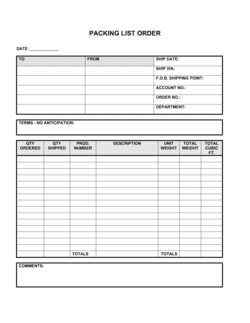
Packing Slip
A document included with a shipment that lists every item in the package β€” quantities, SKUs, and descriptions β€” so the recipient can verify the contents against their purchase order.
Purchase Order (PO) Number
A unique reference number issued by the buyer that authorizes a purchase; it must appear on the packing slip so the receiving team can match the shipment to an open order.
SKU (Stock Keeping Unit)
A unique alphanumeric code assigned to each distinct product variant, used to identify and track inventory at the item level.
Bill of Lading (BOL)
A shipping document issued by the carrier listing the goods being transported; it accompanies the packing slip for freight shipments and serves as the carrier's receipt.
Vendor Compliance
Adherence by a supplier to the buyer's specified standards for labeling, packaging, documentation, and delivery β€” non-compliance typically triggers chargebacks or returns.
Chargeback
A financial penalty assessed by a buyer against a supplier for failing to meet agreed packaging, labeling, or documentation requirements on a shipment.
EDI (Electronic Data Interchange)
A standardized electronic format for transmitting business documents β€” including packing slips and purchase orders β€” between trading partners' systems without manual data entry.
UPC / Barcode
A machine-readable label encoding product identification information; buyers often require a specific barcode format on packing slips and carton labels for automated receiving.
Receiving Discrepancy
A mismatch between what the packing slip says was shipped and what the receiving team physically counts or scans upon delivery.
Advance Ship Notice (ASN)
An electronic notification sent by the supplier before the shipment arrives, detailing contents and estimated delivery date β€” often required alongside a physical packing slip.

Part of your Business Operating System

This document is one of 3,000+ business & legal templates included in Business in a Box.

  • Fill-in-the-blanks β€” ready in minutes
  • 100% customizable Word document
  • Compatible with all office suites
  • Export to PDF and share electronically

Create your document in 3 simple steps.

From template to signed document β€” all inside one Business Operating System.
1
Download or open template

Access over 3,000+ business and legal templates for any business task, project or initiative.

2
Edit and fill in the blanks with AI

Customize your ready-made business document template and save it in the cloud.

3
Save, Share, Send, Sign

Share your files and folders with your team. Create a space of seamless collaboration.

Save time, save money, and create top-quality documents.

β˜…β˜…β˜…β˜…β˜…

"Fantastic value! I'm not sure how I'd do without it. It's worth its weight in gold and paid back for itself many times."

Managing Director Β· Mall Farm
Robert Whalley
Managing Director, Mall Farm Proprietary Limited
β˜…β˜…β˜…β˜…β˜…

"I have been using Business in a Box for years. It has been the most useful source of templates I have encountered. I recommend it to anyone."

Business Owner Β· 4+ years
Dr Michael John Freestone
Business Owner
β˜…β˜…β˜…β˜…β˜…

"It has been a life saver so many times I have lost count. Business in a Box has saved me so much time and as you know, time is money."

Owner Β· Upstate Web
David G. Moore Jr.
Owner, Upstate Web

Run your business with a system β€” not scattered tools

Stop downloading documents. Start operating with clarity. Business in a Box gives you the Business Operating System used by over 250,000 companies worldwide to structure, run, and grow their business.

Free Forever PlanΒ Β·Β No credit card required