Post-Employment Reference Policy Template

Free Word download β€’ Edit online β€’ Save & share with Drive β€’ Export to PDF

1 pageβ€’15–25 min to fillβ€’Difficulty: Standard
Learn more ↓
FreePost-Employment Reference Policy Template

At a glance

What it is
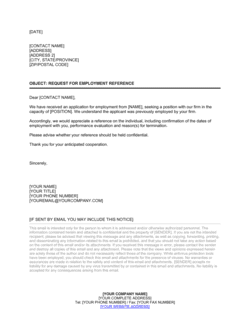
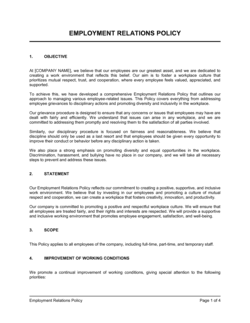
A Post Employment Reference Policy is an internal HR document that defines exactly what information the organization will disclose β€” and to whom β€” when a former employee's prospective employer calls for a reference. This free Word download gives you a structured, ready-to-edit policy you can tailor to your disclosure limits, authorized spokespersons, and documentation requirements, then export as PDF for your HR handbook.
When you need it
Use it whenever your organization receives reference requests for former employees, or when standardizing how managers and HR staff respond to background check inquiries. It is especially critical after any termination for cause, layoff, or departure under dispute.
What's inside
A purpose statement, scope and applicability rules, definitions of permitted and prohibited disclosures, authorized spokesperson designations, response procedures for written and verbal requests, documentation and record-keeping requirements, and consequences for policy violations.

What is a Post Employment Reference Policy?

A Post Employment Reference Policy is an internal HR governance document that establishes exactly what information an organization will disclose β€” and who is authorized to disclose it β€” when a former employee's prospective employer, background screening firm, or other third party requests a reference. It sets a standard neutral-reference baseline, designates an authorized spokesperson, specifies which disclosures are permitted without a signed consent, and lists categories of information that must never be shared. Rather than leaving each reference response to the discretion of individual managers, the policy creates a single, repeatable procedure that every employee who might receive a reference call is trained to follow.

Why You Need This Document

Without a written reference policy, your organization's exposure runs in two directions at once. A manager who volunteers negative performance details about a former employee β€” even accurately β€” without documented support opens the company to defamation claims. A manager who provides an enthusiastic positive reference while omitting known misconduct can trigger negligent referral liability if the former employee later harms their new employer. Neither outcome requires bad intent; both stem from the absence of a clear procedure. A consistently applied policy closes both gaps: HR handles every inquiry, only permitted facts are confirmed, and every response is logged. The result is a defensible paper trail, consistent treatment of all former employees, and a clear answer for every manager who receives an unexpected reference call and needs to know exactly what to say.

Which variant fits your situation?

If your situation is…Use this template
Company-wide policy for all employee departuresPost Employment Reference Policy
Providing a positive written reference for a specific former employeeEmployee Reference Letter
Confirming employment dates and title only with no further commentEmployment Verification Letter
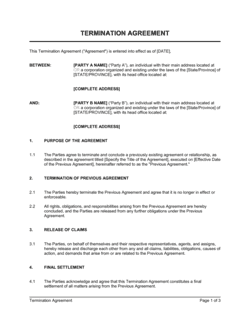
Documenting the terms of an employee's departure and severanceTermination Agreement
Outlining general HR conduct standards and workplace rulesEmployee Handbook
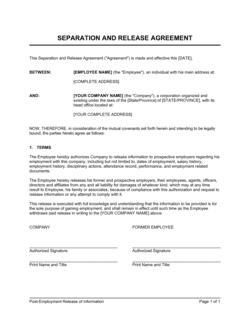
Collecting a signed consent before responding to a reference requestEmployee Consent and Authorization Form
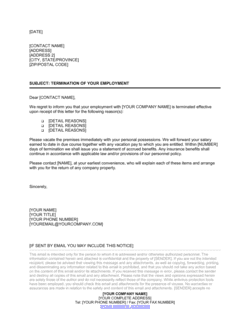
Documenting the reason for and terms of an employee's dismissalEmployee Dismissal Letter

Common mistakes to avoid

❌ Allowing managers to respond independently

Why it matters: Even a well-intentioned positive response from a former manager can constitute negligent referral if it omits known misconduct, exposing the company to third-party liability claims.

Fix: Name a single HR spokesperson in the policy and provide all managers with a one-line redirect script to use when a reference call reaches them directly.

❌ No signed release before extended disclosure

Why it matters: Disclosing performance or conduct details without written consent from the former employee can breach privacy obligations and undermine the company's defense in a defamation claim.

Fix: Require a signed, date-specific release form that names the requesting party before HR provides any information beyond the neutral-reference defaults.

❌ Omitting prohibited disclosures for reason of termination

Why it matters: Confirming that an employee was 'fired for cause' β€” even accurately β€” without a signed release and documented evidence creates defamation exposure and can trigger wrongful termination counterclaims.

Fix: Explicitly list reasons for separation among prohibited disclosures and train HR to respond only with rehire eligibility status when pressed.

❌ Skipping the requester identity verification step

Why it matters: Reference inquiries from unverified callers can be pretexting attempts β€” disclosing employment details to an impersonator violates privacy obligations and can expose sensitive HR data.

Fix: Require HR to confirm the requester's name, employer, and contact number, then call back on a verified company number before providing any information.

The 9 key sections, explained

Purpose and policy statement

Scope and applicability

Authorized spokespersons

Permitted disclosures

Prohibited disclosures

Extended disclosure with signed release

Response procedures

Documentation and record-keeping

Policy violations and consequences

How to fill it out

  1. 1

    Insert your company name and effective date

    Replace all [COMPANY NAME] placeholders throughout the document and add the policy's effective date in the header. Confirm the version number if your organization uses a policy versioning system.

    πŸ’‘ Use the exact legal entity name β€” not a brand name β€” so the policy is clearly attributable to the employing entity in any dispute.

  2. 2

    Name the authorized spokesperson and backup

    Enter the job title and contact details β€” not a personal name β€” for the designated HR reference spokesperson and a backup. Using titles rather than names means the policy stays valid through personnel changes.

    πŸ’‘ Include a generic HR email address (e.g., references@company.com) as the inbound contact point so all requests are logged automatically.

  3. 3

    Set your default neutral-reference scope

    Decide which fields your organization will confirm without a signed release β€” typically employment dates, final job title, and rehire eligibility. Remove salary from the default list if your jurisdiction restricts salary history disclosure.

    πŸ’‘ Check your state or provincial laws on salary history before finalizing the permitted disclosures list β€” at least 20 US states and several Canadian provinces have restrictions.

  4. 4

    Customize the prohibited disclosures list

    Review the prohibited disclosures section and add any company-specific categories β€” performance improvement plan participation, internal investigation status, or equity forfeiture β€” that your legal counsel advises keeping confidential.

    πŸ’‘ If your organization uses a non-disparagement clause in separation agreements, cross-reference it here so HR applies it consistently.

  5. 5

    Attach or reference your release consent form

    Link to or append your signed release form so the extended-disclosure section is immediately actionable. If you do not have one, create a simple one-page form that identifies the former employee, the requesting party, and the specific information authorized for release.

    πŸ’‘ Date-stamp the release form β€” a blanket signed release is weaker than one tied to a specific requester and a specific inquiry.

  6. 6

    Define the response log format and retention period

    Specify whether HR logs requests in your HRIS, a shared spreadsheet, or a dedicated folder, and confirm the retention period aligns with your broader employment records policy β€” typically 5–7 years.

    πŸ’‘ A simple log with six fields β€” date, requester name, requester organization, former employee name, information provided, and HR initials β€” satisfies documentation requirements for most audits.

  7. 7

    Distribute and acknowledge receipt

    Add the policy to your employee handbook and HR operations manual. Have current HR staff and any manager who might receive a reference call sign an acknowledgment confirming they have read and understood it.

    πŸ’‘ Run a 30-minute training session for front-line managers specifically on the redirect script β€” 'Please contact HR at [EMAIL]' β€” so they do not improvise when caught off guard by a phone inquiry.

Frequently asked questions

What is a post employment reference policy?

A post employment reference policy is an internal HR document that defines what information the organization will share β€” and who is authorized to share it β€” when a former employee's prospective employer requests a reference. It sets a standard neutral-reference floor, limits unauthorized disclosures, and creates a documentation trail that protects the company from defamation and negligent referral liability.

Why do companies adopt a neutral reference policy?

Neutral reference policies β€” confirming only employment dates, job title, and rehire eligibility β€” reduce legal risk from two directions simultaneously. A negative reference without thorough documentation exposes the employer to defamation claims. A positive reference that omits known misconduct can result in negligent referral liability if the former employee harms their new employer. A consistently applied neutral policy limits both exposures.

Who should be the authorized spokesperson for reference inquiries?

In most organizations, the HR department β€” specifically a designated HR manager or generalist β€” should be the sole authorized spokesperson. Using a job title rather than a personal name keeps the policy current through staff changes. All other employees, including former direct managers, should redirect any reference call to HR using a scripted response.

Can a company legally refuse to provide any reference?

In most jurisdictions, private employers are not legally required to provide substantive references beyond confirming basic employment facts. Refusing to comment beyond dates and title is a legitimate and widely practiced approach. However, some industries β€” notably financial services and healthcare β€” may have regulatory obligations to disclose specific conduct findings on standard reference forms. Consider consulting an employment lawyer for regulated sectors.

What is the difference between a reference policy and an employment verification letter?

A reference policy governs how the organization responds verbally or in writing to inbound inquiries about former employees. An employment verification letter is a specific outbound document confirming objective employment facts β€” dates, title, and sometimes salary β€” usually for a former employee's own use. The policy determines what the letter may contain and who can issue it.

How does a non-disparagement clause in a separation agreement interact with this policy?

A non-disparagement clause in a separation agreement typically prohibits both parties from making negative statements about each other. Your reference policy should cross-reference any such clauses so HR knows which former employees are subject to mutual non-disparagement obligations. In practice, this means limiting responses to the neutral reference defaults for those individuals regardless of what a manager might want to say.

How long should reference inquiry records be kept?

A retention period of 5–7 years from the date of the response is standard and aligns with typical employment records retention requirements in the US, Canada, and the UK. Records should be stored in the former employee's personnel file or HRIS and include the date, requester's identity, former employee name, and the specific information provided. Consult your legal counsel for jurisdiction-specific minimums.

What should managers say if they receive a reference call directly?

Managers should use a scripted redirect: "Our company policy requires all reference inquiries to go through HR. Please contact [HR EMAIL / PHONE NUMBER] and they will respond within [X] business days." They should not confirm or deny any information about the former employee, including employment dates, before the call is redirected. Brief all managers on this script annually.

How this compares to alternatives

vs Employee Reference Letter

An employee reference letter is a specific outbound document written to support a named former employee's job search β€” it is positive by design and produced at the employer's or employee's request. A post employment reference policy governs how the organization handles inbound reference inquiries for all former employees, including those for whom no letter would be written. The policy determines whether and how a letter like that can be issued.

vs Employment Verification Letter

An employment verification letter confirms objective employment facts β€” dates, title, sometimes salary β€” for a specific former employee, typically for housing, lending, or visa purposes. A reference policy is the broader governance framework that sets disclosure limits for all inbound inquiries, of which employment verification is just one narrow type. The policy defines what information the verification letter is permitted to include.

vs Employee Handbook

An employee handbook is an omnibus document covering all workplace policies, conduct standards, and benefits. A post employment reference policy is a standalone operational document that HR uses after an employee has left β€” it is typically included by reference in the handbook but maintained separately so it can be updated independently without reissuing the full handbook.

vs Termination Agreement

A termination agreement governs the terms of a specific employee's departure β€” severance, non-disparagement, release of claims. A reference policy governs how HR responds to all future inbound inquiries about that former employee. The two documents work in tandem: the termination agreement may restrict what can be said; the reference policy operationalizes those restrictions for the HR team handling calls months or years later.

Industry-specific considerations

Financial Services

FINRA Form U5 disclosures and regulatory reference obligations require financial firms to disclose specific conduct findings, making a policy that coordinates statutory and neutral-reference responses especially important.

Healthcare

Credentialing bodies and state licensing boards require healthcare employers to disclose clinical competency concerns, so the policy must distinguish between regulatory reporting obligations and standard employment references.

Technology / SaaS

High employee mobility and frequent reference checks between competing firms mean IP and non-disparagement considerations from separation agreements must be explicitly embedded in the reference response procedure.

Professional Services

Client-facing roles and professional licensing requirements make rehire eligibility classification and conduct disclosure particularly sensitive, with reputational risk flowing in both directions if references are mishandled.

Template vs pro β€” what fits your needs?

PathBest forCostTime
Use the templateSmall to mid-size businesses standardizing their reference response process for the first timeFree1–2 hours to customize and distribute
Template + professional reviewOrganizations in regulated industries, those with recent termination disputes, or companies with operations in multiple jurisdictions$200–$500 for an employment lawyer to review3–5 business days
Custom draftedLarge enterprises with complex separation agreement portfolios, unionized workforces, or mandatory regulatory reference obligations$800–$2,500 for a custom employment law firm engagement1–3 weeks

Glossary

Reference Request
A formal or informal inquiry from a prospective employer or third party seeking information about a former employee's work history or character.
Authorized Spokesperson
The specific individual β€” typically an HR representative β€” designated by the organization as the only person permitted to respond to reference inquiries.
Neutral Reference
A limited-disclosure response confirming only employment dates, job title, and eligibility for rehire, without positive or negative characterization.
Defamation
A false statement of fact communicated to a third party that damages a person's reputation β€” a primary legal risk when providing negative references without documented support.
Qualified Privilege
A legal protection available in many jurisdictions that shields good-faith reference providers from defamation liability when disclosing job-relevant information without malice.
Negligent Referral
Liability arising when an employer provides a misleading positive reference for a former employee who later harms their new employer, concealing known misconduct.
Employment Verification
A narrow confirmation of objective employment facts β€” start date, end date, and title β€” that does not include performance or conduct commentary.
Rehire Eligibility
An internal classification β€” typically 'eligible,' 'ineligible,' or 'conditional' β€” indicating whether the organization would re-engage the former employee.
Release of Liability
A signed consent form from the former employee authorizing the employer to disclose specific information to third parties in response to reference requests.
Separation Agreement
A contract signed at departure that may include mutual non-disparagement clauses, which constrain what either party can say about the other in a reference context.

Part of your Business Operating System

This document is one of 3,000+ business & legal templates included in Business in a Box.

  • Fill-in-the-blanks β€” ready in minutes
  • 100% customizable Word document
  • Compatible with all office suites
  • Export to PDF and share electronically

Create your document in 3 simple steps.

From template to signed document β€” all inside one Business Operating System.
1
Download or open template

Access over 3,000+ business and legal templates for any business task, project or initiative.

2
Edit and fill in the blanks with AI

Customize your ready-made business document template and save it in the cloud.

3
Save, Share, Send, Sign

Share your files and folders with your team. Create a space of seamless collaboration.

Save time, save money, and create top-quality documents.

β˜…β˜…β˜…β˜…β˜…

"Fantastic value! I'm not sure how I'd do without it. It's worth its weight in gold and paid back for itself many times."

Managing Director Β· Mall Farm
Robert Whalley
Managing Director, Mall Farm Proprietary Limited
β˜…β˜…β˜…β˜…β˜…

"I have been using Business in a Box for years. It has been the most useful source of templates I have encountered. I recommend it to anyone."

Business Owner Β· 4+ years
Dr Michael John Freestone
Business Owner
β˜…β˜…β˜…β˜…β˜…

"It has been a life saver so many times I have lost count. Business in a Box has saved me so much time and as you know, time is money."

Owner Β· Upstate Web
David G. Moore Jr.
Owner, Upstate Web

Run your business with a system β€” not scattered tools

Stop downloading documents. Start operating with clarity. Business in a Box gives you the Business Operating System used by over 250,000 companies worldwide to structure, run, and grow their business.

Start freeΒ Β·Β No credit card required