Request for Contractor References Template

Free Word download β€’ Edit online β€’ Save & share with Drive β€’ Export to PDF

1 pageβ€’15–20 min to fillβ€’Difficulty: Standard
Learn more ↓
FreeRequest for Contractor References Template

At a glance

What it is
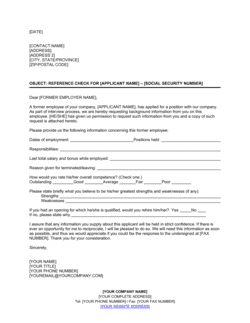
A Request for Contractor References is a formal business letter sent to individuals or organizations listed as references by a contractor under consideration for hire. This free Word download gives you a polished, ready-to-send letter you can edit online and export as PDF in minutes β€” covering the contractor's identity, the scope of work being considered, and the specific questions you need answered before awarding a contract.
When you need it
Use it during the contractor vetting stage β€” after shortlisting candidates and before signing any service agreement or work order. It is especially important when the contract involves significant budget, sensitive operations, or access to your facilities or systems.
What's inside
A professional introduction identifying your organization and the contractor being evaluated, a description of the project or engagement scope, targeted questions about the contractor's past performance, reliability, and quality of work, and a clear response deadline with your contact details.

What is a Request for Contractor References?

A Request for Contractor References is a formal business letter sent by a hiring organization to individuals or companies named as references by a contractor under evaluation. It identifies the contractor, describes the scope of the proposed engagement, and poses specific questions about the contractor's past performance β€” including work quality, on-time delivery, budget adherence, and whether the reference would hire them again. The letter gives your due diligence process a documented, professional paper trail and signals to both the contractor and their references that you take vetting seriously.

Why You Need This Document

Hiring a contractor without checking references is one of the most avoidable sources of project failure. A contractor who looks strong on paper β€” polished proposal, competitive pricing, credible portfolio β€” may have a history of missed deadlines, inflated invoices, or quality disputes that only their past clients know about. Without a structured reference check, that information never reaches you before you sign the contract. A formal request letter also creates a written record of your due diligence process, which matters if a contractor dispute escalates or if your organization is subject to procurement audits. This template gives you a ready-to-send, professional letter that asks the right questions, assures references of confidentiality, and sets a clear response deadline β€” so you get the feedback you need before any money changes hands.

Which variant fits your situation?

If your situation is…Use this template
Checking references for a construction or trades contractorRequest For Contractor References (Construction)
Verifying a freelance consultant or professional services providerRequest For Consultant References
Collecting references as part of a formal RFP evaluationRequest for Proposal (RFP)
Following up when a reference does not respond to the initial letterFollow-Up Reference Request Letter
Requesting a written character or performance reference from a reference providerReference Letter
Confirming employment history and performance for a W-2 contractorEmployment Verification Letter

Common mistakes to avoid

❌ Sending one letter to all references simultaneously on the same email thread

Why it matters: CC'ing all references exposes your candidate list, potentially creating awkward dynamics and reducing the candor of individual responses.

Fix: Send individual, personalized emails or letters to each reference separately, with no visibility into who else was contacted.

❌ Asking only yes/no reference questions

Why it matters: Closed questions like 'Was the work satisfactory?' produce minimal insight and allow evasive responses that obscure real performance concerns.

Fix: Include at least two open-ended questions β€” such as 'Describe a situation where the contractor handled an unexpected challenge' β€” to surface specific, verifiable details.

❌ Setting a response deadline of fewer than five business days

Why it matters: Tight deadlines are frequently ignored because references prioritize their own workload; you end up with incomplete information or no response at all.

Fix: Give references 7 to 10 business days and follow up with a brief, polite phone call or email on day three.

❌ Omitting the scope of the proposed engagement

Why it matters: Without context, a reference cannot tell you whether their experience is relevant β€” a contractor who excelled at small residential work may not be the right fit for a large commercial project.

Fix: Include a two-to-three sentence description of the project type, scale, and duration so the reference can calibrate their feedback to your actual needs.

The 8 key clauses, explained

Sender identification and date

In plain language: Opens the letter with the sender's organization name, address, and the date, establishing the official record of when the inquiry was made.

Sample language
[YOUR ORGANIZATION NAME] | [ADDRESS LINE 1] | [CITY, STATE, ZIP] | [DATE]

Common mistake: Using a personal email address or informal letterhead β€” references may question the legitimacy of the inquiry and decline to respond.

Recipient address block

In plain language: Names the reference provider and their organization, directing the letter to the correct individual who can speak to the contractor's past work.

Sample language
[REFERENCE NAME] | [TITLE] | [ORGANIZATION NAME] | [ADDRESS]

Common mistake: Addressing the letter to a generic department (e.g., 'To Whom It May Concern') instead of the specific person the contractor listed β€” response rates drop significantly.

Opening introduction and purpose

In plain language: States why you are writing, identifies your organization, and names the contractor under evaluation so the reference understands the context immediately.

Sample language
We are writing on behalf of [YOUR ORGANIZATION], currently evaluating [CONTRACTOR NAME / COMPANY] for a [DESCRIPTION OF PROJECT OR ENGAGEMENT]. [CONTRACTOR NAME] has listed you as a reference and we would greatly appreciate your candid feedback.

Common mistake: Burying the contractor's name or the purpose of the letter in the second paragraph β€” recipients who skim the opening may not realize they have relevant information to share.

Description of the proposed engagement

In plain language: Briefly describes the scope, duration, and nature of the work being considered so the reference can give a relevant and informed assessment.

Sample language
The proposed engagement involves [BRIEF SCOPE DESCRIPTION] over approximately [DURATION], commencing [ESTIMATED START DATE]. The contract value is approximately $[AMOUNT].

Common mistake: Omitting the engagement description entirely, forcing the reference to guess whether their experience with the contractor is relevant to your evaluation.

Reference questions

In plain language: Poses specific, targeted questions about the contractor's performance, reliability, quality of work, communication, and adherence to budget and timeline.

Sample language
We would appreciate your responses to the following: (1) In what capacity did [CONTRACTOR NAME] work with your organization? (2) Did they complete deliverables on time and within the agreed budget? (3) How would you rate the quality of their work? (4) Would you engage them again? Please explain.

Common mistake: Asking only closed yes/no questions. Open-ended questions about specific project outcomes produce far more actionable intelligence.

Confidentiality assurance

In plain language: Assures the reference that their feedback will be treated with discretion and used solely for the purpose of contractor evaluation.

Sample language
Please note that your responses will be treated as confidential and used solely to assist our contractor evaluation process. We will not share your specific feedback with [CONTRACTOR NAME] without your consent.

Common mistake: Omitting any confidentiality language β€” references are less candid about performance concerns when they fear the contractor will see their exact words.

Response format and deadline

In plain language: Tells the reference how to respond (written reply, phone call, or email) and the deadline by which you need their feedback to stay on your evaluation timeline.

Sample language
Please reply in writing to [EMAIL ADDRESS] or by phone at [PHONE NUMBER] by [RESPONSE DEADLINE DATE]. If this date is not feasible, please contact us to arrange an alternative.

Common mistake: Setting a response deadline of less than five business days. References have their own workload; insufficient lead time results in non-responses, not faster replies.

Thank-you and contact information

In plain language: Closes the letter courteously, thanks the recipient for their time, and provides direct contact details for follow-up questions.

Sample language
Thank you for taking the time to assist us. If you have any questions, please contact [YOUR NAME] at [EMAIL] or [PHONE NUMBER]. We value your input and look forward to your response.

Common mistake: Closing with a generic sign-off and no named contact. References who have follow-up questions or concerns are less likely to respond if they have no specific person to reach.

How to fill it out

  1. 1

    Enter your organization's letterhead details

    Replace the placeholder at the top of the template with your organization's legal name, address, and the date. Use your official letterhead if available.

    πŸ’‘ Sending from a recognizable organizational email address and domain increases the response rate compared to personal or generic accounts.

  2. 2

    Address the letter to the named reference

    Use the specific name and title the contractor provided for each reference. If the contractor listed only an organization, call ahead to confirm the correct contact person before sending.

    πŸ’‘ Personalized salutations β€” 'Dear Ms. [NAME]' rather than 'Dear Sir/Madam' β€” consistently yield higher response rates.

  3. 3

    Identify the contractor and the project context

    Name the contractor clearly in the opening paragraph and briefly describe the scope, timeline, and value of the engagement you are considering. Give the reference enough context to assess relevance.

    πŸ’‘ Mentioning that the contractor specifically named them as a reference helps recipients understand why they are receiving the letter and feel confident in responding.

  4. 4

    Write targeted reference questions

    Replace the sample questions with questions specific to your evaluation criteria β€” on-time delivery, budget adherence, communication quality, technical competence, and willingness to re-engage.

    πŸ’‘ Limit questions to four to six. Longer questionnaires are frequently abandoned halfway through; fewer focused questions produce more complete answers.

  5. 5

    Add the confidentiality assurance and deadline

    Confirm the deadline date β€” typically 7 to 10 business days from the send date β€” and include clear instructions on how to respond: email, written letter, or phone call.

    πŸ’‘ If you need feedback faster, a phone call follow-up on day three typically doubles your response rate compared to waiting for the deadline.

  6. 6

    Sign and send on official letterhead

    Include your name, title, and direct contact details in the closing. Send the letter by email as a PDF or by post if the reference relationship warrants it.

    πŸ’‘ Send a separate copy of the letter to each reference β€” never CC all references on the same message, as this reveals confidential candidate information.

Frequently asked questions

What is a request for contractor references?

A request for contractor references is a formal letter sent to individuals or organizations named by a contractor as references, asking them to verify and comment on the contractor's past work quality, reliability, and professionalism. It is typically used during the contractor vetting stage before signing a service agreement or awarding a contract. The letter identifies the contractor, describes the proposed engagement, and poses targeted questions the reference is asked to answer by a set deadline.

When should I send a request for contractor references?

Send it after you have shortlisted contractor candidates and before you sign any contract or issue a work order. Reference checks are most valuable at the final evaluation stage, when you are deciding between two or three qualified candidates. For contracts involving significant budget, access to sensitive systems, or long-term engagements, conducting reference checks is standard due diligence regardless of how confident you feel about a candidate.

How many references should I contact for a contractor?

Contact a minimum of two to three references per contractor, ideally from engagements completed within the last three years. For larger or more complex contracts, requesting three to five references covering different project types gives you a more complete picture. Always ask the contractor to provide references relevant to the scope you are evaluating β€” a residential painting contractor's references are not useful for vetting a commercial HVAC installation.

Do I need the contractor's permission to contact their references?

Yes, in practice. The contractor typically provides their references voluntarily as part of the proposal or application process, which implies consent. However, you should confirm that the contractor has notified their references to expect contact from you β€” reference providers who are not expecting your letter are less likely to respond promptly or in detail.

What questions should I ask in a contractor reference letter?

Ask about the nature and duration of the engagement, whether the contractor completed work on time and within budget, the quality of deliverables, how the contractor handled problems or scope changes, the quality of communication, and whether the reference would hire the contractor again. Avoid generic questions; tailor at least two questions to the specific type of work you are considering.

What is the difference between a reference request letter and a reference letter?

A reference request letter is sent by the hiring organization to a contractor's listed references, asking them to provide feedback on the contractor. A reference letter is written by the reference provider themselves β€” proactively or on request β€” to vouch for the contractor's qualifications. The request letter initiates the process; the reference letter is the response or the self-initiated equivalent.

What should I do if a reference does not respond?

Follow up with a brief phone call or email three to five days after the original letter was sent. If there is still no response after a second follow-up, ask the contractor to confirm the reference's current contact details or to provide an alternate reference. Consistent non-responses from multiple references provided by the same contractor can itself be a yellow flag worth discussing with the candidate.

Is a request for contractor references legally binding?

No. A request for contractor references is a professional courtesy letter, not a legal document. References are under no obligation to respond, and their comments are provided voluntarily. In most jurisdictions, reference providers have qualified privilege protection when responding in good faith to a legitimate employment or contractor reference inquiry, meaning honest and reasonable responses are generally protected from defamation claims.

How this compares to alternatives

vs Reference Letter

A reference letter is written by the reference provider to proactively vouch for a contractor's qualifications and character. A request for contractor references is sent by the hiring organization to solicit that feedback on a structured basis. The request letter drives the process and ensures you receive responses to the specific questions that matter for your evaluation.

vs Request for Proposal (RFP)

An RFP solicits bids, pricing, and technical approaches from contractors before selection. A request for contractor references is used after the RFP stage β€” once you have shortlisted candidates β€” to verify the claims and track record of finalists. Both are part of the contractor vetting process, but they serve different stages.

vs Independent Contractor Agreement

An independent contractor agreement is the binding legal document that governs the engagement once a contractor has been selected and approved. A request for contractor references comes before that stage, during due diligence. Completing reference checks before signing the agreement protects you from committing to a contractor whose performance history does not match their pitch.

vs Employment Verification Letter

An employment verification letter confirms a worker's job title, dates of employment, and sometimes compensation β€” typically requested by lenders or landlords. A request for contractor references seeks qualitative feedback on work quality, reliability, and outcomes from past clients, not just factual employment data. The two documents address different evaluation needs.

Industry-specific considerations

Construction and Real Estate

Reference checks for general contractors, subcontractors, and specialty tradespeople are standard practice before awarding any contract above a set dollar threshold.

Professional Services

Firms evaluating consulting, legal, or accounting contractors use reference letters to verify client outcomes, billing accuracy, and confidentiality practices.

Technology and IT

IT procurement teams check references for software developers, managed service providers, and system integrators, focusing on delivery timelines, security practices, and post-project support.

Government and Public Sector

Many government procurement regulations require documented reference checks as part of the formal vendor qualification process before contract award.

Template vs pro β€” what fits your needs?

PathBest forCostTime
Use the templateAny organization conducting standard contractor due diligence before awarding a service contractFree10 minutes to customize, 7–10 business days to receive responses
Template + professional reviewHigh-value contracts, regulated industries, or situations where reference feedback may inform a legal dispute$100–$300 (HR consultant or procurement advisor review)1–2 days
Custom draftedFormal government procurement processes or enterprise vendor qualification programs requiring auditable documentation$300–$8002–5 days

Glossary

Contractor Reference
A person or organization who can speak to a contractor's past work quality, professionalism, and reliability based on direct experience.
Vetting
The process of verifying a contractor's credentials, history, and capabilities before engaging them for a project.
Scope of Work
A documented description of the tasks, deliverables, timeline, and conditions that define a specific contractor engagement.
Due Diligence
The investigation or audit a business conducts before entering a contract to confirm the other party's qualifications and reliability.
Reference Check
A structured inquiry directed at a candidate's or contractor's listed references to verify their claims and performance history.
Shortlist
A reduced list of contractor candidates who have passed initial screening and are being evaluated in more depth before a final selection.
Engagement
The formal working relationship between a hiring organization and a contractor, typically governed by a service agreement or purchase order.
Subcontractor
A contractor hired by a primary contractor β€” rather than directly by the project owner β€” to perform a specific portion of the work.
Performance History
A record of how reliably and effectively a contractor has delivered on past engagements, including on-time delivery, budget adherence, and quality outcomes.

Part of your Business Operating System

This document is one of 3,000+ business & legal templates included in Business in a Box.

  • Fill-in-the-blanks β€” ready in minutes
  • 100% customizable Word document
  • Compatible with all office suites
  • Export to PDF and share electronically

Create your document in 3 simple steps.

From template to signed document β€” all inside one Business Operating System.
1
Download or open template

Access over 3,000+ business and legal templates for any business task, project or initiative.

2
Edit and fill in the blanks with AI

Customize your ready-made business document template and save it in the cloud.

3
Save, Share, Send, Sign

Share your files and folders with your team. Create a space of seamless collaboration.

Save time, save money, and create top-quality documents.

β˜…β˜…β˜…β˜…β˜…

"Fantastic value! I'm not sure how I'd do without it. It's worth its weight in gold and paid back for itself many times."

Managing Director Β· Mall Farm
Robert Whalley
Managing Director, Mall Farm Proprietary Limited
β˜…β˜…β˜…β˜…β˜…

"I have been using Business in a Box for years. It has been the most useful source of templates I have encountered. I recommend it to anyone."

Business Owner Β· 4+ years
Dr Michael John Freestone
Business Owner
β˜…β˜…β˜…β˜…β˜…

"It has been a life saver so many times I have lost count. Business in a Box has saved me so much time and as you know, time is money."

Owner Β· Upstate Web
David G. Moore Jr.
Owner, Upstate Web

Run your business with a system β€” not scattered tools

Stop downloading documents. Start operating with clarity. Business in a Box gives you the Business Operating System used by over 250,000 companies worldwide to structure, run, and grow their business.

Free Forever PlanΒ Β·Β No credit card required