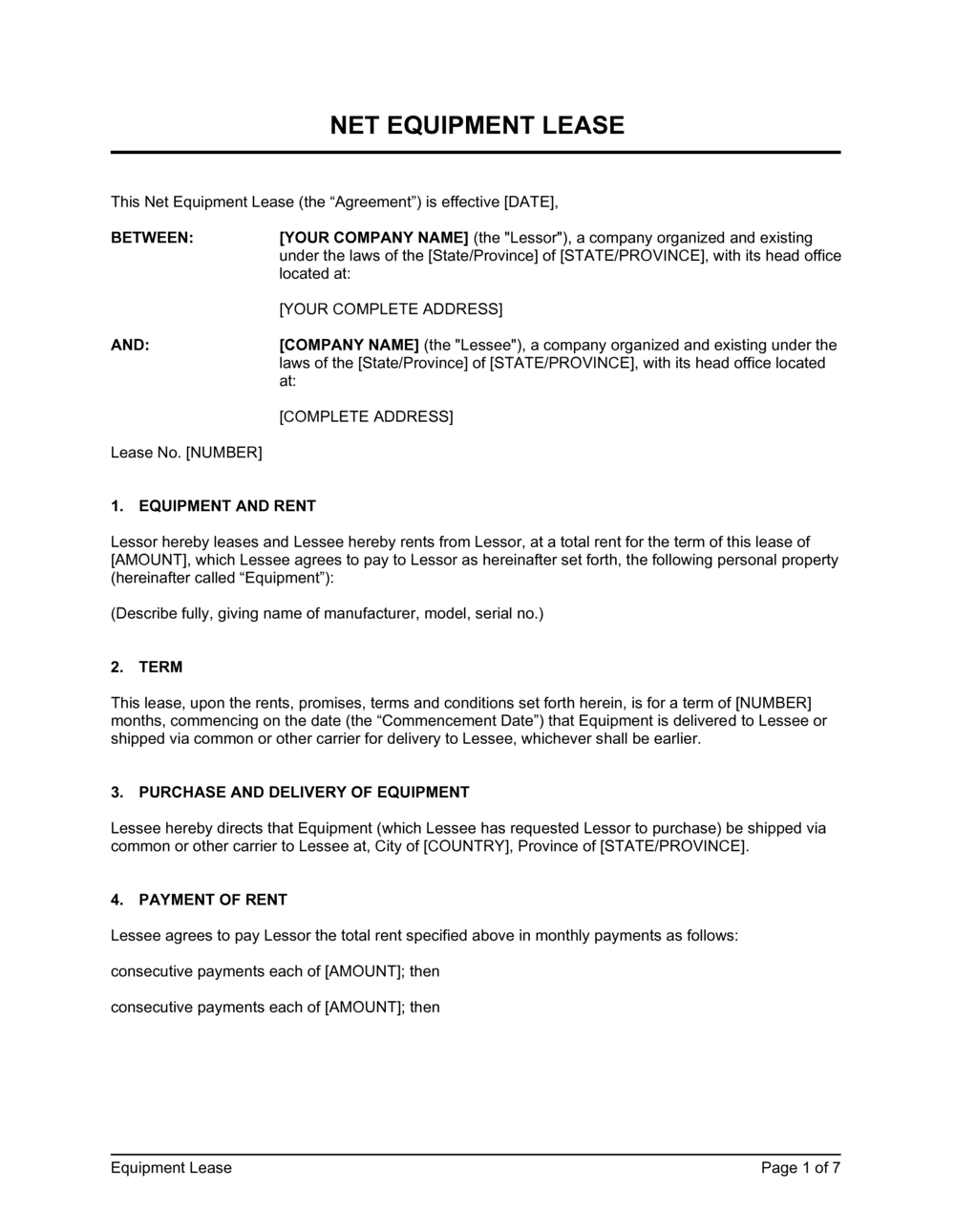
Net Equipment Lease 2 Template

Free Word download β€’ Edit online β€’ Save & share with Drive β€’ Export to PDF

7 pagesβ€’25–35 min to fillβ€’Difficulty: Complexβ€’Signature requiredβ€’Legal review recommended
Learn more ↓
FreeNet Equipment Lease 2 Template

At a glance

What it is
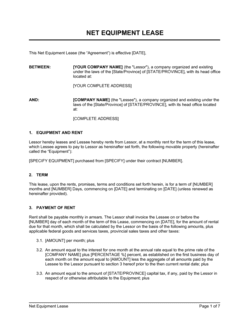
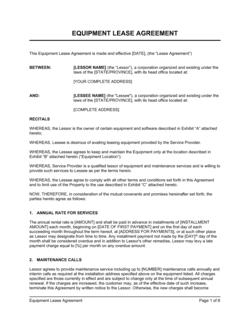
A Net Equipment Lease is a legally binding agreement in which a lessor transfers the right to use specific equipment to a lessee for a defined term and fixed rent, with the lessee bearing responsibility for some or all of the operating costs β€” including maintenance, insurance, and applicable taxes. This free Word download provides a professionally drafted starting point you can edit online and export as PDF for execution by both parties.
When you need it
Use it when a business needs to finance the use of machinery, vehicles, technology hardware, or industrial equipment without purchasing the asset outright, and the lessor requires the lessee to carry the ongoing costs of ownership during the lease term.
What's inside
Equipment description and serial identification, lease term and rent schedule, net cost obligations (maintenance, insurance, taxes), permitted use and care standards, default and remedies, end-of-term options, and governing law. The template also covers lessee representations, lessor warranties, indemnification, and return conditions.

What is a Net Equipment Lease?

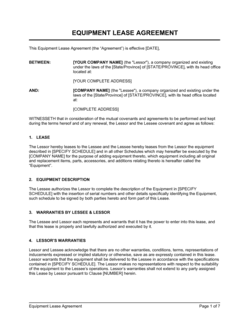
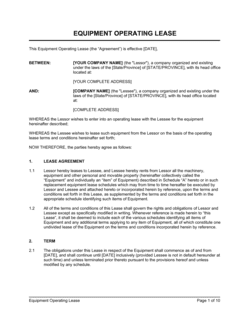
A Net Equipment Lease is a legally binding commercial agreement in which a lessor grants a lessee the right to possess and use specific equipment for a defined term in exchange for periodic rent payments, with the lessee contractually responsible for some or all of the operating costs of the equipment during that term β€” including property taxes assessed on the asset, insurance premiums, and maintenance and repair expenses. Unlike a gross lease where the lessor absorbs those costs and prices them into a higher rent, a net lease separates base rent from operating costs, giving the lessor a predictable, expense-free income stream while the lessee bears the financial risk of variable ownership expenses. The "net" designation refers to the number of cost categories shifted to the lessee: single-net (taxes), double-net (taxes and insurance), or triple-net (taxes, insurance, and maintenance). This template is drafted as a standard commercial net lease suitable for machinery, vehicles, technology hardware, and industrial equipment, and is available as a free Word download you can edit online and export as a signed PDF.

Why You Need This Document

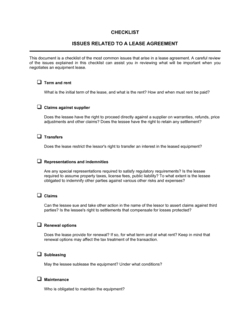
Operating without a written net equipment lease exposes both parties to significant financial and legal risk. A lessor without a signed agreement has no contractual basis to accelerate rent on default, repossess the equipment, or recover the cost of damage the lessee caused β€” courts require a written instrument to enforce those remedies. A lessee without clear written terms has no protection against mid-lease rent increases, conflicting maintenance demands, or surprise charges at lease end. The net cost obligations β€” who pays taxes, who maintains the equipment, what insurance floor applies β€” are the provisions that generate the most disputes when left undefined or ambiguous. This template provides a complete, professionally structured agreement that defines every material term before the equipment changes hands, reducing the likelihood of costly disputes and giving both parties a clear framework from commencement through return or purchase at the end of the lease term.

Which variant fits your situation?

If your situation is…Use this template
Lessor bears all maintenance and insurance costsGross Equipment Lease
Lessee bears taxes, insurance, and maintenance in full (triple net)Triple Net Equipment Lease
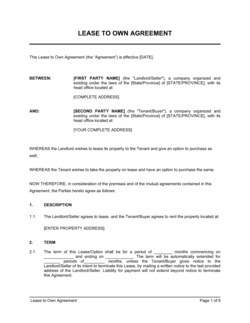
Lessee intends to purchase the equipment at end of termEquipment Lease to Own Agreement
Short-term or project-based equipment rentalEquipment Rental Agreement
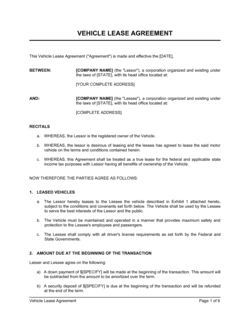
Leasing vehicles specifically for a business fleetVehicle Lease Agreement
Financing equipment through a bank or lender structureEquipment Financing Agreement
Subleasing leased equipment to a third partyEquipment Sublease Agreement

Common mistakes to avoid

❌ No serial number in the equipment description

Why it matters: Without a unique identifier, the lessor cannot prove which specific asset is covered by the lease. Substituted or damaged equipment becomes impossible to distinguish contractually.

Fix: Always record the full serial number, VIN, or asset tag in the equipment description and on Exhibit A. Re-confirm the number at delivery against the physical asset.

❌ Commencement date set as a fixed calendar date regardless of delivery

Why it matters: If equipment is delivered late, the lessee pays rent for a period when the asset is not available β€” creating a breach-of-quiet-enjoyment claim in some jurisdictions.

Fix: Tie commencement to a signed delivery receipt and include a delivery-deadline clause that allows the lessee to terminate or suspend rent if delivery is materially delayed.

❌ Insurance floor set at depreciated book value

Why it matters: If the equipment is a total loss, the insurance payout covers the depreciated value β€” which may be far less than the cost to replace the asset, leaving the lessor with an unrecovered gap.

Fix: Set the all-risk property insurance minimum at the equipment's full replacement cost, updated annually, and require the lessee to provide certificates of insurance before commencement.

❌ Vague maintenance obligation with no scope definition

Why it matters: Without a defined scope, lessees argue that major overhauls are the lessor's responsibility while lessors argue the opposite β€” disputes routinely end in litigation or early termination.

Fix: Enumerate maintenance obligations by category: manufacturer-recommended service intervals, consumable replacements, and specific major-repair thresholds above which a separate approval process applies.

❌ No cure period for the first missed payment

Why it matters: Immediate acceleration and repossession on a single missed payment creates disproportionate consequences for a lessee experiencing a bank processing delay β€” and exposes the lessor to bad-faith or unconscionability claims.

Fix: Build in a 5–10 day cure period for payment defaults and a 30-day cure period for non-monetary breaches, consistent with UCC Article 2A and comparable statutory frameworks.

❌ Governing law chosen without regard to equipment location

Why it matters: Several states and provinces apply local law to equipment-secured transactions β€” including repossession rights and lessee protections β€” regardless of what the contract specifies.

Fix: Select governing law that is consistent with the equipment's primary location and confirm with local counsel that the chosen law does not conflict with mandatory local rules on leased personal property.

The 10 key clauses, explained

Equipment description and identification

In plain language: Identifies the leased equipment with enough specificity β€” make, model, serial number, and condition β€” to distinguish it from any other asset.

Sample language
Lessor hereby leases to Lessee the equipment described as follows: [EQUIPMENT MAKE/MODEL], Serial No. [SERIAL NUMBER], Year [YEAR], in [NEW / USED] condition ('Equipment'), as further described in Exhibit A.

Common mistake: Relying on a generic description like 'one forklift' without a serial number. If the equipment is damaged or substituted, there is no objective reference point to determine which asset was covered.

Lease term and commencement

In plain language: States the exact start and end date of the lease, and the conditions β€” such as delivery confirmation β€” that trigger the start of the term.

Sample language
The lease term shall commence on [START DATE] ('Commencement Date') and expire on [END DATE], unless earlier terminated in accordance with this Agreement ('Lease Term').

Common mistake: Setting the commencement date as a calendar date rather than a delivery-confirmed date. If equipment is delivered late, the lessee begins paying rent before the equipment is available for use.

Rent and payment schedule

In plain language: States the base rent amount, payment frequency, due date, accepted payment methods, and any late-payment fee.

Sample language
Lessee shall pay Lessor base rent of $[AMOUNT] per [month/quarter], due on the [DAY] of each [month/quarter], commencing [FIRST PAYMENT DATE]. Payments more than [X] days late shall accrue interest at [X]% per month.

Common mistake: Omitting a late-payment interest rate. Without it, the lessor's only remedy for chronic late payment is formal default β€” a slower and more expensive process.

Net cost obligations (taxes, insurance, maintenance)

In plain language: Defines which operating costs the lessee must pay β€” typically property taxes assessed on the equipment, insurance premiums, and all routine and major maintenance.

Sample language
Lessee shall bear and pay, as net costs, all: (a) property and use taxes assessed against the Equipment during the Lease Term; (b) insurance premiums as specified in Section [X]; and (c) costs of routine and major maintenance and repair.

Common mistake: Failing to specify whether 'maintenance' includes major repairs and overhauls or only routine servicing. Ambiguity leads to disputes when a significant component fails mid-lease.

Insurance requirements

In plain language: Requires the lessee to obtain and maintain specified insurance coverages β€” typically all-risk property and commercial general liability β€” and name the lessor as an additional insured.

Sample language
Lessee shall maintain, at its own expense: (a) all-risk property insurance on the Equipment for its full replacement value of not less than $[AMOUNT]; and (b) commercial general liability insurance of not less than $[AMOUNT] per occurrence. Lessor shall be named as additional insured and loss payee.

Common mistake: Setting an insurance floor equal to the equipment's current book value rather than replacement cost. Depreciated book value may not cover the cost of replacing damaged equipment.

Permitted use and care

In plain language: Restricts the lessee to using the equipment for its intended purpose, in compliance with applicable law, and prohibits modifications or subletting without the lessor's written consent.

Sample language
Lessee shall use the Equipment solely for [PERMITTED USE] in the ordinary course of its business, in compliance with all applicable laws and manufacturer guidelines. Lessee shall not alter, modify, or sublease the Equipment without the prior written consent of Lessor.

Common mistake: No restriction on geographic use or cross-border transport. Equipment moved to a different jurisdiction can affect insurance validity, tax treatment, and the lessor's ability to repossess on default.

Default and remedies

In plain language: Defines what constitutes default by either party, the notice-and-cure period before remedies are triggered, and the lessor's remedies β€” including repossession, acceleration, and damages.

Sample language
An Event of Default occurs if Lessee: (a) fails to pay any rent within [X] days of the due date; (b) breaches any material covenant and fails to cure within [X] days after written notice; or (c) becomes insolvent or subject to bankruptcy proceedings. Upon default, Lessor may accelerate all remaining rent, repossess the Equipment, and recover damages.

Common mistake: No cure period for non-payment defaults. A lessee who misses one payment due to a bank error is immediately in uncured default β€” which can expose the lessor to bad-faith claims if it moves to repossess immediately.

End-of-term options

In plain language: Specifies what happens when the lease expires: return, renewal at a new rent, or purchase at a stated or fair-market price.

Sample language
Upon expiration of the Lease Term, Lessee shall, at Lessor's election: (a) return the Equipment in the condition required by Section [X]; (b) renew this Lease for [X] months at a rent of $[AMOUNT]; or (c) purchase the Equipment at [fair market value / $FIXED AMOUNT], as determined in accordance with Section [X].

Common mistake: No return condition standard. If the lease only says 'return in good condition,' the parties will dispute normal wear versus damage at every lease end.

Indemnification and liability

In plain language: Requires the lessee to indemnify the lessor against third-party claims arising from the lessee's use, operation, or possession of the equipment.

Sample language
Lessee shall indemnify, defend, and hold harmless Lessor and its officers, employees, and agents from and against any claims, losses, damages, and expenses (including attorneys' fees) arising from Lessee's use, operation, maintenance, or possession of the Equipment.

Common mistake: Mutual indemnification without carve-outs for gross negligence and willful misconduct. Courts in many jurisdictions refuse to enforce indemnification for a party's own intentional wrongdoing β€” and a clause that attempts to do so can void the entire indemnity provision.

Governing law and dispute resolution

In plain language: Specifies the jurisdiction whose law governs the agreement and the mechanism for resolving disputes β€” arbitration, mediation, or litigation in a named court.

Sample language
This Agreement shall be governed by the laws of the State of [STATE], without regard to conflict-of-law principles. Any dispute arising hereunder shall be resolved by binding arbitration administered by [AAA/JAMS] in [CITY], except that either party may seek injunctive relief in a court of competent jurisdiction.

Common mistake: Choosing governing law without confirming it aligns with where the equipment is physically located. Some states apply local law to equipment-secured transactions regardless of contractual choice.

How to fill it out

  1. 1

    Identify parties with full legal entity names

    Enter the lessor's and lessee's full registered legal names, not trade names or DBAs. Include each party's principal address and state or province of formation.

    πŸ’‘ Confirm the lessee's entity name against a current corporate registry extract before executing β€” a dissolved entity cannot legally enter a binding lease.

  2. 2

    Complete the equipment description and attach Exhibit A

    Record the equipment's make, model, year, serial number, and current condition. If leasing multiple units, list each in a separate numbered Exhibit A row.

    πŸ’‘ Photograph the equipment at delivery and attach the photos as part of the exhibit β€” this creates an objective condition baseline and prevents end-of-term disputes.

  3. 3

    Set the lease term with a delivery-triggered commencement

    State the anticipated start date but tie commencement to a signed delivery receipt so the clock starts only when the lessee physically receives the equipment.

    πŸ’‘ Add a delivery-deadline provision: if the equipment is not delivered within [X] days of the anticipated start date, the lessee may terminate without penalty.

  4. 4

    Define rent, payment schedule, and late-fee terms

    Enter the monthly or quarterly base rent, the day of month it is due, accepted payment methods (ACH, wire, check), and the late-payment interest rate.

    πŸ’‘ A 1.5% per month late-payment rate is common and enforceable in most US states β€” confirm the applicable usury ceiling before inserting a higher figure.

  5. 5

    Specify all net cost obligations explicitly

    List each category of cost the lessee bears β€” property taxes, insurance premiums, routine maintenance, and major repairs β€” and confirm who is responsible for any uncovered category.

    πŸ’‘ Include a catch-all for 'all other costs of ownership' only if you intend a full triple-net structure; otherwise, enumerate costs specifically to avoid later disputes.

  6. 6

    Set insurance coverage floors and name lessor as additional insured

    Insert minimum property insurance equal to the equipment's full replacement cost β€” not book value β€” and minimum liability coverage appropriate for the equipment type. Require certificates of insurance before the commencement date.

    πŸ’‘ Ask your insurance broker for the standard coverage floor for your equipment category before completing this section β€” industry norms vary significantly between light commercial vehicles and heavy industrial machinery.

  7. 7

    Tailor default, cure periods, and remedies

    Set a non-payment cure period of 5–10 days and a non-monetary-breach cure period of 30 days. Confirm that the acceleration clause and repossession right are consistent with the governing state's UCC Article 2A requirements.

    πŸ’‘ In Canada and the UK, consumer-protection principles can apply even to commercial equipment leases if the lessee is a small business β€” consult local counsel before finalizing remedy clauses.

  8. 8

    Document return condition standards

    Specify the exact condition the equipment must be returned in β€” normal wear and tear excepted β€” and include a checklist or reference to the Exhibit A condition report as the baseline.

    πŸ’‘ Define 'normal wear and tear' by reference to the equipment category (e.g., cosmetic scratches on a vehicle versus structural damage) to reduce interpretation disputes at lease end.

Frequently asked questions

What is a net equipment lease?

A net equipment lease is a leasing arrangement in which the lessee pays base rent plus some or all of the operating costs associated with the equipment β€” typically property taxes, insurance premiums, and maintenance expenses. The 'net' structure shifts the financial burden of ownership costs from the lessor to the lessee, giving the lessor a predictable, expense-free rent stream. Depending on how many cost categories the lessee bears, the arrangement may be called a single-net, double-net, or triple-net equipment lease.

What is the difference between a net lease and a gross lease for equipment?

Under a gross equipment lease, the lessor pays all operating costs β€” insurance, taxes, and maintenance β€” and charges the lessee a single all-inclusive rent that covers those expenses. Under a net lease, the lessee pays base rent separately and is directly responsible for some or all operating costs. Net leases are typically favored by lessors who want predictable income without exposure to variable maintenance and tax costs; lessees accept net obligations in exchange for a lower base rent.

What equipment is typically leased under a net equipment lease?

Net equipment leases are most common for high-value, long-lived assets where maintenance costs are significant and predictable β€” construction machinery, commercial vehicles, manufacturing equipment, medical imaging devices, printing presses, and large-format technology hardware. The structure is less common for short-lived or low-value items where the administrative cost of separating net expenses exceeds the benefit.

Who is responsible for maintenance under a net equipment lease?

Under a net equipment lease, the lessee is typically responsible for all maintenance and repairs β€” both routine servicing and major overhauls β€” unless the agreement specifically carves out major repairs as the lessor's obligation. The scope of maintenance responsibility should be explicitly defined in the agreement; vague language like 'keep in good repair' frequently leads to disputes when a significant component fails.

What happens at the end of a net equipment lease?

Most net equipment leases include one of three end-of-term options: return the equipment in the condition specified by the agreement, renew the lease for an additional term at a renegotiated rent, or purchase the equipment at a pre-agreed price or at fair market value. The agreement should define the return condition standard precisely β€” failure to do so commonly results in disputes over whether damage exceeds normal wear and tear.

Is a net equipment lease the same as a finance lease?

Not necessarily. A finance lease (also called a capital lease under US GAAP) is an accounting classification indicating that substantially all risks and rewards of ownership have transferred to the lessee β€” typically because the lease covers most of the asset's useful life or includes a bargain purchase option. A net lease is a cost-allocation structure. The two concepts can overlap β€” a lease can be both a net lease and a finance lease β€” but they describe different characteristics of the arrangement.

Does a net equipment lease need to be in writing?

In most jurisdictions, a lease of personal property for a term exceeding one year must be in writing to be enforceable under the Statute of Frauds or its equivalent. For equipment with significant value, a written agreement is essential regardless of term length β€” it documents the equipment description, rent, net obligations, and remedies that oral arrangements leave dangerously ambiguous. A signed written lease is also required to perfect the lessor's interest in many jurisdictions.

What UCC provisions apply to an equipment lease in the United States?

In the United States, equipment leases are governed by UCC Article 2A (Leases of Goods), which establishes default rules for lease formation, implied warranties, lessee rights on default, and lessor remedies including repossession and acceleration. Article 2A allows the parties to modify most default rules by contract, but some lessee protections β€” such as the right to cure a payment default β€” are more difficult to waive entirely. A well-drafted net equipment lease should expressly address Article 2A provisions rather than relying on statutory defaults.

Do I need a lawyer to draft a net equipment lease?

For standard equipment leases between commercial parties of similar sophistication, a high-quality template reviewed by counsel is typically sufficient. Engage a lawyer when the equipment value exceeds $250,000, when the lease involves cross-border use, when the lessee's financial condition requires enhanced default protections, or when the arrangement includes a purchase option that triggers capital-lease accounting treatment. A focused 1–2 hour legal review of a completed template typically costs $300–$600 and is worthwhile for any long-term or high-value lease.

How this compares to alternatives

vs Equipment Rental Agreement

An equipment rental agreement is typically short-term β€” days to weeks β€” with the owner bearing maintenance and insurance costs and pricing those into a higher daily or weekly rate. A net equipment lease runs for months or years, transfers operating cost obligations to the lessee, and sets a lower base rent that excludes those costs. Use a rental agreement for one-off or project-based needs; use a net lease for ongoing operational equipment.

vs Equipment Lease to Own Agreement

A lease-to-own agreement is structured so the lessee's rent payments build toward ownership, with a defined purchase option β€” often at $1 or a nominal amount β€” at the end of the term. A standard net equipment lease may include a purchase option at fair market value, but ownership transfer is not the primary purpose. Choose lease-to-own when the lessee intends to keep the equipment; choose a net lease when the lessor intends to recover the asset.

vs Vehicle Lease Agreement

A vehicle lease agreement is tailored for cars, trucks, and commercial vehicles and includes provisions specific to motor vehicle law β€” registration, mileage limits, and consumer-protection disclosures. A net equipment lease is a broader instrument designed for any category of business equipment. Use a vehicle-specific lease when the asset is a motor vehicle subject to DMV or transport-authority regulation.

vs Personal Property Lease Agreement

A personal property lease covers the broadest range of movable assets and is often used for lower-value or consumer-facing items. A net equipment lease is a commercial document specifically structured for business equipment with net cost-shifting provisions, indemnification, and commercial-grade default and remedy clauses. Use a net equipment lease for any business-to-business equipment arrangement where cost allocation and remedies need to be precisely defined.

Industry-specific considerations

Construction and Heavy Equipment

Net leases for cranes, excavators, and lifting equipment where the lessee bears all service, fuel-system maintenance, and inspection costs tied to project-site use.

Healthcare and Medical Devices

Diagnostic imaging and surgical equipment leased on a net basis with lessee-funded manufacturer service contracts and radiation-safety compliance obligations.

Manufacturing

CNC machinery, presses, and production-line equipment leased long-term with lessee responsibility for scheduled preventive maintenance, tooling, and calibration costs.

Transportation and Logistics

Commercial vehicle and trailer fleets leased net with lessee-borne fuel, DOT compliance inspections, and driver-caused repair costs separate from base fleet rent.

Jurisdictional notes

United States

Equipment leases in the US are governed primarily by UCC Article 2A, which distinguishes true leases from disguised security interests β€” the latter require UCC Article 9 filing to perfect the lessor's interest. Net obligations for property taxes vary by state; some states assess personal property taxes on leased equipment and require the lessee to file returns directly. Non-compete and governing-law clauses should be reviewed against the law of the state where the equipment is physically located.

Canada

Canadian equipment leases are governed by provincial personal property security legislation (PPSA) in common-law provinces, with Quebec governed by the Civil Code under the rules of leasing (louage). Lessors should register their interest under the applicable PPSA registry to protect against the lessee's insolvency or competing creditors. GST/HST applies to lease payments and must be addressed in the rent clause. Quebec leases must be in French for provincially regulated entities.

United Kingdom

UK equipment leases are governed by the Supply of Goods and Services Act 1982 and, for consumer-adjacent transactions, the Consumer Rights Act 2015. Lessors should register a financing statement at Companies House under the Companies Act 2006 if the lessor is taking a charge. VAT at the standard rate applies to lease payments and must be specified in the agreement. Post-Brexit, EU financial leasing regulations no longer apply, but cross-border leases into the EU require individual member-state analysis.

European Union

EU member states each have their own personal property security and leasing laws β€” Germany, France, and the Netherlands have materially different registration and priority rules for leased equipment. VAT treatment of finance versus operating leases varies by member state and affects the lessee's input tax recovery. GDPR considerations arise if the lease involves telematics or remote monitoring of equipment that collects operational or location data. Cross-border EU leases should specify which member state's law governs and confirm that law is compatible with mandatory local rules.

Template vs lawyer β€” what fits your deal?

PathBest forCostTime
Use the templateCommercial equipment leases between businesses for equipment valued under $100,000 in a single domestic jurisdictionFree30–45 minutes
Template + legal reviewEquipment valued $100,000–$500,000, cross-state use, or leases with purchase options that may trigger capital-lease accounting$300–$7001–3 days
Custom draftedHigh-value industrial or medical equipment above $500,000, multi-jurisdiction or cross-border leases, or structured finance arrangements with lender involvement$1,500–$5,000+1–3 weeks

Glossary

Net Lease
A lease structure in which the lessee pays base rent plus some or all operating expenses β€” such as taxes, insurance, and maintenance β€” rather than the lessor absorbing those costs.
Lessor
The party who owns the equipment and grants the right to use it to the lessee in exchange for rent payments.
Lessee
The party who pays rent and takes possession of the equipment for the duration of the lease term.
Lease Term
The defined period during which the lessee has the contractual right to use the equipment, stated as a start date and end date or a number of months.
Base Rent
The fixed periodic payment the lessee owes the lessor, exclusive of any net costs such as insurance premiums or maintenance expenses.
Net Cost Obligations
The operating expenses β€” commonly maintenance, property taxes on the equipment, and insurance premiums β€” that the lessee agrees to pay directly under a net lease structure.
Default
A failure by either party to perform a contractual obligation β€” most commonly the lessee's failure to pay rent or maintain the equipment as required.
Acceleration Clause
A provision that makes all remaining rent payments immediately due and payable upon the lessee's default, rather than requiring the lessor to collect payments as they fall due.
End-of-Term Option
A clause specifying what happens when the lease expires β€” the lessee may return the equipment, renew the lease, or exercise a purchase option at a pre-agreed price.
Indemnification
A contractual obligation by one party to compensate the other for losses, liabilities, or legal claims arising from specified events β€” typically the lessee's use or misuse of the equipment.
Fair Market Value
The price at which equipment would change hands between a willing buyer and seller, used to set purchase-option pricing at lease end.
Hell-or-High-Water Clause
A provision stating the lessee's obligation to pay rent is unconditional and cannot be suspended or reduced for any reason, including equipment failure or casualty.

Part of your Business Operating System

This document is one of 3,000+ business & legal templates included in Business in a Box.

  • Fill-in-the-blanks β€” ready in minutes
  • 100% customizable Word document
  • Compatible with all office suites
  • Export to PDF and share electronically

Create your document in 3 simple steps.

From template to signed document β€” all inside one Business Operating System.
1
Download or open template

Access over 3,000+ business and legal templates for any business task, project or initiative.

2
Edit and fill in the blanks with AI

Customize your ready-made business document template and save it in the cloud.

3
Save, Share, Send, Sign

Share your files and folders with your team. Create a space of seamless collaboration.

Save time, save money, and create top-quality documents.

β˜…β˜…β˜…β˜…β˜…

"Fantastic value! I'm not sure how I'd do without it. It's worth its weight in gold and paid back for itself many times."

Managing Director Β· Mall Farm
Robert Whalley
Managing Director, Mall Farm Proprietary Limited
β˜…β˜…β˜…β˜…β˜…

"I have been using Business in a Box for years. It has been the most useful source of templates I have encountered. I recommend it to anyone."

Business Owner Β· 4+ years
Dr Michael John Freestone
Business Owner
β˜…β˜…β˜…β˜…β˜…

"It has been a life saver so many times I have lost count. Business in a Box has saved me so much time and as you know, time is money."

Owner Β· Upstate Web
David G. Moore Jr.
Owner, Upstate Web

Run your business with a system β€” not scattered tools

Stop downloading documents. Start operating with clarity. Business in a Box gives you the Business Operating System used by over 250,000 companies worldwide to structure, run, and grow their business.

Free Forever PlanΒ Β·Β No credit card required