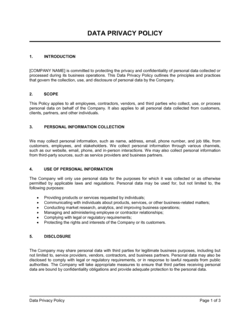
Email Marketing Best Practices Template

Free Word download • Edit online • Save & share with Drive • Export to PDF

4 pages25–30 min to fillDifficulty: ComplexSignature requiredLegal review recommended
Learn more ↓
FreeEmail Marketing Best Practices Template

At a glance

What it is
An Email Marketing Best Practices Policy is a binding internal and client-facing document that establishes enforceable rules for how an organization collects consent, sends commercial email, processes unsubscribe requests, retains subscriber data, and maintains compliance with CAN-SPAM, CASL, GDPR, and equivalent anti-spam legislation. This free Word download gives you a structured, legally grounded starting point you can edit online and export as PDF for internal sign-off or client distribution.
When you need it
Use it when launching an email marketing program, onboarding a new marketing agency or ESP (email service provider), responding to a regulatory inquiry, or formalizing existing ad-hoc practices into a documented, enforceable standard that protects both the organization and its subscribers.
What's inside
Consent and opt-in requirements, prohibited sending practices, list hygiene and data retention rules, unsubscribe and suppression obligations, sender identification requirements, complaint-handling procedures, third-party vendor accountability clauses, and governing law provisions that align with the major email marketing regulatory frameworks.

What is an Email Marketing Best Practices Policy?

An Email Marketing Best Practices Policy is a binding internal and client-facing document that establishes the enforceable rules governing how an organization collects subscriber consent, sends commercial email, processes opt-out requests, retains subscriber data, and maintains compliance with the major anti-spam and data protection frameworks — including the US CAN-SPAM Act, Canada's CASL, the EU GDPR, and the UK's PECR. Unlike a general privacy policy, which discloses data practices publicly, an email marketing policy operates as an operational standard: it tells employees, agencies, and vendors exactly what they are permitted and prohibited from doing, assigns accountability for each compliance obligation, and creates the auditable paper trail that regulators request during investigations. A properly drafted policy also governs technical standards — SPF, DKIM, and DMARC authentication — that determine whether commercial email actually reaches the inbox.

Why You Need This Document

Without a written email marketing policy, your organization's compliance posture depends entirely on individual judgment calls made by marketers, agencies, and developers who may have no regulatory training. The consequences of that gap are concrete: the CRTC has issued CASL fines exceeding CAD $1.1 million for a single proceeding; GDPR enforcement authorities have fined organizations 4% of global annual turnover for consent failures; and the FTC has pursued CAN-SPAM cases resulting in penalties over $1 million. Beyond regulatory fines, a single large-scale send to an unclean or non-consented list can trigger spam complaint rates that cause your sending domain to be blocklisted by Google and Microsoft — a deliverability event that can take months and significant technical effort to reverse. A signed, current email marketing policy closes that exposure by converting vague best-practice intentions into enforceable organizational rules, ensuring every person and vendor touching your subscriber data knows exactly what the standard is and what happens when it is not met.

Which variant fits your situation?

If your situation is…Use this template
Governing an internal marketing team's sending practicesEmail Marketing Best Practices Policy (Internal)
Engaging an external agency to manage email campaigns on your behalfDigital Marketing Services Agreement
Setting rules for cold outreach and prospecting emailsEmail Outreach and Prospecting Policy
Documenting how subscriber data is collected and storedPrivacy Policy
Obtaining written subscriber consent for a specific list or programEmail Consent Form
Governing SMS and multi-channel marketing alongside emailMulti-Channel Marketing Compliance Policy
Responding formally to a CAN-SPAM or CASL regulatory complaintRegulatory Response Letter

Common mistakes to avoid

❌ Omitting third-party agencies from the policy scope

Why it matters: Under CAN-SPAM, CASL, and GDPR, the brand — not the agency — is the legally responsible sender. An agency violation is your violation.

Fix: Name all current agencies and ESP platforms in the scope clause, and require each to execute a DPA and acknowledge the policy in writing before accessing subscriber data.

❌ Treating a purchased list as a consented list

Why it matters: Under CASL and GDPR, consent must be obtained directly by the data controller. A purchased list — regardless of the vendor's consent claims — does not satisfy this standard, exposing the sender to fines up to CAD $10 million or 4% of global annual turnover.

Fix: Prohibit purchased lists explicitly in the policy and require all new list sources to be approved by the compliance owner with documented consent provenance before first use.

❌ Setting DMARC to 'p=none' and never advancing the policy

Why it matters: A monitoring-only DMARC policy provides no protection against domain spoofing and does not meet the authentication standards required by Google and Yahoo for bulk senders as of 2024.

Fix: Set a target DMARC policy of at least 'p=quarantine' in the authentication clause, and assign a deadline — typically 90 days from policy adoption — for IT to advance the configuration.

❌ Deleting the suppression list during a platform migration

Why it matters: Re-importing opted-out addresses into a new ESP without the suppression flag means sending commercial email to people who explicitly refused it — a direct CAN-SPAM violation and a significant sender reputation event.

Fix: Add an explicit prohibition on suppression list deletion to the list hygiene clause, and require a suppression list export and re-import verification step in any ESP migration checklist.

❌ Using a shared or generic abuse@ address with no monitored inbox

Why it matters: Regulatory notices and feedback loop complaints sent to an unmonitored inbox can sit unseen for weeks. Failure to respond to a regulatory inquiry within the stated timeframe compounds the original violation.

Fix: Assign a named individual — not a team alias — as the abuse and regulatory contact, and include their direct email in the complaint-handling clause. Test the address monthly.

❌ Failing to update the policy after a major regulatory change

Why it matters: A policy that references outdated consent standards — for example, pre-2024 authentication requirements — can be used against the organization as evidence of willful non-compliance during a regulatory investigation.

Fix: Set a mandatory 30-day policy update trigger for any material change to CAN-SPAM, CASL, GDPR, or applicable state privacy law, and assign the compliance owner responsibility for monitoring regulatory developments.

The 10 key clauses, explained

Purpose and Scope

In plain language: Defines what the policy covers, which teams and systems it applies to, and the regulatory frameworks it is designed to address.

Sample language
This Email Marketing Best Practices Policy ('Policy') governs all commercial electronic messages sent by [COMPANY NAME] ('Company') to subscribers, customers, and prospects via any email service provider or internal platform. It applies to all employees, contractors, and third-party agencies acting on behalf of the Company and is designed to ensure compliance with the CAN-SPAM Act, CASL, GDPR, and applicable equivalent legislation.

Common mistake: Scoping the policy only to internal marketing staff and omitting third-party agencies. If an agency sends on your behalf and violates the policy, you remain the legally responsible party under CAN-SPAM and CASL.

Consent Requirements and Opt-In Standards

In plain language: States the type of consent required before adding a subscriber to a list and the documentation that must be captured to prove consent.

Sample language
The Company shall obtain express consent before sending commercial electronic messages to any recipient located in Canada or the European Union. Consent records must include the date, method, and specific content of the consent request. For recipients in the United States, the Company shall comply with CAN-SPAM opt-in standards and shall not use pre-checked consent boxes or bundled consent language.

Common mistake: Treating a business card exchange or LinkedIn connection as documented consent. Without a recorded consent timestamp and the specific opt-in mechanism, implied consent claims are very difficult to defend under CASL or GDPR.

Sender Identification and Physical Address

In plain language: Requires every commercial message to accurately identify the sender and include a valid physical postal address — a mandatory CAN-SPAM element.

Sample language
Every commercial email sent by or on behalf of the Company must (a) accurately identify [COMPANY NAME] as the sender in the 'From' field using a domain the Company owns and operates, (b) include a non-deceptive subject line, and (c) display the Company's current physical mailing address: [STREET ADDRESS, CITY, STATE/PROVINCE, POSTAL CODE, COUNTRY].

Common mistake: Using a shared or third-party domain in the 'From' field for deliverability purposes without updating the sender identification clause. Mismatched domain and sender name is a CAN-SPAM violation and triggers spam filter penalties.

Unsubscribe Mechanism and Processing Timeframe

In plain language: Mandates a functional opt-out link in every commercial message and sets the maximum time allowed to process unsubscribe requests.

Sample language
Every commercial email must include a clearly visible, functional unsubscribe link or mechanism. Unsubscribe requests shall be processed within [10] business days of receipt. The Company shall honor all opt-out requests for a minimum of [10] years and shall add unsubscribed addresses to its suppression list within [2] business days of processing.

Common mistake: Setting a 30-day processing window for unsubscribes. CAN-SPAM requires processing within 10 business days. Exceeding this window — even by one day — creates direct regulatory exposure.

Prohibited Content and Sending Practices

In plain language: Lists specific sending behaviors that are banned under the policy — deceptive headers, harvested lists, purchased lists, and automated scraping of addresses.

Sample language
The Company prohibits: (a) using harvested, scraped, or purchased email lists without verified opt-in consent; (b) deceptive or misleading subject lines or header information; (c) disguising or obscuring the commercial nature of a message; (d) sending to addresses that have previously unsubscribed; (e) using relay or proxy servers to obscure the origin of the message.

Common mistake: Omitting purchased list restrictions from the prohibited practices clause. Many marketers assume that a 'GDPR-compliant' or 'opt-in' list purchased from a third party satisfies consent requirements — it does not under CASL or GDPR, where consent must be obtained directly by the data controller.

List Hygiene and Data Retention

In plain language: Sets standards for how often subscriber lists must be cleaned, how long inactive subscriber data may be retained, and when suppression lists must be updated.

Sample language
The Company shall review and clean active subscriber lists no less than quarterly, removing hard bounces within [5] business days of the bounce event. Subscriber records for individuals who have not engaged in [24] months shall be reviewed for re-consent or deletion. Suppression lists shall be retained indefinitely and must not be deleted or purged without written approval from the [DATA PROTECTION OFFICER / COMPLIANCE MANAGER].

Common mistake: Deleting suppression lists during a CRM migration or platform change. If suppressed addresses are re-imported into the new platform without the suppression flag, the company will send to opted-out users — triggering both regulatory violations and spam complaints that damage sender reputation.

Third-Party Vendor and ESP Accountability

In plain language: Requires all email service providers and marketing technology vendors to operate under a data processing agreement and to meet the same compliance standards as internal teams.

Sample language
Any third-party email service provider, marketing automation platform, or agency sending commercial email on behalf of the Company must execute a Data Processing Agreement with [COMPANY NAME] prior to accessing subscriber data. The agreement must require the vendor to: (a) process subscriber data only as instructed by the Company, (b) implement appropriate technical and organizational security measures, and (c) notify the Company of any data breach within [72] hours of discovery.

Common mistake: Forwarding subscriber exports to an agency without a signed DPA. Under GDPR, the absence of a DPA makes the company jointly liable for any data misuse by the processor — including unauthorized sends or data breaches.

Email Authentication Standards

In plain language: Requires the organization to implement SPF, DKIM, and DMARC authentication records to verify sender identity and protect the domain from spoofing.

Sample language
The Company shall maintain valid SPF, DKIM, and DMARC records for all domains used in commercial email sending. DMARC policy shall be set to a minimum of 'p=quarantine' for all primary sending domains. Any new sending domain must have authentication records configured and verified before its first send.

Common mistake: Leaving DMARC at 'p=none' (monitoring only) indefinitely. A DMARC policy of 'none' provides no spoofing protection and does not satisfy major ISP authentication requirements introduced by Google and Yahoo in 2024.

Complaint Handling and Regulatory Response

In plain language: Defines the process for receiving and responding to subscriber complaints, spam reports, and formal regulatory inquiries.

Sample language
The Company shall designate a [COMPLIANCE CONTACT NAME / ROLE] as the primary point of contact for email marketing complaints and regulatory inquiries. All complaints received via feedback loops, abuse@ addresses, or direct regulatory notice must be logged, investigated, and resolved within [5] business days. The designated contact must notify [LEGAL COUNSEL / DATA PROTECTION OFFICER] within [24] hours of receiving any formal regulatory inquiry or notice of investigation.

Common mistake: Designating a generic info@ or marketing@ address as the abuse contact. Regulatory notices sent to unmonitored shared inboxes frequently go unseen until a fine has already been issued.

Governing Law and Policy Review

In plain language: Specifies the jurisdiction whose law governs the policy and sets a mandatory annual review cycle to keep the policy current with regulatory changes.

Sample language
This Policy is governed by the laws of [STATE / PROVINCE / COUNTRY] and shall be interpreted in a manner consistent with applicable federal and regional email marketing regulations. The Company shall review and update this Policy no less than annually, or within [30] days of any material change to applicable law. Updates shall be communicated to all affected employees and vendors within [10] business days of adoption.

Common mistake: Setting a three-year review cycle or no review cycle at all. Email marketing law changes frequently — GDPR enforcement guidance, new state privacy laws, and ISP authentication mandates all require policy updates to maintain compliance.

How to fill it out

  1. 1

    Identify all sending entities and platforms

    List every domain, email service provider, and marketing automation platform your organization uses to send commercial email. The policy must name or reference all of them to ensure full coverage.

    💡 Pull a list of active ESP integrations from your IT or marketing ops team before drafting — shadow email tools are common and create compliance gaps if omitted.

  2. 2

    Determine the consent standard for each audience segment

    Classify your subscriber base by geography: US recipients require CAN-SPAM compliance; Canadian recipients require CASL express or documented implied consent; EU/UK recipients require GDPR-compliant consent. Each segment may need different consent language and documentation.

    💡 If you cannot determine a subscriber's country of residence, apply CASL standards — it is the most restrictive major framework and satisfies the others.

  3. 3

    Define your unsubscribe processing workflow

    Map the technical steps from unsubscribe click to suppression list update. Confirm your ESP processes unsubscribes within 10 business days and that your suppression list syncs to all sending platforms.

    💡 Test your unsubscribe link before finalizing the policy — a broken opt-out mechanism is a CAN-SPAM violation regardless of intent.

  4. 4

    Complete the prohibited practices clause with your specific platforms

    Add the names of any tools your team uses for prospecting or list building — LinkedIn Sales Navigator exports, contact enrichment services — and confirm each complies with the consent standards in clause 2.

    💡 Contact enrichment tools that append email addresses to records without subscriber consent are a common GDPR and CASL liability. Document how each tool sources its data before approving use.

  5. 5

    Set list hygiene thresholds and assign ownership

    Enter the bounce removal timeframe, inactive subscriber review period, and suppression list retention rules. Assign a named role — not just a team — responsible for executing each task.

    💡 Tie hygiene triggers to your ESP's automated rules where possible. Manual processes are consistently missed during high-volume campaign periods.

  6. 6

    Execute DPAs with all third-party vendors

    Identify every vendor with access to subscriber data and confirm a signed Data Processing Agreement is in place. For vendors that do not offer a DPA, escalate to legal before continuing to use the platform.

    💡 Most major ESPs (Mailchimp, Klaviyo, HubSpot) provide standard DPA templates in their legal documentation. Request the signed copy and file it alongside this policy.

  7. 7

    Configure and verify email authentication records

    Work with your IT or DNS administrator to confirm SPF, DKIM, and DMARC records are in place for every sending domain referenced in the policy. Document the current DMARC policy level.

    💡 Use a free DMARC analyzer (e.g., dmarcian or MXToolbox) to audit authentication records before signing off on the policy — misconfigurations are common and invisible without a dedicated check.

  8. 8

    Obtain signatures and schedule the annual review

    Have the policy signed by the Marketing Director, Data Protection Officer or Compliance Manager, and any agency partners operating under it. Calendar the annual review date on adoption.

    💡 Store the signed policy alongside your DPAs and consent records in a single compliance folder — regulators request all three together during investigations.

Frequently asked questions

What is an email marketing best practices policy?

An email marketing best practices policy is a binding internal and client-facing document that establishes enforceable rules for how an organization collects consent, sends commercial email, handles opt-outs, retains subscriber data, and maintains compliance with laws like CAN-SPAM, CASL, and GDPR. It converts ad-hoc sending habits into a documented, auditable standard that protects both the organization and its subscribers from regulatory and reputational harm.

Is an email marketing policy legally required?

No single law mandates a written email marketing policy by that name, but the obligations it documents — consent records, opt-out processing timelines, sender identification, and data retention — are legally required under CAN-SPAM, CASL, and GDPR. Regulators consistently treat the absence of a written policy as evidence of systemic non-compliance rather than an isolated error, which results in significantly higher penalties. A written policy also demonstrates good-faith compliance efforts, which courts and regulators typically weigh favorably.

What is the difference between CAN-SPAM, CASL, and GDPR compliance for email?

CAN-SPAM (US) requires accurate sender identification, a physical address, and a functional opt-out mechanism — but it does not require prior consent before sending. CASL (Canada) requires express or documented implied consent before sending commercial email and imposes fines up to CAD $10 million per violation. GDPR (EU/UK) requires freely given, specific, and informed consent before processing email addresses for marketing purposes and grants subscribers the right to erasure. An organization sending to recipients in all three regions must meet the most stringent applicable standard for each segment.

Do I need a separate policy for transactional emails?

Transactional emails — purchase confirmations, password resets, account alerts — are generally exempt from commercial email consent requirements under CAN-SPAM, CASL, and GDPR. However, a transactional email that includes a promotional element (a discount offer, upsell, or newsletter invitation) loses its transactional exemption and becomes subject to commercial email rules. Your policy should define what qualifies as transactional and prohibit adding promotional content to exempt messages without legal review.

Can I use a purchased email list for marketing?

Under CASL and GDPR, consent must be obtained directly by the organization sending the email — a purchased list, regardless of the vendor's claims, does not satisfy this requirement. Under CAN-SPAM, there is no prior-consent requirement, but sending to purchased lists still carries significant deliverability and sender-reputation risk. Most major ESPs prohibit purchased lists in their terms of service. The practical and legal risks of purchased lists far outweigh any short-term list size benefit.

What authentication records does my sending domain need?

Every sending domain should have an SPF record authorizing your ESP's sending servers, a DKIM signature configured through your ESP's domain authentication settings, and a DMARC record set to at least 'p=quarantine' with an aggregate report address. As of February 2024, Google and Yahoo require bulk senders (over 5,000 messages per day) to have all three configured or risk systematic rejection. Use a free tool like MXToolbox or dmarcian to verify all three records are correctly published before your first major send.

Who should sign the email marketing best practices policy?

At minimum, the Marketing Director or Head of Marketing responsible for campaigns, and the Compliance Officer or Data Protection Officer responsible for regulatory adherence. Any external agency or ESP with access to subscriber data should acknowledge the policy in writing — either through a DPA reference or a countersignature on a vendor acknowledgment addendum. For organizations subject to GDPR, the DPO signature is not optional.

How often should an email marketing policy be updated?

At minimum annually, with an additional triggered review within 30 days of any material change to applicable law — new state privacy statutes, CASL enforcement guidance updates, GDPR adequacy decisions, or new ISP authentication mandates. Email marketing law has changed more frequently in the past three years than in the prior decade; a policy that is more than 18 months old without a review is likely materially outdated.

How this compares to alternatives

vs Privacy Policy

A privacy policy discloses how the organization collects, uses, and retains personal data broadly — covering all data processing activities, not just email marketing. An email marketing best practices policy is narrower and operational, setting enforceable internal rules for consent, sending, suppression, and authentication. Both documents are needed; the privacy policy satisfies public disclosure requirements while the email marketing policy governs internal conduct and vendor accountability.

vs Terms of Service

Terms of service govern the relationship between a platform and its users — access rights, prohibited conduct, liability limitations. An email marketing policy governs outbound communications to subscribers, not inbound user behavior. The two documents serve different legal functions and are both typically needed by organizations that operate a website and conduct email marketing.

vs Digital Marketing Services Agreement

A digital marketing services agreement is a contract between a brand and a marketing agency defining scope of work, fees, deliverables, and liability. An email marketing best practices policy sets the compliance standards the agency must follow when executing those services. The services agreement creates the commercial relationship; the policy sets the compliance floor within it.

vs Non-Disclosure Agreement

An NDA protects confidential information shared between two parties — it does not address how subscriber data is collected, processed, or used for marketing. An email marketing policy covers the regulatory and operational standards for subscriber communications. When sharing subscriber data with a vendor, both a DPA and an NDA are typically needed — they protect different aspects of the relationship.

Industry-specific considerations

E-commerce and Retail

High send frequency, promotional-to-transactional email ratios, abandoned-cart sequences, and multi-jurisdictional subscriber bases make a documented consent and suppression framework essential for maintaining deliverability and avoiding CASL and GDPR fines.

SaaS and Technology

Product update, onboarding, and lifecycle emails frequently blur the line between transactional and commercial; a clear policy definition prevents promotional content from being inserted into exempt transactional messages without triggering consent obligations.

Financial Services

Regulatory overlap between email marketing law and FINRA, FCA, and OSFI communication standards requires a policy that satisfies both marketing compliance and financial services communication rules simultaneously.

Healthcare and Wellness

HIPAA restrictions on using protected health information for marketing purposes layer on top of CAN-SPAM and GDPR consent requirements, making explicit policy language on permissible use of patient or subscriber data critical.

Professional Services

Law firms, accounting firms, and consultancies face bar association and professional conduct rules that restrict certain forms of client solicitation by email, requiring policy language that addresses both marketing law and professional ethics standards.

Nonprofit and Education

Donor and alumni email programs must navigate CASL and GDPR alongside the reputational sensitivity of communicating with constituencies who have long-standing relationships with the organization — a clear policy protects trust as much as legal standing.

Jurisdictional notes

United States

The CAN-SPAM Act sets the federal floor for commercial email in the US — it does not require prior consent but mandates accurate sender identification, a physical postal address, and a functional opt-out processed within 10 business days. Several states, including California under CCPA, layer additional data rights on top of CAN-SPAM. The FTC enforces CAN-SPAM and has issued fines exceeding $1 million for repeat or systemic violations.

Canada

CASL is one of the strictest commercial email laws globally, requiring express or documented implied consent before sending commercial electronic messages. Implied consent expires after two years from the last business interaction. CASL has a private right of action provision — suspended as of 2017 but subject to reinstatement — and the CRTC has issued fines up to CAD $1.1 million per proceeding. French-language consent mechanisms are required for Quebec recipients.

United Kingdom

The UK GDPR and the Privacy and Electronic Communications Regulations (PECR) jointly govern email marketing in the United Kingdom post-Brexit. PECR requires prior opt-in consent for marketing to individual subscribers and permits soft opt-in for existing customers within closely related product categories. The ICO enforces both frameworks and has issued fines up to GBP £500,000 under PECR and significantly higher under UK GDPR.

European Union

GDPR requires freely given, specific, informed, and unambiguous consent before processing email addresses for marketing purposes — pre-ticked boxes and bundled consent are prohibited. The ePrivacy Directive (and its pending ePrivacy Regulation successor) adds an additional prior-consent requirement for electronic direct marketing. Fines can reach 4% of global annual turnover or EUR €20 million, whichever is higher. Member state data protection authorities enforce locally, meaning enforcement intensity varies across Germany, France, Ireland, and other EU jurisdictions.

Template vs lawyer — what fits your deal?

PathBest forCostTime
Use the templateSmall to mid-size businesses with a straightforward domestic subscriber base sending under 5,000 messages per dayFree1–2 hours to complete and sign
Template + legal reviewOrganizations with multi-jurisdictional subscriber lists (US, Canada, EU/UK), external agencies, or an existing regulatory inquiry$400–$900 for a privacy or marketing compliance attorney review3–5 business days
Custom draftedEnterprise senders, regulated industries (financial services, healthcare), or organizations subject to active CASL, GDPR, or FTC investigation$2,000–$8,000+2–4 weeks

Glossary

Express Consent
A subscriber's affirmative, documented agreement to receive commercial email from a specific sender — required under CASL and GDPR for most marketing messages.
Implied Consent
Consent inferred from an existing business relationship or publicly listed contact information, permissible under CASL for a limited time window (typically two years).
CAN-SPAM Act
The US federal law governing commercial email, requiring accurate sender identification, a functional opt-out mechanism, and a physical postal address in every message.
CASL (Canada's Anti-Spam Legislation)
Canadian federal law that prohibits sending commercial electronic messages without prior express or implied consent, with fines up to CAD $10 million per violation.
GDPR (General Data Protection Regulation)
EU regulation requiring freely given, specific, informed, and unambiguous consent before processing personal data — including email addresses — for marketing purposes.
Suppression List
A maintained record of email addresses that have unsubscribed or opted out, used to ensure those addresses are never contacted again by the sender.
Sender Policy Framework (SPF)
A DNS-based email authentication standard that verifies the sending server is authorized to send on behalf of the domain, reducing spoofing and improving deliverability.
DKIM (DomainKeys Identified Mail)
An email authentication method that attaches a cryptographic signature to outgoing messages, allowing recipients to verify the message has not been altered in transit.
Hard Bounce
A permanent delivery failure caused by an invalid or non-existent email address — addresses that hard-bounce must be removed from active lists immediately.
Transactional Email
An email triggered by a specific user action — a purchase confirmation, password reset, or shipping notice — which is generally exempt from commercial email consent requirements.
ESP (Email Service Provider)
A platform used to send bulk email campaigns, manage subscriber lists, and track engagement metrics — examples include Mailchimp, Klaviyo, and HubSpot.
List Hygiene
The ongoing process of removing invalid, inactive, or opted-out addresses from a subscriber list to maintain deliverability rates and regulatory compliance.

Part of your Business Operating System

This document is one of 3,000+ business & legal templates included in Business in a Box.

  • Fill-in-the-blanks — ready in minutes
  • 100% customizable Word document
  • Compatible with all office suites
  • Export to PDF and share electronically

Create your document in 3 simple steps.

From template to signed document — all inside one Business Operating System.
1
Download or open template

Access over 3,000+ business and legal templates for any business task, project or initiative.

2
Edit and fill in the blanks with AI

Customize your ready-made business document template and save it in the cloud.

3
Save, Share, Send, Sign

Share your files and folders with your team. Create a space of seamless collaboration.

Save time, save money, and create top-quality documents.

★★★★★

"Fantastic value! I'm not sure how I'd do without it. It's worth its weight in gold and paid back for itself many times."

Managing Director · Mall Farm
Robert Whalley
Managing Director, Mall Farm Proprietary Limited
★★★★★

"I have been using Business in a Box for years. It has been the most useful source of templates I have encountered. I recommend it to anyone."

Business Owner · 4+ years
Dr Michael John Freestone
Business Owner
★★★★★

"It has been a life saver so many times I have lost count. Business in a Box has saved me so much time and as you know, time is money."

Owner · Upstate Web
David G. Moore Jr.
Owner, Upstate Web

Run your business with a system — not scattered tools

Stop downloading documents. Start operating with clarity. Business in a Box gives you the Business Operating System used by over 250,000 companies worldwide to structure, run, and grow their business.

Free Forever Plan · No credit card required